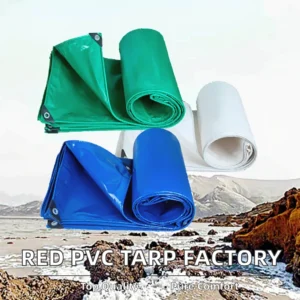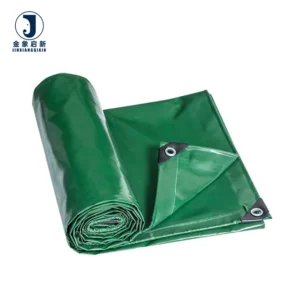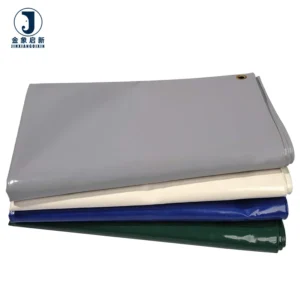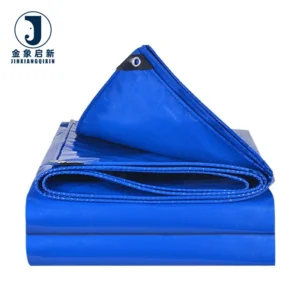
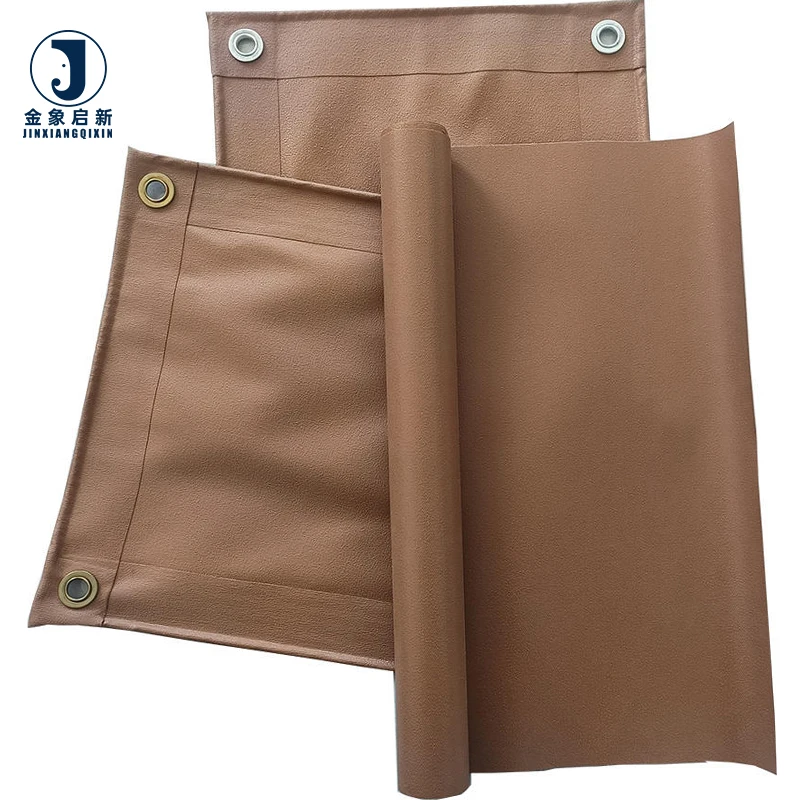
Precision Coating Control — Every roll of 1000D PVC coated tarpaulin undergoes in-process weight verification to ensure the GSM you specify matches the material that arrives at your fabrication floor.
Technical Specifications
| Parameter | Value |
|---|---|
| Product Type | PVC Coated Tarpaulin |
| Base Fabric Denier | 1000D Polyester |
| Weight (GSM) | 550GSM / 900GSM |
| Coating Material | PVC |
| Coating Method | Knife Coated |
| Waterproof | Yes |
| Self-Clean Treatment | Yes |
| Flame Retardant | Available (grade not stated in source) |
| Anti-Static | Available (standard not stated in source) |
| Anti-Cold | Available |
| Anti-Mildew | Available |
| Surface Finish | Self-Clean |
| Customization | Size, color, and printing available |
| Certification | ISO, CE |
Application Suitability
| Application | Exposure & Requirement |
|---|---|
| Truck and trailer side curtains | Constant flexing at tie-down points, road debris abrasion, prolonged UV exposure, wind load stress |
| Tent and temporary structure fabric | Repeated assembly and teardown, weather exposure across seasons, structural tension at seam lines |
| Roof and building envelope covers | Continuous sunlight, rainfall pooling, thermal expansion and contraction cycles |
| Flood barrier and containment | Direct water contact, hydrostatic pressure, ground-level puncture risk from debris |
Why Verified GSM Matters More Than the Number on the Quotation
Coating weight must be measured, not just declared.
Technical buyers specifying PVC coated tarpaulin 1000D GSM know that a 550GSM label on paper means little if the roll arriving at the dock weighs in lighter. I have reviewed inspection records where the coating thickness varied measurably across a single production run, and the fabric that left the factory did not match the sample the buyer approved. [NEED_CITE: coating weight measurement methods for PVC tarpaulin per ISO standards] When you are welding side curtains for a fleet or fabricating tensioned roof panels, that shortfall translates directly into reduced tear resistance and premature failure at stress points.
Base Fabric Denier and Its Role in Structural Integrity
The 1000D polyester base fabric provides the tensile backbone of this PVC coated tarpaulin. Denier indicates the linear mass density of the yarn — a 1000D yarn is substantially heavier and stronger than lighter denier alternatives, giving the finished fabric higher resistance to both initial tearing and tear propagation under load. For fabricators cutting and welding panels for truck covers or tensile structures, the base fabric specification directly determines how the material behaves when tensioned across a frame or flexed during transport.
Coating Weight Options and Performance Matching
Available in 550GSM and 900GSM grades, this PVC coated tarpaulin 1000D GSM range lets technical buyers match coating weight to the mechanical demands of the end use. The 550GSM grade suits applications where flexibility and lighter handling are priorities, such as temporary covers and tent fabric that must be folded and deployed repeatedly. The 900GSM grade adds coating mass for applications requiring greater rigidity, abrasion resistance, and structural durability — such as permanent roof covers or heavy-duty flood barriers that face sustained environmental exposure. [NEED_CITE: relationship between PVC coating weight and tensile performance in coated fabrics]
Coating Method and Adhesion Behaviour
Knife coating applies a controlled layer of PVC compound directly onto the 1000D base fabric, producing a uniform film with strong mechanical adhesion to the yarn structure. This method differs from dip coating or lamination in that it allows precise control over coating thickness and weight per square metre. For fabricators who hot-air weld or high-frequency weld seams, the consistency of the knife-coated layer affects weld integrity — uneven coating can cause weak spots where the seam separates before the body fabric reaches its load limit.
Specification Interpretation for Technical Buyers
The interplay between base fabric denier and coating weight determines how this material performs under real-world loads. A 1000D base with 900GSM coating carries more PVC mass, which improves abrasion resistance and waterproofing redundancy but also increases stiffness — a factor when the fabric must be folded or routed through curtain tracks. The 550GSM option on the same 1000D base retains the tensile contribution of the base yarns while remaining more pliable, making it better suited to applications involving repeated handling. Self-clean surface treatment reduces dirt adhesion and simplifies maintenance on installed structures, which matters for roof covers and architectural applications where manual cleaning is impractical. Optional functional treatments — flame retardant, anti-static, anti-cold, anti-mildew — are available for projects with specific compliance or environmental requirements; confirm the grade and test standard required for your target market before ordering. [NEED_CITE: functional treatment testing standards for PVC coated technical textiles]
The Hidden Cost of Specification Mismatch
When a truck cover fabricator sources material based on price per kilogram without verifying the coating weight on delivery, the finished covers may pass initial inspection but fail within months at the flex points where the load shifts during transit. Similarly, specifying a flame retardant treatment without requiring the corresponding test report can result in a site rejection when the installing contractor asks for documentation that the material meets the fire classification demanded by the project engineer. Batch-to-batch colour inconsistency across rolls forces fabricators into unplanned rework when panels installed side by side show visible differences. [NEED_CITE: seam and weld failure modes in PVC coated tarpaulin under cyclic loading]
Why Source This Material Through Jinxiang
Three full production lines and 36 sets of professional coating equipment support consistent output volume for bulk roll orders. A 10-person R&D team handles material selection, custom sizing, and sample development, enabling fabricators to confirm specifications before committing to a production run. Dedicated QA/QC operates at every production stage, with 100% pre-shipment inspection verifying coating weight and adhesion against the stated specification. Nearly 30 years of focused production on coated fabrics has built deep process control over coating application and base fabric treatment. Samples are developed within days for custom requirements, allowing technical buyers to validate weld behaviour and colour match before full-order production begins.
Documentation & Verification
- Material specification sheet listing 1000D base fabric, GSM grade, and coating method per roll
- Test reports for UV and flame retardant grades referencing applicable standards where treatments are specified
- Pre-shipment inspection record confirming measured coating weight against the ordered 550GSM or 900GSM
- ISO and CE certificates included with customs documentation and certificate of origin
- Roll packing list with individual roll weights and batch traceability references
Fabrication, Handling & Storage
- Hot-air weld temperature and speed must be matched to the specific 550GSM or 900GSM coating thickness for reliable seam strength
- Store rolls upright on pallets to prevent flat-spot deformation on the 1000D base fabric
- Unroll and allow material to acclimatise before cutting in cold conditions to avoid coating micro-cracking
- Use PVC-compatible cleaning agents only — solvent-based cleaners may degrade the self-clean surface treatment
- Plan cutting layouts to minimise offcuts and weld seams across high-stress zones on the finished panel
What to Include in Your Enquiry
Provide the application type and the mechanical and environmental conditions the fabric will face in service. Specify which GSM grade — 550GSM or 900GSM — suits your structural requirements, along with any functional treatments needed such as flame retardant or anti-static compliance for your target market. Indicate the required roll width, colour references, and whether you need raw rolls or finished cut-and-welded panels. Request samples if weld parameters or colour accuracy need to be confirmed before committing to full production.
Frequently Asked Questions
Q: How is the coating weight verified before shipment?
A: Each roll of 1000D PVC coated tarpaulin undergoes in-process coating weight measurement during production. A pre-shipment inspection record documents the measured GSM against the ordered specification — whether 550GSM or 900GSM — and is included with the shipment documentation. This ensures the material arriving at your facility matches what was quoted.
Q: What flame retardant grades are available for this fabric?
A: Flame retardant treatment is available, but the specific grade and test standard depend on your target market requirements. Confirm the fire classification needed for your project — such as the applicable building code or transport regulation — so the correct treatment can be applied and documented with the corresponding test report.
Q: How does GSM affect the welding behaviour of this material?
A: The 550GSM and 900GSM grades have different coating thicknesses, which require adjusted hot-air or high-frequency weld parameters. Thicker coating on the 900GSM grade generally needs higher temperature or slower travel speed. We recommend testing weld samples on the specific GSM grade you intend to use before full production begins.
Q: Can I order this PVC coated tarpaulin in custom widths and colours?
A: Custom width, length, colour, and printed branding are available. Provide your colour references and required roll dimensions with your enquiry. Samples are developed within days so you can verify colour accuracy and coating finish before approving the full production run. Minimum order quantities and lead times depend on the specific customisation requested.