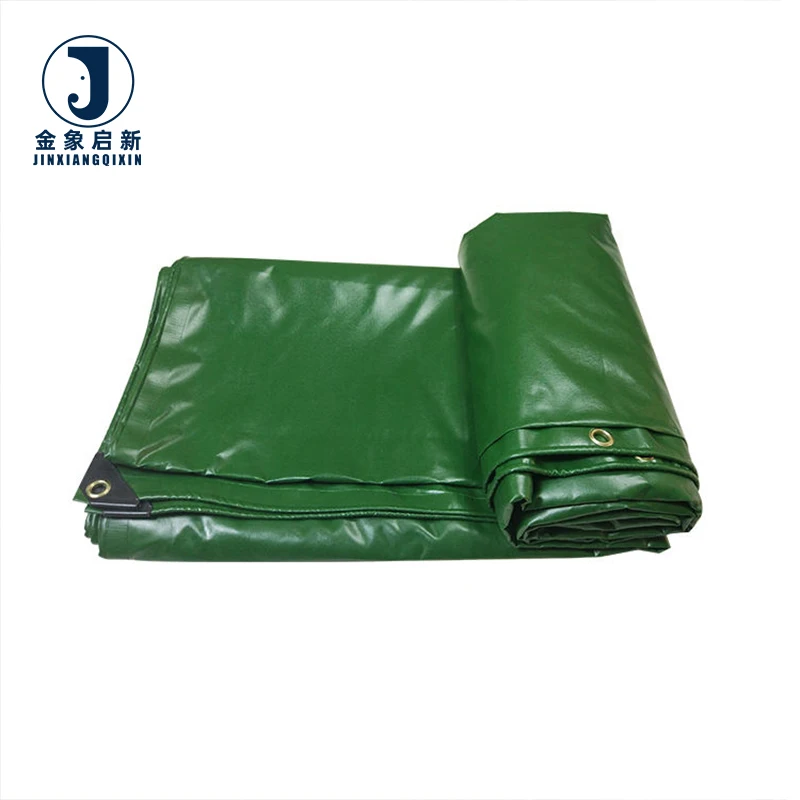
Specification Consistency Guaranteed — Every roll of 500gsm PVC Coated Tarpaulin ships with a material specification sheet detailing exact coating weight, base fabric denier, and thickness to ensure incoming inspection matches your purchase order without variance.
Technical Specifications
| Parameter | Value |
|---|---|
| Product Type | PVC Coated Tarpaulin |
| Base Fabric | High-strength polyester mesh fabric |
| Coating Material | PVC (Polyvinyl Chloride) |
| Coating Technology | Laminated & Hot-melt Coating |
| Weight | 500 gsm |
| Total Thickness | 0.45 mm |
| Available Widths | 2.0 m / 2.1 m |
| Roll Length | 75 m (for 2.0 m width) / 50 m (for 2.1 m width) |
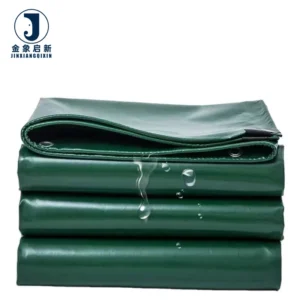
| Waterproofing | 100% Waterproof construction |
| Key Features | Anti-mildew, Anti-static treatment, Cold crack resistance, UV Stable treatment (test basis not stated) |
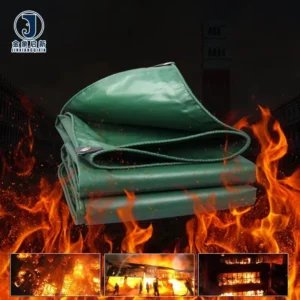
| Flame Retardancy | Available in flame retardant grades — confirm the grade required for your market |
| Recyclability | 100% Recyclable material |
Application Suitability
| Application | Exposure & Requirement |
|---|---|
| Truck Side Curtains | Constant mechanical flexing, road abrasion, and continuous UV exposure requiring high adhesion strength. |
| Industrial Air Ducts | Internal airflow friction and potential static buildup requiring specific anti-static or flame retardant properties. |
| Tent & Awning Structures | Long-term weather exposure and tension stress requiring dimensional stability and color fastness. |
| Inflatable Membranes | High internal pressure and repeated folding requiring superior tear strength and weld seam integrity. |
Why Material Composition Matters More Than Just GSM for PVC Coated Fabric 500 gsm
Technical buyers specify based on the relationship between base fabric construction and coating adhesion, not just weight.
Purchasing decisions based solely on weight often lead to field failures where the fabric meets the scale but fails at the weld or under tension. A 500 gsm material can vary significantly in performance depending on whether the weight comes from the polyester yarn or the PVC coating. [NEED_CITE: ISO 1421 tensile and tear test methods for coated fabrics]. When the coating is too thick relative to the mesh, the material becomes stiff and prone to cracking at fold points; when the mesh is too loose, the coating lacks structural support. Specifying the exact denier and weave count ensures the PVC coated fabric 500 gsm you receive performs under the specific load conditions of your application.
Hot-Melt Coating Adhesion and Weld Seam Integrity
The primary advantage of hot-melt coating technology on this PVC coated fabric 500 gsm is the superior adhesion between the PVC layer and the high-strength polyester mesh. Unlike simple lamination where layers are glued, hot-melt coating allows the PVC to penetrate the weave structure, creating a mechanical lock that resists delamination during high-frequency welding. This is critical for fabricators producing truck curtains or inflatable structures where the welded seam must bear structural loads. The coating formulation is engineered to melt and fuse consistently, ensuring that the tear strength at the weld zone approaches that of the body fabric, preventing the common failure mode where seams peel apart under tension.
Base Fabric Denier and Tensile Performance
The structural backbone of this material is the high-strength polyester mesh, which dictates the tensile and tear resistance. While the 500 gsm weight provides a general indication of durability, the specific denier of the yarns and the mesh count (ends and picks per inch) determine how the fabric handles point loads and tear propagation. [NEED_CITE: relationship between base fabric denier and tear strength in PVC coated textiles]. A tighter mesh with high-tenacity yarns ensures that if the fabric is punctured, the tear is contained rather than propagating rapidly across the roll. This construction is essential for applications like dump truck covers or temporary shelters where the material is subjected to dynamic stress and wind loading.
Technical Interpretation of 500 gsm Construction
In the context of PVC coated fabrics, a 500 gsm weight at 0.45 mm thickness represents a balance between flexibility and heavy-duty protection. The thickness indicates a substantial coating layer that protects the base fabric from abrasion and chemical exposure, while the polyester mesh provides the necessary tensile strength. The laminated technology mentioned in the specifications often refers to the bonding process that ensures the coating does not separate from the fabric during extreme temperature fluctuations. This specific weight class is often chosen for applications that require more durability than light-duty tarps but more flexibility than rigid architectural membranes. The anti-mildew treatment integrated into the coating is vital for preventing biological degradation in humid environments or when the fabric is stored while damp.
The Hidden Cost of Inconsistent Coating Weight
When the coating weight varies across a roll, the thermal properties change, leading to inconsistent weld results. Fabricators often experience "burn-through" on thinner sections or weak bonds on thicker sections, resulting in high rejection rates during production. [NEED_CITE: impact of coating consistency on high-frequency welding results]. Furthermore, if the PVC formulation lacks proper cold crack resistance, the material becomes brittle in freezing temperatures, leading to fractures during handling or deployment. This is particularly costly for logistics companies whose truck covers fail during winter transport. Ensuring the PVC coated fabric 500 gsm is produced with strict thickness tolerances prevents these downstream fabrication and operational losses.
Precision Manufacturing for Technical Fabricators
Our production process utilizes three full production lines to maintain strict control over the coating weight and thickness of the PVC coated fabric 500 gsm. The 10-person R&D team supports technical buyers by providing sample developments that match specific denier and coating requirements, allowing for lab verification before bulk production. Every roll undergoes 100% inspection to ensure the GSM and coating adhesion meet the agreed specifications, eliminating the risk of receiving under-weight material. The facility’s dedicated QA/QC protocols focus on weld-ability and color consistency, ensuring that every roll in a batch behaves identically during fabrication.
Documentation & Verification
- Material specification sheet stating exact GSM, base fabric denier, and coating weight.
- Test reports for UV stability and flame retardant grades confirming the specific standard.
- Pre-shipment inspection record verifying roll dimensions and weight against the order.
- Certificate of Origin and customs documentation for international shipment clearance.
- Technical data sheet outlining recommended welding parameters and storage conditions.
Fabrication, Handling & Storage
- Use high-frequency welding at temperatures optimized for 500 gsm hot-melt coated PVC.
- Store rolls horizontally in a cool, dry place to prevent permanent creasing of the coating.
- Clean with mild, non-abrasive detergents to preserve the anti-mildew surface treatment.
- Allow material to acclimatize to room temperature before unrolling to avoid cold-cracking.
- Reinforce eyelet areas with additional patches to distribute load across the polyester mesh.
Specifying Your Coated Fabric Requirements
To ensure the PVC coated fabric 500 gsm meets your project needs, please provide details on the specific environmental exposure, including UV intensity and temperature ranges. Specify the required flame retardant standard (e.g., DIN 4102, NFPA 701) and any color matching requirements for brand consistency. Indicate whether you require roll stock for your own fabrication or custom cut-to-size finished products with specific hemming and eyelet configurations.
Frequently Asked Questions
Q: How is the 500 gsm weight verified on every roll?
A: We conduct weight verification per roll against the stated 500 gsm before dispatch using calibrated scales. A pre-shipment inspection record is included, detailing the average and minimum weights found, ensuring the material matches your purchase order specifications.
Q: What flame retardant grades are available for this fabric?
A: This fabric is available in various flame retardant grades, such as M2, B1, or NFPA 701, depending on your market requirements. You must specify the exact standard needed, and we will provide the corresponding test report with the shipment.
Q: How does the hot-melt coating affect welding performance?
A: The hot-melt coating penetrates the polyester mesh, creating a strong mechanical bond that enhances high-frequency welding results. This ensures the weld seam has high tear resistance and reduces the risk of delamination at the flex points of truck curtains.
Q: Can I get a sample to test the material properties?
A: Yes, our 10-person R&D team can develop samples within days for lab verification. You can request a sample of the 500 gsm PVC coated fabric to test tensile strength, weld-ability, and color consistency before committing to a bulk order.