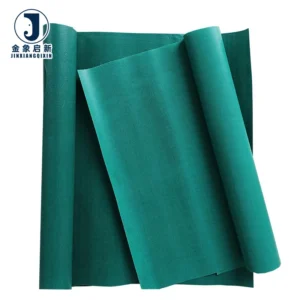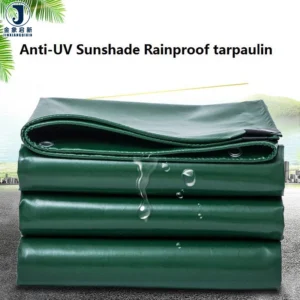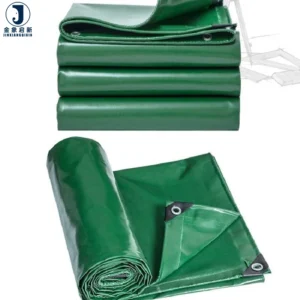
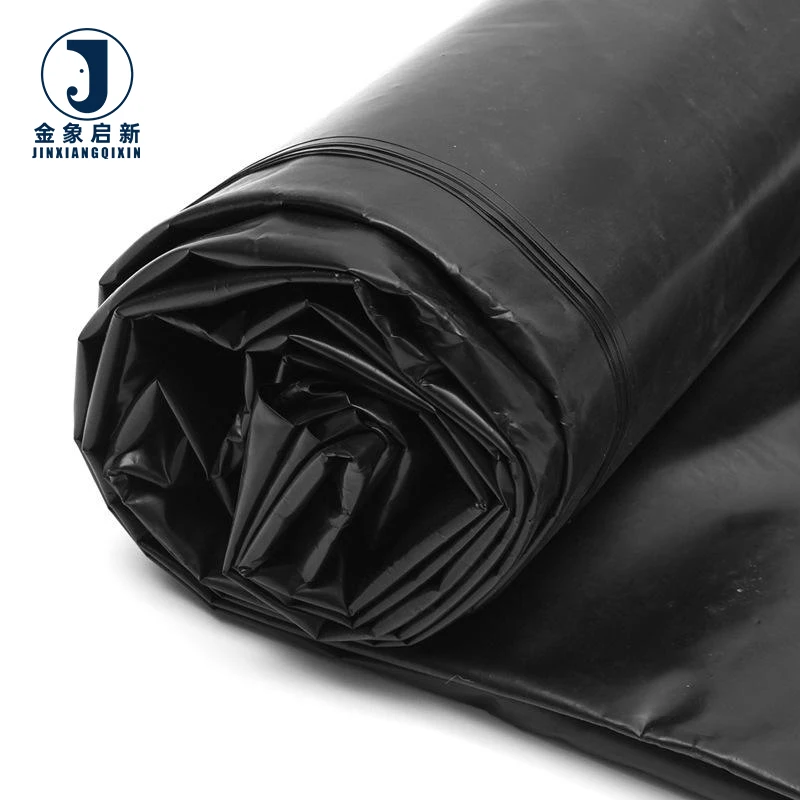
Coating Weight Control — Every roll of 550gsm PVC coated tarpaulin undergoes in-process coating weight verification with pre-shipment inspection records matching the stated specification sheet.
Technical Specifications
| Parameter | Value |
|---|---|
| Product Type | PVC Coated Tarpaulin Roll |
| Weight | 550gsm |
| Total Thickness | 0.45mm |
| Base Fabric Denier Options | 200D×300D, 500D×500D, 840D×840D, 1000D×1000D |
| Coating Material | PVC |
| Surface Finish | Available in glossy or matte |
| Color | Black |
| Temperature Range | -15°C to 70°C |
| Treatment | Waterproof, UV treated (test basis not stated in source), FR treated (grade not stated in source), anti-fungal treated |
| Key Features | Rain-resistant, tear-resistant, abrasion-resistant, flexible with strong adhesion between base fabric and coating layers |
Application Suitability
| Application | Exposure & Requirement |
|---|---|
| Fish farming pond liners | Permanent water immersion, soil chemistry contact, puncture risk from substrate debris, long-term hydrostatic pressure |
| Aquaculture tank covers | Continuous moisture exposure, biological environment with algae and microbial growth, frequent cleaning cycles |
| Agricultural water containment | UV exposure, seasonal temperature fluctuation, mechanical stress from installation tension and water weight |
| Reservoir and dam lining | Large panel joining on-site, weld seam integrity under load, extended outdoor weathering |
What "550gsm" Means When Coating Weight Cannot Be Verified On Arrival
A stated GSM value is only as reliable as the process control and inspection documentation behind it.
Buyers sourcing PVC coated tarpaulin 550 gsm material specification for aquaculture projects frequently encounter rolls that arrive lighter than the quotation stated, with no test report to support the UV or flame-retardant claims made during ordering [NEED_CITE: tensile and tear test methods for coated fabrics per ISO 1421]. The pond leaks within months because the coating adhesion or thickness was insufficient for continuous water immersion. This material is produced under controlled coating weight processes with documentation available to verify the stated GSM and treatment grades per batch.
Base Fabric Denier and Its Role in Liner Performance
The base fabric denier selection directly determines how a PVC coated tarpaulin 550 gsm material specification performs under installation tension and puncture stress. Lower denier options such as 200D×300D produce a lighter, more flexible fabric suited to smaller pond applications where handling ease matters. Higher denier selections like 1000D×1000D deliver greater tensile and tear strength for large reservoir installations where the liner spans significant distances and must resist substrate irregularities.
Coating Adhesion and Long-Term Water Immersion Stability
The bond between the PVC coating and the polyester base fabric determines whether the liner degrades through delamination after prolonged water contact. In aquaculture environments, the material faces continuous hydrostatic pressure, microbial exposure, and temperature cycling that test the coating adhesion at every point. Anti-fungal treatment is compounded into this grade to address the biological environment specific to fish farming and aquaculture water containment applications. Surface finish selection — glossy or matte — influences how readily algae and biofilm adhere to the liner surface, affecting maintenance intervals [NEED_CITE: PVC coating adhesion test methods for prolonged water immersion].
Decoding the Technical Parameters for Pond Liner Selection
The 550gsm weight and 0.45mm thickness together indicate the balance between flexibility for installation and puncture resistance against substrate debris. A heavier GSM alone does not guarantee superior performance; the base fabric denier and weave density determine how effectively the material resists tear propagation once a puncture initiates. The -15°C to 70°C temperature range defines the operational boundaries where the PVC remains flexible without becoming brittle in cold weather or softening excessively under direct sun exposure. Treatment claims for UV and flame retardant are available in specific grades — confirm the grade required for your market and request the corresponding test documentation before order confirmation.
The Hidden Cost of Specifying Material Without Verification
When a pond liner specified at a certain GSM arrives lighter than agreed, the consequence is not immediately visible — it appears months later as premature coating failure, seam delamination under hydrostatic load, or puncture at stress points where the substrate pushes against the liner. Rolls produced without consistent coating weight control show variation across the production run, meaning one section of the pond may perform adequately while another fails early [NEED_CITE: coating weight consistency testing across production batches]. For aquaculture operators, this translates into water loss, stock damage, and liner replacement costs that exceed any initial material savings.
Why Technical Buyers Source This Material Here
Three full production lines and dedicated coating weight control processes support consistent GSM delivery across large-volume orders for multi-pond aquaculture projects. The 10-person R&D team handles denier selection, treatment specification, and custom sizing to match the tensile requirements of your specific installation geometry. A dedicated QA/QC process inspects every roll before shipment, verifying weight, thickness, and treatment compliance against the material specification sheet. Sample development within days allows you to evaluate coating adhesion, surface finish, and weld behavior before committing to bulk production. Full documentation accompanies each shipment, from certificate of origin to pre-shipment inspection records, supporting cross-border aquaculture project compliance requirements.
Documentation & Verification
- Material specification sheet stating 550gsm, base fabric denier, coating method, and colour reference per production batch
- UV and flame-retardant test reports provided where applicable — request documentation matching your market requirements before confirming order
- Pre-shipment inspection record verifying GSM, 0.45mm thickness, and roll-to-roll colour consistency across the order
- Certificate of origin and customs documentation prepared for international aquaculture project shipments
Fabrication, Handling & Storage
- Heat welding parameters must be matched to the 550gsm coating thickness and denier selection to ensure seam strength equals base fabric tensile capacity
- Store rolls horizontally on pallets to prevent permanent creasing in the 0.45mm PVC coating that affects weld seam integrity
- Select glossy finish for applications requiring frequent cleaning or where algae adhesion must be minimized in aquaculture environments
- Allow cold-stored rolls to reach ambient temperature before unrolling to prevent cracking at the -15°C lower flexibility boundary
- Reinforce stress concentration points at liner edges and anchor locations with additional material layers appropriate to the selected denier grade
Specifying the Right Material for Your Application
Provide the installation environment details including water chemistry, substrate conditions, and exposure duration to allow accurate denier and treatment selection. Confirm whether your market requires specific UV or flame-retardant certification grades, and supply the relevant standards. Specify whether you need stock roll widths for on-site fabrication or custom-cut panels with welded seams to minimize field joining.
Frequently Asked Questions
Q: How is the 550gsm coating weight verified and can I receive documentation per roll?
A: Each production batch undergoes in-process coating weight control with GSM verification recorded during manufacturing. Pre-shipment inspection includes weight measurement against the stated specification, and inspection records accompany the shipment. You can request per-roll GSM certificates documenting the actual measured weight before the material leaves the facility, providing traceability for quality-sensitive aquaculture installations.
Q: Which base fabric denier is recommended for fish pond liners and how does it affect tear strength?
A: Denier selection depends on pond size, substrate conditions, and installation tension requirements. Higher denier options like 1000D×1000D deliver greater tear propagation resistance for large reservoirs spanning uneven ground, while 500D×500D balances strength with flexibility for standard pond applications. The technical team provides denier recommendations based on your specific installation geometry and expected mechanical stress conditions.
Q: Is the flame-retardant treatment certified to a specific standard or is it a general additive?
A: Flame-retardant treatment is available in various grades suitable for different market requirements. The specific certification — whether M2, B1, NFPA 701, or another standard — must be confirmed at inquiry stage to ensure the correct additives are incorporated during production. Request the test report and certification documentation matching your local compliance requirements before order confirmation to avoid receiving material that fails site inspection.
Q: What is the basis for the UV treatment claim and is there a test report available?
A: UV treatment is available with documented testing to verify long-term performance under solar exposure. The test method and exposure hours vary by grade, and the appropriate level depends on your geographic location and installation orientation. Request the specific UV test report — whether xenon arc, QUV, or another recognized standard — when specifying the material to ensure the treatment grade matches your expected service environment and duration requirements.
Q: Can custom width and length be produced for large pond liner panels?
A: Custom dimensions are available to minimize on-site welding and reduce seam count in large aquaculture installations. Production capability covers non-stock widths and lengths with minimum order requirements that vary by specification complexity. Provide your panel dimensions and quantity requirements during inquiry to receive accurate lead time and production scheduling information for your project timeline.