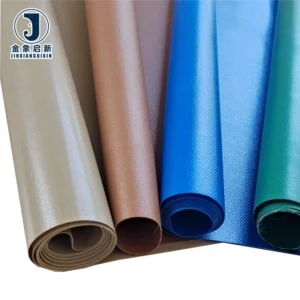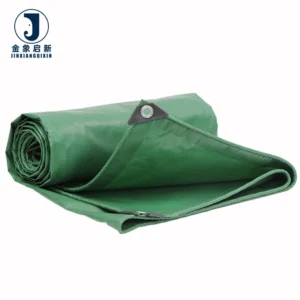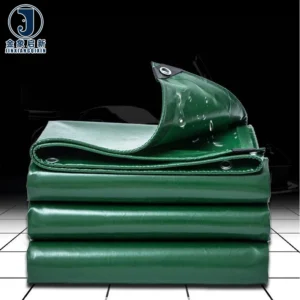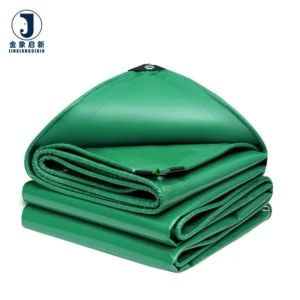
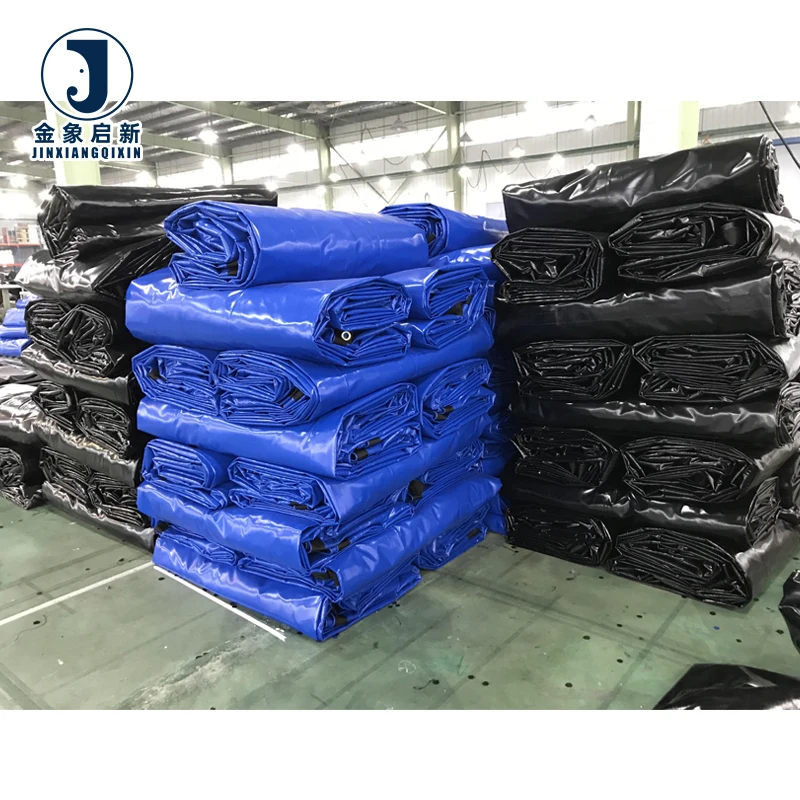
Coating Process Control — Every roll of 650 GSM PVC coated tarpaulin undergoes in-process weight verification to ensure the stated coating mass and base fabric specification match the material documentation you receive.
Technical Specifications
| Parameter | Value |
|---|---|
| Product Type | PVC Coated Tarpaulin Roll |
| Weight | 650 GSM |
| Coating Material | PVC |
| Base Fabric | PVC Coated Polyester |
| Surface Finish | Self-Cleaning Coating |
| Flame Retardant | Fire retardant (grade not stated in source — confirm required grade for your market) |
| UV Treatment | UV resistance (test basis not stated in source — request test report) |
| Anti-Mildew | Antibacterial and mildew proof |
| Chemical Resistance | Oil and stain resistance, acid and alkali resistance |
| Temperature Resistance | High temperature and cold resistance |
| Anti-Oxidation | Yes |
| Weather Resistance | Yes |
| Flexibility | Highly flexible, crack resistant |
| Welding Options | HF, Hot Air, Sewing |
| Tensile Strength | Excellent (test standard not stated in source) |
| Tear Strength | Excellent (test standard not stated in source) |
| Peel Strength | Excellent (test standard not stated in source) |
| Key Features | Fire retardant, UV resistant, antibacterial, mildew proof, self-cleaning surface, oil and stain resistant, acid and alkali resistant |
Application Suitability
| Application | Exposure & Requirement |
|---|---|
| Tensile and membrane structures | Permanent outdoor tension, UV exposure, wind loading, structural engineering calculations require verified material data |
| Tent and awning fabrication | Cut-and-weld production, repeated assembly and disassembly, flame retardant compliance for public venues |
| Stadium architectural structures | Long-span coverage, sustained UV and weather exposure, fire safety codes for large public assemblies |
| Airport hangars and portable storage | Wide-width panels, welding integrity at seam joints, chemical exposure from fuel and de-icing agents |
| Shade systems and shadings | Continuous solar exposure, thermal cycling, colour consistency across installed panels |
| Outdoor waterproof covering | Rain and moisture contact, mildew risk in humid climates, surface dirt accumulation |
Why Coating Weight and Base Fabric Together Define Real Performance
A 650 GSM reading on a scale tells you the total mass per square metre, but it does not tell you how that mass is distributed between base fabric and coating — and that distribution determines how the PVC coated tarpaulin 650 gsm material specifications translate into field performance.
Buyers who specify only on GSM often receive rolls where a lighter base fabric is compensated with extra coating to hit the target weight. The result is a material that passes the scale check but underperforms on tensile and tear tests because the polyester scrim — the structural skeleton — is undersized. [NEED_CITE: relationship between base fabric denier and tensile strength in coated fabrics per ISO 1421]
I have seen heavy-grade coated rolls fail at the weld line not because the coating was poor, but because the base fabric lacked the dimensional stability to hold the seam under flex loads. When the coating-to-fabric ratio is wrong, the PVC layer absorbs stress that the scrim should carry, and delamination follows. The 650 GSM PVC coated tarpaulin material specifications you receive should break down coating weight separately from base fabric weight so you can verify the engineering balance.
Coating Adhesion and Weight Distribution Across the Roll
Consistent coating weight from the first metre to the last is a process control outcome, not a material accident. The PVC coating formulation and application method determine how evenly the 650 GSM target is maintained across the full roll width and length. Variations in coating thickness create weak zones where peel strength drops, and these zones typically reveal themselves during HF or hot air welding when the seam splits before the fabric does. Our production lines monitor coating application continuously, with QA checks at defined intervals to catch drift before it becomes a batch-wide problem.
Weld Behaviour and Seam Integrity for Fabricated Structures
The PVC coated tarpaulin 650 gsm material specifications include compatibility with HF, hot air, and sewing — but the seam performance depends on how the coating formulation responds to each method. HF welding works by reactivating the PVC layer, and the weld strength is directly tied to coating thickness uniformity. Hot air welding demands a coating that softens at a predictable temperature window without scorching. [NEED_CITE: welding compatibility standards for PVC coated polyester fabrics] Sewn seams on this material require thread and stitch density matched to the fabric’s tear propagation behaviour, because a needle hole becomes a stress concentrator in a high-tensile scrim.
How GSM, Denier, and Weave Density Interact
GSM alone is a composite number. A 650 GSM roll can be built on a high-denier, open-weave base with moderate coating, or a low-denier, tight-weave base with heavy coating. The first gives better tear resistance because individual yarns are thicker and harder to break. The second gives a smoother surface but sacrifices tear propagation resistance. Tensile strength follows the warp and weft yarn count and denier, while the coating contributes primarily to peel strength and environmental protection. When reviewing PVC coated tarpaulin 650 gsm material specifications, ask for the base fabric denier and thread count alongside the total GSM to understand what you are actually buying.
The self-cleaning surface finish on this grade reduces dirt adhesion and water spotting, which matters for tensile structures and shade systems where visual appearance is part of the architectural specification. The antibacterial and mildew-proof treatment prevents biological growth on the coating surface in humid or tropical installations, extending the interval between cleaning cycles.
What Happens When Specifications Are Verified Too Late
When a container of PVC coated tarpaulin rolls arrives and the GSM is below the quoted value, the options are limited — reject the shipment and delay the project, or accept underweight material and absorb the performance risk downstream. Flame retardant grades that lack a matching test report become a compliance failure at the building inspection stage, not at the quotation stage. Colour variation between rolls in the same shipment forces fabricators to sort and match panels manually, adding labour and creating waste from offcuts that cannot be placed side by side. [NEED_CITE: pre-shipment inspection practices for coated fabric roll stock] These are not manufacturing defects — they are specification and verification gaps that can be closed before the order is placed.
Production Capability Aligned to Technical Fabric Requirements
Dedicated QA and QC checkpoints at every production stage mean the 650 GSM target is verified during coating, not just at final weighing. Three full production lines with 36 sets of professional equipment support roll stock volumes without sacrificing the process control this material demands. A 10-person R&D team handles custom width, colour matching, and treatment formulation adjustments when your project requires a specific flame retardant grade or UV stabiliser package. Every roll ships with a material specification sheet stating exact GSM, base fabric construction, and coating composition — not a generic brochure. Samples are developed within days for custom requirements, allowing you to weld-test and verify before committing to a production run.
Documentation & Verification
- Material specification sheet stating 650 GSM, base fabric denier and weave, and PVC coating weight breakdown
- Test reports for fire retardant and UV resistance grades supplied where applicable to your market
- Pre-shipment inspection record with per-roll weight verification against stated GSM
- ISO and CE certificates included with shipping documentation
- Certificate of Origin and customs support for international roll stock shipments
Fabrication, Handling & Storage
- HF welding parameters should be calibrated to the 650 GSM coating thickness for consistent seam peel strength
- Hot air welding temperature window must match the PVC formulation to avoid surface scorching on the self-cleaning finish
- Store rolls upright on pallets to prevent flat-spotting and permanent creasing in the polyester base fabric
- Allow rolls to acclimatise before unrolling in cold conditions to preserve flexibility and prevent coating micro-cracking
- Use mild, non-solvent cleaners on the self-cleaning surface to maintain the antibacterial and mildew-proof treatment
- Plan panel cutting layouts to minimise weld seams across high-tension zones in tensile structures
Specification and Sample Request
To move forward, share the exposure conditions your project faces — sustained UV, fire code requirements, chemical contact, or thermal cycling range. Confirm whether you need rolls in standard or custom width, and whether the fire retardant grade must meet a specific standard such as DIN 4102, NFPA 701, or a local equivalent. Let us know your annual volume and whether you require pre-production samples for weld testing before the main order.
Frequently Asked Questions
Q: How do I verify the 650 GSM weight when rolls arrive at my facility?
A: Every shipment includes a pre-shipment inspection record documenting per-roll weight checks against the stated 650 GSM. We recommend sampling rolls from different positions in the container and weighing cut sections to cross-reference. The material specification sheet provided with your order states the target GSM, base fabric denier, and coating weight separately, giving you the baseline data for incoming inspection.
Q: Which flame retardant grades are available for this PVC coated tarpaulin roll?
A: Fire retardant treatment is available, and the specific grade should be confirmed against your target market’s fire safety code — common requirements include DIN 4102, NFPA 701, or local building material classifications. Request the applicable test report at the quotation stage so you can verify compliance with your project’s fire engineering specification before committing to production.
Q: What is the difference between HF and hot air welding for this 650 GSM material?
A: HF welding reactivates the PVC coating layer to form a molecular bond, producing high peel strength on flat seams suited to membrane and tent fabrication. Hot air welding uses heated airflow to soften the coating and is more portable for on-site repairs. Both methods require temperature calibration to the coating formulation on this specific 650 GSM grade for reliable seam performance.
Q: Can UV resistance and fire retardant treatments be combined on the same roll?
A: Yes, both treatments can be applied to the same PVC coated tarpaulin roll. The UV stabiliser package and fire retardant chemistry must be formulated to work together without reducing coating adhesion or weld compatibility. Specify both requirements at the inquiry stage and request the corresponding test reports to verify performance claims.
Q: What custom width and minimum order options apply to roll stock purchases?
A: Custom widths and roll lengths are available based on production line capability and your project requirements. Minimum order quantities depend on whether you are ordering a standard grade or a custom colour and treatment combination. Share your required width, roll length, and annual volume to receive a specific quotation with lead time and packaging details.