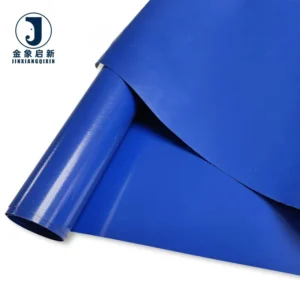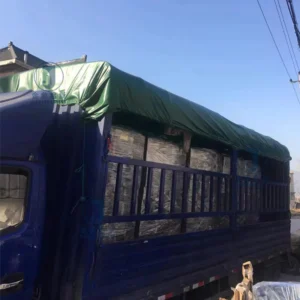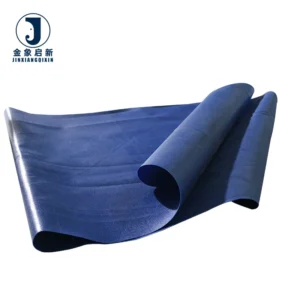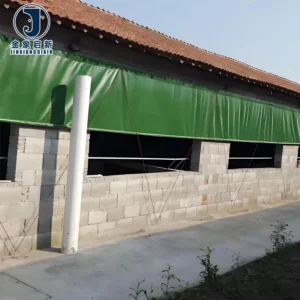
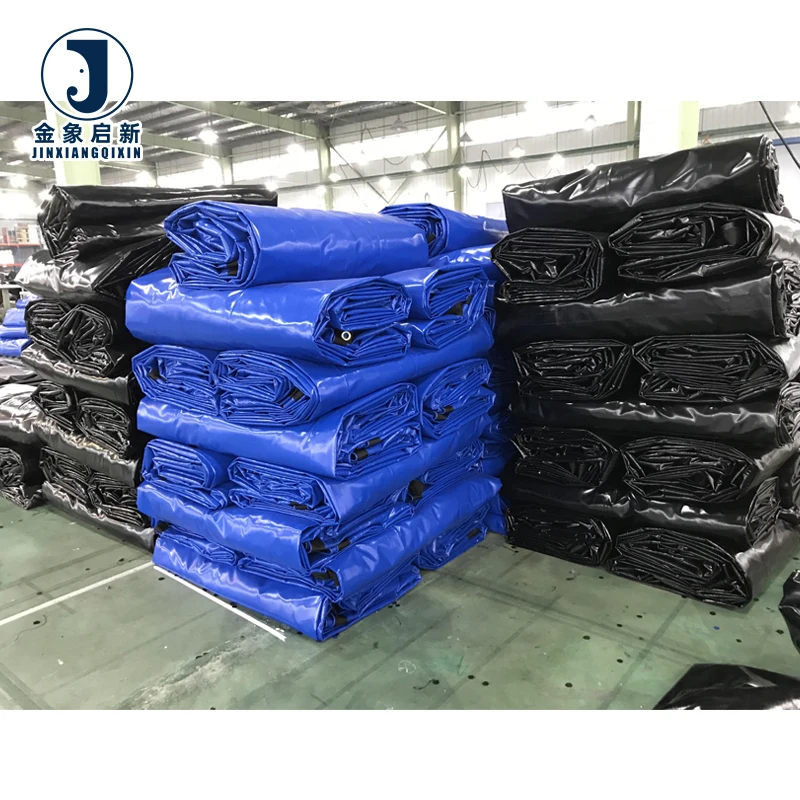
Coating Adhesion Control — Every roll of this PVC coated tarpaulin roll ships with a verified specification sheet stating exact GSM, base fabric denier and coating method, eliminating incoming material surprises at your fabrication facility.
Technical Specifications
| Parameter | Value |
|---|---|
| Product Type | PVC Coated Tarpaulin Roll |
| Weight | 650 GSM |
| Coating Material | PVC |
| Base Fabric | PVC Coated Polyester |
| Waterproof Rating | Waterproof |
| Flame Retardant Grade | Fire retardant (grade not stated in source — confirm the grade required for your market) |
| UV Treatment | UV resistance (test basis not stated in source — request certification for your application) |
| Anti-Mildew | Antibacterial and mildew proof |
| Oil & Stain Resistance | Oil and stain resistance |
| Chemical Resistance | Acid and alkali resistance |
| Temperature Range | High temperature and cold resistance |
| Weather Resistance | Anti-oxidation and weather resistance |
| Flexibility | Highly flexible, resistant to cracking |
| Surface Property | Self-cleaning system |
| Welding Options | HF, hot air, sewing |
| Standards | ISO, CE |
Application Suitability
| Application | Exposure & Requirement |
|---|---|
| Tensile and membrane structures | Sustained wind load, UV exposure, seam integrity under tension |
| Stadium architectural canopies | Long-term weathering, high visibility colour consistency, fire code compliance |
| Airport hangar fabric buildings | Fire retardant certification, large-panel welding, wind uplift resistance |
| Shade systems and awnings | Solar exposure, repeated flex during retraction, surface soiling |
| Portable storage structures | Temporary weather protection, rapid deployment, fold-and-store cycles |
| Large format technical textiles | Dimensional stability for digital printing, panel-to-panel colour match |
| Tent and awning fabrication | Cut-and-weld production, seam peel strength, pack weight |
Why 650 GSM PVC Coated Tarpaulin Roll Buyers Must Look Beyond Weight
GSM alone does not predict how a fabric performs at the weld line or under sustained load.
When a PVC coated tarpaulin roll 650 gsm arrives at your facility lighter than the quotation stated, the cost is not the missing material — it is the failed seam on a tensile canopy, the rejected shipment, or the warranty claim six months later. I have seen heavy-grade coated rolls fail at the weld line because the coating formulation did not bond properly to the base fabric, even though the GSM reading was correct. The failure was in the adhesion, not the weight [NEED_CITE: tensile and tear test methods for coated fabrics per ISO 1421]. Fabricators who specify only on GSM without verifying coating method and base fabric denier accept a risk that only becomes visible after welding, installation and the first storm season.
Base Fabric Denier and Coating Adhesion
The tensile performance of a PVC coated tarpaulin roll 650 gsm depends on two independent variables working together: the base fabric denier and weave density, and the PVC coating weight applied to it. A high-denier polyester base with tight weave delivers tear resistance, while the coating provides waterproofing, surface durability and weldability. If the coating adhesion is weak — whether from improper knife-over-roll pressure or insufficient curing — the PVC layer delaminates at stress points long before the fabric itself fails.
Welding Compatibility Across Fabrication Methods
Fabricators working with tensile structures and shade systems rely on seams that match or exceed the strength of the parent fabric. This material supports HF welding, hot air welding and sewing, giving production teams the flexibility to choose the method that suits each panel geometry [NEED_CITE: high-frequency welding parameters for PVC coated polyester fabrics]. HF welding produces the most uniform bond on flat panel joins typical in membrane roofs, while hot air suits curved sections and field repairs where HF equipment is impractical.
What the Surface Coating Tells You About Maintenance
The self-cleaning surface system on this PVC coated tarpaulin roll reduces particulate adhesion on installed shade canopies and architectural membranes. On stadium roofs and airport hangars, where panel cleaning requires access equipment and significant labour cost, a surface that sheds dust and organic soiling extends the interval between maintenance cycles. The formulation resists oxidation under prolonged UV exposure, though buyers specifying fabric for building codes should request the applicable test report to verify durability claims for their jurisdiction.
Reading GSM in Context — Density, Coating Method and Real-World Behaviour
A 650 GSM reading on the specification sheet combines the weight of the polyester base fabric and the PVC coating applied to both faces. The ratio between these two components determines how the material behaves in fabrication and service. A higher proportion of base fabric weight relative to coating weight yields a stiffer, more tear-resistant panel suited to tensile structures under sustained load. A heavier coating relative to the base gives superior waterproofing and a more forgiving surface for hot air welding, but may flex and crack sooner in cold-temperature deployment [NEED_CITE: relationship between coating weight and low-temperature flexibility in PVC fabrics]. The coating method also matters: knife-over-roll coating produces a tighter bond with higher peel strength, while dip coating delivers greater flexibility at the expense of some surface uniformity. Specifying GSM without understanding these variables is like specifying a vehicle by its kerb weight — technically accurate but practically incomplete.
The Hidden Cost of Specifying Coated Fabric on Price Per Kilogram
When procurement decisions on a PVC coated tarpaulin roll 650 gsm are driven by unit price rather than verified coating weight and adhesion, the downstream costs appear in production. Rolls that arrive underweight produce panels that fall short of engineered tensile values. Flame retardant claims unsupported by a batch-matched test report cause failed inspections on stadium and airport projects, where authorities require documentation tied to the installed material [NEED_CITE: fire classification requirements for textile membranes in public buildings]. Colour variation between rolls in the same order becomes visible once panels are installed side by side on a tensile canopy, forcing replacement or acceptance of a compromised appearance.
Procurement Advantages Rooted in Process Control
The 650 GSM specification is backed by process control over coating weight and adhesion, verified at every production stage rather than sampled at the end. Three full production lines and 36 sets of equipment support consistent output volume, meaning your reorders match the sample you approved — roll to roll, batch to batch. The 10-person R&D team handles custom width, pattern printing and sample development within days, not weeks, so your fabrication schedule does not wait on material availability. Dedicated QA/QC with 100% inspection before shipment means each roll is checked against the stated specification, not just the first and last in the production run.
Documentation & Verification
- Material specification sheet stating exact GSM, base fabric denier and coating method per roll
- Fire retardant test report matched to batch — request the grade applicable to your market
- UV treatment verification documentation available on request for project submissions
- ISO and CE certificates included with shipment for compliance and customs clearance
- Pre-shipment inspection record confirming coating weight consistency across all rolls in the order
Fabrication, Handling & Storage
- HF welding at recommended power settings produces the highest peel strength on 650 GSM panels
- Hot air welding suits curved membrane sections where electrode contact is limited
- Store rolls upright on core to prevent flat-spot deformation of the self-cleaning surface
- Allow cold-stored rolls to acclimatise before unrolling to avoid coating micro-cracking
- Use non-abrasive cleaners compatible with PVC to preserve the self-cleaning surface treatment
- Plan panel layout to minimise cross-machine-direction seams on high-load tensile sections
What to Share When Requesting a Quotation
Provide your target application and the environmental conditions the installed fabric will face — wind load, UV exposure, temperature range and any fire code requirements specific to your jurisdiction. Confirm whether you need roll stock in standard or custom width, and state your annual volume so batch consistency can be managed across multiple shipments. If colour matching across panels is critical, share your reference standard so dye-lot control is planned from the start.
Frequently Asked Questions
Q: How do I verify the 650 GSM coating weight on arrival at my facility?
A: Each order ships with a material specification sheet stating the exact GSM and base fabric denier for every roll. Conduct incoming QC by weighing a cut sample of known area and comparing to the stated value. Discrepancies should be flagged before production begins, using the pre-shipment inspection record as your reference baseline.
Q: What fire retardant grade does this PVC fabric carry for my building project?
A: The material is available in fire retardant grades — confirm the grade required for your market and project type. Request a batch-matched test report at the quotation stage so the certification aligns with your shipment. Generic certificates not tied to your batch may not satisfy inspection authorities on stadium or hangar projects.
Q: Will colour remain consistent if I order multiple rolls across two separate shipments?
A: Colour consistency is managed through dye-lot control and a colour reference system matched to your specification. For projects where panels are installed side by side, confirm your colour standard at the inquiry stage and request that all rolls for a given installation phase are produced from the same dye lot.
Q: Which welding method produces the strongest seam for a tensile structure?
A: HF welding delivers the most uniform bond for flat panel joins typical in tensile membranes, creating a seam approaching the strength of the parent 650 GSM fabric. Hot air welding is preferred for curved sections and field repairs. Sewing with sealed stitch lines suits applications requiring mechanical redundancy at attachment points.
Q: What is the minimum order for a custom width or colour on this PVC coated tarpaulin roll?
A: Custom width and colour requirements are evaluated based on production line configuration and dye-lot minimums. Share your required dimensions, colour reference and estimated annual volume during the inquiry so a realistic lead time and minimum can be quoted. Samples for custom specifications are developed within days for your approval.