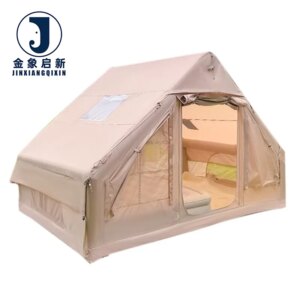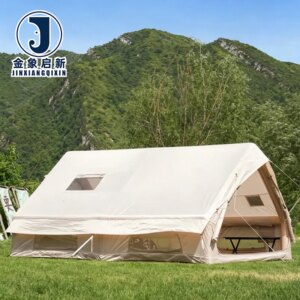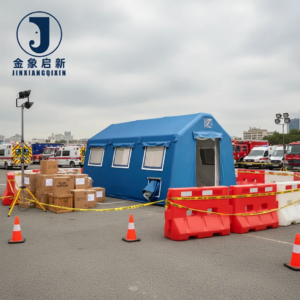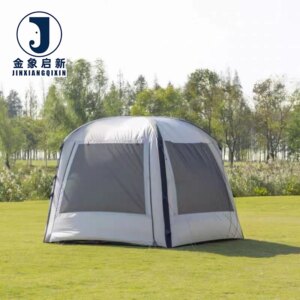
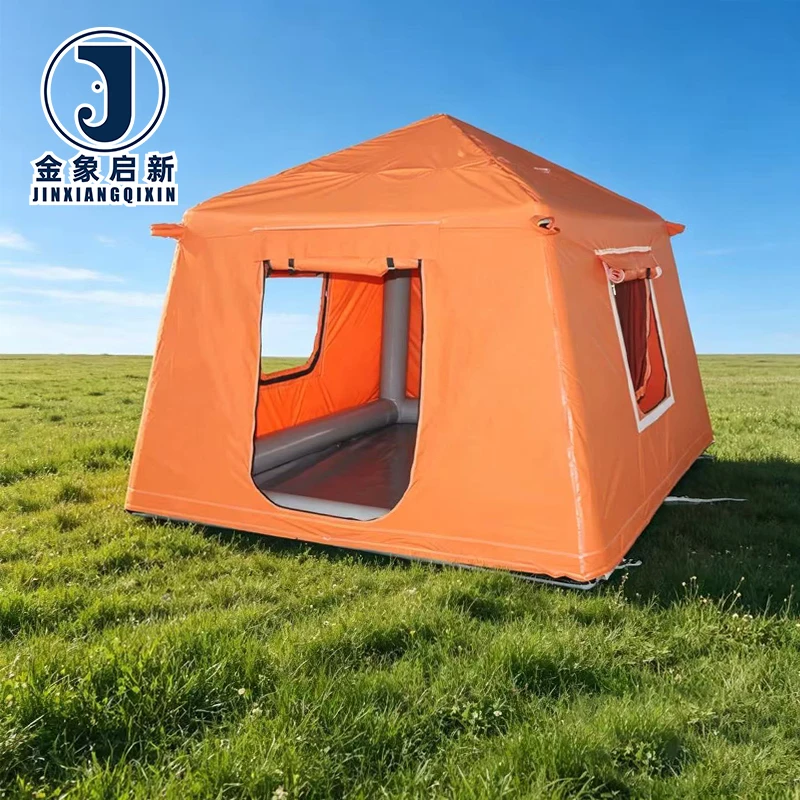
Deep Process Control Over Coating Weight — Three full production lines and 36 sets of equipment deliver consistent coating adhesion on 420D Oxford inflatable tent fabric material coating for pneumatic structure integrity.
Technical Specifications
| Parameter | Value |
|---|---|
| Product Type | Inflatable Camping Tent |
| Core Material | 420D Oxford |
| Capacity | 5-8 Person |
| Season Suitability | 4-Season |
| Opening Mechanism | Quick Automatic Opening |
| Construction Type | Single Layer |
| Design Type | Extended Type |
| Key Features | Quick Automatic Opening, OEM & ODM Sample Customization, Pattern Printing |
| Flame Retardant | Grade not stated — confirm the grade required for your market |
| Anti-UV | Test basis not stated — request test report before specification |
| Anti-Static | Not stated |
| Standards | ISO9001, ISO14001, ISO45001, CE |
Application Suitability
| Application | Exposure & Requirement |
|---|---|
| Emergency Response Facilities | Rapid deployment cycles, extreme weather variability, frequent inflation and deflation stress on seams |
| Temporary Construction Site Shelters | Dust and debris impact, wind loading on extended panels, repeated relocation across project phases |
| Mobile Storage Units for Logistics | Forklift proximity abrasion, sun exposure on stored goods, quick setup and teardown between sites |
Why Coating Adhesion Matters More Than Denier Alone for Inflatable Structures
The seam fails before the fabric does when coating adhesion is not verified against pneumatic pressure loads.
Technical buyers sourcing inflatable tent fabric material coating often receive material data sheets stating base fabric denier without a corresponding coating adhesion value. The 420D Oxford base provides the tear resistance needed at stress points, but the single-layer coating construction must bond to that base fabric strongly enough to hold air pressure across extended panel areas. When adhesion is weak, the coating delaminates at the welded seams during inflation cycles, leaving the structure unable to maintain shape [NEED_CITE: tensile and peel adhesion test methods for coated fabrics per ISO 1421]. This failure mode is particularly costly in emergency deployment scenarios where the tent must stand immediately without rework.
Air-Holding Performance Through Single-Layer Coating Construction
Single-layer coated 420D Oxford represents a specific engineering choice for inflatable tent fabric material coating applications. The coating must provide sufficient air impermeability while remaining flexible enough for the quick automatic opening mechanism to function without excessive resistance. Unlike multi-layer constructions used in permanent structures, this single-layer approach keeps the packed weight manageable for transport to disaster sites and remote construction camps. The inflatable tent fabric material coating must also withstand the repeated folding and unfolding that emergency shelters experience between deployments.
Extended Panel Consistency Across Large Inflatable Chambers
The extended type design of this inflatable camping tent means coating thickness and adhesion must remain uniform across large continuous panel areas. Any variation in the coating weight across the roll becomes visible once the structure is inflated, as uneven stiffness creates distortion in the pneumatic beams [NEED_CITE: coating weight verification methods for industrial fabrics]. Manufacturers converting this fabric into inflatable structures require batch-to-batch consistency so that welding parameters set on one roll produce identical seam strength on the next.
Base Fabric Denier and Its Role in Pneumatic Beam Integrity
The 420D Oxford designation refers to the yarn weight per 9,000 meters of the base fabric filaments. In an inflatable structure, these yarns carry the tensile load when internal air pressure pushes outward on the pneumatic beams. Higher denier yarns resist tearing when the tent flexes under wind load or when the structure is dragged across rough ground during setup. However, denier alone does not determine performance; the weave density of the Oxford construction determines how well the coating penetrates and locks onto the base fabric. A tightly woven 420D Oxford with proper coating penetration will outperform a loosely woven fabric of the same denier in both peel adhesion and tear propagation resistance [NEED_CITE: relationship between base fabric weave density and coating adhesion strength].
The Hidden Cost of Unverified Coating Specifications
Specifying inflatable tent fabric material coating without requesting a coating weight value leads to field failures that are expensive to diagnose. A coating that is lighter than the project requirement may pass initial visual inspection but will delaminate at the heat-welded seams after a few inflation cycles. In disaster relief operations, a tent that collapses due to seam failure exposes occupants to the elements and forces the purchasing organization to source emergency replacements at premium cost. For construction contractors, a failed temporary shelter delays the project schedule while replacement material is sourced and shipped [NEED_CITE: field failure analysis of inflatable structure seam delamination].
Why Technical Buyers Source This Fabric Here
The 10-person R&D team handles material selection and sample development, producing custom samples within days so manufacturers can validate welding parameters before committing to production volumes. Dedicated QA/QC at every production stage means each roll of 420D Oxford undergoes inspection for coating consistency before it leaves the facility. The 9,180 square meter production facility with three full lines supports bulk orders for inflatable tent fabric material coating with reliable on-time delivery, reducing the risk of production line stoppages at your fabrication plant. Full customization through OEM and ODM services includes pattern printing for branding and sample customization to match your specific pneumatic structure design requirements. ISO and CE certified processes provide the documentation trail that compliance teams require when specifying materials for institutional and government emergency shelter contracts.
Documentation & Verification
- Material specification sheet stating 420D Oxford base fabric denier and coating type for your records
- Coating adhesion test results verifying bond strength for inflatable seam integrity validation
- Flame retardant grade test report provided when a specific grade is confirmed for your target market
- Pre-shipment inspection record confirming batch-to-batch coating consistency across all rolls in the order
- ISO and CE certificates supporting compliance documentation for institutional procurement requirements
Fabrication, Handling & Storage
- Heat weld single-layer 420D Oxford at temperatures validated by your sample testing to avoid coating burn-through
- Store rolls vertically on end cores to prevent permanent creasing that weakens the coating at fold lines
- Allow cold-stored rolls to reach ambient temperature before unrolling to prevent coating cracking on the 420D Oxford
- Use mild detergent for cleaning; avoid solvents that may attack the coating bond on this single-layer construction
- Cut panels with sharp blades to prevent fraying the Oxford weave edges before welding seams
What to Include in Your Inquiry
Provide your target market fire safety classification so we can confirm whether the required flame retardant grade is available for this 420D Oxford construction. Specify the inflation pressure your pneumatic design operates at, along with the panel dimensions and seam configuration, so the coating adhesion can be matched to your structural load. Indicate your annual roll volume and whether you require pattern printing or solid colour to receive accurate lead time guidance.
Frequently Asked Questions
Q: How do I verify the 420D Oxford base fabric denier and coating weight upon delivery?
A: Request the material specification sheet with your order, which states the base fabric denier and coating type. On receipt, you can conduct a gravimetric test by weighing a known area sample, dissolving the coating in a specified solvent, and re-weighing the base fabric to calculate both coating weight and GSM independently.
Q: What welding parameters work best for single-layer coated 420D Oxford in inflatable applications?
A: Welding temperature and dwell time depend on the specific coating formulation applied to the 420D Oxford. We recommend ordering a sample roll first to run welding trials at your facility, documenting the temperature, pressure, and speed settings that produce full seam adhesion without coating damage.
Q: Is this inflatable tent fabric material coating available in certified flame retardant grades?
A: Flame retardant treatment is available in various grades, but the specific grade must be confirmed against your target market fire safety standards. Provide your required classification when inquiring, and we will supply the corresponding test report with the material specification sheet for your compliance documentation.
Q: How does the quick automatic opening mechanism affect fabric flexibility requirements?
A: The rapid inflation cycle demands that the single-layer coated 420D Oxford unfolds and expands without excessive stiffness or resistance. The coating formulation must remain flexible across the operating temperature range specified for your 4-season application to ensure reliable automatic deployment in field conditions.
Q: What batch consistency controls are in place for large-volume inflatable fabric orders?
A: Every production run undergoes in-process QA checks and 100% pre-shipment inspection, with coating consistency verified across all rolls. The pre-shipment inspection record included with your shipment documents the results, providing traceability for manufacturers producing inflatable structures requiring uniform material behaviour across multiple production batches.