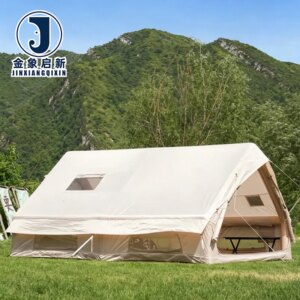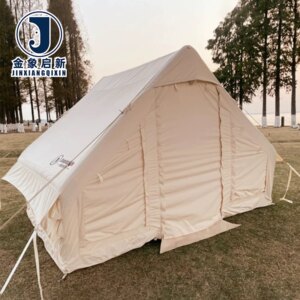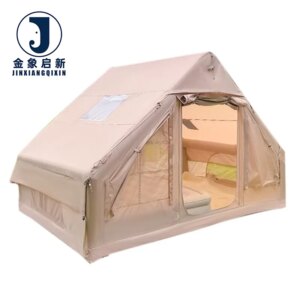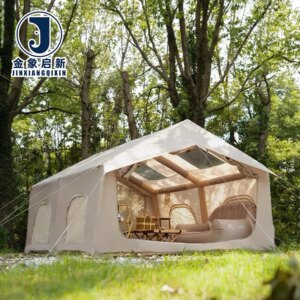
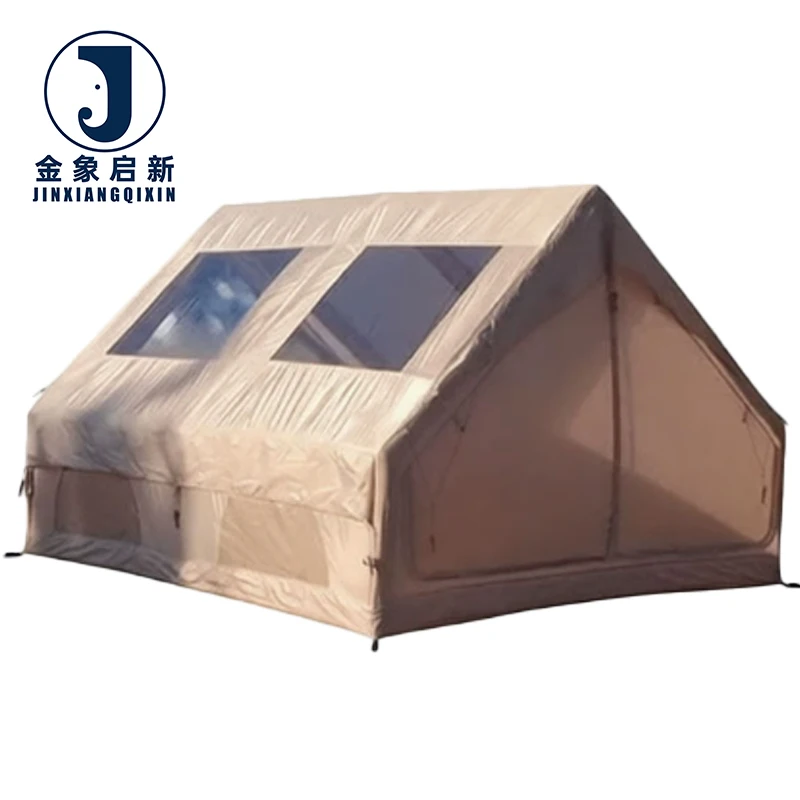
Deep coating process control — nearly 30 years of focused PVC coating experience applied to inflatable tent fabric, ensuring every roll meets stated weight, adhesion and surface consistency before it leaves the factory.
Technical Specifications
| Parameter | Value |
|---|---|
| Product Type | Inflatable Tent Fabric / PVC Tent |
| Core Material | PVC coated tarpaulin |
| Base Fabric | High-tenacity polyester yarn, woven construction |
| Coating Method | PVC knife-over-roll coating |
| Waterproof Performance | Fully waterproof coated construction |
| UV Resistance | Available with anti-UV treatment — confirm the UV grade required for your climate zone |
| Flame Retardancy | Available in flame retardant grades — confirm the grade required for your market |
| Anti-Static Treatment | Available with anti-static treatment — confirm the standard required for your application |
| Tear Resistance | Tear-resistant construction determined by base fabric denier and weave density |
| Surface Finish | Available in glossy or matte finish |
| Colour Options | Single or double-side colour, custom colour matching available |
| Custom Width and Length | Available — confirm required dimensions for your cutting layout |
| Pattern Printing | OEM and ODM branding and pattern printing available |
| Certification | ISO 9001, ISO 14001, ISO 45001, CE |
Application Suitability
| Application | Exposure & Requirement |
|---|---|
| Commercial glamping dome and bubble tents | Continuous outdoor UV exposure, wind-load inflation stress, seasonal temperature swings, guest safety compliance |
| Tourism resort inflatable shelters | High visual consistency across multiple units, weather resistance in coastal or high-altitude environments, fire code adherence |
| Outdoor event and festival temporary structures | Rapid deployment and repeated inflation cycle* occupancy fire classification |
| Hospitality pop-up and seasonal dining enclosures | Frequent cleaning and chemical exposure from sanitizers, UV degradation from all-day sun, aesthetic consistency for guest-facing surfaces |
| Inflatable membrane structures for exhibitions | Large-span air-supported panels under sustained internal pressure, seam integrity at curvature stress points, flame retardant compliance for indoor venues |
Why Inflatable Tent Fabric Demands More Than a Quoted GSM
Inflatable structures place sustained internal pressure on every square metre of fabric — a quoted weight that cannot be verified on arrival is a structural liability, not a material specification.
Technical buyers sourcing PVC-coated fabric for air-supported tents regularly receive rolls where the actual weight falls below the stated value. The shortfall may not be visible during cutting, but it surfaces when the structure is inflated and the fabric must resist constant tensile load across welded seams. When the coating is lighter than specified, the base fabric carries the full inflation pressure with less protection from abrasion and UV degradation [NEED_CITE: tensile and tear test methods for coated fabrics per ISO 1421]. The inflatable tent fabric you specify must arrive with verifiable weight documentation, not just a quotation line item.
Base Fabric Construction and Coating Weight Interaction
The structural behaviour of inflatable tent fabric under sustained air pressure depends on two variables working together: the denier and weave density of the polyester base, and the weight of PVC applied to each surface. A heavier coating does not compensate for a loosely woven base when the fabric must resist tear propagation at inflation stress points. Our coating lines apply PVC to both faces with controlled thickness, and the resulting composite is checked for adhesion strength so that delamination does not initiate at heat-welded seams during repeated inflation cycles.
Welded Seam Integrity Under Inflation Load
Every inflatable tent panel joins to the next at a heat-welded seam, and that junction is where the structure either holds or fails. When the PVC coating weight or formulation varies between rolls, the optimal welding temperature and dwell time shift — and a welder set for one roll may produce a weak bond on the next. Process consistency across the production run ensures that fabricators can dial in welding parameters once and maintain seam strength throughout the build [NEED_CITE: DIN 4102 fire classification for building materials].
Reading the Specification Sheet Beyond Weight
Four material properties determine whether inflatable tent fabric performs in commercial service: tensile strength in warp and weft, tear resistance measured by tongue or trapezoid methods, coating adhesion to the base fabric, and the specific grade of any flame retardant or anti-UV treatment applied. A specification sheet that lists only a single GSM figure leaves three of these four properties undocumented. We supply material data sheets that record base fabric denier, weave count, coating weight per face, and treatment grades where applicable, so that technical buyers can cross-reference against their engineering requirements before committing to volume.
The Hidden Cost of Underspecified Material for Inflatable Structures
A resort operator who installs multiple glamping units from the same fabric batch expects uniform colour and identical structural behaviour. When rolls within a single shipment vary in coating weight or treatment level, the units age at different rates — some panels stiffen and crack while adjacent ones remain supple. Batch inconsistency also complicates fabrication, as heat-weld parameters that produce a clean bond on one roll may burn through or under-fuse on the next. The cost of re-covering a single commercial inflatable tent far exceeds the incremental investment in documented batch consistency [NEED_CITE: coating adhesion test standards for PVC tarpaulin per ISO 2411].
Why Source This Fabric Here
Three full production lines and 36 sets of processing equipment give us the capacity to deliver multi-roll orders for large glamping deployments without splitting production across subcontracted facilities. A dedicated 10-person R&D team handles custom colour matching, pattern printing for branded tent panels, and sample development within days so that buyers can verify appearance and weldability before mass production begins. Full-process QA and QC inspection at every coating and winding stage catches weight deviation, surface defects and colour drift before the roll is packed, backed by ISO 9001, ISO 14001, ISO 45001 and CE certification for international project compliance.
Documentation & Verification
- Material specification sheet recording GSM, base fabric denier and weave, coating weight per face for each roll
- Colour reference card matched to batch for multi-roll glamping projects requiring panel-to-panel uniformity
- Flame retardant and anti-UV test reports provided per batch number where treatment grades are specified
- Pre-shipment inspection record confirming weight, dimensions and surface quality against purchase order
- ISO 9001, ISO 14001, ISO 45001 and CE certificates supporting international building and fire code submissions
Fabrication, Handling & Storage
- Heat-weld temperature and dwell time should be calibrated to the specific PVC coating formulation supplied — request our welding parameter guide for the inflatable tent fabric grade ordered
- Cut panels should be welded rather than sewn for air-holding seams, as needle perforations compromise inflation integrity regardless of coating weight
- Store rolls vertically on end-caps in shaded conditions to prevent flat-spot deformation that causes visible creasing after inflation
- Allow cold-stored rolls to reach ambient temperature before unrolling to prevent coating micro-cracking in low-temperature transit
- Clean inflated tent surfaces with pH-neutral detergent only — solvent-based cleaners degrade the PVC plasticizer layer and accelerate UV damage
Request a Material Recommendation
Provide your intended application, the inflation pressure range, and the fire classification or UV grade required by your local authority. Include the panel dimensions and total fabric area per unit so we can recommend the most cutting-efficient roll width and length. If colour consistency across multiple structures is critical, request a production sample for approval before the full batch enters coating.
Frequently Asked Questions
Q: How is the actual fabric weight verified against the quoted GSM on delivery?
A: Every roll undergoes 100% inspection before dispatch, and the pre-shipment record includes verified weight data. On receipt, we recommend cutting a measured sample from each roll and weighing it on a calibrated scale to confirm the stated GSM matches your specification sheet.
Q: Are flame retardant test reports supplied with each batch of inflatable tent fabric?
A: Where a flame retardant grade has been specified at order stage, the corresponding test report is matched to the batch number and included in the shipping documentation. Confirm the specific classification required for your market — such as B1, M2 or NFPA 701 — so we apply the correct treatment.
Q: What customisation is possible for width, colour and pattern printing?
A: Rolls are available in custom widths and lengths to optimise your cutting layout and reduce waste. Colour matching is done against your reference sample, and OEM or ODM pattern printing is available for branded panels. A production sample is provided for approval before mass coating begins.
Q: How is colour consistency maintained across multiple rolls for a multi-unit project?
A: All rolls for a single project order are coated from the same prepared PVC batch under controlled conditions. A colour reference card accompanies the shipment so that any visible deviation between rolls can be identified before fabrication and reported immediately.
Q: What certifications accompany the fabric for international compliance?
A: Each order is supported by ISO 9001, ISO 14001, ISO 45001 and CE certificates, along with a certificate of origin and customs documentation. Material specification sheets and test reports are provided per batch to support fire code and building regulation submissions in your jurisdiction.