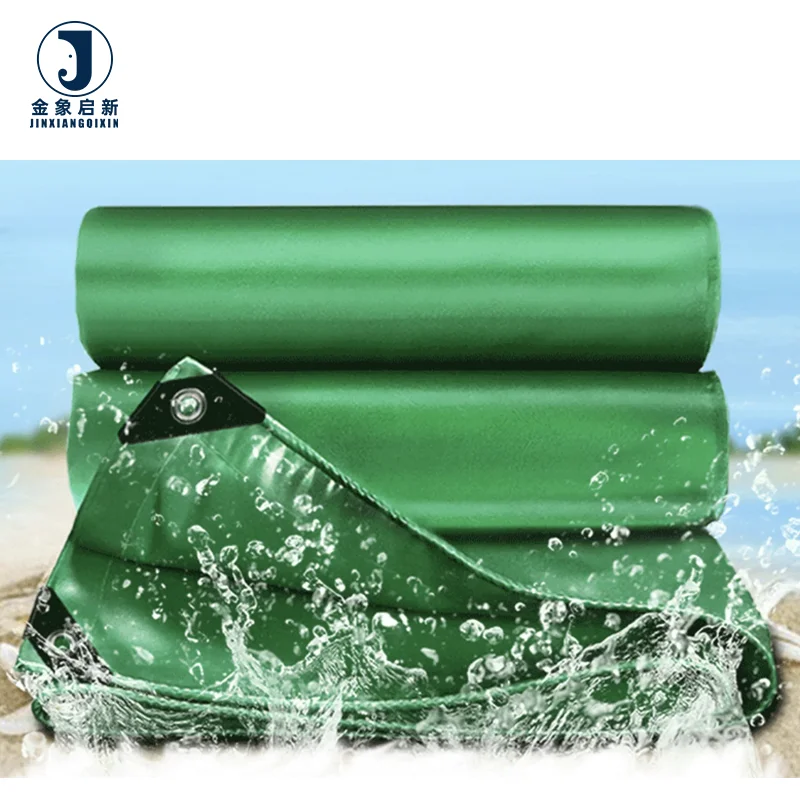
Hot-melt coating control — Every roll of PVC coated tarpaulin roll material is mapped to its base fabric denier, weave density and coating weight so fabricators can specify by property rather than guesswork.
Technical Specifications
| Parameter | Value |
|---|---|
| Product Type | PVC Tarpaulin Roll |
| Coating Material | PVC + High-strength polyester mesh fabric |
| Base Fabric Options | 500D×500D / 500D×1000D / 840D×840D / 1000D×1000D / 2000D×2000D |
| Density Options | 15×15 / 18×18 / 18×25 / 20×20 / 23×24 / 30×17 / 30×30 |
| Weight Range (GSM) | 250GSM / 300GSM / 350GSM / 400GSM / 420GSM / 450GSM / 500GSM / 550GSM / 560GSM / 600GSM / 650GSM / 680GSM / 750GSM / 950GSM / 1000GSM |
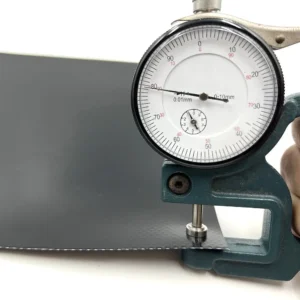
| Thickness Range | 0.32mm / 0.35mm / 0.4mm / 0.45mm / 0.5mm / 0.65mm |
| Roll Size | 2m width × 75m length / 2.1m width × 50m length |
| Coating Technology | Laminated technology & Hot-melt Coating technology |
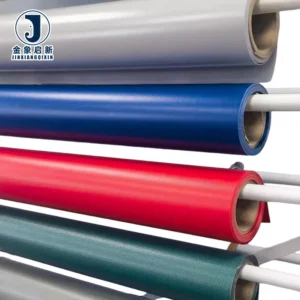
| Color Options | Blue / Red / Yellow / Light Blue / Grey (Customized) |
| Key Features | Cold Crack Resistance, Anti-Mildew, Waterproof, Color Fastness |
| Anti-Static Treatment | Available — grade not stated in source, confirm requirement |
| Service Life | 3–7 years under normal circumstances |
| Certifications | ISO, CE |
Application Suitability
| Application | Exposure & Requirement |
|---|---|
| Truck curtain and side curtain panels | Constant flexing at fold lines, road debris abrasion, UV and weather exposure — demands strong weld adhesion and cold crack resistance |
| Tent and awning structural covers | Wind load tension on seams, prolonged sun exposure, repeated assembly and teardown stress |
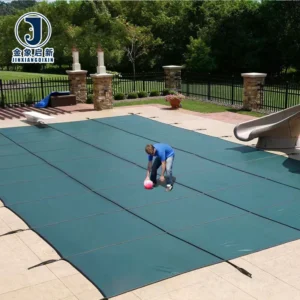
| Fish tank and pool lining | Permanent water immersion, hydrostatic pressure, chemical contact from water treatment agents |
| Cargo ship and goods yard covers | Salt spray, heavy rain, sustained wind uplift forces on tie-down points |
| Liquid storage tank and bladder | Long-term liquid containment, ground contact abrasion, puncture risk from subgrade |
| Breed farm waste transportation | Chemical and biological exposure, frequent cleaning, mechanical abrasion from loading |
Why the PVC Coating Method Decides More Than the GSM Tells You
A roll’s true strength comes from how well the PVC bonds to the base fabric, not just how much material sits on top.
Technical buyers reviewing PVC coated tarpaulin roll options often start with GSM as the first filter, but coating weight alone tells only part of the story. Two rolls rated at 650GSM can perform very differently depending on whether the PVC was laminated or hot-melt coated onto the polyester mesh. Laminated construction layers the PVC film onto the base fabric under heat and pressure, producing a uniform coating thickness that suits high-speed welding. Hot-melt coating drives the PVC compound into the mesh interstices, creating mechanical interlock that raises peel strength at the weld line. [NEED_CITE: peel strength test methods for coated fabrics per ISO 1421]
Fabricators who have seen welded seams fail before the body fabric tore will recognise this: the coating method determines where the weakest point sits in the finished panel.
How Hot-Melt and Laminated Coating Differ at the Weld Line
When you hot-weld two panels of PVC coated tarpaulin roll material, the heat must penetrate the coating layer and fuse the PVC from both sides into a single bond. Hot-melt coated fabric, where PVC penetrates deep into the polyester mesh, tends to produce a weld zone with higher peel strength because the coating is integrated into the yarn structure rather than sitting as a discrete film on top. This matters most on truck side curtains where every flex cycle at the fold point puts the weld under cyclic peel stress. Laminated grades, with their more uniform surface coating, offer a predictable melt behaviour that high-frequency welding machines handle consistently across long production runs. The choice between them should match your fabrication setup and the stress profile of the end application.
Base Fabric Denier and Density as the Structural Backbone
The polyester mesh underneath the PVC coating carries the tensile and tear load; the coating protects it and provides weldability. A 1000D×1000D base fabric at 30×30 density delivers substantially higher tensile strength than a 500D×500D at 18×18, even if the final coated weights are close after PVC application. Denier determines how much load each individual yarn can bear before rupture, while the weave density — the number of ends and picks per unit length — governs how that load distributes across the fabric plane. [NEED_CITE: tensile and tear test methods for coated fabrics per ISO 1421] For tent and awning manufacturers selecting PVC coated tarpaulin roll stock by denier and GSM, matching the base fabric to the structural demand is where real performance separation occurs.
Reading GSM, Thickness and Base Fabric Together
A useful way to evaluate any coated fabric is to treat GSM, thickness and base fabric specification as an interconnected system rather than independent numbers. GSM reflects the combined weight of base fabric plus coating; thickness indicates how much PVC sits above and within the mesh. When a lighter base fabric like 500D×500D is coated to 650GSM, the PVC layer must be thicker to reach that weight, which can improve waterproofing but does not add proportional tensile strength. Conversely, a heavier 2000D×2000D mesh coated to the same 650GSM leaves less PVC mass on the surface, trading some coating thickness for a stronger structural core. The coating technology — laminated or hot-melt — then determines how effectively the PVC transfers stress into that base fabric. Specifiers who evaluate all three parameters together make more reliable material decisions than those selecting on GSM alone.
The Hidden Cost When Coating Weight Does Not Match the Quotation
When a roll arrives lighter than the GSM stated on the quotation, the consequences compound through the fabrication process. Panels cut to designed dimensions may stretch beyond tolerance under wind load because the base fabric is underweight. Welds that were calibrated for a specific coating thickness may under-penetrate, leaving a bond that fails at the seam while the body fabric remains intact. Batch-to-batch GSM variation across the same order also creates visible colour shifts once panels are installed side by side — a problem that only shows up after the structure is assembled. [NEED_CITE: coating weight tolerance standards for PVC coated polyester fabrics] These are not cosmetic issues; they represent structural underperformance that surfaces under load, in cold weather, or at the weld line during the first season of service.
What Makes This Supply Reliable for Technical Specifiers
Three full production lines and 36 sets of professional equipment give Jinan Jinxiang the capacity to hold coating weight and GSM consistency across large roll batches. A 10-person R&D team handles material selection and sample development, meaning custom denier, density and coating combinations are developed in-house rather than outsourced. Every roll passes dedicated QA/QC at each production stage, with 100% pre-shipment inspection against the stated specification. The coating process control — both laminated and hot-melt — is built on nearly 30 years of focused experience with PVC coated fabrics, producing the batch-to-roll consistency that fabricators need when cutting panels from multiple rolls in a single order. Custom widths, colours and lengths are produced on dedicated runs to maintain this consistency.
Documentation & Verification
- Material specification sheet stating GSM, base fabric denier, density and coating weight per roll
- Test report for anti-UV and flame-retardant grades supplied where applicable to your market
- Pre-shipment inspection record with measured GSM against the quoted value for batch traceability
- Roll packing list detailing roll number, colour reference and dimensions for inventory matching
- Certificate of origin and customs documentation for cross-border shipment
Fabrication, Handling & Storage
- Hot-air weld temperature and speed must match coating type — hot-melt and laminated grades respond differently to the same heat input
- Store rolls horizontally on pallets to prevent edge crushing that distorts the PVC coating surface across the roll width
- Allow cold-stored rolls to reach ambient temperature before unrolling to avoid cold crack damage on the PVC surface
- High-frequency welding settings should be calibrated per GSM and thickness grade to achieve full coating fusion without mesh burn-through
- Clean finished panels with mild detergent only; aggressive solvents can degrade the PVC coating surface and reduce colour fastness
- Cut panels should account for the 2m or 2.1m roll width to minimise offcut waste and reduce the number of welded joints in the final assembly
Specifying Your Roll — What We Need from You
To recommend the right base fabric, coating weight and PVC coating technology for your application, provide the end-use environment, expected mechanical loads and any compliance requirements your market demands. Specify whether you need roll stock only or finished cut panels, along with target colour references and annual volume so we can plan dedicated production runs for batch consistency. If flame-retardant or anti-static certification is required on site, state the standard your project specifies so we can confirm the grade available and supply the matching test documentation.
Frequently Asked Questions
Q: How is GSM verified and what does the material spec sheet include?
A: Each roll is weighed and measured before shipment to confirm the actual GSM matches the quoted value. The material specification sheet documents the base fabric denier, weave density, coating material, measured GSM and colour reference. A pre-shipment inspection record accompanies the shipment so you can cross-reference the roll you receive against the specification you approved.
Q: How does base fabric denier and density relate to tensile and tear strength?
A: Denier determines individual yarn strength while density controls load distribution across the fabric plane. A higher denier like 1000D×1000D at 30×30 density delivers greater tensile capacity than a lighter mesh, but the PVC coating weight and adhesion method determine how effectively that strength transfers into the finished panel, especially at welded seams.
Q: What coating method is used and how does it affect weld and seam behaviour?
A: Both laminated and hot-melt coating technologies are available. Hot-melt drives PVC into the mesh for higher peel strength at weld lines, suited to high-stress flexing applications. Laminated coating provides uniform surface thickness for consistent high-frequency welding across long production runs. The choice depends on your fabrication equipment and end-use stress profile.
Q: Can roll width, length and colour be customised with batch-to-batch consistency?
A: Custom widths, lengths and colours are produced on dedicated runs across three full production lines. Roll-to-roll colour consistency is maintained through controlled coating batches and verified against colour references before dispatch, so panels installed side by side from different rolls show no visible shift.
Q: What test basis supports the anti-UV and sunproof claims?
A: UV resistance and sunproof performance depend on the specific additive package used in the PVC compound. Available grades include anti-UV treatments — confirm the test standard and exposure rating required for your market and application, and the matching test report will be supplied with the shipment documentation.