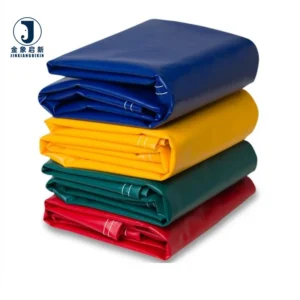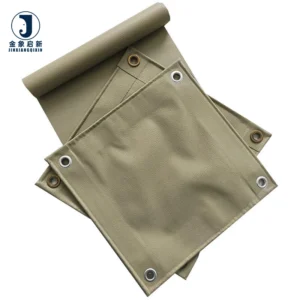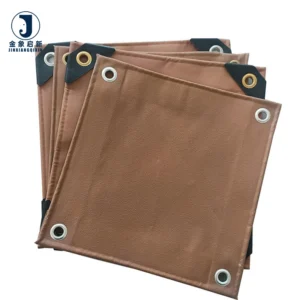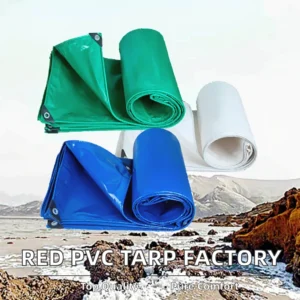
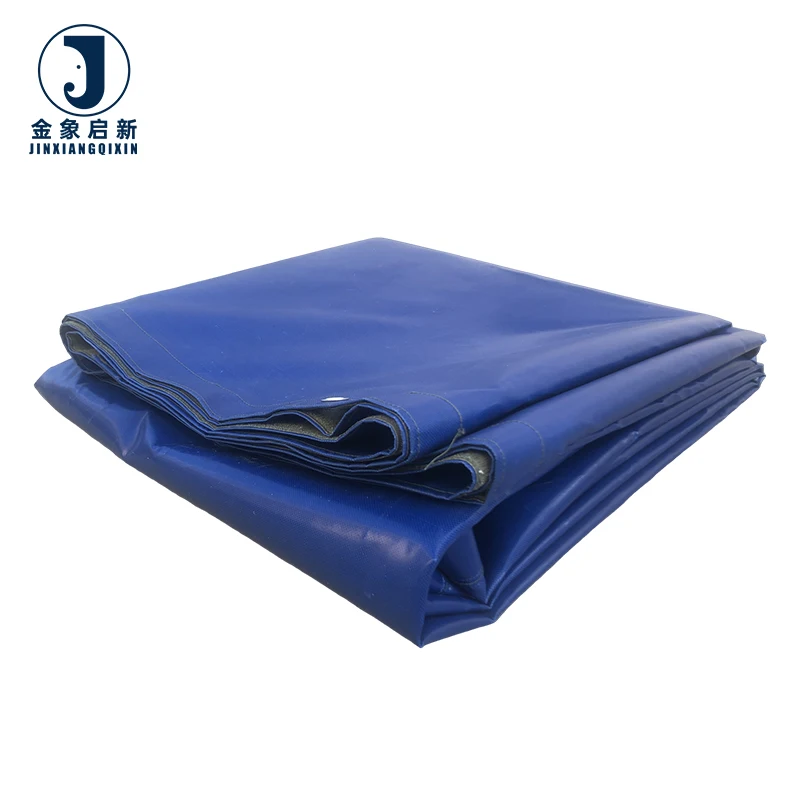
Precision coating control — nearly 30 years focused on PVC coated fabric, with dedicated QA at every production stage ensuring the base fabric denier, coating weight and total GSM you specify are exactly what ships.
Technical Specifications
| Parameter | Value |
|---|---|
| Product Type | PVC Coated Fabric |
| Base Material | 100% high tenacity polyester yarn |
| Coating Technology | Lamination and hot melt coating |
| Base Fabric Denier (Medium-duty) | 500D |
| Weight (Medium-duty) | 400-500 g/m² |
| Thickness (Medium-duty) | 0.35-0.45 mm |
| Tensile Strength (Medium-duty) | Warp 1500-2000 / Weft 1200-1800 N/5cm |
| Base Fabric Denier (Heavy-duty) | 1000D |
| Weight (Heavy-duty) | 700-1000 g/m² |
| Thickness (Heavy-duty) | 0.70-1.0 mm |
| Tensile Strength (Heavy-duty) | Warp 2000-2500 / Weft 1800-2200 N/5cm |
| Base Fabric Denier (Super Heavy-duty) | 500D-2000D |
| Weight (Super Heavy-duty) | 1100-1500 g/m² |
| Thickness (Super Heavy-duty) | 1.2-1.5 mm |
| Tensile Strength (Super Heavy-duty) | Warp 2500-3000 / Weft 2200-2800 N/5cm |
| Treatment Options | Flame retardant, anti-static, cold resistant, mold proof, UV resistant (grades available — confirm the standard required for your market) |
| Weather Resistance | Suited to extended outdoor exposure |
| Welding Tear Strength | Excellent (verify against manufacturer test data) |
| Color | Blue, other colours available |
| Certification | ISO, CE |
Application Suitability
| Application | Exposure & Requirement |
|---|---|
| Truck and trailer tarpaulin covers | Constant flexing at tie-down points, road debris abrasion, UV and weather cycling, tensile load from wind flap |
| Engineering and construction protective cloth | Prolonged sun and rain exposure, contact with alkaline dust and cement residue, repeated folding and handling |
| Industrial pipe canopy and enclosure fabric | Continuous outdoor exposure, thermal cycling, resistance to industrial pollutants and particulate |
| Tensioned structural and membrane fabric | Sustained biaxial tension, wind uplift loads, requirement for reliable heat-welded seams at panel joins |
| Farm and transport equipment covers | Moisture and organic debris contact, mold risk, UV degradation from long-term field storage |
Why the Denier-to-GSM Relationship Defines Your PVC Coated Tarpaulin Performance
A heavier roll does not automatically mean a stronger fabric — base fabric denier and coating weight must be engineered together to deliver real tensile and tear performance.
When buyers specify PVC coated tarpaulin by GSM alone, they miss the structural contribution of the polyester scrim. Two fabrics can carry the same total weight but behave completely differently under load: one may rely on heavy PVC fill with a lighter base yarn, while another distributes mass into a denser weave that resists tear propagation far more effectively. [NEED_CITE: tensile and tear test methods for coated fabrics per ISO 1421]. Without understanding the denier and weave density behind the number, a purchasing decision based on weight alone leaves the door open to material that arrives lighter than the spec sheet promised.
How Hot Melt and Lamination Coating Build Adhesion Strength
The coating method directly determines how well the PVC layer bonds to the polyester base fabric. Lamination technology presses pre-formed PVC films onto the scrim under heat and pressure, producing a uniform coating thickness and strong interlayer adhesion. Hot melt coating applies liquid PVC co*ns before curing. Both methods are used across this PVC coated fabric range, and each produces a material where the coating and base work as a unified composite rather than two separable layers.
What Base Fabric Denier Means for Tear Propagation
The denier of the polyester yarn — from 500D through to 2000D — governs the individual yarn thickness and therefore the resistance of the scrim to tear spread. Higher denier yarns absorb more energy before breaking, and a tighter weave distributes the load across adjacent yarns rather than allowing a puncture to open into a runaway tear. For tensioned structures and heavy truck covers where point loads concentrate at eyelets and seams, specifying the correct denier tier matters more than chasing maximum GSM. [NEED_CITE: relationship between yarn denier and tear resistance in coated technical textiles].
Reading the Specification Sheet Beyond Total Weight
Four parameters on a material specification sheet interact to define real-world performance: base fabric denier sets the structural skeleton, coating weight adds weatherproofing and surface durability, total GSM reflects the sum of both, and coating method determines how well they bond. A medium-duty 400-500 g/m² fabric at 500D serves light truck covers and temporary enclosures where flexibility and handling ease matter. Stepping to 1000D at 700-1000 g/m² shifts the material into heavy-duty transport and construction protection where sustained mechanical stress is expected. At the super heavy tier — 500D-2000D base with 1100-1500 g/m² — the fabric is engineered for structural membrane applications and high-load industrial enclosures.
The Cost of Specifying Coated Fabric Without Checking the Details
A roll that arrives below the quoted GSM often signals reduced coating weight rather than a lighter base yarn, which means the waterproofing and UV protection are compromised while the structural denier remains unchanged. Flame retardant claims without a named test standard create compliance risk on construction sites and mining operations where inspectors demand documentation matching a specific classification. Colour variation between rolls in the same shipment becomes visible the moment panels are installed side by side on a large canopy or truck curtain, forcing costly replacement. [NEED_CITE: common causes of coated fabric failure in field service]. Welded seams that fail before the fabric itself are frequently traced to coating chemistry mismatches rather than welder settings, a problem that surfaces only under load in service.
What This Production Process Delivers for Your Specification
Three full production lines and 36 sets of professional equipment support consistent PVC coated fabric output at scale, with in-process quality checks at every coating and lamination stage rather than sampling only at the end. The 10-person R&D team handles material selection, denier-to-GSM matching and sample development for custom requirements, returning samples within days for approval before bulk production runs. Every roll undergoes 100% pre-shipment inspection covering weight verification, coating adhesion and visual quality against the agreed specification sheet. Material documentation — including GSM, base fabric denier, coating method and treatment grades — ships with each consignment so that receiving verification is straightforward. ISO and CE certified processes underpin the production system.
Documentation & Verification
- Material specification sheet stating base fabric denier, coating weight and total GSM for this PVC coated fabric
- UV and flame retardant test reports provided against the specific grade confirmed for your application
- Pre-shipment inspection record with per-roll weight verification before dispatch
- ISO and CE certificates included in the documentation package
- Colour reference and batch consistency record for multi-roll orders
Fabrication, Handling & Storage
- Heat weld parameters must match the lamination or hot melt coating type — confirm temperature and dwell time before full production runs
- Store rolls upright on a clean, dry surface to prevent flat-spot deformation of the 0.35-1.5 mm coating surface
- When cutting super heavy-duty 1100-1500 g/m² grades, allow for blade wear on high-denier 2000D base yarns
- Use compatible PVC welding tape and solvent for field repairs to maintain coating continuity at patched seams
- Cold-weather handling requires gradual unrolling to avoid coating crease damage, especially on heavy-duty 700-1000 g/m² rolls
Before You Request a Quote — What We Need to Know
Provide the specific application, expected mechanical loads and environmental exposure so the correct denier tier and GSM can be recommended. Confirm the flame retardant, anti-static or UV treatment grade your market or site requires, along with any applicable test standard. Specify roll width and colour requirements, including whether batch colour consistency across multiple rolls is critical for side-by-side installation.
Frequently Asked Questions
Q: How is GSM verified on PVC coated tarpaulin fabric and what tolerance applies?
A: Total GSM includes both the polyester base fabric and the PVC coating layers. Each roll is weighed and verified against the material specification sheet during pre-shipment inspection. The inspection record travels with the shipment so you can cross-check on arrival. Request the coating weight breakdown separately if your specification requires it.
Q: Can flame retardant treatment be supplied with a valid test report?
A: Flame retardant grades are available for this PVC coated fabric range. The applicable test standard — such as B1 per DIN 4102 or another classification — must be confirmed at the inquiry stage so the correct compound is applied during coating and the matching test report is included in your documentation package.
Q: What base fabric denier suits heavy truck tarpaulin versus tensioned membrane structures?
A: Heavy-duty truck covers typically require 1000D base fabric in the 700-1000 g/m² range to handle constant flexing and road abrasion. Tensioned membrane structures often specify wider denier ranges within the super heavy tier, where biaxial load distribution and weld seam integrity govern the selection rather than abrasion resistance alone.
Q: How is colour consistency maintained across multiple rolls in one order?
A: Colour reference standards are locked at the sample approval stage, and batch pigment mixing is controlled across the production run. A batch consistency record accompanies multi-roll shipments. If panels will be installed side by side, requesting batch samples before full production is recommended.
Q: What documentation ships with each PVC coated fabric roll order?
A: Each shipment includes a material specification sheet, pre-shipment inspection record with GSM verification, packing list, certificate of origin and customs documentation. UV and flame retardant test reports, ISO and CE certificates are provided where applicable to the grades specified on your purchase order.