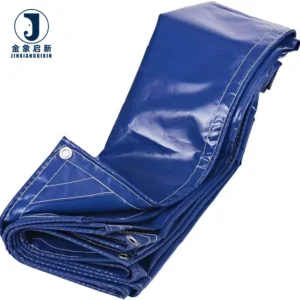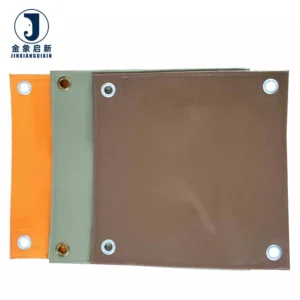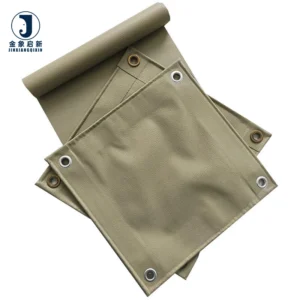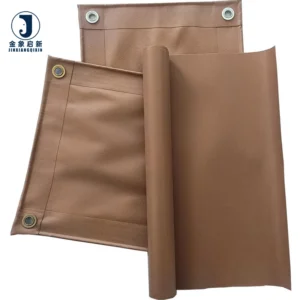
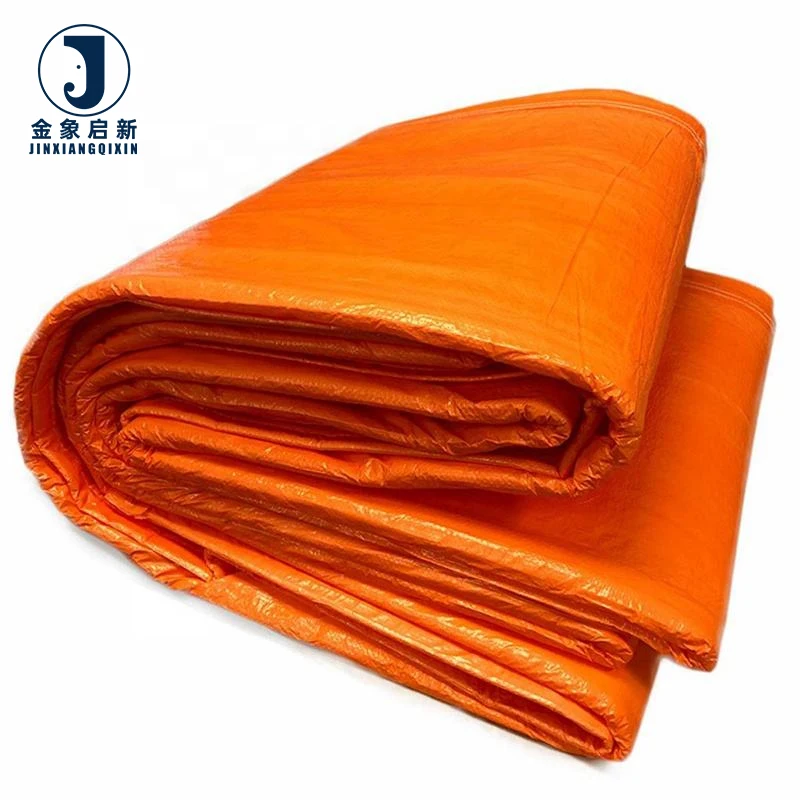
Deep Coating Expertise — Thirty years of PVC and PE coating process control ensures consistent foam-core lamination and reliable thermal performance across every roll produced.
Technical Specifications
| Parameter | Value |
|---|---|
| Product Type | Insulated Tarpaulin / Concrete Curing Blanket |
| Structure | PE cloth + closed cell PE foam core + PE cloth |
| Thickness Options | 2x2mm, 3×1.5mm, 1x4mm, 5mm, 6mm, 8mm, 12mm |
| Size Options | 6ftx24ft, 8ftx25ft, 12ftx20ft, 12ftx24ft |
| Grommet Configuration | Spaced at 61cm and 91.5cm intervals |
| Grommet Material | Rust-proof brass (source states brass and aluminum — verify upon receipt) |
| Edge Finish | Reinforced stitched edges |
| Surface Treatment | UV treatment integrated into base fabric (test basis not stated) |
| Waterproof | Yes (test basis not stated) |
| Flame Retardant | Grade not stated — confirm requirement for your market |
| Temperature Performance | Designed for low-temperature and heat-insulation applications |
| Mildew Resistance | Yes (test basis not stated) |
| Color Options | Orange, Black, White, Silver, Customized |
Application Suitability
| Application | Exposure & Requirement |
|---|---|
| Concrete curing blanket | Continuous ground contact, sub-zero ambient air, moisture retention, thermal hold during hydration cycle |
| Heated enclosure lining | Vertical hanging, convective heat retention, medium wind loads on scaffold frames |
| Wind block and building enclosure | Lateral wind pressure, UV exposure, repeated installation and removal |
| Snow and rain coverage | Direct precipitation, pooling water, freeze-thaw cycling on exposed surfaces |
| Construction material protection | Temperature-sensitive inventory, outdoor staging, long-term weather exposure |
When Insulation Claims Have No Test Data to Back Them Up
A three-layer structure is only as effective as the closed-cell integrity of its core — and that requires verification, not assumption.
Technical buyers sourcing PE insulated tarpaulin for concrete curing or heated enclosures often receive material data sheets that list thickness without a corresponding thermal conductivity value. A 12mm blanket that compresses under its own weight or loses closed-cell structure at the fold line performs closer to a 4mm panel in practice. Without a documented thermal resistance rating, the only way to confirm real-world heat retention is through on-site temperature monitoring across the first curing cycle [NEED_CITE: ASTM C518 standard test method for steady-state thermal transmission properties].
How Closed-Cell PE Foam Core Controls Heat Transfer
The insulating value of this PE insulated tarpaulin derives from the closed-cell PE foam sandwiched between two layers of PE cloth. Each sealed cell traps a pocket of still air, and it is this trapped air — not the foam polymer itself — that resists conductive heat flow. When the cell walls remain intact during handling, folding, and tie-down, the thermal barrier holds. Cell rupture at fold lines or under point loads creates thermal bridges where heat escapes faster.
Dual PE Cloth Layers and Waterproof Integrity
The outer PE cloth layers serve two functions: they protect the foam core from mechanical damage and provide a waterproof barrier against rain, snow, and ground moisture. In concrete curing applications, the blanket sits directly on wet concrete or timber formwork, and any moisture penetration into the foam core would compromise insulation value. The laminated construction keeps the core dry while the reinforced stitched edges prevent delamination at the perimeter under tie-down tension [NEED_CITE: peel strength test methods for laminated fabrics].
Reading the Thickness and Grommet Specifications
Thickness options range from 2x2mm to 12mm, and the correct selection depends on ambient temperature and required curing duration rather than simply choosing the heaviest option available. A thicker core increases thermal resistance but also increases roll weight and handling difficulty on elevated scaffold positions. Grommets are spaced at 61cm and 91.5cm intervals, providing multiple tie-down points per panel edge. The source documentation lists both brass and aluminum for grommet material — a discrepancy that should be resolved by physical inspection of the first shipment, as brass offers superior corrosion resistance in wet curing environments.
The Hidden Cost of Specifying Insulation Thickness Without Verification
A blanket specified at 8mm that arrives with inconsistent foam density across the roll will create cold spots in a concrete curing layout, leading to uneven strength development in the slab. When grommet spacing does not align with the tie-down framework on a heated enclosure, installers improvise with additional fixings that puncture the foam core, creating thermal leaks at every penetration point. These failures are not visible until temperature logging reveals gradients across the covered area, often after the pour has already been completed [NEED_CITE: thermal imaging standards for building enclosure inspection].
Why Source This Insulated Tarpaulin Here
Three full production lines with 36 sets of professional equipment support consistent lamination quality across bulk orders, reducing the risk of density variation between rolls. The 10-person R&D team handles custom thickness and size development, producing samples within days for approval before production commits. Dedicated QA/QC at every production stage includes 100% pre-shipment inspection, catching edge delamination and grommet misalignment before dispatch. Deep process control over coating weight and lamination adhesion, built across nearly three decades of PE and PVC fabric production, underpins the structural reliability of every panel.
Documentation & Verification
- Material specification sheet confirming PE structure, foam core thickness, and color reference per roll
- UV and flame-retardant test reports provided where applicable grades are specified and confirmed
- Pre-shipment inspection record documenting grommet count, spacing, and edge integrity
- Roll packing list with individual panel dimensions and thickness for receiving verification
- Certificate of origin and customs documentation for international shipment clearance
Fabrication, Handling & Storage
- Heat-weld seams at moderate temperature to avoid collapsing the closed-cell PE foam core at join lines
- Install grommets through both PE cloth layers and the foam core to distribute tie-down load evenly
- Store rolls horizontally on pallets to prevent permanent compression marks in the 5mm to 12mm foam core
- Avoid dragging panels across abrasive formwork surfaces to protect the outer PE cloth waterproof layer
- Clean with mild detergent only — solvent-based cleaners may degrade the PE surface treatment over time
What to Include in Your Inquiry
Provide the lowest expected ambient temperature and the required curing duration so the correct thickness can be recommended from the available range. Specify whether panels will be used horizontally on concrete or vertically on enclosure frames, as this affects grommet loading and tie-down design. If your project requires a specific flame-retardant grade for building enclosure compliance, state the standard and certification body so the appropriate test documentation can be arranged before production.
Frequently Asked Questions
Q: How does the PE foam core compare to PVC coated fabric for insulation purposes?
A: PVC coated fabric provides waterproofing and mechanical strength but has minimal inherent insulation value. The closed-cell PE foam core in this PE insulated tarpaulin traps air within sealed cells, providing thermal resistance that a single-layer PVC coated fabric cannot match. For concrete curing, the foam structure is the functional insulating element.
Q: How can the thermal conductivity of the closed-cell foam be verified?
A: Request a thermal conductivity test report referencing a recognized standard such as ASTM C518 or ISO 8301. These measure heat flow through the material under controlled conditions. Without a documented value, insulation performance can only be confirmed through on-site temperature monitoring during the first application cycle.
Q: The UV treatment is claimed but no test basis is provided — what should I require?
A: Ask for a UV exposure test report referencing a standard such as ISO 4892 or ASTM G154, which documents performance after controlled accelerated weathering. If the blanket will be exposed to direct sunlight for extended periods, this documentation confirms whether the integrated base-fabric treatment meets your durability requirements.
Q: How do I select the right thickness for concrete curing in cold weather?
A: Thickness selection depends on ambient temperature, wind exposure, and required curing duration. Lower temperatures and longer curing cycles demand thicker foam cores. Provide these parameters in your inquiry so a specific thickness from the 2x2mm to 12mm range can be recommended and validated against your project specifications.
Q: What fabrication methods work best for joining multiple insulated panels?
A: Heat welding at controlled temperatures preserves the closed-cell structure at seam lines, while sewing through the foam can create thermal bridges. Reinforce all join lines with additional PE cloth tape to maintain waterproof integrity. Avoid compression at seams, as collapsed foam cells lose insulating value at the join.