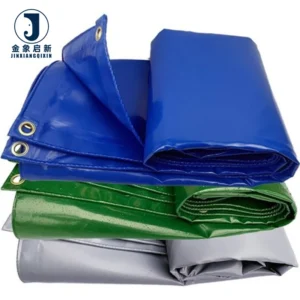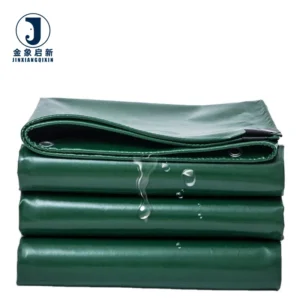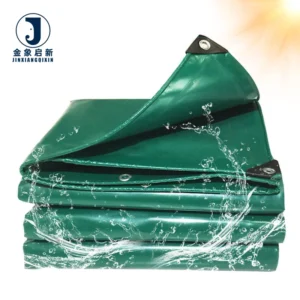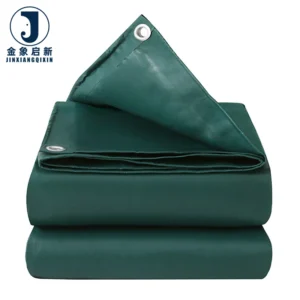
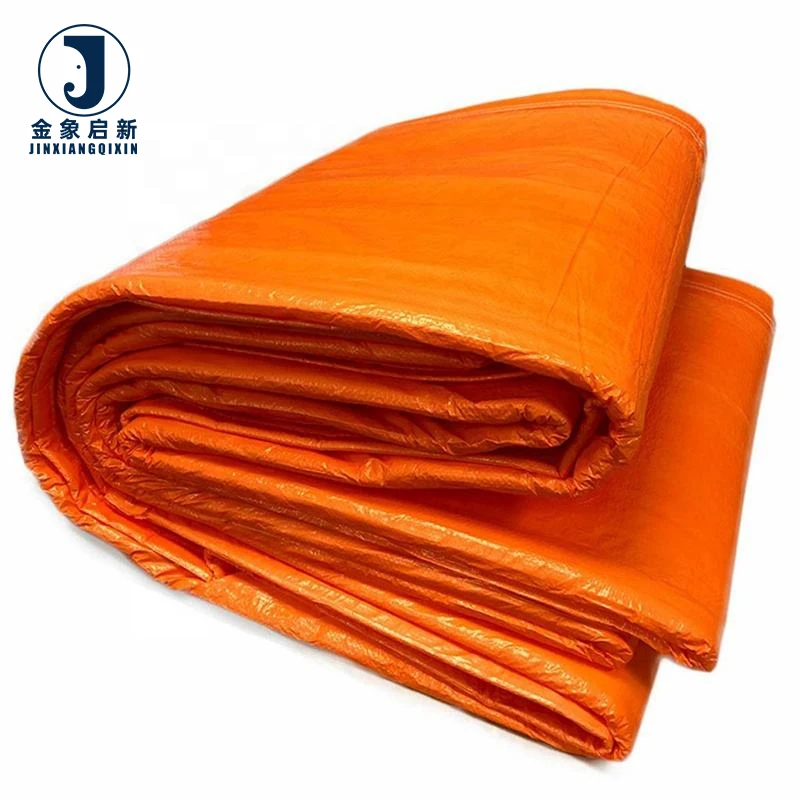
Multi-Layer Thermal Engineering — PE closed-cell foam core bonded between dual waterproof cloth layers, with QA verification of thickness and insulation consistency before dispatch.
Technical Specifications
| Parameter | Value |
|---|---|
| Product Type | Insulated Tarpaulin Blanket |
| Base Fabric | PE woven cloth (dual-layer outer surfaces) |
| Core Material | Closed-cell PE foam |
| Total Thickness Options | 2x2mm, 3×1.5mm, 1x4mm, 5mm, 6mm, 8mm, 12mm |
| Size Options | 6ft x 24ft, 8ft x 25ft, 12ft x 20ft, 12ft x 24ft |
| Surface Treatment | Waterproof, UV treated (test basis not stated) |
| Grommet Configuration | Aluminum grommets, 61cm and 91.5cm spacing |
| Edge Construction | Stitched edges with reinforcement stitch |
| Color Options | Orange, Black, White, Silver, Customized color |
| Flame Retardant Grade | Available upon request — confirm grade required for your project specification |
Application Suitability
| Application | Exposure & Requirement |
|---|---|
| Concrete curing under cold weather | Sustained thermal retention, moisture barrier against rain and snow, continuous ground contact |
| Heated enclosure linings on construction sites | Internal heat containment, wind ingress blocking, repeated installation and removal cycles |
| Vertical wind block on scaffolding | Lateral wind load, tie-down stress at grommet points, prolonged UV exposure |
| Snow and rain coverage for outdoor materials | Direct precipitation, pooled water resistance, low-temperature flexibility |
Why Thickness Alone Does Not Guarantee Thermal Performance on an Insulated Concrete Curing Blanket
Closed-cell foam density and layer adhesion determine real insulation value, not just total millimetres.
Technical buyers frequently specify an insulated concrete curing blanket material properties based on overall thickness without asking what sits between the outer surfaces. A 12mm blanket with low-density foam transfers more heat than a well-engineered 6mm with uniform closed-cell structure. When core density is not stated on the material sheet, the insulation value becomes guesswork. On winter pours, that guesswork costs curing time and concrete integrity [NEED_CITE: thermal resistance measurement methods for insulated construction fabrics].
Closed-Cell Foam Core and Its Role in Heat Retention
The insulated concrete curing blanket uses a closed-cell PE foam core sandwiched between two layers of PE cloth. Closed-cell structure traps air within individual pockets, which limits conductive heat transfer through the blanket cross-section. When cells are fully sealed, moisture cannot migrate into the core, keeping insulation performance stable even under wet curing conditions. This core is the functional layer; the outer PE cloth serves primarily as a waterproof barrier and mechanical shield.
Dual PE Cloth Surfaces as a Waterproof Envelope
Both outer faces of the blanket are PE woven cloth with a waterproof coating. This dual-surface construction means the blanket can be deployed either side up without exposing the foam core to direct water contact. For concrete curing, this prevents saturation of the insulation layer after rain or snow melt. The surface also carries the UV treatment, though test basis and exposure duration should be verified before specifying for prolonged outdoor weathering [NEED_CITE: UV degradation testing standards for polyethylene coated fabrics].
Understanding Thickness Grades and Their Insulation Implications
The available thickness range — from 2x2mm up to 12mm — addresses different thermal demand scenarios. A 2x2mm construction indicates two foam layers bonded together, which can offer more consistent insulation than a single 4mm layer of the same total thickness because the internal bond line interrupts heat conduction paths. Thicker grades such as 8mm and 12mm suit extended cold-weather curing where ambient temperatures remain below freezing for days. Selecting the correct grade requires knowing both the target concrete temperature and the expected minimum ambient temperature during the curing window. The reinforcement stitch at edges prevents delamination of the multi-layer structure under repeated folding and tie-down tension.
The Hidden Cost of Specifying Insulation Without Layer Data
When buyers order insulated blankets by total thickness alone, the foam core density and cell structure remain unverified. A blanket that measures 8mm when new can compress under its own weight or under wind load, reducing effective insulation at the concrete surface. Edge delamination is another failure mode — if the bond between PE cloth and foam fails, cold air channels form along the blanket perimeter. These channels cause uneven curing across the slab, leading to strength variation that may not appear until core testing [NEED_CITE: concrete curing temperature differentials and compressive strength impact]. Batch-to-batch consistency in foam density is what prevents these problems across a large site order.
What Process Control Brings to Insulated Blanket Supply
The production facility runs dedicated QA checks at each stage of the multi-layer bonding process, confirming foam core thickness and layer adhesion before the blanket moves to edge finishing. A 10-person R&D team handles sample development when project specifications call for non-standard thickness or colour matching across multiple blanket batches. Three full production lines support bulk order volumes while maintaining roll-to-roll consistency in coating weight and foam density. Every blanket undergoes inspection before dispatch, with grommet spacing verified against the stated 61cm and 91.5cm configuration.
Documentation & Verification
- Material specification sheet stating PE cloth base fabric type, foam core density and total thickness per blanket SKU
- UV treatment test report with stated test standard or exposure duration to support weathering claims
- Pre-shipment inspection record confirming grommet spacing, edge stitch integrity and layer adhesion
- Colour reference sample for custom colour orders to confirm match before bulk production
- ISO and CE certificates available as part of shipment documentation package
Fabrication, Handling & Storage
- Stitched reinforcement edges should align with primary tie-down points to distribute grommet load across the PE cloth surface
- Aluminum grommets at 61cm spacing suit standard bungee cord attachment; verify compatibility with site tie-down hardware before ordering
- Store folded blankets in dry conditions to prevent moisture absorption at edge stitch lines
- Avoid dragging blankets across abrasive concrete surfaces to protect the waterproof PE cloth outer layer
- For large-area curing, overlap adjacent blankets by at least 30cm to eliminate cold air gaps at seams
How to Specify Your Insulated Blanket Inquiry
Provide the concrete pour dimensions and the minimum ambient temperature expected during the curing period so we can recommend the appropriate thickness grade. Confirm whether the blankets will be reused across multiple pours or deployed for a single project phase, as this affects edge reinforcement requirements. If your site requires a specific fire classification for enclosure materials, state the grade needed so we can match available options.
Frequently Asked Questions
Q: How is closed-cell PE foam core density verified and what does it mean for insulation value?
A: Core density is checked during production by measuring foam weight per unit volume before lamination. Higher density closed-cell foam provides more consistent thermal resistance because the cell walls are thicker and resist compression under load. Request the foam density value on the material specification sheet to compare insulation performance between suppliers.
Q: What UV test basis supports the anti-UV claim on PE insulated blankets?
A: UV resistance depends on the additive package in the PE cloth surface layer. Without a stated test standard or exposure duration, the claim remains unverified. Request a UV test report citing the method used, such as accelerated weathering hours or outdoor exposure data, before specifying blankets for long-term outdoor curing.
Q: How does the PE cloth and foam structure behave under heat-welded seam fabrication?
A: The closed-cell foam core does not melt uniformly under standard PVC heat-welding parameters. Seam fabrication on this multi-layer PE structure typically requires hot-air welding at controlled temperatures matched to the PE melting point. Always run a test weld on a sample piece to confirm bond strength before full production.
Q: What thickness grade should be specified for concrete curing versus general enclosure use?
A: Concrete curing in sub-zero conditions generally requires thicker grades such as 8mm or 12mm to maintain the target slab temperature. General wind block or enclosure applications may perform adequately at 5mm or 6mm where the primary requirement is air barrier rather than sustained thermal retention.
Q: How is batch-to-batch colour consistency controlled across custom colour orders?
A: Colour matching is managed through reference samples approved before production begins. Each production batch is compared against the approved sample under controlled lighting conditions. Request a pre-production sample for custom colours to confirm consistency, especially when blankets from multiple batches will be installed side by side on the same site.