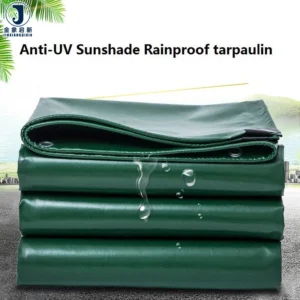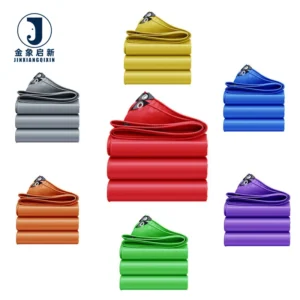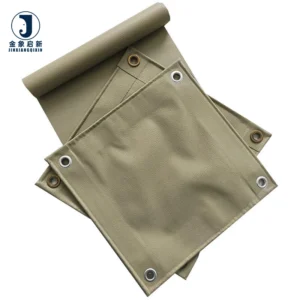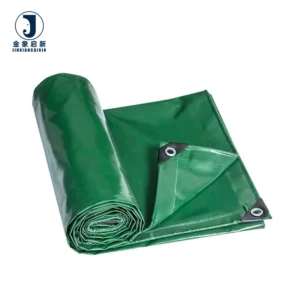
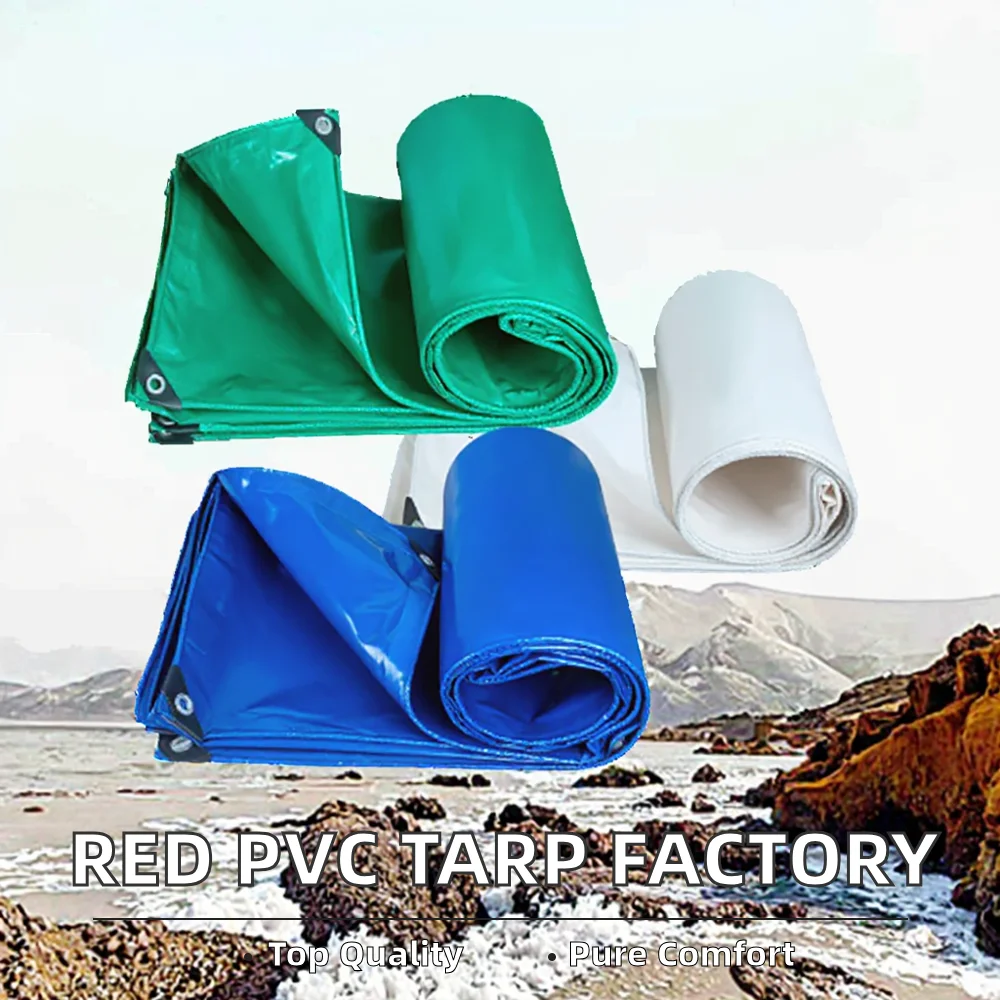
Coating Adhesion Control — Knife coating process ensures consistent PVC adhesion to the base fabric, verified through pre-shipment inspection on every roll of PVC coated tarpaulin fabric.
Technical Specifications
| Parameter | Value |
|---|---|
| Product Type | PVC Coated Tarpaulin Roll |
| Material | PVC coated polyester fabric |
| Coating Method | Knife coated |
| Base Fabric Denier | 1000×1000 |
| Weight (GSM) | 420 g |
| Finish | Glossy / Matte (available options) |
| Color Options | Standard colors with black back option |
| Flame Retardant | Available (grade not stated — confirm required grade for your market) |
| Anti-Static | Available (standard not stated — verify compliance requirement) |
| Anti-UV | Available (test basis not stated — request test documentation) |
| Anti-Mildew | Available |
| Anti-Cold | Available |
| Waterproof | Yes (rating not stated) |
| Custom Sizing | Available |
Application Suitability
| Application | Exposure & Requirement |
|---|---|
| Outdoor tent structures | Extended UV exposure, wind loading, seasonal assembly and disassembly |
| Truck cover fabric | Road abrasion, weather exposure, flex stress at tie-down points |
| Car covers | UV degradation, moisture ingress, surface contact abrasion |
| Trailer side curtains | Constant flexing during transport, highway debris impact, thermal cycling |
| Equipment protection | Outdoor storage conditions, dust and moisture barrier, handling wear |
| Inflatable structures | Air pressure retention, repeated inflation cycles, UV and weather exposure |
| Industrial covers | Chemical exposure, mechanical abrasion, long-term outdoor deployment |
Why Material Data Sheets Matter More Than Marketing Claims
Every treatment option on this PVC coated tarpaulin fabric is backed by documented test reports available on request, not just marketing descriptions.
Buyers regularly receive PVC coated tarpaulin fabric with flame retardant or anti-UV treatments claimed on the quotation but unsupported by actual test documentation. When the material arrives on site, there is no way to verify compliance without third-party testing. This creates liability exposure for contractors who must certify their installations meet local fire codes or durability specifications. [NEED_CITE: fire safety compliance requirements for temporary structures vary by jurisdiction]
Technical buyers specifying material by GSM alone miss critical performance factors. Base fabric denier, weave density, and coating adhesion method all determine whether the fabric performs as expected under load. A 420 g knife-coated fabric behaves differently than a laminated alternative at the same weight, particularly at welded seams where flex stress concentrates. [NEED_CITE: tensile and tear test methods for coated fabrics per ISO 1421]
Knife Coating Process and Adhesion Performance
The knife coating method applies PVC compound directly to the 1000×1000 base fabric under controlled pressure, forcing the coating into the weave structure. This creates mechanical bonding that resists delamination under flex stress and thermal cycling. PVC coated tarpaulin fabric produced through knife coating maintains coating integrity at welded seams, where heat and pressure can compromise laminated constructions.
Treatment Verification Through Documentation
Flame retardant, anti-static, anti-UV, anti-mildew, and anti-cold treatments are available as selectable options for this PVC coated tarpaulin fabric. Each treatment requires specific chemical compounds and application parameters that must be verified through standardized testing. Request the test report that corresponds to your target market’s compliance requirements before approving production samples. [NEED_CITE: flame retardant classification systems differ between DIN 4102, NFPA 701, and regional standards]
Understanding GSM in Context of Base Fabric Construction
The 420 g weight specification represents total fabric mass including base fabric and coating, but does not alone determine tensile or tear strength. The 1000×1000 denier polyester base provides the structural skeleton, while the knife-applied PVC coating protects the fibers and distributes load across the weave. Higher GSM achieved through thicker coating rather than denser base fabric may improve puncture resistance but not necessarily tear propagation resistance. Glossy finish surfaces facilitate cleaning and resist dirt accumulation, while matte finish reduces glare and provides better adhesion for printed graphics or applied branding.
The Cost of Specification Mismatches
Receiving PVC coated tarpaulin fabric with lower actual GSM than quoted forces fabricators to either accept reduced performance margins or reject entire shipments, delaying project timelines. Flame retardant grades that do not match local fire code requirements mean the installed structure fails inspection, requiring complete replacement at significant cost. [NEED_CITE: material substitution disputes in construction supply chains]
Color variation between rolls in the same order becomes visible when panels are installed side by side on large tent structures or truck fleet branding projects. Welded seams that fail before the fabric body reaches its service life create warranty claims and damage fabricator reputation with end customers. These failures typically trace back to insufficient specification detail in the original purchase order rather than manufacturing defects.
Procurement Advantages for Technical Buyers
Nearly 30 years focused on coated fabric production provides process control over coating weight consistency and adhesion quality across production runs. Three full production lines with 36 sets of professional equipment support bulk order volumes with reliable delivery schedules for PVC coated tarpaulin fabric orders.
A 10-person R&D team handles material selection, custom sizing, treatment specification, and sample development for specific application requirements. Dedicated QA/QC inspection at every production stage ensures the 420 g GSM specification and treatment claims are verified before shipment, not just stated on documentation.
Samples developed within days allow technical buyers to test weld parameters, flex performance, and treatment effectiveness before committing to full production quantities. ISO and CE certified production processes provide documentation traceability required for projects with third-party inspection or compliance certification requirements.
Documentation & Verification
- Material specification sheet stating exact GSM, base fabric denier, coating method, and color reference for this product
- Test reports for flame retardant and anti-UV grades referencing recognized standards applicable to your market
- Pre-shipment inspection record confirming roll-to-roll coating weight consistency and visual quality
- ISO and CE certificates included with shipment documentation package
- Certificate of origin and customs support documentation for international shipments
Fabrication, Handling & Storage
- Heat welding parameters must account for knife-coated PVC layer thickness to achieve full seam penetration without base fabric damage
- Store rolls horizontally on pallets to prevent permanent creasing in the 420 g coated fabric that affects flat installation
- Allow cold-stored rolls to reach ambient temperature before unrolling to prevent coating cracking in anti-cold treated variants
- Use compatible PVC adhesive for field repairs rather than generic contact cement that may not bond to knife-coated surfaces
- Plan panel cutting layout to maximize material yield from roll width and minimize welded seam count in visible areas
Requesting Technical Documentation and Samples
Provide your specific application conditions including UV exposure duration, temperature range, and any fire code requirements for your jurisdiction. Specify required roll width, annual volume estimate, and whether you need custom color matching or standard color options. Indicate if you require finished cut sizes with edge treatment or raw roll stock for your own fabrication process. Request production samples with the exact treatment package you intend to specify, allowing you to verify weld behavior and mechanical performance before placing bulk orders.
Frequently Asked Questions
Q: How is GSM verified on arrival and what tolerance applies to knife-coated PVC fabric?
A: Pre-shipment inspection includes weight verification per roll against the stated 420 g specification. Industry standard tolerance for knife-coated PVC coated tarpaulin fabric typically allows minor variation due to coating thickness consistency. Request the inspection record with your shipment to confirm actual measured values. Third-party testing at receipt provides additional verification if required by your quality system.
Q: What flame retardant test standards are available and how do they map to target market fire codes?
A: Flame retardant treatment is available for this PVC coated tarpaulin fabric, but the specific grade and test standard must be confirmed based on your market requirements. Different jurisdictions recognize DIN 4102, NFPA 701, or regional classification systems. Request the test report that corresponds to your compliance requirement before approving production. The R&D team can advise on treatment options that meet specific standards.
Q: What is the UV test basis and how does it relate to expected outdoor service life?
A: Anti-UV treatment is available as an option, with test documentation provided upon request. The test basis and exposure duration should match your application’s expected outdoor service conditions. UV resistance depends on treatment compound concentration, coating thickness, and geographic exposure intensity. Request sample material to conduct accelerated weathering tests relevant to your deployment environment before specifying for production orders.
Q: How does knife coating differ from laminated coating in terms of adhesion and seam weld behaviour?
A: Knife coating forces PVC compound into the 1000×1000 base fabric weave under pressure, creating mechanical bonding that resists delamination. Laminated coating applies pre-formed PVC film to the base fabric surface with adhesive bonding. Knife-coated PVC coated tarpaulin fabric typically maintains better coating integrity at heat-welded seams where flex stress concentrates, reducing the risk of seam failure before fabric body degradation.
Q: What base fabric denier and mesh count options are available and how do they affect tear strength?
A: This PVC coated tarpaulin fabric uses 1000×1000 denier polyester base fabric, which provides the structural skeleton for tensile and tear performance. Higher denier base fabric increases tear propagation resistance but also increases weight and cost. The weave density works together with the knife-applied coating to distribute load across fibers. Custom base fabric specifications may be available through the R&D team for applications requiring different performance balances.