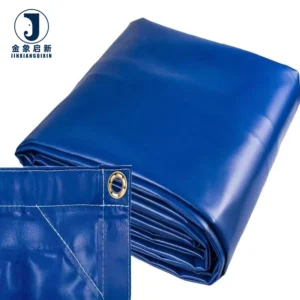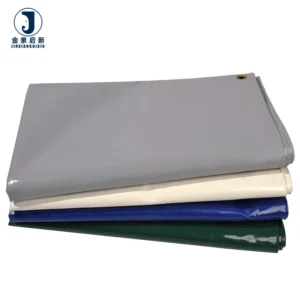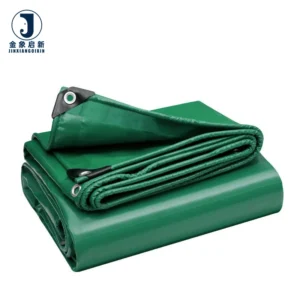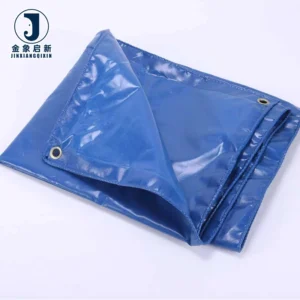
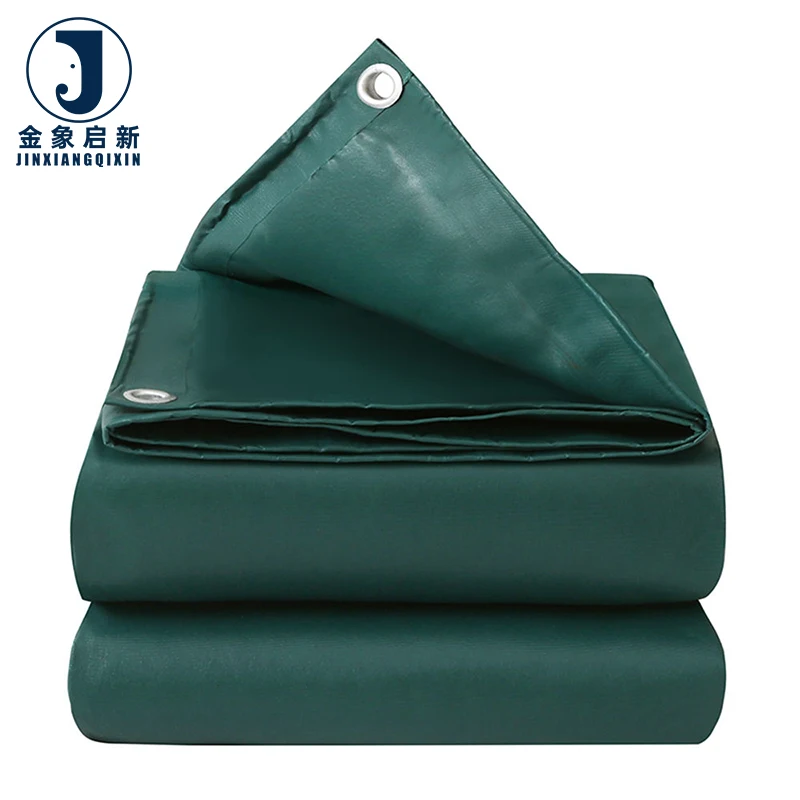
Coating Weight Adhesion Control — hot-melt and laminated coating technologies maintain consistent bond strength between the PVC layer and high-tenacity polyester mesh base fabric, verified per production run.
Technical Specifications
| Parameter | Value |
|---|---|
| Product Type | PVC Coated Tarpaulin |
| Base Material | PVC + High-strength polyester mesh fabric |
| Coating Technology | Laminated technology & Hot-melt coating technology |
| Weight Range | 350gsm, 420g, 500gsm, 550gsm, 600gsm, 750gsm (confirm the grade for this item) |
| Total Thickness | 0.32mm, 0.35mm, 0.4mm, 0.45mm, 0.5mm, 0.65mm (confirm the grade for this item) |
| Roll Dimensions | 2m width × 75m length / 2.1m width × 50m length |
| Finish Product Size | Custom items as per customer’s needs or sold by inventory |
| Color Options | Blue, Red, Yellow, Light blue, Grey (customized colors available) |
| Flame Retardant Grade | flame retardant (grade not stated in source — confirm the grade required for your market) |
| Anti-Static Treatment | stated (standard / surface resistance not stated — confirm test basis) |
| UV Treatment | sunproof stated (test basis not stated in source — request specific documentation) |
| Cold Crack Resistance | anti-cold treatment available |
| Anti-Mildew | treated for mildew resistance |
| Certifications | ISO, CE |
Application Suitability
| Application | Exposure & Requirement |
|---|---|
| Tent and awning structures | Permanent UV exposure, wind loading at seam lines, structural tension across welded joints |
| Truck awning and cargo ship covers | Constant flexing at load points, road salt and marine spray, abrasion at tie-down contact areas |
| Construction and scaffolding enclosure | Debris impact, prolonged weather exposure, repeated installation and removal cycles |
| Industrial equipment covers | Outdoor storage, moisture ingress prevention, mildew risk in humid environments |
| Fish tank and pool liners | Continuous water immersion, chemical treatment exposure, puncture resistance on substrate |
| Plant and refinery maintenance covers | Chemical splash, flame retardant compliance for site safety regulations |
Why Base Fabric Denier Matters More Than GSM Alone for PVC Coated Tarpaulin
A higher GSM reading does not guarantee a stronger fabric when the base mesh and coating weight are not matched to the application’s tensile and tear demands.
Technical buyers frequently receive PVC coated tarpaulin fabric where the stated GSM aligns with the quotation, yet the material underperforms in the field. The issue is not dishonesty — it is that coating weight and base fabric denier operate as a system. A heavy coating applied over a low-denier mesh produces a thick but structurally weak laminate that tears easily under load. Conversely, a tightly woven high-tenacity polyester base with a leaner coating delivers superior tear propagation resistance at a lower total weight. When sourcing PVC coated tarpaulin base fabric denier and weave coating weight GSM as a combined specification set, the relationship between these variables determines whether the fabric survives welding, flexing, and long-term outdoor exposure [NEED_CITE: tensile and tear test methods for coated fabrics per ISO 1421].
Hot-Melt Versus Laminated Coating and Adhesion Performance
The coating method defines how the PVC layer bonds to the high-strength polyester mesh fabric underneath. Laminated technology applies pre-formed PVC films to both sides of the base mesh under heat and pressure, producing a uniform thickness with reliable adhesion for general-purpose applications. Hot-melt coating involves applying liquid PVC directly onto the mesh, allowing the compound to penetrate the weave structure before curing. This penetration creates a mechanical lock that raises peel strength and improves weldability at fabricated seams. For applications where welded joints carry structural load — such as tensioned awning frames or truck side curtains — the PVC coated tarpaulin coating weight GSM selected must align with the coating method to ensure the seam does not delaminate before the fabric itself reaches its tear limit.
GSM-to-Thickness Progression Across the Product Range
The available weight grades correspond to a thickness progression from 0.32mm at 350gsm through to 0.65mm at 750gsm. This relationship is not linear: intermediate grades such as 500gsm and 550gsm occupy a narrow thickness band (0.4mm–0.45mm), meaning the coating formulation and base mesh density shift to accommodate the weight increase without a proportional thickness jump. For fabricators cutting and welding roll stock into finished covers, understanding where each PVC coated tarpaulin base fabric denier and weave coating weight GSM grade sits within this progression informs die-cutting pressure, heat-weld temperature, and seam allowance design [NEED_CITE: PVC coated fabric thickness and weight correlation standards].
How Weave Density and Coating Weight Interact at Stress Points
The high-tenacity polyester yarns forming the base mesh provide the structural skeleton of the fabric. Warp and weft density determine how tearing forces distribute once a puncture or cut initiates. A tightly woven mesh arrests tear propagation by forcing the tear to change direction at each yarn intersection. When the PVC coating weight is correctly proportioned to this mesh density, the coating fills the interstices without adding brittle mass that cracks under flexing. If the coating is too thick relative to the mesh openness, the fabric becomes stiff and prone to cold crack failure in low-temperature environments. The anti-cold treatment available across this range addresses this risk, but the base specification must be correct first.
What Specification Gaps Cost in Fabrication and Service
Receiving roll stock where the GSM matches the order but the base fabric denier does not creates downstream failures that appear only after fabrication. Welded seams separate at flex points because the coating-to-mesh bond was insufficient for the chosen welding temperature. Color variation between rolls in the same shipment becomes visible once panels are installed side by side on a structure, forcing rejection and rework. Flame retardant grades claimed without supporting test documentation cause site inspection failures, delaying project handover and triggering contractual penalties. Anti-static treatment without a stated surface resistance value leaves mining and tunnelling contractors unable to verify compliance with ventilation duct safety regulations [NEED_CITE: anti-static surface resistance requirements for mining ventilation ducts].
Process Control That Reduces Specification Risk
Deep process control over coating weight and adhesion is maintained across three full production lines equipped with 36 sets of professional equipment, supporting consistent output across bulk orders. A 10-person R&D team handles material selection, sample development, and custom sizing requests, producing samples within days for evaluation before production commitment. Dedicated QA/QC runs at every production stage, with 100% inspection before shipment against the stated material specification. This approach addresses the common procurement pain point where quoted GSM does not match the fabric received on site.
Documentation & Verification
- Material specification sheet stating exact GSM, base fabric construction, coating method, and colour reference per roll
- Test reports for UV and flame-retardant grades supplied where applicable — request specific standard documentation before ordering
- Pre-shipment inspection record confirming measured weight and visual quality against order specification
- ISO and CE certificates included with dispatch documentation package
- Certificate of origin and customs support documents for international shipment clearance
- Roll packing list detailing weight, dimensions, and batch reference for each roll in the shipment
Fabrication, Handling & Storage
- Set heat-weld temperature based on the specific coating method — laminated and hot-melt coatings respond differently to thermal input at the seam line
- Allow adequate seam allowance width proportional to the chosen GSM grade to distribute load across the welded joint
- Store rolls vertically on end-caps to prevent flat-spotting and permanent creasing across the 2m or 2.1m width
- Unroll and allow the fabric to relax at ambient temperature before cutting in cold conditions to avoid stress distortion
- Use mild detergent for cleaning — aggressive solvents may compromise the anti-mildew and sunproof surface treatments
- Plan panel layout to minimize transverse welds across the roll width, reducing seam count on large-format covers
What to Include in Your Specification Request
Provide the application environment and primary stress factors — whether the fabric will face continuous flexing, static tension, chemical exposure, or immersion. State the target market and any applicable fire safety or anti-static compliance requirements so the correct treatment grade can be confirmed. Indicate whether roll stock or finished cut-to-size panels are needed, along with the required width and annual volume estimate.
Frequently Asked Questions
Q: How is GSM verified to match the quotation upon delivery?
A: Each order ships with a material specification sheet stating the exact GSM, base fabric type, and coating method. A 100% pre-shipment inspection is conducted before dispatch, and the inspection record is included with the documentation package. Buyers can independently verify measured weight against the stated value upon receipt of the roll stock.
Q: What flame retardant documentation is available for site compliance?
A: Flame retardant treatment is available across this PVC coated tarpaulin fabric range. Specific grade certifications and test standard documentation should be requested at the inquiry stage to confirm suitability for your market’s fire safety regulations. Test reports are supplied where applicable alongside the dispatch documentation.
Q: How do laminated and hot-melt coating methods affect welding behaviour?
A: Hot-melt coating penetrates the polyester mesh structure, creating a mechanical bond that supports higher peel strength at welded seams. Laminated coating produces uniform thickness with consistent thermal response. The appropriate method depends on whether the fabricated product places structural load on the weld line or requires uniform surface finish.
Q: How is color consistency maintained across multiple rolls in one order?
A: Batch color matching is controlled during the coating formulation stage, with the colour reference stated on the material specification sheet for each roll. Pre-shipment inspection includes visual comparison between rolls in the same production run to identify variation before dispatch. Confirm your Pantone or RAL reference at the inquiry stage.
Q: What base fabric options correspond to each GSM grade?
A: The high-strength polyester mesh fabric is matched to the target GSM grade during material selection. Base fabric denier and weave density vary across the 350gsm to 750gsm range to balance tensile strength, tear resistance, and flexibility. Request the specific base fabric construction for your required grade at the sampling stage.