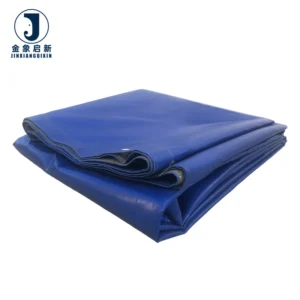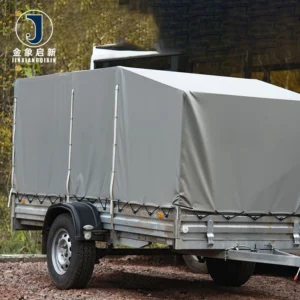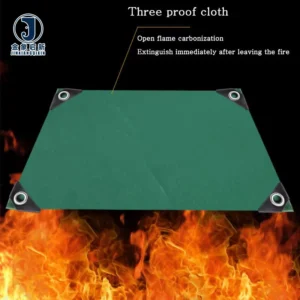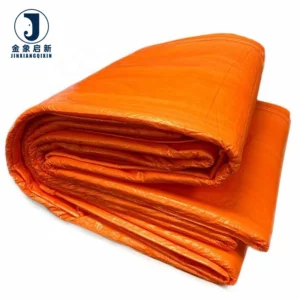
Process-Controlled Coating — Nearly 30 years focused on PVC coating weight and adhesion, giving technical buyers verifiable material data from denier and GSM to tensile performance across medium, heavy-duty and super-heavy grades.
Technical Specifications
| Parameter | Value |
|---|---|
| Product Type | PVC Coated Tarpaulin |
| Base Fabric | 100% high toughness polyester yarn |
| Coating Technology | Lamination technology and hot melt coating technology |
| Weight (Medium-duty) | 400–500 g/m² |
| Thickness (Medium-duty) | 0.35–0.45 mm |
| Base Fabric Denier (Medium-duty) | 500D |
| Tensile Strength (Medium-duty) | Warp 1500–2000 N/5cm / Weft 1200–1800 N/5cm |
| Weight (Heavy-duty) | 700–1000 g/m² |
| Thickness (Heavy-duty) | 0.70–1.0 mm |
| Base Fabric Denier (Heavy-duty) | 1000D |
| Tensile Strength (Heavy-duty) | Warp 2000–2500 N/5cm / Weft 1800–2200 N/5cm |
| Weight (Super Heavy-duty) | 1100–1500 g/m² |
| Thickness (Super Heavy-duty) | 1.2–1.5 mm |
| Base Fabric Denier (Super Heavy-duty) | 500D–2000D |
| Tensile Strength (Super Heavy-duty) | Warp 2500–3000 N/5cm / Weft 2200–2800 N/5cm |
| Key Features | Waterproof, cold cracking resistant, mold proof, anti-static treatment |
| Special Treatment Options | Flame retardant, anti-static, cold prevention, mold prevention |
| Weather Resistance | 3–5 years outdoor (stated in source, test basis not confirmed) |
| Color Fastness | Best color fastness (grade not stated) |
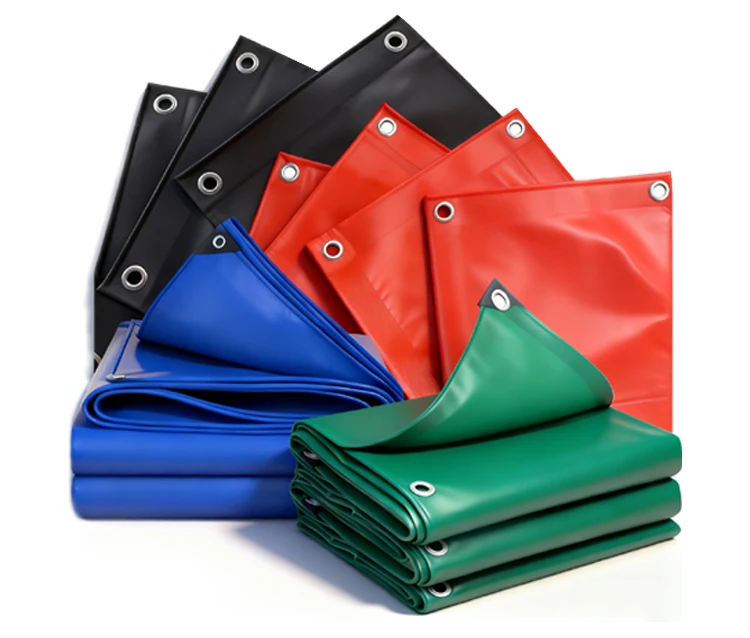
| Color | Blue (featured), other colors available via customization |
| Certifications | ISO, CE |
Application Suitability
| Application | Exposure & Requirement |
|---|---|
| Truck tarpaulin (medium-duty) | Repeated flexing at load points, road debris abrasion, UV and rain exposure |
| Heavy truck tarpaulin (heavy-duty) | High wind load, tie-down tension, prolonged highway UV and weather cycles |
| Tensioned structural fabric (super heavy-duty) | Permanent tensile load, wind uplift, structural membrane stress |
| Engineering protective cloth | Construction site dust, impact from falling objects, moisture ingress |
| Industrial pipe canopy | Chemical exposure, thermal cycling, UV degradation on horizontal spans |
| Farm and truck covers | Seasonal storage conditions, condensation, biological growth risk |
Why Base Fabric Denier Matters More Than GSM for Coated Fabric Strength
Tensile and tear performance comes from the polyester yarn structure underneath the coating, not the PVC layer alone.
Technical buyers often receive quotations stating a target GSM, yet the delivered rolls test lighter on the scale. When PVC coated fabric coating technology is evaluated only by weight, the base fabric denier and knit density — the true load-bearing elements — get overlooked. A 650 GSM roll woven from low-denier yarn will stretch and tear at the seam long before a 600 GSM roll built on 1000D high-toughness polyester fails [NEED_CITE: tensile and tear test methods for coated fabrics per ISO 1421]. The coating protects against water and UV, but it is the woven base that carries the mechanical load.
Coating Technology and Adhesion Behaviour
Lamination and hot melt coating produce different adhesion profiles between the PVC layer and the polyester base fabric. Lamination bonds a pre-formed PVC film to the woven substrate under heat and pressure, creating a smooth surface suited to applications where print clarity and visual consistency matter. Hot melt coating, often referred to as knife coating, forces liquid PVC into the yarn interstices, producing deeper mechanical interlock. For fabricators who weld seams on PVC coated tarpaulin aftermarket supplier stock, the coating method directly influences how the material behaves at the weld line and whether the seam peels before the fabric body fails.
Tensile Strength Across Three Weight Tiers
The three-tier structure maps directly to mechanical demand. Medium-duty grades at 400–500 g/m² with 500D base fabric suit light truck covers and temporary site protection where the fabric flexes frequently but carries moderate load. Heavy-duty grades at 700–1000 g/m² on 1000D yarn handle side curtain fabric for trailers, where tie-down straps concentrate stress at discrete points. Super heavy-duty grades at 1100–1500 g/m² with up to 2000D base fabric serve tensile structures and membrane architecture, where the material must sustain permanent pre-tension without creep. Tensile strength values in warp and weft directions confirm whether the weave is balanced or biased toward one axis [NEED_CITE: warp and weft tensile testing for PVC coated polyester fabric].
Reading GSM, Denier and Coating Weight Together
GSM measures the total weight of base fabric plus coating per square metre, but it does not reveal how that weight is distributed. A roll can hit its target GSM by adding a thick PVC coating over a loosely woven, low-denier base — producing a heavy fabric with poor tear resistance. Conversely, a tightly woven 1000D base with a thinner, well-controlled coating delivers higher tensile and tear strength at a similar or lower GSM. Hot melt coating technology penetrates the yarn matrix more thoroughly than lamination, meaning the same base fabric can achieve different adhesion and peel-strength results depending on the coating method chosen. Technical buyers specifying PVC coated fabric coating technology should request both the base fabric denier and the coating weight separately, rather than relying on total GSM alone.
What Happens When Specifications Are Chosen on Price Alone
When procurement decisions rest on per-square-metre cost without verifying the underlying base fabric structure, delivered rolls often show early failure at stress concentration points. Welded seams separate under load because the coating layer lacked sufficient adhesion to the base yarn. Fabricators report batch-to-batch colour variation across rolls in the same order, visible once panels are installed side by side on a truck body or building facade. Flame retardant treatment may be claimed on the quotation but arrive without a test report tied to a recognised standard, causing site inspectors to reject the material at delivery [NEED_CITE: flame retardant classification standards for coated fabrics in construction]. These failures are not material defects — they are specification gaps that surface only after fabrication and installation.
Why Fabricators Source Coated Fabric Here
Three full production lines with 36 sets of professional equipment allow bulk roll orders to run on dedicated lines, maintaining consistent coating weight and colour across the entire batch. The 10-person R&D team develops samples within days for custom width, colour or functional treatment requirements, giving fabricators physical material to weld-test before committing to production volume. Every roll undergoes dedicated QA and QC inspection at each production stage, with 100% pre-shipment inspection verifying coating weight, adhesion and colour consistency against the material specification sheet. PVC coated tarpaulin aftermarket supplier documentation packages ship with each order, including test reports for applicable treatments and full customs support for cross-border delivery. The facility’s process control over coating adhesion and base fabric selection means technical buyers receive material that matches the specification rather than a generic substitute.
Documentation & Verification
- Material specification sheet stating exact GSM, base fabric denier, weave structure and coating method per roll
- Test reports for flame retardant grades issued against named standards where applicable
- UV resistance test documentation with stated test basis for outdoor-exposed applications
- Pre-shipment inspection record with coating weight and adhesion verification per roll
- Roll packing list with individual roll identification for batch traceability
- Certificate of origin and full customs documentation for international dispatch
Fabrication, Handling & Storage
- Hot melt coated surfaces weld at standard PVC temperatures; verify adhesion at seam before full production run
- Laminated grades require controlled heat input to avoid delamination at the film-to-yarn interface during welding
- Store rolls horizontally on padded racks to prevent compression marks on the coating surface
- Unroll super heavy-duty grades at 1100–1500 g/m² with mechanical assistance to avoid creasing the base fabric
- Clean matte finish surfaces with mild detergent only; solvent-based cleaners may soften the PVC coating layer
- Cut patterns accounting for the warp and weft orientation to align tensile strength with load direction
Requesting a Technical Quotation
Provide the application type, expected mechanical load and environmental exposure so the correct weight tier and base fabric denier can be recommended. Specify whether your market requires flame retardant or anti-static certification, and which standard applies at the installation site. Confirm the roll width and colour needed, and whether you require finished cut panels or full rolls for your own fabrication line. Samples can be developed for weld testing and visual approval before production begins.
Frequently Asked Questions
Q: How is GSM verified on arrival against the quotation specification?
A: Each roll ships with a material specification sheet stating the exact GSM, base fabric denier and coating method. Upon receipt, buyers can cut a measured sample from the roll edge and weigh it on a calibrated scale. The pre-shipment inspection record included with every order documents the coating weight verification performed before dispatch.
Q: What test documentation supports flame retardant or anti-static claims?
A: Flame retardant and anti-static treatments are available in multiple grades. When specified in your inquiry, the quotation will reference the applicable standard, and a test report issued against that named standard will accompany the shipment. Confirm the grade required for your market and installation environment before ordering.
Q: Can custom width, colour or print be produced with low minimums?
A: The three production lines support custom width, colour and pattern printing on PVC coated tarpaulin rolls. The R&D team develops samples within days so you can verify colour, weld behaviour and surface finish before committing to a production run. Minimum order quantities depend on the specific customisation requested.
Q: How is colour consistency maintained across multiple rolls in one order?
A: Rolls within a single order are produced in continuous runs on the same line with identical coating formulation and pigment batch. The 100% pre-shipment inspection includes visual comparison under controlled lighting to confirm roll-to-roll colour consistency before dispatch.
Q: What welding and seam strength testing is performed before shipment?
A: Both lamination and hot melt coated grades undergo adhesion testing during production. The pre-shipment inspection record documents seam behaviour at flex points, confirming that the weld line does not fail before the fabric body under load. Fabricators are encouraged to request weld-test samples for their own equipment validation.