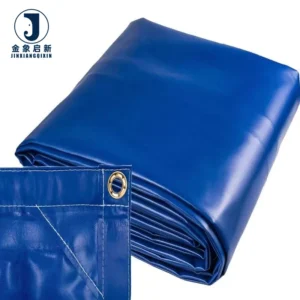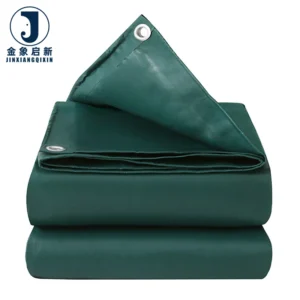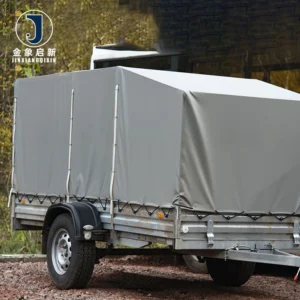
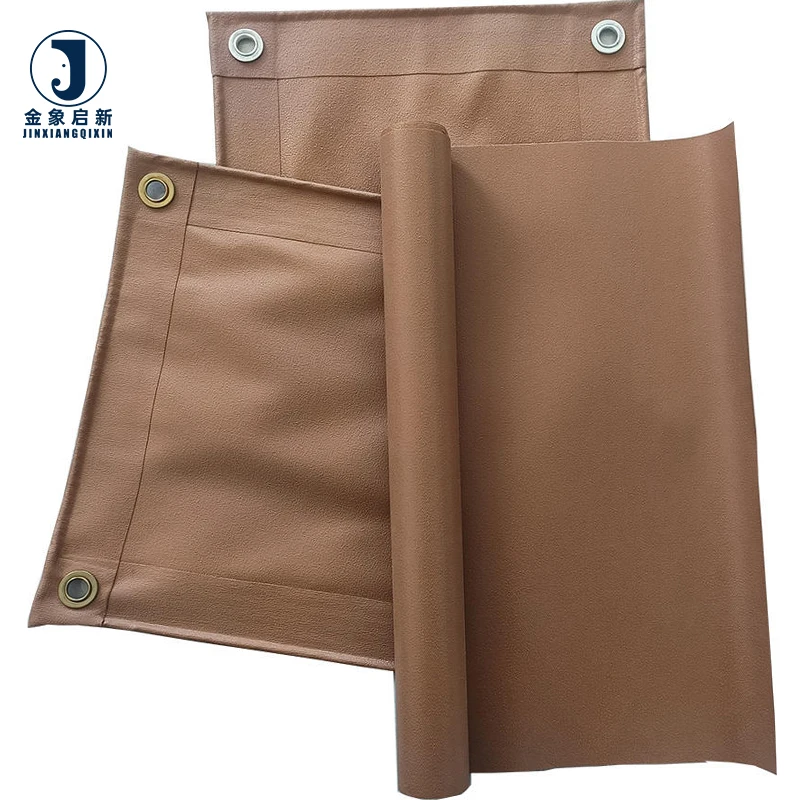
Coating Weight Verification — Every roll undergoes 100% pre-shipment inspection against the specified 520gsm, ensuring the material weight stated on the quotation matches what arrives at your fabrication floor.
Technical Specifications
| Parameter | Value |
|---|---|
| Product Type | PVC Coated Tarpaulin Roll |
| Weight | 520gsm |
| Base Fabric Denier | 1000D high toughness polyester yarn |
| Coating Method | Lamination technology and hot melt coating technology |
| Coating Material | PVC |
| Tensile Strength (Meridian) | 2000-2500 N/5cm |
| Tensile Strength (Latitude) | 1800-2200 N/5cm |
| Flame Retardant | Available in flame retardant grades — confirm the grade required for your market |
| UV Treatment | Anti-UV treatment available (test basis to be confirmed per order) |
| Anti-Static | Anti-static treatment available (surface resistance to be confirmed) |
| Anti-Mildew | Mold proof |
| Cold Resistance | Cold resistant cracking |
| Waterproof | Yes |
| Welding Tear Strength | Excellent |
| Key Features | Waterproof, cold resistant, mold proof, best color fastness |
| Weather Resistance | 3-5 years outdoor durability |
Application Suitability
| Application | Exposure & Requirement |
|---|---|
| Truck and trailer side curtain | Constant flexing at hinges, road debris abrasion, UV and weather exposure, repeated folding and unfolding |
| Transport cover fabric | Wind load tension, tie-down strap abrasion, rain and snow ingress prevention |
| Custom truck cover fabrication | Weld integrity at seam lines, dimensional stability during cutting and heat welding |
| Industrial pipe canopy | Tensioned installation, outdoor weathering, structural load bearing |
Why 520gsm PVC Coated Tarpaulin Fabric Fails at the Weld Before the Fabric Does
Weld failure almost always traces back to inconsistent coating adhesion, not the base fabric itself.
When a truck side curtain flexes thousands of times on the road, the weakest point is not the PVC coated tarpaulin fabric 520 gsm panel — it is the seam where two panels meet. I have seen coated rolls where the lamination bond between the base fabric and the PVC layer was uneven across the roll width. The result is a weld line that separates under load long before the fabric body shows any sign of tearing. The adhesion strength between coating and substrate determines whether your welded seam survives real-world flexing. [NEED_CITE: peel strength test methods for laminated coated fabrics]
Lamination and Hot Melt Coating Adhesion Behaviour
This PVC coated tarpaulin fabric 520 gsm is produced using both lamination technology and hot melt coating technology. The lamination process bonds a pre-formed PVC film to the 1000D polyester base under heat and pressure, creating a uniform adhesive interface across the entire roll width. The hot melt coating stage adds additional PVC compound directly onto the substrate, filling the weave structure and improving the mechanical lock between yarn and coating. Together, these methods deliver the adhesion consistency needed for high-frequency heat welding during fabrication.
Tensile Performance at Flex Points
The 1000D high toughness polyester yarn base provides meridian tensile strength of 2000-2500 N/5cm and latitude tensile strength of 1800-2200 N/5cm. For truck side curtains, the meridian direction typically runs vertically along the curtain drop, bearing the primary load from wind pressure and tie-down tension. The latitude direction resists the lateral forces generated when the curtain flexes around the trailer frame during cornering. This directional strength balance is critical when specifying PVC coated tarpaulin fabric for fleet applications. [NEED_CITE: ISO 1421 tensile test methods for coated fabrics]
How Coating Method Determines Weld Integrity
The relationship between coating weight, base fabric denier and weld performance is often misunderstood. A 520gsm material built on a 1000D base with lamination and hot melt coating concentrates its mass differently than a knife-coated fabric of the same weight. Lamination produces a smoother surface with consistent PVC thickness on both sides, which allows heat welding equipment to maintain uniform temperature contact along the seam. Hot melt coating penetrates the weave, reducing the chance of delamination at the weld zone. When both technologies are combined, the resulting PVC coated tarpaulin fabric 520 gsm offers predictable weld behaviour that fabrication shops can set their equipment parameters against. The 3-5 years outdoor durability rating reflects the combined UV and weather resistance of this coating system under typical transport exposure conditions.
What Happens When Roll Consistency Breaks Down
Batch-to-batch variation in coating weight is one of the most costly problems a tarpaulin converter faces. When one roll in a shipment runs lighter than the specified 520gsm, the heat welding temperature that worked on the previous roll now burns through the thinner coating, leaving a brittle seam that cracks under the first load cycle. Colour shift between rolls in the same order becomes visible once panels are installed side by side on a trailer, forcing rejection and rework. Anti-UV treatment that is not uniformly applied across the production run creates panels that fade at different rates within months of installation. These are the failures that surface after the material has left the factory, making pre-shipment verification essential. [NEED_CITE: coating weight tolerance standards for PVC tarpaulin production]
Why Sourcing This Fabric Here Makes Sense for Technical Buyers
Deep process control over coating weight and adhesion comes from nearly 30 years focused exclusively on coated fabric production. Three full production lines with 36 sets of professional equipment support consistent output at bulk volumes without sacrificing roll-to-roll uniformity. A 10-person R&D team handles material selection and sample development, allowing you to confirm coating behaviour before committing to a full order. Dedicated QA/QC at every production stage with 100% inspection before shipment means the 520gsm specification is verified, not assumed. Sample development within days ensures that custom colour or treatment requirements can be evaluated against your welding equipment parameters before production begins.
Documentation & Verification
- Material specification sheet confirming 520gsm, 1000D base fabric and coating method for each roll
- Test reports for UV and flame retardant treatments provided where applicable to your market requirements
- Pre-shipment inspection record documenting verified GSM per roll against the purchase order
- ISO and CE certificates included with shipment documentation package
- Roll packing list with individual roll identification for traceability through fabrication
Fabrication, Handling & Storage
- Set heat welding temperature and dwell time based on the lamination and hot melt coating thickness before running production panels
- Store rolls upright on end cores to prevent flat-spot creasing that affects weld surface contact on the 520gsm material
- Allow cold-stored rolls to reach ambient temperature before unrolling to prevent cracking of the cold resistant PVC surface
- Cut panels with the meridian direction aligned to the primary load axis for optimal tensile performance at tie-down points
- Use PVC-compatible adhesive for field repairs on the 1000D base fabric to maintain bond strength at patch edges
What to Include in Your Enquiry
Provide the specific trailer models or structure dimensions so we can confirm the most efficient roll width for your cutting layout. State your target market fire safety classification if flame retardant treatment is required, along with any anti-static surface resistance specification for mining or aviation ventilation environments. Indicate whether you need rolls only or finished panels welded to vehicle-specific dimensions, and whether colour matching to an existing fleet livery is required.
Frequently Asked Questions
Q: How is the 520gsm coating weight verified before my rolls ship?
A: Each roll is weighed and measured during 100% pre-shipment inspection. The inspection record documents the actual GSM calculated from roll weight and area, confirming it matches your purchase specification. This record ships with your documentation package so you can cross-reference on arrival.
Q: Which flame retardant grades are available for truck side curtain use?
A: Flame retardant treatment is available in multiple grades. The appropriate grade depends on your target market regulations — European transport requirements differ from North American or Australian standards. Specify the fire classification your end-use market requires so we can supply the matching test report with your order.
Q: How does the 1000D base fabric affect weld strength compared to lighter denier options?
A: The 1000D polyester base provides a thicker yarn structure for the hot melt coating to penetrate, creating a stronger mechanical bond at the weld zone. This reduces the risk of seam delamination at flex points compared to fabrics built on lighter base yarns with less coating penetration depth.
Q: What roll width options are available and how does this affect my cutting yield?
A: Roll widths are available in standard and custom options. Specifying a width that aligns with your panel dimensions minimises offcut waste and reduces the number of weld seams in the finished truck cover. Contact us with your cutting layout so we can recommend the most efficient roll width for your production.