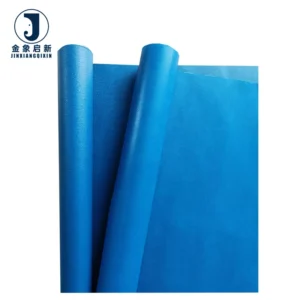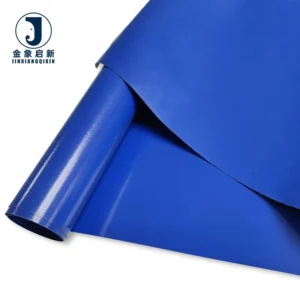
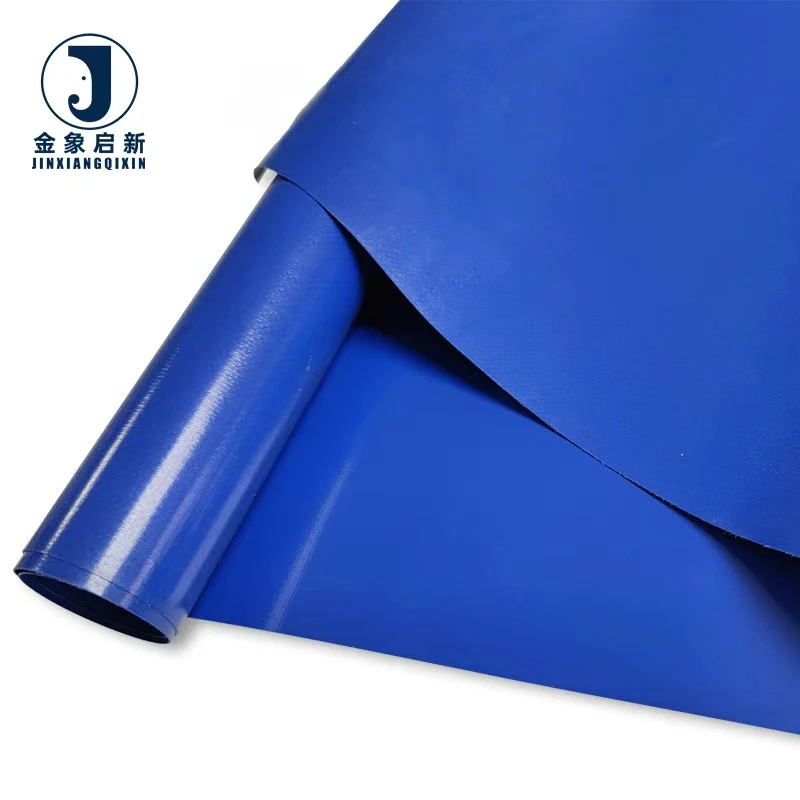
Controlled Coating Weight — every roll of this PVC Tarpaulin Roll undergoes in-process measurement to confirm GSM matches the specification sheet before dispatch.
Technical Specifications
| Parameter | Value |
|---|---|
| Product Type | PVC Tarpaulin Roll |
| Base Fabric | High-strength polyester mesh |
| Coating Technology | Laminated & hot-melt coating |
| Weight Options | 350 gsm / 420 gsm / 500 gsm / 550 gsm / 600 gsm / 750 gsm |
| Thickness Range | 0.32 mm / 0.35 mm / 0.4 mm / 0.45 mm / 0.5 mm / 0.65 mm |
| Roll Dimensions | 2 m × 75 m or 2.1 m × 50 m |
| Available Colours | Blue, Red, Yellow, Light Blue, Grey (custom colours available) |
| Key Features | Waterproof, cold crack resistance, anti-mildew, colour fastness |
| Special Treatments | Flame retardant, anti-static, anti-cold — confirm the grade required for your market |
| Service Life | Suited to extended outdoor exposure under normal conditions |
Application Suitability
| Application | Exposure & Requirement |
|---|---|
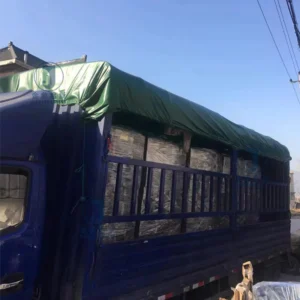
| Truck awning and side curtain | Constant flexing at load points, road abrasion, UV and weather exposure |
| Tent and inflatable structure fabric | Roll-to-roll colour consistency, weld strength at seam lines, wind load |
| Construction site enclosure | Scaffolding contact, wind drag, dust and debris impact |
| Industrial equipment cover | Outdoor storage, moisture ingress, temperature cycling |
| Agricultural and pond liner | Permanent water contact, soil chemistry, puncture from substrate |
| Marine and offshore cover | Salt spray, UV saturation, mechanical handling stress |
Why a Quoted GSM Can Still Arrive Underweight
Coating weight control during production — not a post-production sample — is what determines whether the roll you receive matches the specification on the purchase order.
Buyers who specify PVC coated tarpaulin roll gsm often discover at the receiving dock that the material feels lighter than agreed. A variance of even a small percentage across an entire container can mean the difference between a cover that holds for years and one that tears at the first heavy wind. The root cause is typically inconsistent paste application during coating, where speed and temperature drift create rolls that pass a single-point sample check but fail across the full length [NEED_CITE: tensile and tear test methods for coated fabrics per ISO 1421].
How Hot-Melt Lamination Holds the Coating to the Base Fabric
The PVC Tarpaulin Roll uses hot-melt coating and lamination technology rather than simple paste spreading. In this process, heated PVC compound is pressed into the high-strength polyester mesh under controlled pressure, filling the interstices of the weave rather than sitting on the surface. This creates a mechanical and chemical bond between coating and yarn that resists delamination when the fabric is folded, welded or subjected to repeated flex cycles.
What the Coating Method Means for Weld and Seam Integrity
When fabricators heat-weld panels together, the bond must hold at the coating-to-yarn interface, not just at the coating surface. Laminated PVC coated tarpaulin roll stock with strong adhesion between layers allows the weld to transfer stress into the base fabric rather than peeling the coating away. Rolls coated by simple knife-over-edge methods often show coating separation at the weld line before the fabric itself reaches its tensile limit [NEED_CITE: hot-melt versus knife-coat adhesion comparison for PVC fabrics].
Reading GSM and Thickness Together, Not in Isolation
A 650 gsm roll made with a loose base weave and thick coating will behave very differently from a 650 gsm roll built on a dense, high-tenacity yarn grid. The polyester mesh in this PVC Tarpaulin Roll provides the structural skeleton — tensile and tear strength come primarily from yarn denier and weave density, while the PVC coating adds abrasion resistance, waterproofing and weldability. Thickness values from 0.32 mm to 0.65 mm correspond to the GSM range, but a thicker coating alone does not guarantee higher tear resistance; the base fabric construction is the governing factor [NEED_CITE: relationship between base fabric denier and tear propagation in coated textiles].
The Hidden Cost of Specifying by GSM Alone
A buyer who selects material solely on a quoted weight, without verifying base fabric density and coating adhesion, faces failures that appear months after installation. Coating that separates from the mesh at fold lines allows water ingress and accelerates mildew formation. Welds that peel under load create openings at the exact points where stress concentrates — the corners and tie-down zones of a truck cover or the apex of a tensioned structure. These failures are rarely random; they trace back to a mismatch between the specified grade and the actual coating-to-fabric bond achieved during production [NEED_CITE: common failure modes in PVC coated fabric installations].
Why Fabricators Source This PVC Tarpaulin Roll Here
Three full production lines and 36 sets of professional equipment support consistent output across multiple GSM grades without cross-contamination between coating batches. A dedicated 10-person R&D team develops custom width, colour and treatment samples within days, allowing fabricators to confirm material behaviour on their own welding equipment before committing to a production order. Every roll undergoes 100% pre-shipment inspection, with weight and dimension checks recorded against the purchase order — not a generic tolerance band.
Documentation & Verification
- Material specification sheet stating exact GSM, base fabric construction and coating technology per roll
- Test reports for flame retardant and anti-static grades where applicable to the purchase order
- Pre-shipment inspection record confirming roll count, width, length and weight verification
- ISO and CE certificates supplied with dispatch documentation
- Colour reference sample retained for batch-to-batch consistency checks
Fabrication, Handling & Storage
- Hot-weld temperature must be calibrated to the specific GSM grade — 350 gsm requires lower heat input than 750 gsm to avoid coating burn-through
- Allow laminated rolls to acclimatise to workshop temperature before unrolling to prevent cold crack stress at the coating surface
- Store rolls vertically on pallets to avoid permanent creasing across the 2 m or 2.1 m width
- Use compatible PVC-based repair patches matched to the coating thickness for on-site seam reinforcement
- Plan cutting layout to minimise off-cuts, accounting for the 75 m or 50 m roll length against finished panel dimensions
- Clean with neutral pH detergent only — solvent-based cleaners can degrade the anti-mildew treatment surface layer
Before You Enquire — What We Need to Specify Accurately
Provide the target GSM and the end-use application so we can recommend the correct base fabric density and coating thickness for your welding equipment. If your market requires flame retardant or anti-static certification, state the standard your project must meet — available grades vary by market and we will confirm the applicable test basis before sampling. Specify roll width, colour and whether you need custom printed branding or plain stock so we can calculate production lead time and minimum quantities.
Frequently Asked Questions
Q: How is the GSM of each roll verified before shipment?
A: Each roll is weighed and measured during 100% pre-shipment inspection. The recorded weight is divided by the measured area to confirm GSM falls within the tolerance stated on your material specification sheet. The inspection record accompanies the shipment documentation.
Q: What is the difference between laminated and hot-melt coating for my fabrication process?
A: Laminated coating bonds PVC to the polyester mesh through heat and pressure, producing strong coating-to-fabric adhesion suited to high-stress welding. Hot-melt coating achieves similar results with slightly different surface finish characteristics. We provide samples of both for your weld testing.
Q: What test reports accompany flame retardant or anti-static grades?
A: Where applicable, test reports are issued for the specific grade ordered. Confirm the standard required for your market — such as B1, M2 or NFPA 701 — and we will supply the corresponding documentation with the material specification sheet.
Q: Can I order a custom width or colour on the roll?
A: Custom widths and colours are available beyond the standard Blue, Red, Yellow, Light Blue and Grey range. Minimum order quantities and lead times depend on the GSM grade and coating run required. Submit your colour reference and width to receive a sample.
Q: How do you maintain colour consistency across multiple rolls in one order?
A: Colour reference samples are retained from the approved batch. All rolls in a single production run are coated from the same compound mix, and visual inspection against the reference is recorded in the pre-shipment inspection report.