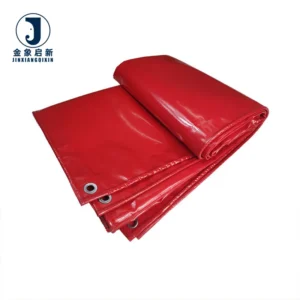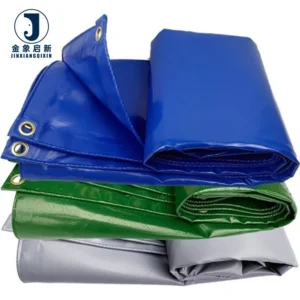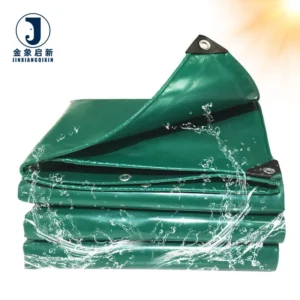
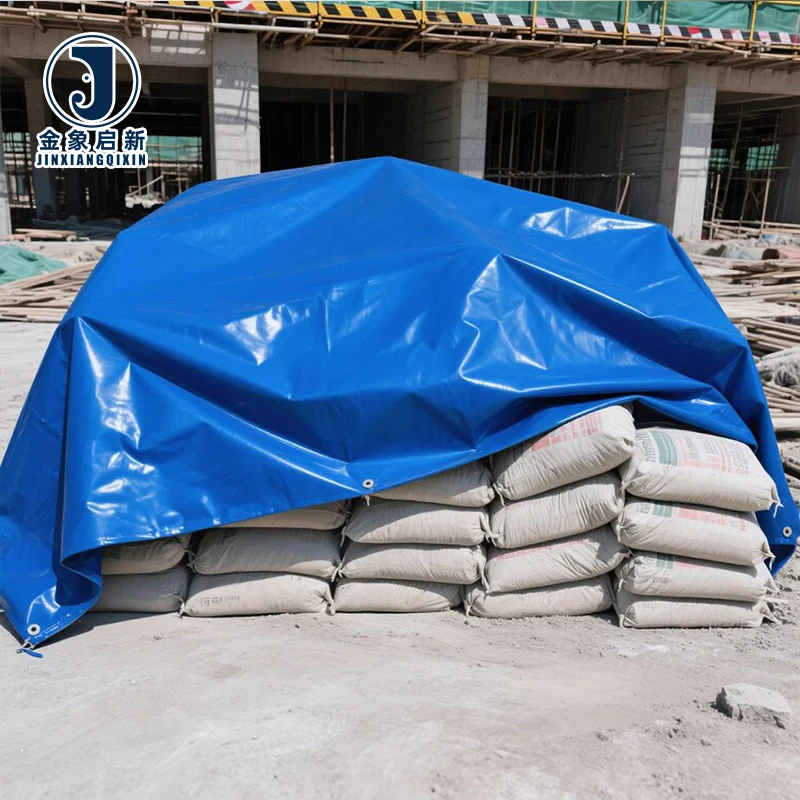
Deep Process Control Over PVC Coating — every roll of PVC coated tarpaulin fabric GSM denier specification is verified against the agreed formulation before dispatch, supported by nearly 30 years of coating weight adhesion expertise.
Technical Specifications
| Parameter | Value |
|---|---|
| Product Type | PVC Coated Tarpaulin |
| Base Fabric Denier | 200D×300D / 500D×500D / 840D×840D / 1000D×1000D |
| Coating Material | PVC |
| Weight Range | 250gsm–1500gsm |
| Surface Finish | Glossy or matte |
| Temperature Range | -15°C to 70°C |
| Waterproof | Yes |
| UV Treatment | Available — confirm the grade required for your market |
| Flame Retardant | Available in flame retardant grades — confirm the grade required for your market |
| Anti-Fungal Treatment | Standard treatment applied (standard not specified) |
| Colour Options | Blue, yellow, black, green, white, and custom colours |
| Standard Sizes | 3×4m, 6×8m, 8×10m, 10×12m, or custom made |
| Surface Options | Pattern printing and branding available |
| Key Features | Waterproof, tear-resistant, flexible, abrasion-resistant, good adhesion strength |
| Standards | ISO, CE |
Application Suitability
| Application | Exposure & Requirement |
|---|---|
| Truck side curtains and load covers | Constant flexing at tie-down points, road debris abrasion, UV and rain exposure |
| Construction site and equipment covers | Prolonged outdoor weathering, mechanical contact, dust and moisture ingress |
| Agricultural and aquaculture pond liners | Permanent water contact, soil chemistry, puncture from substrate irregularities |
| Tent and awning fabric | Tension loading at frame connections, repeated folding, solar and rain exposure |
| Inflatable and membrane structures | Internal air pressure, seam integrity under cyclic loading, weld adhesion |
Why the Quoted GSM Does Not Always Match What Arrives
A stated GSM on paper means nothing without a measured value on the roll.
Technical buyers routinely specify PVC coated tarpaulin fabric GSM denier specification by weight class, only to receive material that measures lighter on arrival. The coating weight directly governs tensile behaviour, tear propagation resistance, and how the fabric handles during heat welding. When a roll arrives below the agreed GSM, the fabricator bears the cost — weaker seams, failed inspections, and rework that delays the entire project [NEED_CITE: coating weight verification methods per ISO testing protocols for industrial fabrics].
How Base Fabric Denier Governs Structural Performance
The denier of the polyester base fabric — from 200D×300D up to 1000D×1000D — determines the underlying skeleton that carries mechanical load. Higher denier yarns in both warp and weft directions provide greater resistance to tear propagation, particularly at stress concentrations where the fabric meets hardware or welded seams. Selecting PVC coated tarpaulin fabric by denier is the first step technical buyers take when matching material to structural demand.
Coating Weight and Its Role in Seam Integrity
The PVC coating layer does more than provide weather protection — it is the medium through which heat welding transfers bond strength between panels. Coating weight across the 250gsm–1500gsm range affects how consistently the material responds to hot-air or wedge welding parameters. Insufficient coating at the weld zone leads to adhesion failure before the base fabric reaches its tear limit, a failure mode that shows up in the field rather than the factory [NEED_CITE: weld adhesion testing for coated textile assemblies].
Reading the Specification Sheet Beyond GSM Alone
GSM tells you the total weight per square metre but reveals nothing about how that weight is distributed between base fabric and coating. A 650gsm material built on a 1000D×1000D base with a thinner coating layer will behave very differently under tension than a 650gsm material on a 500D×500D base with a heavier coat. The denier-to-coating ratio determines whether the fabric fails by yarn rupture or coating delamination. Glossy finishes tend to accept heat welds at slightly different temperature windows than matte finishes, affecting production line setup. Temperature performance from -15°C to 70°C defines the operating envelope, beyond which the PVC layer risks embrittlement at the cold end or excessive softening at the hot end.
The Hidden Cost of Specifying on Price Per Square Metre
When buyers select PVC coated tarpaulin fabric GSM denier specification purely on unit cost, the consequences surface downstream. A lighter coating may pass the initial weight check but fail to protect the base yarn from UV degradation over an extended service period. Rolls with inconsistent coating thickness across the width produce uneven weld strength, causing seam failures that appear random but trace back to the coating process. Batch colour variation between rolls in the same shipment forces fabricators to sort and match panels manually, adding labour that erodes the savings from a cheaper purchase [NEED_CITE: batch consistency requirements for coated fabric in fabricated assemblies].
What Distinguishes This Material Supply
Three full production lines with 36 sets of professional equipment support consistent coating weight control across the denier range from 200D×300D to 1000D×1000D. A dedicated 10-person R&D team handles material selection, custom sizing, and sample development for specific fabrication requirements. Every production stage includes QA checkpoints, with 100% pre-shipment inspection verifying measured coating weight against the order specification. Samples for custom colour, width, or print requirements are developed within days rather than weeks. Nearly 30 years of focused coated fabric production informs process decisions that affect coating adhesion and base fabric integrity.
Documentation & Verification
- Material specification sheet confirming exact GSM, base fabric denier, and coating formulation per order
- Test reports for UV resistance and flame retardant grades supplied where specified
- Pre-shipment inspection record with measured weight verification for each roll
- ISO and CE certificates included with full customs documentation package
- Roll packing list with batch reference for traceability across the shipment
Fabrication, Handling & Storage
- Heat welding parameters vary by finish — glossy and matte surfaces respond differently to hot-air temperature settings
- Store rolls upright on cores to prevent flat-spot deformation across the PVC coating layer
- Allow cold-transported rolls to reach ambient temperature before unrolling to avoid coating micro-cracking
- Plan panel layout to minimise cross-grain seams where denier direction affects tear propagation
- Use compatible PVC-based repair patches matching the coating weight for field seam touch-ups
What to Include in Your Inquiry
Provide the base fabric denier and target GSM range that matches your fabrication method and end-use loading. Specify whether glossy or matte finish is required, as this influences your welding setup and surface cleaning protocol. Indicate any flame retardant or UV treatment grade your market demands, along with the test standard your compliance body requires. Confirm whether you need roll stock in standard widths or custom-cut panels, and state your annual volume to support production planning.
Frequently Asked Questions
Q: How is GSM verified and what documentation accompanies each shipment?
A: Every roll is weighed and measured during pre-shipment inspection, with the recorded GSM compared against the material specification sheet for that order. The inspection record ships with the documentation package, giving you a traceable weight reading per roll rather than a batch average claim.
Q: What flame retardant grades are available and which test standards do they meet?
A: Flame retardant treatment is available across the PVC coated tarpaulin range, but the specific grade must be confirmed against your local building code or site safety requirement. Request the applicable test standard — such as DIN 4102, NFPA 701, or M2 — when placing your inquiry so the correct formulation and test report are supplied.
Q: How does base fabric denier relate to tensile and tear strength in PVC coated fabric?
A: Higher denier yarns in the base fabric increase resistance to tear propagation, particularly at welded seams and hardware attachment points. The coating layer adds weight and weather protection but does not carry structural load — the polyester base skeleton determines how the material performs under mechanical stress.
Q: How do glossy vs matte finishes affect heat welding and seam adhesion performance?
A: Surface finish influences the temperature window and dwell time required for consistent weld adhesion. Fabricators running production lines should request sample rolls in both finishes to calibrate welding equipment before committing to a full order of PVC coated tarpaulin fabric.
Q: What is the basis for anti-UV treatment claims and how is it tested?
A: UV treatment is available as a custom option, but the test method and exposure duration should be specified at inquiry stage. Ask for a test report that states the standard used and the measured result, so you can verify suitability for your intended outdoor exposure period.