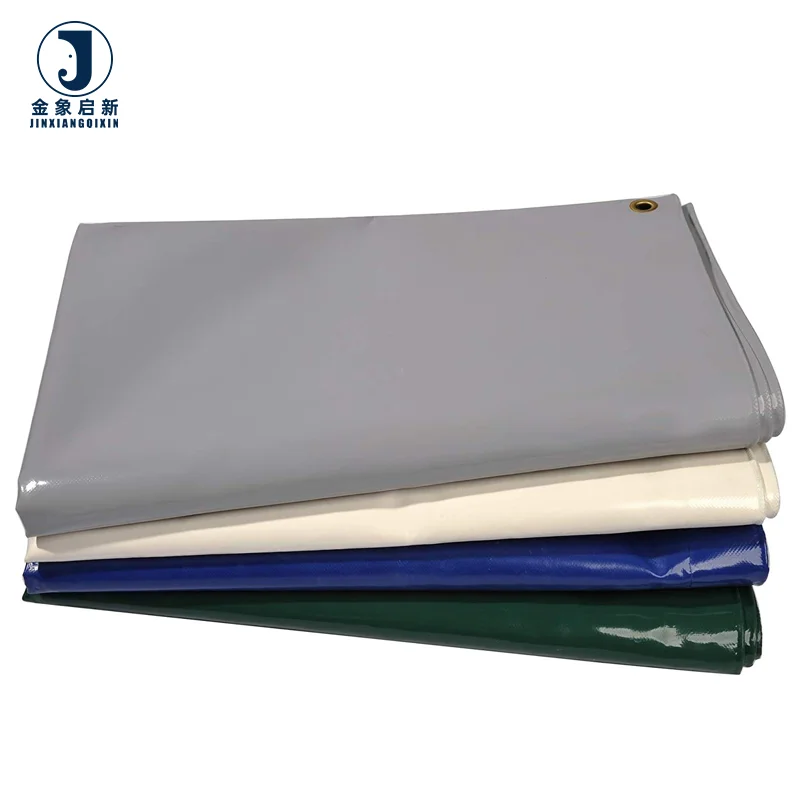
Material Data Transparency — every roll of this PVC coated fabric ships with a specification sheet documenting base fabric denier, coating weight, and verified GSM, backed by 100% pre-shipment inspection so technical buyers can match received goods against their engineering requirements before fabrication begins.
Technical Specifications
| Parameter | Value |
|---|---|
| Product Type | PVC Coated Tarpaulin |
| Coating Material | PVC & Polyester |
| Yarn Count Options | 500D×840D / 500D×1000D / 1000D×1000D / 1000D×1300D / 1300D×1300D / 1000D×2000D |
| Weight Range (GSM) | 350 / 400 / 420 / 500 / 600 / 650 / 750 / 900 |
| Total Thickness | 0.29 mm (350 GSM) to 0.65 mm (900 GSM) |
| Base Fabric Denier | 500D×840D (350–420 GSM) / 500D×1000D (500 GSM) / 1000D×1000D (600 GSM) / 1000D×1300D (650 GSM) / 1300D×1300D (750 GSM) / 1000D×2000D (900 GSM) |
| Mesh Count | 30×19 (350–500 GSM) / 20×20 (600–750 GSM) / 30×15 (900 GSM) |
| Tensile Strength — Warp (N) | 1650 (350 GSM) / 1800 (400 GSM) / 1850 (420 GSM) / 2050 (500 GSM) / 2500 (600 GSM) / 2550 (650 GSM) / 2750 (750 GSM) / 3900 (900 GSM) — test basis not stated in source |
| Tensile Strength — Weft (N) | 1600 (350 GSM) / 1700 (400 GSM) / 1750 (420 GSM) / 1900 (500 GSM) / 2200 (600 GSM) / 2250 (650 GSM) / 2850 (750 GSM) / 3500 (900 GSM) — test basis not stated in source |
| Flame Retardant | Available in flame retardant grades — confirm the grade required for your market |
| UV Treatment | Anti-UV — test basis not stated in source |
| Waterproof Rating | Water Resistant / Waterproof |
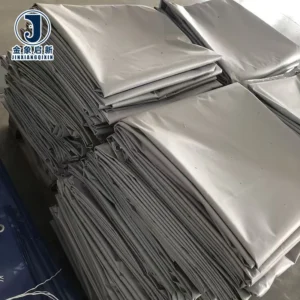
| Color | Gray |
| Available Widths | 2 m / 2.1 m (varies by grade) |
| Material Density | 1.15–2.00 g/cm³ |
| Softening Temperature | ≥ 80 ℃ |
| Melting Point | 212 ℃ |
| Brittle Temperature | ≤ -50 ~ -60 ℃ |
| Edge Finishing | High temperature heat sealed seamless edge wrapping |
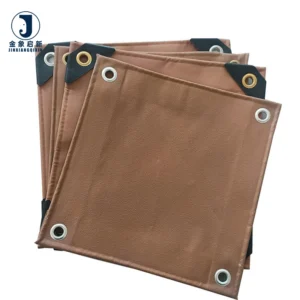
| Eyelets | 3 cm enlarged aluminum alloy buttonhole |
| Corner Reinforcement | Reinforced corners on all sides |
| Rope | 5 mm thick rope without splicing |
| Certifications | ISO, CE |
Application Suitability
| Application | Exposure & Requirement |
|---|---|
| Truck side curtains and trailer covers | Constant flexing at tie-down points, road debris abrasion, sustained UV exposure, rain and spray |
| Tent and awning fabrication | Weld seam integrity under wind load, colour consistency across panels, UV and weather exposure |
| Construction site and equipment covers | Puncture from sharp edges, flame retardant compliance on site, prolonged outdoor storage |
| Pergola and canopy structures | Tensile load spanning unsupported areas, UV degradation over seasons, water runoff resistance |
| Machine and industrial equipment wraps | Abrasion from vibration contact, oil and chemical splash, heat from operating machinery |
Why Tensile Data Matters More Than GSM Alone for PVC Coated Tarpaulin Specification
A 650 GSM roll with 1000D×1300D base fabric can outperform a heavier roll woven from thinner yarn at a tighter mesh.
Technical buyers frequently specify PVC coated tarpaulin by weight alone, only to discover that two rolls at the same GSM behave very differently under load. The reason lies in base fabric architecture — denier and mesh count determine how force distributes across the weave before the coating even enters the equation. A fabric woven from thicker yarns at a looser mesh may carry the same coating weight yet resist tear propagation far better than one relying on thin yarns packed tightly. Without warp and weft tensile values tied to a test standard, a GSM figure becomes a partial picture. [NEED_CITE: tensile and tear test methods for coated fabrics per ISO 1421]
This PVC coated flame-retardant tarpaulin series addresses that gap by mapping base fabric denier, mesh count, and tensile strength across every grade from 350 to 900 GSM. The data allows engineers to select the grade whose construction matches the mechanical demands of the end use rather than relying on weight as a proxy for strength.
Base Fabric Architecture Across the GSM Spectrum
The denier escalation in this PVC coated tarpaulin range is deliberate — lighter grades at 350–420 GSM use 500D×840D yarn at a 30×19 mesh, suitable for applications where flexibility and low roll weight matter more than extreme load bearing. As grades progress through 500 and 600 GSM, the base shifts to 500D×1000D and then 1000D×1000D, with mesh count adjusting to 20×20 to accommodate heavier yarn while maintaining coating adhesion surface area. At the top of the range, 900 GSM fabric is built on 1000D×2000D yarn — a construction that gives weft-direction tensile values reaching 3500 N, important for applications where crosswise stress dominates, such as truck side curtains that billow under highway air pressure.
Coating Adhesion and Weld Integrity in Fabrication
For fabricators welding panels into finished covers or structures, the PVC coating must bond to the polyester base with enough peel strength to survive heat activation without delaminating. The double-sided PVC coating on this series is applied with controlled coating weight relative to each base fabric grade, meaning the ratio of polymer to fibre stays consistent within a given GSM specification. This consistency is what allows weld parameters — temperature, dwell time, and pressure — to be set once for a given grade and repeated across production batches. When coating weight varies roll to roll, weld seams can fail before the fabric itself does, typically at the point where the load flexes most during transport or wind events. [NEED_CITE: hot air welding parameters and peel strength requirements for PVC coated polyester]
Temperature Envelope and Climate Specification
The material data sheet for this PVC coated flame-retardant tarpaulin lists a brittle temperature at or below -50 to -60 ℃, a softening point at or above 80 ℃, and a melting point of 212 ℃. These boundaries define where the fabric remains functional without cracking in cold storage or high-altitude transport routes, and where it begins to lose dimensional stability in hot climates or near heat-generating machinery. Specifiers working in regions with extreme seasonal swings can use these values to confirm the grade selected will stay within its performance envelope throughout the service environment.
The Hidden Cost of Undocumented Flame Retardant and Anti-UV Claims
A quotation that lists "flame retardant" and "anti-UV" without naming a test standard or grade creates risk at two points — project acceptance and in-service compliance. On construction sites and in aviation or mining ventilation, inspectors require documentation referencing a recognised standard such as DIN 4102, NFPA 701, or a local building code equivalent before the material is permitted on site. When the test report does not arrive with the roll, the entire delivery can be held pending verification, delaying project timelines. For UV treatment, the absence of a stated test basis means the specifier has no reference for expected exposure duration, making it impossible to plan replacement cycles or warranty terms. [NEED_CITE: DIN 4102 fire classification for building materials and textile membranes]
This series is offered with flame retardant and anti-UV treatments available — the specific grade and supporting test report should be confirmed during the specification stage so documentation ships with the order.
Why Procurement Teams Source This PVC Coated Fabric Here
Three full production lines and 36 sets of professional equipment give this facility the capacity to run bulk roll orders with consistent coating weight across the batch — a factor that directly affects roll-to-roll colour matching and weld parameter repeatability for fabricators.
A dedicated 10-person R&D team handles material selection and sample development, producing pre-production samples within days so buyers can verify denier, mesh, and coating hand before committing to a full container order.
Dedicated QA/QC at every production stage includes 100% pre-shipment inspection, meaning each roll is verified against the stated GSM, width, and colour reference before packing.
Deep process control over coating weight and adhesion, built across nearly 30 years of focused coated fabric production, underpins the consistency that technical buyers require when setting fabrication parameters for welding and eyelet installation.
Documentation & Verification
- Material specification sheet per roll stating GSM, base fabric denier, mesh count, and coating type for traceability
- Flame retardant and anti-UV test reports referencing the applicable standard where grade is specified at order
- Pre-shipment inspection record with roll-by-roll GSM and width verification before container loading
- Certificate of origin and customs documentation prepared per destination country requirements
- Roll packing list detailing net weight, gross weight, and dimensions for freight planning
Fabrication, Handling & Storage
- Set hot air weld temperature and dwell time per GSM grade — test on a sample offcut before production runs
- Eyelet installation at 3 cm aluminum alloy buttonholes requires reinforced webbing behind the PVC coating layer for load distribution
- Store rolls upright on pallets to prevent flat-spot creasing that can affect coating adhesion at the contact line
- Allow rolls to acclimatise to workshop temperature before unrolling in cold conditions below the stated brittle point
- Plan panel cutting layouts around the available 2 m or 2.1 m width to minimise offcut waste and reduce weld seam count
- Clean finished PVC surfaces with mild detergent only — solvent-based cleaners may attack the coating and reduce anti-UV treatment effectiveness
Requesting the Right Grade for Your Project
To narrow down the correct GSM and base fabric construction from this series, provide the end-use application, the mechanical loads the fabric will face in service, and the climate or temperature range of the installation environment. If your market requires a specific flame retardant classification or anti-UV test standard, name that requirement in your inquiry so the matching grade and test documentation can be included in the quotation. State whether you need roll stock by the container or finished cut-and-hemmed panels with eyelets, and include any colour or width preferences so sample development can proceed immediately.
Frequently Asked Questions
Q: How do I confirm the base fabric denier and GSM match my specification when the rolls arrive?
A: Each roll ships with a material specification sheet listing the base fabric denier, mesh count, and GSM. Your receiving team can cross-reference this document against your purchase order. A 100% pre-shipment inspection is conducted before dispatch, and random sample cutting on arrival is recommended to verify weight per square metre using a calibrated scale and a known-area template.
Q: Which flame retardant test standard applies to my market, and can you supply the report?
A: Flame retardant requirements vary — common references include DIN 4102 B1 for European building applications, NFPA 701 for the US, and local building or transport codes. State the standard your project or market requires at the inquiry stage. The applicable test report will be provided with shipment documentation when the grade is confirmed at order.
Q: What is the difference in performance between the lighter and heavier grades in this PVC coated tarpaulin range?
A: The difference goes beyond weight. Heavier grades use thicker yarn (up to 1000D×2000D at 900 GSM) with higher warp and weft tensile values, making them suited to applications with sustained mechanical load. Lighter grades use finer yarn at tighter mesh, offering flexibility and lower roll weight for applications where handling ease and packability are priorities over extreme tensile demand.
Q: How do you ensure colour consistency when I order multiple rolls of the same gray grade?
A: Batch colour matching is controlled during the coating stage, with QA checks at every production phase. A 100% pre-shipment inspection verifies roll-to-roll colour consistency before packing. For orders requiring critical colour matching across panels, request a pre-production sample to approve the shade reference before the full production run begins.
Q: Can I order custom widths or finished panels instead of standard roll stock?
A: Custom widths and finished panels with heat-sealed edges, eyelets, and corner reinforcement are available. Provide your required dimensions, eyelet spacing, and any rope or hem details at the inquiry stage. Pre-production samples are developed within days so you can confirm construction and weld quality before the bulk run proceeds.