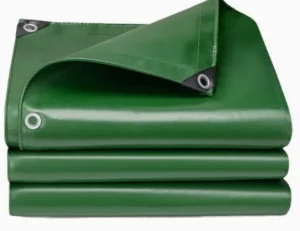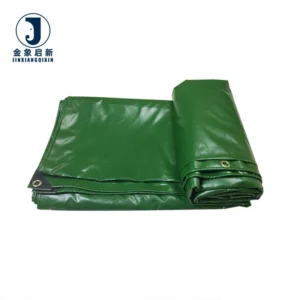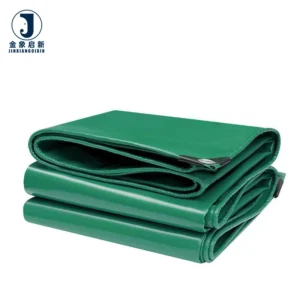
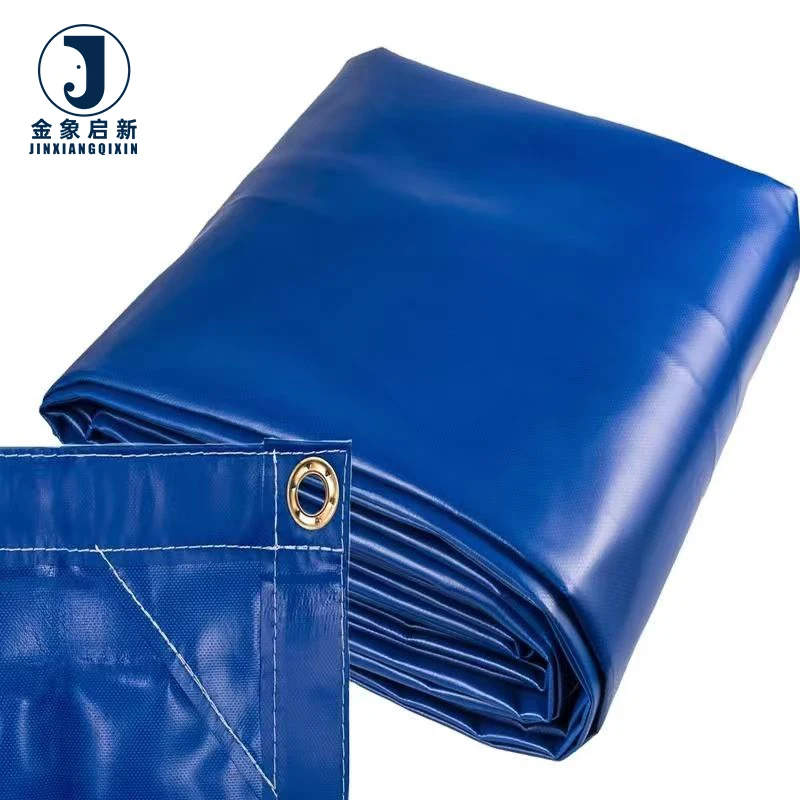
Precision Coating Control — three full production lines maintain consistent PVC adhesion across 3-meter wide rolls, verified at every stage before dispatch.
Technical Specifications
| Parameter | Value |
|---|---|
| Product Type | PVC Coated Tarpaulin |
| Weight (GSM) | 250gsm–1500gsm (confirm grade for your application) |
| Base Fabric Denier | 200D×300D, 500D×500D, 840D×840D, 1000D×1000D |
| Coating Material | PVC |
| Coating Method | Knife coated and laminated |
| Roll Width | 3 Meter |
| Finished Size Options | 3×4m, 6×8m, 8×10m, 10×12m or custom made |
| Surface Finish | Available in glossy or matte finish |
| Colour Options | Blue, yellow, black, green, white, and others on request |
| Temperature Range | -15°C to 70°C |
| UV Treatment | Customized — confirm the UV grade required for your market |
| Flame Retardant | Treated — available in flame retardant grades, confirm the standard for your region |
| Anti-Mildew | Anti-fungal treated |
| Waterproof Rating | Waterproof, rain-resistant construction |
| Working Life | 3–10 years depending on usage environment |
| Environmental Profile | Eco-friendly formulation |
| Standards | ISO, CE certified production |
Application Suitability
| Application | Exposure & Requirement |
|---|---|
| Truck and train tarpaulin | Constant road vibration, wind flexing, UV exposure, abrasion at tie-down points |
| Side curtain systems | Repeated rolling and folding, lateral tension, weld seam integrity under dynamic load |
| Top cover materials | Direct rainfall, pooling water, thermal expansion and contraction cycles |
| Sunshade and protection awning | Prolonged solar exposure, wind uplift forces, structural tension at mounting brackets |
| Swimming pool covers | Continuous moisture contact, chlorine or chemical splash, seasonal handling and folding |
Why GSM and Denier Together Define True PVC Coated Tarpaulin Performance
A quoted GSM figure means little without the base fabric denier behind it — both must match your load and flex conditions.
When a roll arrives on the dock, the first check is weight. But two fabrics at the same GSM can behave completely differently under tension if one uses a 200D×300D base and the other a 1000D×1000D base. The denier determines how the load distributes across the yarn intersections, while the PVC coating weight fills the gaps and provides the barrier properties. Specifying PVC coated tarpaulin by GSM alone leaves the structural backbone undefined, which is why technical buyers cross-reference both values before approving a grade. [NEED_CITE: tensile and tear test methods for coated fabrics per ISO 1421]
How the Base Fabric Weave Dictates Tensile Behaviour
The denier options in this range — from 200D×300D up to 1000D×1000D — represent fundamentally different yarn thicknesses woven into the scrim. A higher denier means thicker individual yarns, which resist tearing propagation more effectively because each yarn intersection carries a larger share of the load. For PVC coated tarpaulin used in side curtain applications where the fabric undergoes repeated lateral flexing, the 840D×840D or 1000D×1000D base fabrics maintain structural continuity far longer than lighter deniers under identical stress cycles.
Coating Method and Its Effect on Seam Adhesion
Knife coating forces PVC paste into the weave under blade pressure, filling interstices and creating a mechanical lock between coating and yarn. Lamination bonds a pre-formed PVC film to the scrim using heat and pressure. Each method produces a different surface profile that directly affects hot air welding parameters — knife coated surfaces typically require higher temperature settings to achieve full fusion at the overlap, while laminated surfaces may bond at lower temperatures but demand precise speed control. The PVC coated tarpaulin in this range is available through both processes. [NEED_CITE: hot air welding parameters for PVC coated polyester fabrics]
Reading the Specification Sheet Beyond the Headline Number
The 250gsm–1500gsm range spans lightweight awning fabric through to heavy-duty truck cover material, and the correct grade depends on the mechanical demand of the end use. A 500D×500D base at a mid-range GSM provides balanced performance for general-purpose covers, while a 1000D×1000D base at higher GSM delivers the tear resistance needed for tensioned structures. The glossy or matte finish selection influences not only appearance but also surface friction during fabrication and dirt retention in service. The -15°C to 70°C operating range means the PVC formulation remains flexible in cold weather without becoming tacky at elevated temperatures, which matters for rolls shipped across climate zones. Base fabric denier and PVC coating weight together determine weld seam peel strength — a critical factor when the seam, not the fabric body, becomes the failure point under load.
What Happens When the Specification Does Not Match the Load
A fabric specified too light for its application reveals the mismatch not in the centre of the panel but at the stress concentration points — where eyelets pull through, where tie-down straps bear against the surface, and where welded seams flex repeatedly. Colour inconsistency between rolls in the same shipment becomes visible only after panels are installed side by side on a truck or awning frame, forcing costly rework. Flame retardant treatment claimed without a referenced test standard can result in failed site inspections, particularly in mining and construction ventilation where compliance documentation is checked before installation. These failures trace back to incomplete specification at the inquiry stage, not to manufacturing defects. [NEED_CITE: common failure modes in PVC coated fabric installations]
Production Capability Aligned with Technical Fabric Requirements
The 10-person R&D team handles material selection and sample development for custom denier and GSM combinations, producing trial rolls within days rather than weeks. Three full production lines with 36 sets of professional equipment support the 3-meter coating width required for large-format panels without mid-width joins. Dedicated QA and QC inspection at every production stage catches GSM deviation and colour drift before rolls leave the facility. The knife coating and lamination processes are controlled for consistent PVC adhesion, which directly affects the peel strength at welded seams in finished products. Nearly 30 years of coated fabric production experience underpins the process parameters that determine how the material behaves on your fabrication table.
Documentation & Verification
- Material specification sheet stating GSM, base fabric denier, and coating weight for each roll dispatched
- UV and flame retardant test reports referencing the applicable standard for your market
- Pre-shipment inspection record confirming weight and colour consistency across the order
- ISO and CE certificates included with shipping documentation
- Certificate of origin and customs documentation prepared per destination country
Fabrication, Handling & Storage
- Hot air welding temperature must be calibrated to the glossy or matte surface finish selected
- Knife coated PVC surfaces require adjusted dwell time compared to laminated finishes for full seam fusion
- Store 3-meter rolls upright on end cores to prevent flat-spotting and permanent creasing
- Allow cold-stored rolls to reach workshop temperature before unrolling to avoid surface cracking below -15°C
- Anti-fungal treatment maintains coating integrity in humid storage conditions before fabrication
- Cutting layout should account for the full 3-meter width to minimise offcut waste on large panels
What to Include in Your Enquiry
To match the correct denier and GSM grade to your application, provide the end-use environment including UV exposure level, temperature extremes, and mechanical load conditions. Specify whether you require roll stock for your own fabrication line or finished cut-to-size panels with edge reinforcement. Confirm the fire safety or regulatory standard applicable in your destination market so that flame retardant treatment can be specified to the correct grade. Indicate your target roll width, colour preference, and annual volume to support accurate lead time and production planning.
Frequently Asked Questions
Q: How can I verify the GSM of PVC coated tarpaulin matches the quotation on arrival?
A: Request the pre-shipment inspection record that lists measured GSM per roll. On receipt, cut a measured sample from the roll edge, weigh it on a calibrated scale, and compare against the stated specification. Any significant deviation should be reported immediately with photographs before fabrication begins.
Q: Which flame retardant standard applies to my market for this PVC coated tarpaulin?
A: Flame retardant grades vary by region — European markets typically reference DIN 4102 classifications, while other regions use different frameworks. Confirm the specific standard required for your application and request a test report referencing that standard before placing the production order.
Q: How does glossy versus matte finish affect hot air welding?
A: Glossy PVC surfaces generally require slightly different temperature and speed settings than matte finishes to achieve full seam fusion. Request welding parameter guidance for the specific finish you select, and run test welds on offcuts before committing to production panels.
Q: Can I order custom widths within the 3-meter coating capability without high minimums?
A: The 3-meter knife coating line supports custom slit widths from the master roll. Minimum order quantities depend on the denier and GSM combination selected. Provide your required finished width and length per roll to receive a production plan and lead time estimate.
Q: What causes colour variation between rolls and how is it controlled?
A: Colour drift can occur when pigment batches differ or coating thickness varies across production runs. Each order is matched to a colour reference, and pre-shipment inspection checks consistency roll by roll. For large installations, request that all panels for one project are produced in a single batch.