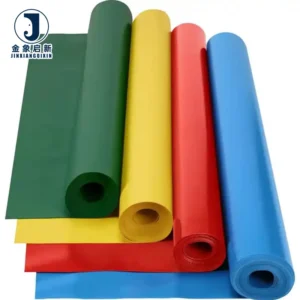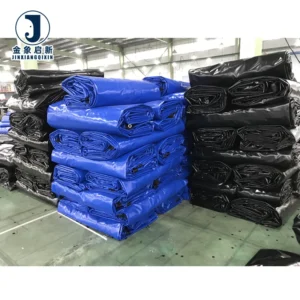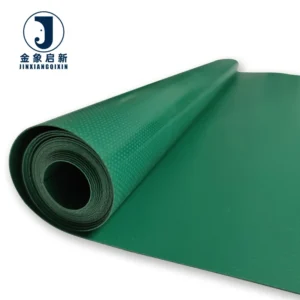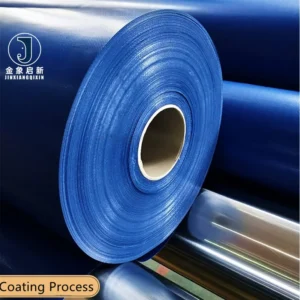
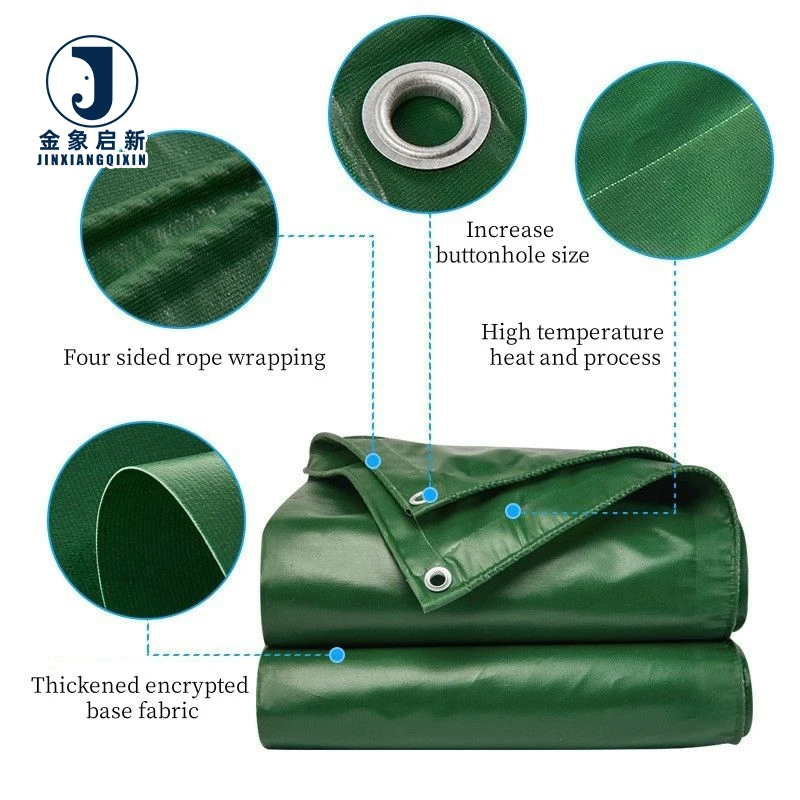
Coating Consistency Control — Every roll of this PVC coated tarpaulin is verified for coating weight and adhesion at each production stage, ensuring the material that arrives on your dock matches the specification you approved.
Technical Specifications
| Parameter | Value |
|---|---|
| Product Type | PVC Coated Tarpaulin Roll |
| Coating Material | PVC |
| Base Fabric | Tricot woven plain industrial fabric |
| Weight | 500GSM |
| Waterproof Rating | Anti-permeable ≥20KPa |
| Flame Retardant | ≤10 seconds (grade not stated — confirm DIN 4102 or NFPA 701 classification required for your market) |
| Low-Temperature Flexibility | Not fractured at -30°C |
| Corrosion Resistance | Acid, alkali and brine resistant |
| Mildew Resistance | Mildew proofing treatment applied |
| Surface Finish | Abrasion-resistant woven plain |
Application Suitability
| Application | Exposure & Requirement |
|---|---|
| Truck and trailer side curtains | Constant flexing at load points, road abrasion, UV exposure, weather cycling |
| Heavy-duty pool covers | Permanent water contact, chlorine and chemical exposure, tension across spans |
| Open-air cargo covers | Wind-driven rain, tie-down stress at grommets, stacking abrasion |
| Outdoor equipment enclosures | Long-term weather exposure, temperature fluctuation, mildew risk in humid climates |
Why a 500GSM PVC Coated Tarpaulin Roll Can Still Fail at the Weld
The coating adhesion — not the GSM alone — determines whether a heat-welded seam holds when the load flexes under transport stress.
Technical buyers sourcing PVC coated tarpaulin by weight often discover that a material meeting the stated GSM still produces weak weld lines. The tricot woven base in this 500GSM grade addresses a specific failure pattern: when the load shifts during transit, the fabric flexes at stress concentration points, and seams bonded to a poorly coated substrate delaminate before the base fabric reaches its tear limit. I have seen coated fabric rolls pass the weight check and still produce rejected batches at the fabrication stage because the coating bond to the base fabric was insufficient for thermal welding [NEED_CITE: coating adhesion test methods for PVC coated fabrics per ISO 2411]. The plain weave structure of the tricot base provides a mechanical key for the PVC coating, which directly influences how much peel strength a fabricated seam can sustain under repeated flex cycles.
How Tricot Base Construction Influences Tear Behaviour
The tricot woven structure differs from standard woven polyester scrim in how it distributes tear propagation. When a puncture or cut initiates in the base fabric, the interlocking loop structure of a tricot weave resists the tear from spreading along a single warp or weft line. For fabricators cutting and welding this PVC coated tarpaulin into custom truck and trailer covers, this means the finished panel is less likely to experience a catastrophic rip starting from a cut edge or a grommet point. The base denier and weave density work together with the 500GSM coating weight to produce a balanced tensile and tear profile rather than a material that is stiff but brittle.
Coating Adhesion and Its Effect on Heat-Weld Performance
The PVC coating applied to the tricot base must bond at a level that survives thermal reactivation during heat welding. When two panels are joined by high-frequency or hot-air welding, the coating layers melt and fuse, but the strength of that joint depends entirely on how well the coating was bonded to the base fabric during the original knife-coating process. A coating that sits on the surface without penetrating the tricot structure will produce a weld that peels under load [NEED_CITE: peel adhesion requirements for welded PVC coated fabric seams]. This is why fabricators running this material through automated welding equipment should request coating adhesion data before setting production parameters — a failed weld discovered after installation is a warranty claim, not a material cost.
Reading the Specification Sheet Beyond GSM
The 500GSM weight figure represents total coated fabric mass per square metre, but three underlying variables determine whether that weight translates into field performance. First, the base fabric denier and thread count establish the tensile and tear foundation — a heavier coating on a lighter base produces a stiff material that cracks at fold lines rather than a genuinely heavy-duty fabric. Second, the anti-permeable rating of ≥20KPa indicates the hydrostatic head the coating can withstand before water penetrates, which matters for pool covers and cargo applications where standing water or wind-driven rain applies sustained pressure. Third, the low-temperature flexibility rating of -30°C defines the boundary below which the PVC compound becomes brittle — a critical specification for transport fleets operating in northern climates where a tarpaulin that fractures when folded in winter is a safety hazard, not just a material failure. The corrosion resistance to acid, alkali and brine further extends the application range to marine and industrial environments where chemical exposure would degrade standard PVC compounds.
The Hidden Cost of Specifying on Weight Alone
When procurement evaluates PVC coated tarpaulin solely on GSM and price per roll, the downstream costs of specification errors surface at the fabrication and installation stages. A material that arrives lighter than quoted forces fabricators to re-engineer seam allowances or reject entire batches, delaying production schedules. Flame retardant grades claimed without a supporting test report create compliance failures at the job site — a mining or aviation ventilation installation that cannot produce a DIN 4102 B1 or NFPA 701 certificate on demand faces work stoppage, not a price negotiation [NEED_CITE: fire classification standards for flexible coated fabrics in construction and mining]. Colour drift between rolls in the same container order produces visible panel mismatches once installed side by side on a fleet of trailers, triggering rework that costs far more than the material savings achieved by choosing the lower bid.
Why Fabricators Source This Grade From Jinxiang
Three full production lines with 36 sets of professional equipment support consistent output of this 500GSM PVC coated tarpaulin at container-load volumes without sacrificing roll-to-roll uniformity. The 10-person R&D team handles material selection, custom width requirements, and sample development — producing a trial roll within days so fabricators can validate weld parameters before committing to a production order. Dedicated QA/QC at every production stage means coating weight is verified in-process, not just sampled at the end, which is the difference between a specification sheet that matches reality and one that does not. Pre-shipment inspection covers 100 percent of rolls before dispatch, catching GSM drift, colour variation, and coating defects before they reach the customer. Nearly 30 years of focused production on coated fabrics means the coating formulation and tricot base bonding process have been refined through repeated production cycles, not developed from scratch for each order.
Documentation & Verification
- Material specification sheet confirming 500GSM weight, tricot base construction, and PVC coating method
- Flame retardant test report available — confirm the standard required for your jurisdiction before ordering
- Pre-shipment inspection record documenting roll-by-roll GSM and coating thickness verification
- ISO and CE certificates covering production quality management for coated fabric manufacturing
- Roll packing list with batch traceability for container-load shipments
Fabrication, Handling & Storage
- Heat-weld temperature and speed settings should be validated against coating adhesion data specific to this 500GSM tricot-base grade
- Store rolls upright on core supports to prevent flat-spot deformation of the PVC coating under self-weight
- Allow cold-stored rolls to reach ambient temperature before unrolling to avoid cracking the PVC coating below -30°C flexibility threshold
- Cut panels with sealed-edge tooling to prevent moisture ingress into the tricot base fabric at exposed edges
- Clean with neutral pH detergent — alkaline or solvent-based cleaners may degrade the abrasion-resistant plain finish surface
What to Include in Your Enquiry
Specify the end-use application and exposure environment — whether the material will serve as a truck side curtain, a pool cover, or an open-air cargo enclosure — so the correct flame retardant grade and UV treatment can be confirmed. Indicate the roll widths and annual volume you require, along with any colour matching or custom sizing needs. If your project demands a specific fire classification for regulatory compliance, state the standard and grade so the test documentation can be prepared before production begins.
Frequently Asked Questions
Q: How is the 500GSM weight verified on each roll before shipment?
A: Coating weight is monitored at each stage of the production process, not only at final inspection. Every roll undergoes GSM verification against the stated specification before it is cleared for dispatch. The pre-shipment inspection record documents the actual measured weight per roll, so you receive traceability data — not just a certificate stating the target value.
Q: Which flame retardant test standard applies to the ≤10 second rating?
A: The ≤10 second result is stated in the product data, but the specific test method — DIN 4102 B1, NFPA 701, or M2 — is not confirmed in the source documentation. Before placing an order, request the test standard that your local regulatory authority requires so the correct grade can be produced and the corresponding certificate supplied with the shipment.
Q: How does the tricot base differ from standard woven scrim in tear performance?
A: The tricot woven structure distributes tear propagation across multiple yarn paths rather than allowing a rip to follow a single warp or weft line. This makes the base fabric more resistant to tear spread from cut edges or grommet stress points. For fabricators, this translates into panels that tolerate field damage without catastrophic failure along the weave direction.
Q: What coating adhesion data is available for setting heat-weld parameters?
A: Coating adhesion values can be provided upon request to help fabricators calibrate high-frequency or hot-air welding equipment. Running a test weld on a sample piece before full production is recommended, as the optimal temperature and dwell time depend on both the coating formulation and the welding equipment in use at your facility.