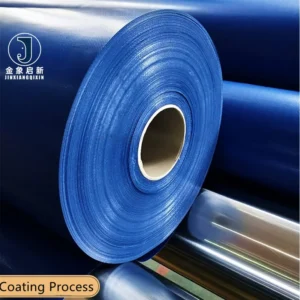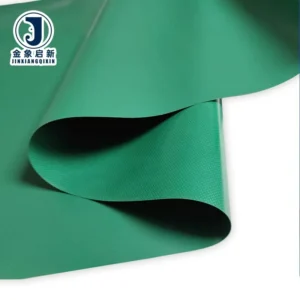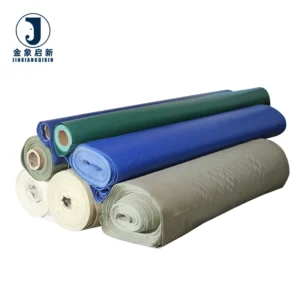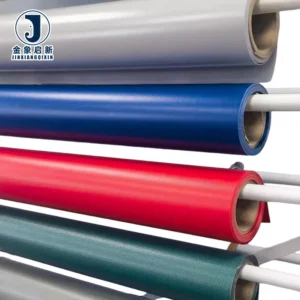
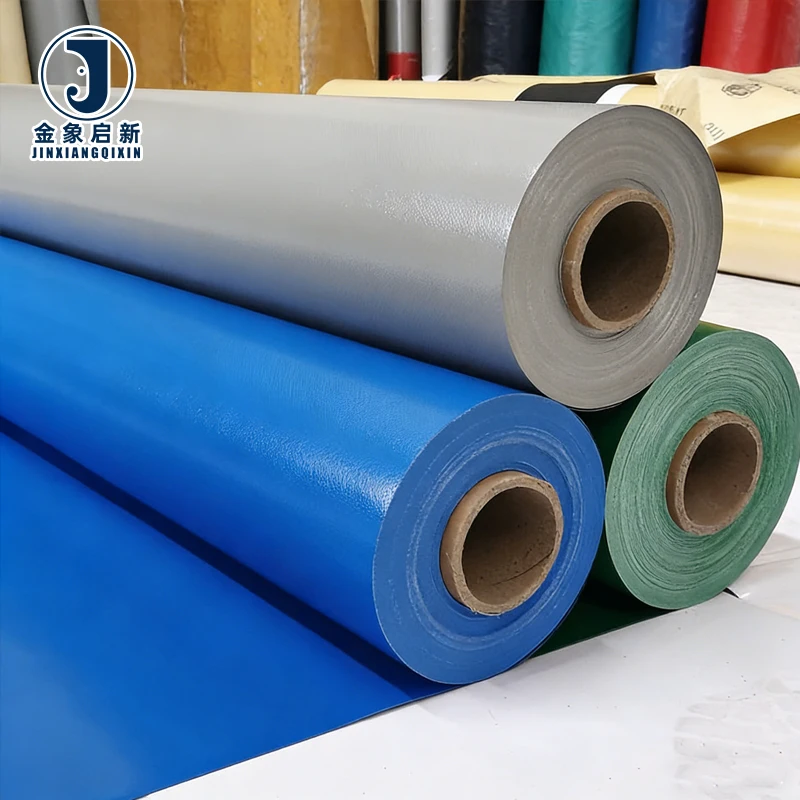
Verified Coating Weight — each roll ships with a specification sheet stating exact GSM, base fabric denier and coating method, backed by pre-shipment inspection records before dispatch.
Technical Specifications
| Parameter | Value |
|---|---|
| Product Type | PVC Coated Tarpaulin Roll |
| Weight (GSM) | 610gsm / 650gsm / 800gsm |
| Coating Material | PVC |
| Base Fabric | Polyester woven, ripstop pattern available |
| Water Resistance | Waterproof (test basis not stated) |
| Flame Retardant | Fire retardant grades available — confirm the grade required for your market |
| UV Treatment | Anti-UV treatment available — confirm test basis and documentation |
| Tensile Strength | High tensile strength base fabric (test standard not stated) |
| Surface Finish | Glossy or matte finish available |
| Product Form | Roll |
Application Suitability
| Application | Exposure & Requirement |
|---|---|
| Truck and trailer side curtains | Constant flexing at load points, road abrasion, UV exposure, wind flutter stress |
| Tent and awning fabrication | Extended outdoor weathering, rain runoff, wind load tension on frame contact points |
| Inflatable product manufacturing | Internal air pressure cycling, repeated fold-and-unfold, coating adhesion under stress |
| Outdoor equipment covers | UV degradation, moisture ingress, handling abrasion during removal and replacement |
| Membrane structure panels | Long-span tension, thermal expansion and contraction, welded seam integrity |
Why the GSM on Your Quotation Might Not Match the Roll on the Dock
Every PVC coated tarpaulin roll gsm claim should be verifiable at the receiving dock, not just on paper.
Technical buyers have opened containers to find material that feels lighter than agreed, only to discover the coating weight was distributed unevenly or the base fabric denier was substituted for a lower grade. When you specify a PVC coated fabric gsm for a truck side curtain application, a shortfall in coating weight directly reduces abrasion resistance at the flex points where the fabric folds over the load. Fire retardant or anti-UV treatments add further complexity — without a test report tied to the exact roll batch, the claimed treatment may not reflect what actually arrived [NEED_CITE: coating weight verification methods for PVC tarpaulin].
Coating Weight Distribution and Its Effect on Tensile Behaviour
When sourcing PVC coated tarpaulin roll gsm across the 610gsm, 650gsm and 800gsm range, the relationship between coating weight and base fabric construction determines how the material performs under load. A heavier coating does not automatically mean higher tensile strength — the base fabric denier, weave density and yarn orientation carry the structural load, while the PVC coating protects against environmental exposure and contributes to abrasion resistance at contact points.
How Coating Method Shapes Weld and Seam Performance
The coating method — whether knife-over-roll, laminating or calendering — determines how the PVC bonds to the polyester base fabric and how it behaves during heat welding. Knife-coated fabrics typically show stronger peel resistance at the weld line because the coating penetrates the weave interstices rather than sitting as a surface film. For fabricators producing truck covers or inflatable structures where welded seams carry structural load, the coating method is as critical as the stated PVC coated fabric gsm [NEED_CITE: coating method influence on weld peel strength per ISO 1421].
Reading the Specification Sheet Beyond the GSM Number
The GSM value alone tells you the total weight per square metre but reveals nothing about how that weight is distributed between base fabric and coating. A 650gsm roll with a high-denier, tightly woven base and a thinner coating may outperform a 650gsm roll with a lighter base and heavier coating in tear resistance, yet fail earlier in abrasion scenarios. The ripstop woven pattern option further changes tear propagation behaviour — when a puncture occurs, the reinforced grid limits tear spread across the panel. For inflatable and membrane structure applications where internal pressure loads the fabric biaxially, specifying base fabric denier alongside the PVC coated tarpaulin roll gsm gives a more complete picture of how the material will behave under tension. Surface finish — glossy or matte — also influences practical performance: glossy surfaces shed water and dirt more readily, while matte finishes reduce glare and may offer better adhesion for printed graphics or secondary coatings [NEED_CITE: relationship between base fabric denier and tear strength in coated textiles].
The Hidden Cost of Specifying on Weight Alone
When a fabricator selects material based only on GSM without verifying base fabric construction, the consequences appear after the product enters service. A truck side curtain made from a roll where the base fabric denier was lighter than expected will show premature failure at the weld line — the point where the load flexes most — because the coating carries a share of the structural load it was never designed to bear. Fire retardant grades claimed without supporting documentation create a different problem: the installed structure fails inspection because the test certificate does not match the material batch on site. Colour variation between rolls in the same order becomes visible once panels are installed side by side, forcing rework or panel replacement. These are not material defects in the traditional sense — they are specification gaps that a complete material data sheet and pre-shipment inspection record would have prevented [NEED_CITE: common specification failures in PVC coated fabric procurement].
Why Technical Buyers Source This Range Here
Nearly 30 years of focused production on coated fabric gives this facility deep process control over coating weight consistency and base fabric adhesion across the 610gsm, 650gsm and 800gsm grades. Three full production lines and 36 sets of professional equipment support bulk roll output with reliable scheduling for container-level orders. A 10-person R&D team handles material selection, custom width development and sample production, allowing technical buyers to receive test samples within days rather than weeks. Every roll passes through dedicated QA/QC at each production stage, with 100% inspection before shipment ensuring that the PVC coated tarpaulin roll gsm stated on the order matches what arrives on the dock. ISO and CE certified production provides a baseline compliance framework, with test reports for UV and flame-retardant grades supplied where applicable to support market-specific documentation requirements.
Documentation & Verification
- Material specification sheet stating exact GSM, base fabric denier and coating weight per roll line
- Test reports for fire retardant and anti-UV grades supplied with the applicable standard referenced
- Pre-shipment inspection record with weight verification against stated PVC coated fabric gsm before dispatch
- Roll packing list detailing dimensions, net weight and roll count per container load
- ISO and CE certificates available to confirm production compliance framework
- Certificate of origin and customs documentation included for international shipment
Fabrication, Handling & Storage
- Heat welding parameters should be adjusted for the specific 610gsm, 650gsm or 800gsm grade to avoid coating burn-through or incomplete bond
- Store rolls upright on end caps in a dry environment to prevent permanent creasing across the PVC coating surface
- Unroll and allow the material to relax before cutting to reduce tension-induced distortion in the ripstop woven base
- Use compatible PVC-based adhesives for field repairs, matching the glossy or matte finish of the roll surface
- Plan cutting layouts around the roll width to minimise offcut waste and reduce the number of welded seams in the finished panel
- Avoid dragging rolls across abrasive surfaces during handling to protect the coating integrity before fabrication
What We Need to Specify Your Material Correctly
To provide an accurate material recommendation, share the end-use application and the environmental conditions the fabric will face — particularly UV exposure duration, temperature range and mechanical stress type. Confirm the fire retardant or anti-UV standard your target market requires so we can match the available treatment grade to your compliance documentation. Specify the roll width, colour and whether you need glossy or matte finish, along with estimated annual volume, so we can confirm production lead time and container loading configuration.
Frequently Asked Questions
Q: How is the GSM verified on each roll before shipment?
A: Each roll is weighed and measured to calculate actual grams per square metre, which is then compared against the material specification sheet. The pre-shipment inspection record documents the result per roll, and this record is available to the buyer before dispatch. Any roll falling outside tolerance is flagged and replaced before container loading.
Q: Which fire retardant standards can be supplied with this PVC coated fabric?
A: Fire retardant treatment is available across multiple grades, but the applicable standard — such as DIN 4102, NFPA 701 or a national building code classification — depends on your target market and end-use application. Request the specific standard during inquiry so the correct treatment grade is applied and the matching test report is included in your documentation package.
Q: How does the ripstop weave pattern affect tear propagation?
A: The ripstop woven base fabric incorporates reinforced yarns at regular intervals within the grid. When a puncture occurs, these reinforcement points limit the tear from spreading across the full panel width. This is particularly relevant for inflatable and membrane applications where a small puncture under biaxial tension could otherwise propagate rapidly.
Q: Can different GSM grades be combined in a single container order?
A: Yes, mixed GSM grades and colours can be loaded in one container provided each roll line is clearly identified on the packing list. This allows fabricators serving multiple product lines to consolidate orders. Confirm the specific grades, widths and quantities during the quotation stage so container loading can be planned efficiently.
Q: What documentation supports the anti-UV treatment claim?
A: Where anti-UV treatment is specified, a test report documenting the exposure protocol and performance result is supplied with the shipment. The report references the treatment grade applied to the specific production batch. Request this documentation during the inquiry to ensure it meets the compliance requirements of your target market.