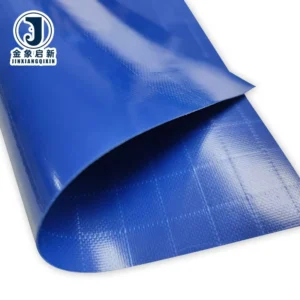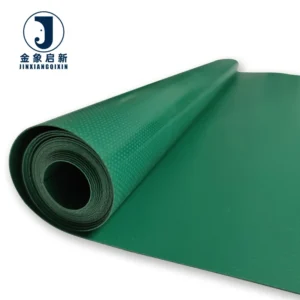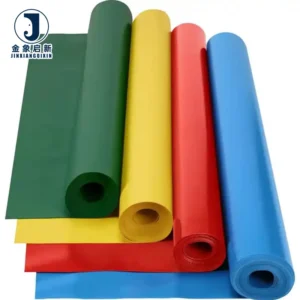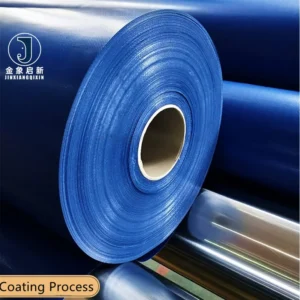
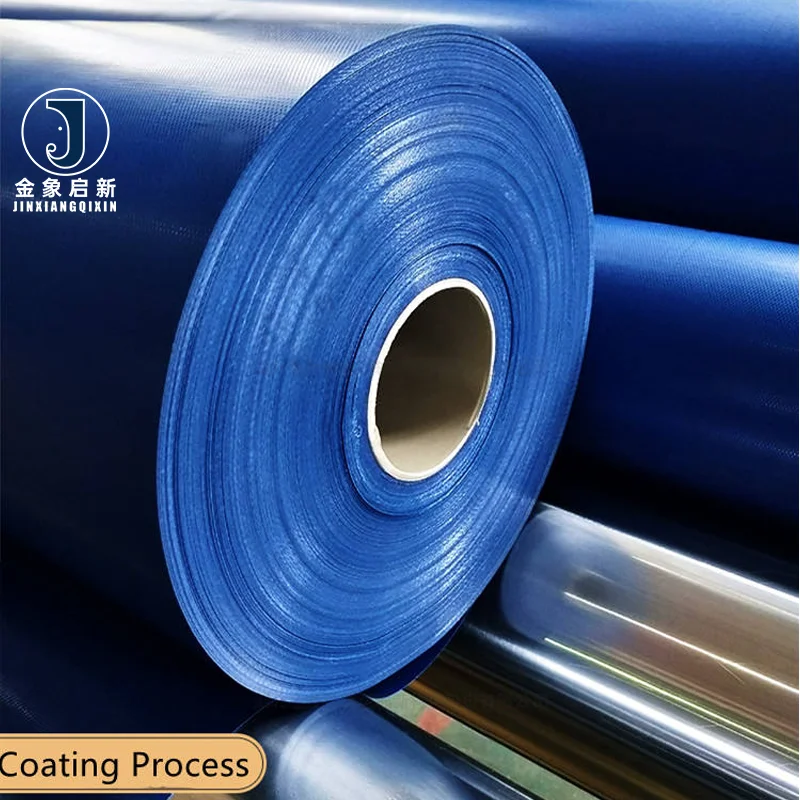
Coating Weight Control — Every roll of this 650 GSM PVC coated tarpaulin is produced under in-process QA with coating weight checked at each stage and 100% pre-shipment inspection before dispatch.
Technical Specifications
| Parameter | Value |
|---|---|
| Product Type | PVC Coated Tarpaulin |
| Weight | 650 GSM |
| Base Fabric Denier | 1000D × 1300D |
| Mesh Count | 20 × 20 |
| Total Thickness | 0.46 mm |
| Coating Material | PVC |
| Base Material | Polyester |
| Tensile Strength (Warp) | 2550 N |
| Tensile Strength (Weft) | 2250 N |
| Waterproof | Water Resistant |
| Color | Customizable |
| Printing Option | Custom brand printing available |
| Key Features | Water Resistant, Flame Retardant grades available, Anti-UV treatment available |
Application Suitability
| Application | Exposure & Requirement |
|---|---|
| Truck side curtain | Constant flexing at load points, road debris abrasion, UV and weather exposure, hot-air welded seams |
| Trailer cover | High-speed wind load, tie-down stress at hems, rain and spray ingress, repeated roll and fold cycles |
| Machine cover | Outdoor storage, dust and moisture sealing, abrasion from equipment vibration, long-term UV exposure |
| Tent and awning fabric | Tension under wind load, seam integrity at pole and ridge points, UV degradation over extended seasons |
| Wood and stockpile cover | Moisture barrier, weight of snow load, abrasion from rough-sawn timber edges |
Why the GSM on Your Quotation May Not Match the Roll That Arrives
Verified weight starts at the coating head, not at the scale in the warehouse.
Technical buyers who have received PVC coated tarpaulin rolls lighter than quoted know the cost is not just the missing material — it is the weld that fails at the flex point, the seam that splits under tension, the specification that cannot be signed off on site [NEED_CITE: tensile and tear test methods for coated fabrics per ISO 1421]. When PVC Coated Tarpaulin 650 gsm is specified for truck curtain or awning fabrication, the fabricator cuts and welds before the shortfall appears on the scale. At that stage, the entire roll is already committed and the downtime is already spent.
How Coating Weight Translates to Weld Behaviour at the Seam
The relationship between PVC coating thickness and hot-air weld performance is direct. A 0.46 mm total thickness across this 650 GSM PVC coated polyester tarpaulin means the PVC layer has sufficient mass to melt and fuse under standard hot-air welding temperatures, producing a bond that holds through repeated flexing. Fabricators cutting truck side curtains or tent panels rely on predictable melt behaviour — too thin and the weld burns through before bonding; too thick and the heat does not penetrate fully, leaving a cold joint that peels under load.
What the 1000D × 1300D Base Denier Means for Tear Propagation
The asymmetric denier construction — 1000D warp against 1300D weft — places heavier yarn in the cross-machine direction where trailer curtains and awning spans experience lateral wind load. This denier pairing, combined with the 20 × 20 mesh count, controls how a puncture or cut propagates through the fabric. A tighter weave arrests tear spread at each intersection, while a looser weave allows the tear to run [NEED_CITE: tear propagation behaviour in woven coated fabrics per ISO 13937]. Technical buyers specifying PVC Coated Tarpaulin 650 gsm should compare the denier-to-mesh ratio against their expected load profile, not weight alone.
Reading the Tensile Data Beyond the Headline Number
The warp tensile of 2550 N and weft tensile of 2250 N reflect the combined contribution of the polyester base fabric and the PVC coating adhesion. Tensile strength in coated fabrics is governed by yarn count, weave density and coating penetration into the scrim — a heavier coating does not automatically mean higher tensile if the base fabric is under-specification. For fabricators working with PVC Coated Tarpaulin 650 gsm, the warp-weft differential of roughly 300 N indicates the direction in which the fabric will resist load most effectively, which matters when orienting panels on a side curtain or tensioned awning. The test basis for these values should be confirmed with the material specification sheet before writing them into a project specification [NEED_CITE: DIN 53354 test methods for tensile properties of coated fabrics].
The Hidden Cost of Specifying on GSM Without Checking the Base Fabric
A roll that weighs 650 GSM on arrival can still underperform if the weight comes from excess coating on a lighter base fabric rather than a properly constructed scrim. The result is a material that passes the scale check but tears at the hem when a truck cover is strapped down, or delaminates at the weld after one season of flexing. Fabricators who have dealt with seam failure before the fabric itself shows wear will recognise this pattern — the coating separates from the polyester base at the exact point the load flexes most [NEED_CITE: coating adhesion failure modes in PVC tarpaulin applications]. Batch-to-batch consistency in base denier and mesh count, verified at each production stage, is what prevents this failure from repeating across an order.
Why Fabricators Source This Grade Here
Three full production lines with dedicated coating heads allow consistent GSM output across large roll orders, with in-process QA checking coating weight before the roll is wound. The 10-person R&D team develops samples for custom width, colour or print within days, so fabricators can run weld tests on their own equipment before committing to bulk. Every roll ships with a pre-shipment inspection record confirming weight, colour and dimensional tolerance against the purchase specification. PVC versus PE performance differences — smooth coating surface, overall sealing, hot-air-weldable repairability — are backed by process control rather than marketing claims. Documentation including ISO and CE certificates ships with every dispatch, giving technical buyers the traceability their end customers require.
Documentation & Verification
- Material specification sheet stating 650 GSM, 1000D × 1300D base fabric and coating weight per roll
- Test report for UV and flame-retardant grades where applicable, with grade clearly documented
- Pre-shipment inspection record confirming roll-to-roll weight and colour consistency
- ISO and CE certificates included with every shipment for compliance traceability
- Certificate of origin and customs documentation prepared per destination market requirements
Fabrication, Handling & Storage
- Hot-air weld temperature and speed should be calibrated to the 0.46 mm total thickness for full PVC fusion
- Orient panels with warp direction aligned to the primary load path based on the 2550 N warp tensile value
- Store rolls upright on a flat surface to prevent permanent creasing through the polyester scrim
- Allow rolls to acclimatise before unrolling in cold conditions to avoid low-temperature coating stiffness
- Use PVC-compatible solvent cleaners only, as aggressive chemicals may degrade the coating surface adhesion
- Plan cutting layout to minimise off-cuts and reduce the number of welded joins in finished covers
Before You Request a Quote
Share the specific application — truck side curtain, awning span, equipment cover — along with the exposure conditions your end user faces. Confirm whether your market requires a documented flame-retardant grade or UV test report, and specify the roll width and annual volume you need. If custom colour or brand printing is part of the project, provide the Pantone or RAL reference so a sample roll can be produced for your approval before production begins.
Frequently Asked Questions
Q: How is the 650 GSM weight verified before the rolls leave the factory?
A: Coating weight is monitored at every stage of production, not only at final weighing. Each roll undergoes a pre-shipment inspection where weight is measured against the stated 650 GSM and recorded in the inspection report that ships with your order. This ensures the PVC coating mass and base fabric combined meet specification before the roll is packed.
Q: Can I get a flame-retardant test report with my batch?
A: Flame retardant grades are available for this PVC Coated Tarpaulin 650 gsm, but the specific grade and test standard must be confirmed before production. Once agreed, the test report matching your required standard is supplied with the batch documentation. Specify the fire classification your market demands so the correct formulation is applied.
Q: How do you keep colour consistent across multiple rolls in one order?
A: Colour is matched against a confirmed reference sample and checked at each production stage under controlled lighting. The pre-shipment inspection includes a roll-to-roll colour comparison, and any variation outside tolerance is flagged before packing. This is critical when multiple rolls are installed side by side on a truck curtain or awning.
Q: What is the difference between hot-air welding and sewing for this fabric?
A: Hot-air welding melts the PVC coating on both sides of the seam, creating a continuous bond that flexes with the fabric. Sewing punctures the 1000D × 1300D polyester base, creating potential water ingress points and stress concentrations at each stitch. For truck side curtains and tensioned structures, welded seams generally outperform sewn seams at flex points.
Q: How quickly can I receive a sample for weld testing on my equipment?
A: Sample rolls are developed within days for standard specifications and slightly longer for custom colour or width. Fabricators are encouraged to test hot-air weld parameters on the sample using their own equipment before approving bulk production, ensuring seam performance matches the requirements of the finished application.