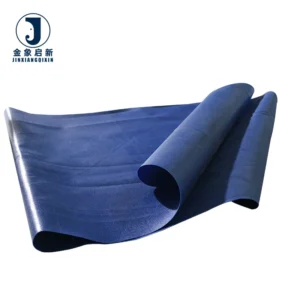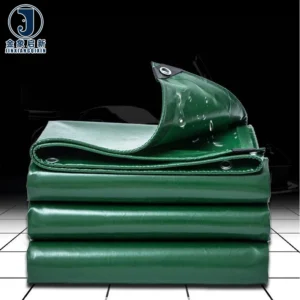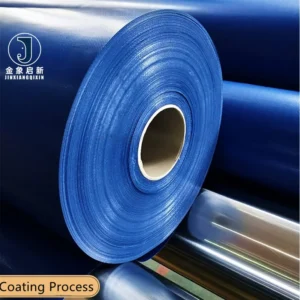
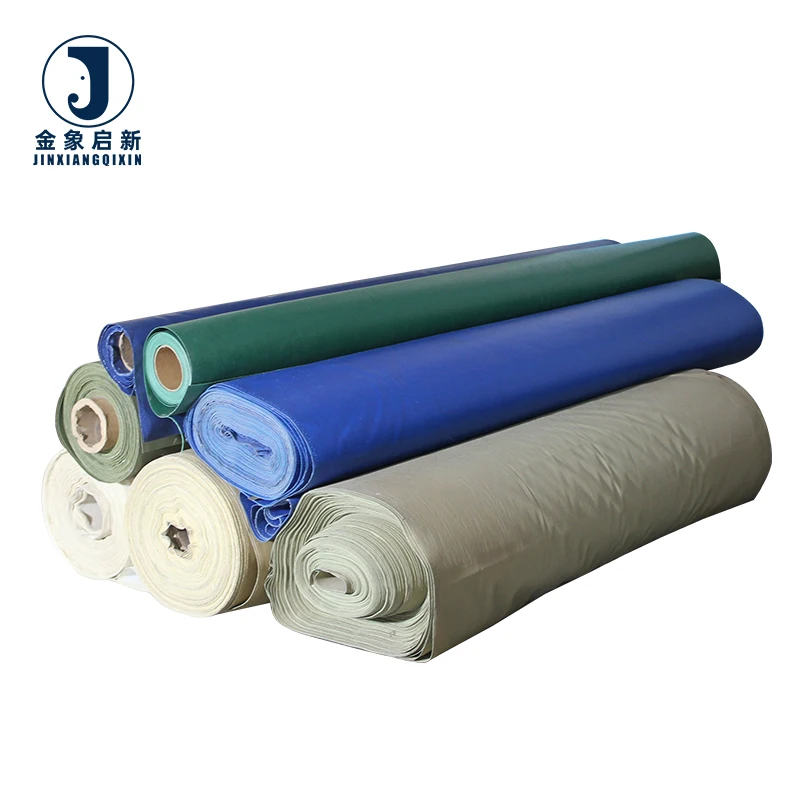
Coating weight control — every roll of PVC Coated Tarpaulin Roll for Awning and Tents is checked against the stated GSM at three points across the web width before it leaves the line.
Technical Specifications
| Parameter | Value |
|---|---|
| Product Type | PVC Coated Tarpaulin Roll |
| Coating Material | HDPE weaving with LDPE lamination on both sides |
| Weight (GSM) | 50gr/m² ~ 220gr/m² (range covers product family — confirm the grade for this item) |
| Total Thickness | 0.2-0.4mm / 8 mil-16 mil |
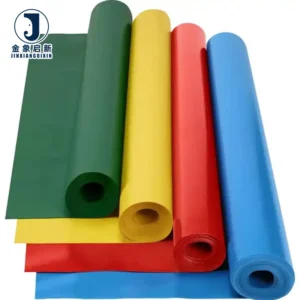
| Color Options | Blue, Blue/Orange, Green, Grey, Black, Clear, Grey/Green, Orange, or custom color |
| Waterproof Rating | Waterproof and washable |
| Tear Resistance | Tear resistant super durability |
| UV Treatment | UV treatment available (test basis not stated) |
| Anti-Mildew | Mildew proof and anti-aging |
| Printing Option | Custom brand printing accepted |
| Standards | ISO, CE |
Application Suitability
| Application | Exposure & Requirement |
|---|---|
| Awning fabrication | Prolonged sun exposure, wind load cycling, colour retention for retail and residential fronts |
| Tent and canopy structures | Rain ingress prevention, frame flex at ridge lines, UV degradation in open-air event sites |
| Temporary shelter covers | Rapid deployment, repeated folding and unfolding, moisture barrier integrity |
| Outdoor event canopies | Crowd-visible aesthetics, mildew resistance in humid climates, wash-down between events |
| Shade structures | Continuous solar radiation, thermal expansion of supporting frames, tensile load at fixing points |
Why GSM Alone Does Not Define Tarpaulin Durability
The real measure of strength sits in how the HDPE woven base and the LDPE lamination share the load, not in the GSM figure printed on the label.
Buyers sourcing PE Tarpaulin material coating GSM specifications often focus on a single number, yet I have seen lightweight grades outperform heavier ones when the weave density and lamination adhesion are well matched. A roll that arrives at the stated weight can still delaminate at the seams if the coating bond was not controlled during production [NEED_CITE: relationship between coating adhesion and seam failure in laminated fabrics]. Specifying the base fabric denier alongside the GSM gives a clearer picture of how the material will behave once it is cut, welded or stitched into a finished awning or tent panel.
How the Woven Substrate Carries the Tensile Load
The HDPE woven base fabric acts as the structural skeleton of the PE Tarpaulin material coating GSM specifications range. Its denier and weave density determine how tensile forces distribute across warp and weft when the fabric is tensioned on a frame. A tighter weave resists tear propagation more effectively, which matters at stress concentration points such as ridge poles and corner fixings on tent structures.
Dual-Side LDPE Lamination and the Waterproof Barrier
The LDPE lamination applied to both faces seals the woven substrate, creating a continuous waterproof membrane. This coating method differs from PVC knife-coating in that it relies on heat and pressure to bond the film to the weave rather than filling the interstices with liquid plastisol. The result is a lighter, more flexible sheet that still blocks water penetration, though the peel strength at the lamination interface is the critical variable [NEED_CITE: peel strength test methods for laminated tarpaulin per ISO standards]. For awning fabricators who heat-weld seams, the LDPE layer must fuse cleanly without bubbling or separation.
Reading GSM, Thickness and Denier Together
The GSM value tells you the total mass per square metre, combining both the woven HDPE yarns and the LDPE coating on each side. Two rolls can share the same GSM yet behave differently if one achieves it through a heavier base fabric while the other compensates with thicker lamination. Thickness in the 0.2–0.4 mm range correlates with the coating build-up; a thicker LDPE film adds rigidity and puncture resistance but may reduce drape. When selecting a grade for inflatable tent structures, fabricators balance these three parameters against the expected wind load and inflation pressure. The UV treatment, where specified, must be verified against a documented test method before committing to container quantities, as field degradation rates vary significantly by climate zone [NEED_CITE: UV degradation test protocols for polyethylene-based outdoor fabrics].
The Hidden Cost of Specifying on Weight Alone
When a roll arrives below the quoted GSM, the shortfall may be invisible until the finished awning is under wind load or the tent panel is tensioned on site. I have seen lamination delamination at fold lines where the coating was thinner than specified, exposing the HDPE weave to moisture ingress. Colour inconsistency between rolls from the same order forces fabricators to sort and match panels manually, delaying shipment and increasing waste. These issues trace back to insufficient in-process control during weaving and lamination rather than any single material flaw [NEED_CITE: common failure modes in laminated tarpaulin at flex points]. The cost of rework on a container load far exceeds the effort of requesting pre-shipment GSM and thickness verification per roll.
Why Fabricators Source This Roll Stock Here
Three full production lines and thirty-six sets of equipment allow the mill to hold GSM tolerance tightly across the full 50gr/m² to 220gr/m² family without slowing output. A ten-person R&D team develops custom colour matches and lamination weights against buyer-supplied swatches, turning samples around in days rather than weeks. Dedicated QA staff inspect every roll before dispatch, recording weight and thickness against the order specification. The coating process is calibrated per batch, so colour and gloss remain consistent from the first roll to the last in a container shipment. Buyers receive material specification sheets and pre-shipment inspection records with their documentation package, not after they ask for them.
Documentation & Verification
- Material specification sheet stating base fabric denier, LDPE coating weight and GSM for each roll
- UV treatment test report supplied where the grade has been specified on the purchase order
- Pre-shipment inspection record confirming thickness and weight per roll against stated tolerances
- Roll packing list with batch reference for colour traceability across the container load
- ISO and CE certificates included with customs documentation
Fabrication, Handling & Storage
- Heat-weld LDPE surfaces at temperatures matched to the coating thickness to avoid delamination
- Store rolls horizontally on pallets to prevent edge crushing on the 0.2-0.4mm laminated layers
- Allow rolls to acclimatise before unrolling in cold weather to prevent LDPE film cracking
- Use mild detergent for wash-down; avoid solvents that attack the LDPE lamination bond
- Plan cut patterns around standard roll widths to minimise off-cuts at awning panel edges
- Reinforce eyelet zones with additional LDPE patches where tensile loads concentrate
What We Need to Quote Your Roll Stock
Tell us the end-use structure — whether the fabric will be tensioned on an awning frame, heat-welded into inflatable tent panels, or sewn into canopy sections. Share your target GSM and thickness, along with the colour references or custom Pantone codes required for the order. If your market demands a documented UV or mildew treatment grade, specify the standard you need so we can align the formulation and testing before production begins.
Frequently Asked Questions
Q: How do I verify the actual GSM when the rolls arrive?
A: Cut a measured sample from each roll and weigh it on a calibrated scale. Compare the result against the material specification sheet supplied with the shipment. Our pre-shipment inspection record documents the weight per roll so any discrepancy can be traced to a specific batch reference before the container leaves the mill.
Q: What is the difference between PE-laminated and PVC-coated tarpaulin for welding?
A: PE lamination fuses at lower temperatures and requires shorter dwell times on a hot-air or wedge welder. PVC coating typically needs higher heat and longer pressure cycles. The choice depends on your existing welding equipment and the flexibility you need in the finished awning or tent panel.
Q: Can I get a UV treatment test report with my shipment?
A: Yes, where UV treatment has been specified on the purchase order. Confirm the test standard required for your destination market — such as accelerated weathering or outdoor exposure — so the formulation and documentation match before we run your batch.
Q: How do you control colour consistency across multiple rolls?
A: Each production batch is mixed from a single colour formulation run. Rolls from the same batch are grouped together on the packing list. If your order spans multiple batches, we flag this in advance and provide colour swatches from each batch for your approval before dispatch.