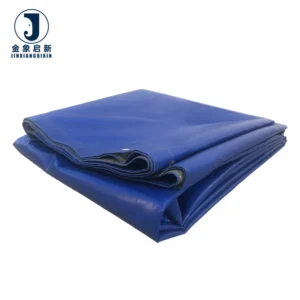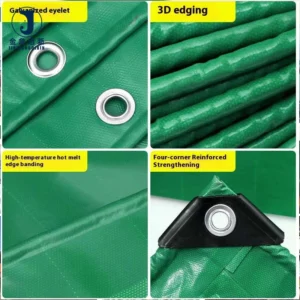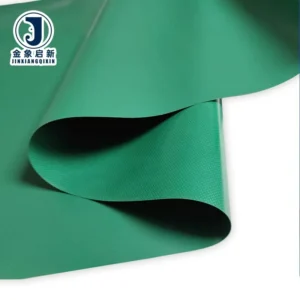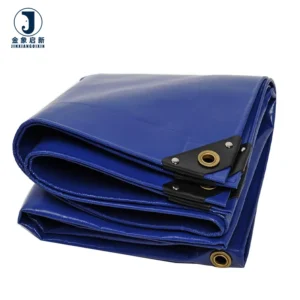
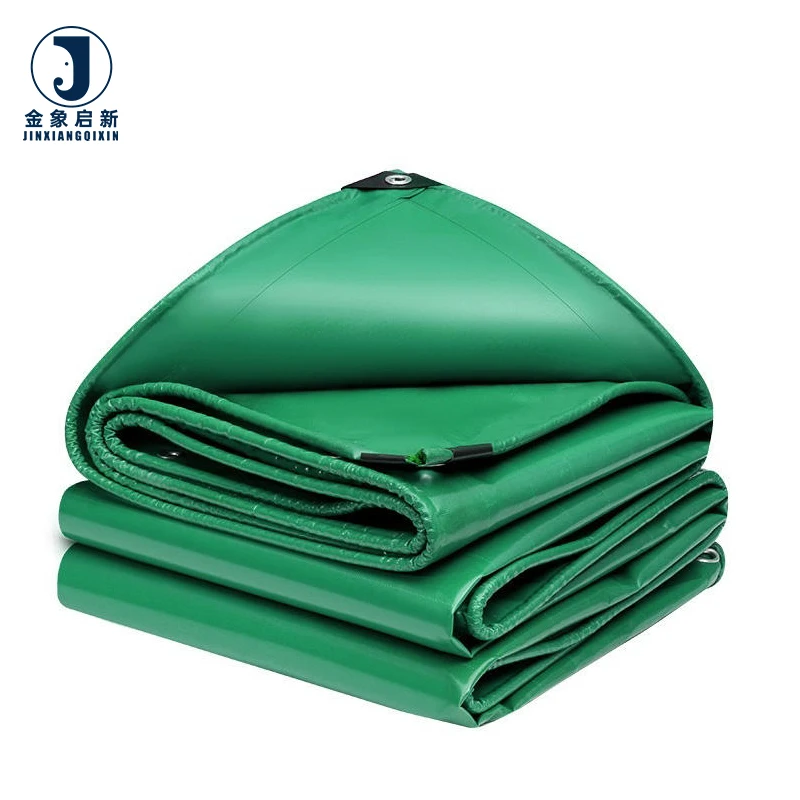
Proven Coating Adhesion Control — Nearly three decades of PVC coating process refinement ensure consistent bonding between warp knitted base fabric and PVC layers across every roll produced.
Technical Specifications
| Parameter | Value |
|---|---|
| Product Type | PVC Coated Tarpaulin Roll |
| Coating Material | PVC |
| Base Fabric | Warp Knitted Polyester |
| Weave Style | Plain |
| Surface Treatment | Waterproof, Anti-Static (grade not stated in source) |
| Flame Retardant | Available — confirm the grade required for your market |
| UV Treatment | Available — test basis to be confirmed per order |
| Color | Customizable |
| Assembly State | Roll |
| Certifications | ISO, CE |
Application Suitability
| Application | Exposure & Requirement |
|---|---|
| Poultry farm enclosure covers (broiler, chicken) | Continuous outdoor weather exposure, moisture from washing cycles, ammonia-rich atmosphere inside shelters |
| Pig and sheep pen covers | Direct animal contact, high humidity, repeated cleaning with water and agricultural disinfectants |
| Agricultural tent and temporary shelter fabric | Tensioned frame loading, wind uplift stress, seasonal UV exposure during deployment |
| Livestock equipment waterproofing | Abrasion from machinery contact, chemical splash from feed and fertilizer handling |
Why a Material Spec Sheet Matters More Than a Quoted GSM for PVC Coated Tarpaulin Warp Knitted Farm Cover
A quoted GSM tells you weight, not how that weight is distributed between base fabric and coating — and that distribution determines real-world performance.
When sourcing PVC coated tarpaulin warp knitted farm cover material, buyers frequently receive rolls that meet the stated weight on a scale but underperform in the field. The reason is often a thinner base fabric compensated by heavier coating filler, which inflates GSM without improving tensile or tear resistance. Without a material specification sheet that breaks down base fabric denier, weave density, and coating weight separately, the number on the quotation becomes a hollow metric. [NEED_CITE: relationship between base fabric denier and coated fabric tensile strength per ISO 1421]
Base Fabric Architecture and Its Effect on Farm Cover Durability
The warp knitted polyester base fabric used in this PVC coated tarpaulin roll provides inherent dimensional stability under tension, which is critical when the material is stretched over poultry farm frames or livestock pen structures. Unlike woven fabrics where yarns can shift at intersection points, warp knitted construction locks yarns into interlocking loops that resist tear propagation. This structural advantage matters most at stress concentration points such as ridge poles and corner anchors on agricultural tents.
Coating Method and Waterproof Integrity for Livestock Environments
The PVC coating applied to this warp knitted base creates a continuous waterproof barrier that prevents moisture ingress during washing cycles common in poultry and pig farming operations. The coating formulation and application method determine how well the PVC layer bonds to the polyester substrate, which directly affects whether the material delaminates under repeated flexing or chemical exposure from agricultural cleaning agents. Fabricators assembling farm tents need to confirm heat welding compatibility with the specific coating formulation before production. [NEED_CITE: PVC coating adhesion test methods for coated technical textiles]
How Warp Knitted Construction and Coating Weight Interact
The performance of any PVC coated tarpaulin roll depends on the interplay between base fabric structure and coating weight rather than either factor alone. A warp knitted plain weave provides the tensile backbone, while the PVC coating adds abrasion resistance, waterproofing, and environmental protection. When evaluating material for poultry farm covers, buyers should request the base fabric denier and ends-per-inch count alongside the total GSM, because a 1000-denier base with moderate coating will outperform a 500-denier base loaded with coating filler in tear resistance. The plain weave style specified here offers balanced strength in both warp and weft directions, which suits the multi-directional loading that tensioned farm covers experience. Surface finish options — glossy or matte — affect how easily the material cleans after exposure to livestock environments and whether printed markings adhere reliably during fabrication. Anti-static treatment is available for environments where dust accumulation on the cover surface poses a hygiene concern, though the specific surface resistance standard must be confirmed with a test report before specifying for sensitive applications.
The Hidden Cost of Specifying on Weight Alone
Ordering PVC coated tarpaulin rolls based solely on quoted GSM leads to predictable failures in agricultural applications. A roll that meets the weight target through excessive filler loading will crack along fold lines during winter deployment, while one with insufficient coating thickness will allow moisture penetration at the first abrasion point. Batch-to-batch colour inconsistency across multiple rolls forces fabricators to reject material when installed panels show visible variation on a single farm structure. [NEED_CITE: common failure modes in agricultural coated fabric installations] Weld seam failures occur when the coating formulation varies between batches, causing fabricators to use heat settings that worked on the sample roll but burn through or under-bond on production material. These problems compound when the supplier cannot provide roll-level documentation tracing GSM, colour reference, and coating formulation back to the specific production batch.
Why Source This Material Through Jinan Jinxiang
Three full production lines and 36 sets of professional coating equipment support consistent output volume for PVC coated tarpaulin roll orders without sacrificing batch uniformity. A dedicated 10-person R&D team develops material samples within days when custom colour, width, or treatment combinations are required for specific farm cover projects. Every roll undergoes 100% inspection before shipment, covering coating adhesion, colour consistency, and waterproof integrity — not just a weight check. Process control over coating weight and base fabric adhesion has been refined across nearly 30 years of focused coated fabric production, reducing the risk of delamination in demanding agricultural environments.
Documentation & Verification
- Material specification sheet stating GSM, base fabric denier, weave density, and PVC coating weight per roll
- Anti-static surface resistance test report supplied when the treatment is specified for your order
- Pre-shipment inspection record covering coating adhesion, colour match, and waterproof integrity
- ISO and CE certificates included in the shipment documentation package
- Roll packing list with individual roll weights and dimensions for receiving verification
Fabrication, Handling & Storage
- Confirm heat welding temperature range with the coating formulation spec before setting production parameters for farm tent seams
- Store PVC coated tarpaulin rolls upright on pallets to prevent permanent creasing across the warp knitted base fabric
- Use compatible PVC-based repair patches for field repairs to maintain waterproof continuity on livestock covers
- Plan cutting layouts to minimise waste from the customisable roll width and reduce seam count on large farm covers
- Avoid dragging rolls on unsealed concrete to protect the PVC coating surface before fabrication begins
What to Include in Your Inquiry
Provide the specific livestock type and enclosure dimensions so the appropriate base fabric denier and coating weight can be recommended. Specify whether anti-static or flame retardant treatment is required by your local agricultural building code, along with the applicable standard. Confirm target roll width, colour reference, and whether you need raw rolls for your own fabrication or finished cut-to-size panels with reinforced hems.
Frequently Asked Questions
Q: How is the GSM of the PVC coated tarpaulin verified on arrival, and what tolerance applies to warp knitted base fabric?
A: Each roll is weighed and measured against the material specification sheet before dispatch, with the GSM recorded on the pre-shipment inspection report. Buyers should request this documentation and cross-check a sample roll on receipt. Tolerance expectations depend on the base fabric denier and coating formulation, which are detailed on the spec sheet provided with your order.
Q: What test basis supports the anti-static claim, and which surface resistance standard applies to agricultural environments?
A: Anti-static treatment is available for this PVC coated tarpaulin roll, but the specific surface resistance value and applicable test standard depend on the formulation selected for your order. Request a test report referencing the relevant standard for your market before confirming the specification, particularly for poultry environments where dust control affects air quality.
Q: How does warp knitted construction compare to woven base fabric in tear strength and weld seam performance?
A: Warp knitted polyester interlocks yarns in loops that resist tear propagation in multiple directions, unlike woven fabrics where tears can follow yarn paths. This structure also provides a more uniform surface for PVC coating adhesion, which improves heat weld consistency when fabricators join panels for farm tents and livestock enclosures.
Q: How is batch-to-batch colour consistency maintained across multiple rolls for large farm cover projects?
A: Colour matching is controlled against an approved sample reference before production begins, with in-process checks during the coating run. Pre-shipment inspection includes visual comparison across all rolls in the order. For large projects, request that all rolls come from a single production run to eliminate inter-batch variation.
Q: What coating method is used, and how does it affect heat welding parameters for fabricators assembling farm tents?
A: The PVC coating method and formulation are documented on the material specification sheet supplied with each order. Fabricators should request this sheet before setting heat welding equipment, as coating thickness and plasticiser content directly determine the temperature and dwell time needed for reliable seam bonds without burning through the material.