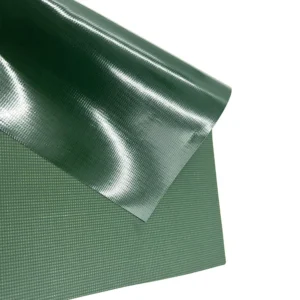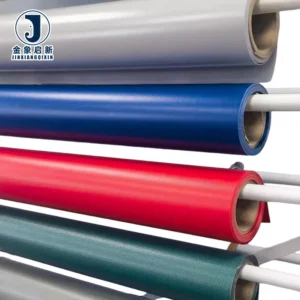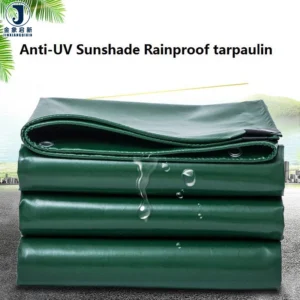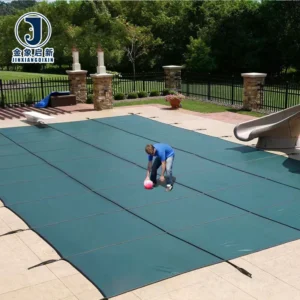
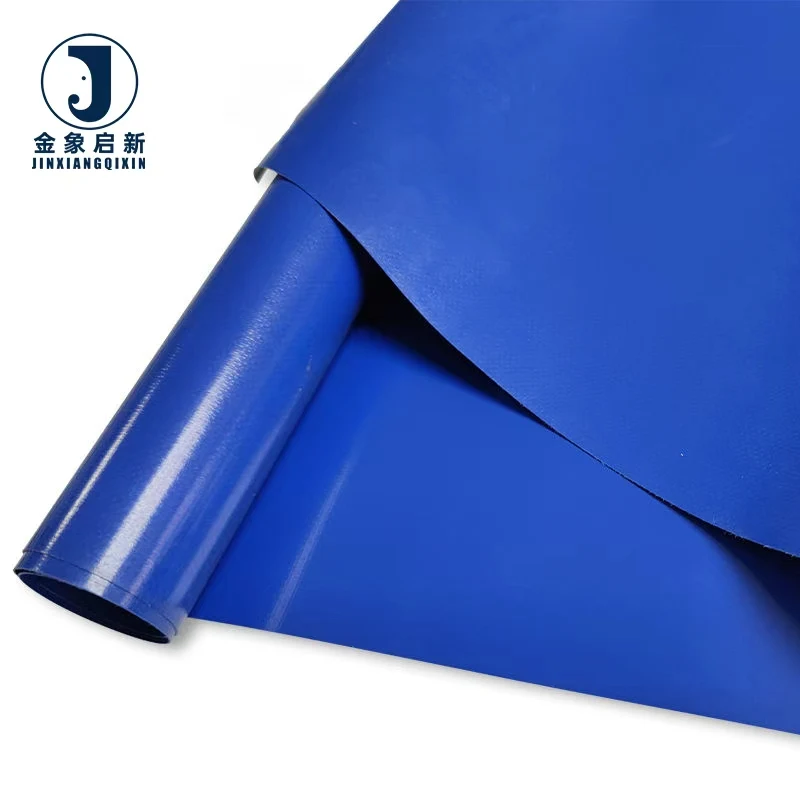
Coating weight control — every roll of PVC coated tarpaulin fabric material specifications is checked against quoted GSM before leaving the factory, with a dedicated QA step at the coating head and a second spot-check at winding.
Technical Specifications
| Parameter | Value |
|---|---|
| Product Type | PVC Tarpaulin Roll |
| Base Fabric Denier | 500D, 1000D, 500D–2000D |
| Coating Material | PVC coated polyester fabric |
| Total Thickness | 0.35–0.45 mm (medium), 0.70–1.0 mm (heavy-duty), 1.2–1.5 mm (super heavy) |
| Weight (GSM) | 400–500 g/m² (medium), 700–1000 g/m² (heavy-duty), 1100–1500 g/m² (super heavy) |
| Tensile Strength (N/5cm) | Warp 1500–2000 / Weft 1200–1800 (medium); Warp 2000–2500 / Weft 1800–2200 (heavy-duty); Warp 2500–3000 / Weft 2200–2800 (super heavy) |
| Roll Width | 6ft, 8ft, 10ft, 12ft, 2m, 4m, 6m |
| Roll Length | 100 yards, 100 meters, or custom |
| Waterproof | Yes |
| UV Treatment | Available — confirm the test basis required for your market |
| Anti-Mildew | Mildew proof and anti-aging treatment available |
| Edge Reinforcement | PP rope reinforced hem |
| Eyelets | Galvanized, every 3ft or 1 meter |
| Corner Reinforcement | Reinforced plastic corners |
| Certification | ISO, CE |
Application Suitability
| Application | Exposure & Requirement |
|---|---|
| Truck tarpaulin & side curtain | Constant flexing at load points, road debris abrasion, rain and UV exposure, tie-down stress at eyelets |
| Engineering protective cloth | Site dust, chemical splash, puncture from sharp aggregate, repeated handling |
| Industrial pipe canopy | Outdoor weathering, wind load on tensioned spans, weld-seam integrity at joints |
| Tensioned structural fabric | Sustained biaxial stress, UV exposure, fire code compliance for enclosed public spaces |
| Outdoor equipment covers | Standing water, mildew in humid storage, UV degradation over seasons |
Why Tensile Data Matters More Than GSM Alone for PVC Coated Tarpaulin Fabric Material Specifications
A 900 g/m² roll with a 500D base can tear more easily than a 700 g/m² roll built on a 1000D yarn.
Most buyers compare PVC coated tarpaulin fabric material specifications by GSM first, assuming a heavier number means a stronger fabric. In practice, tensile performance depends on base fabric denier and weave density as much as on coating weight. A roll can reach a target GSM through heavier PVC coating while the underlying polyester scrim remains relatively light, which shows up as poor tear resistance once the material is under real load [NEED_CITE: tensile and tear test methods for coated fabrics per ISO 1421].
How Base Fabric Denier Drives Real-World Performance
The 500D, 1000D, and 500D–2000D options define the polyester yarn thickness woven into the scrim before coating. Thicker yarns at a given weave density produce higher warp and weft tensile values. For a truck side curtain that flexes thousands of times per trip, the 1000D or higher base keeps the PVC coated tarpaulin fabric material specifications aligned with the mechanical demand, rather than relying on the PVC layer to carry the load.
Coating Weight and Thickness Across the Three Tiers
The medium grade (400–500 g/m², 0.35–0.45 mm) suits equipment covers and light engineering wraps where flexibility is valued over extreme strength. The heavy-duty range (700–1000 g/m², 0.70–1.0 mm) is the typical choice for truck covers and site enclosures. The super heavy tier (1100–1500 g/m², 1.2–1.5 mm) addresses tensioned structures and industrial canopies where sustained biaxial stress is present [NEED_CITE: relationship between coating thickness and peel strength in PVC-coated polyester].
Reading Tensile Values in Context
The warp-direction strength rises from 1500 N/5cm at the medium grade to 2500–3000 N/5cm at the super heavy grade, while weft values track slightly lower. This directional difference is typical of woven polyester scrims and matters when you orient panels during fabrication. For a side curtain, aligning the warp direction with the vertical drop gives the highest resistance to wind load. For a flat canopy, the biaxial balance between warp and weft determines how well the structure holds tension without local deformation.
Coating Adhesion and Weld Behaviour
Knife-coated PVC on a polyester scrim creates a mechanical and chemical bond between the coating and the yarn. When two panels are heat-welded, the seam strength depends on coating-to-coating fusion rather than on the base fabric itself. If the coating weight is uneven across the roll, some weld zones receive insufficient material and fail before the surrounding fabric does. Our production lines control coating application so that GSM variation across the roll width stays within tight limits, which directly supports consistent weld quality during fabrication.
The Hidden Cost of Specifying on GSM Without Denier Data
When a buyer orders a 650 g/m² tarpaulin and receives a roll that meets the weight target but uses a lighter base scrim with thicker coating, the material feels right in the hand yet tears more easily at stress points. Weld seams become the first failure location because the coating layer is thick but the scrim underneath carries less load. This mismatch is often discovered only after the finished truck cover or canopy has been in service, at which point the entire panel may need replacement [NEED_CITE: common failure modes in PVC coated fabric at weld seams].
Why Technical Buyers Source PVC Coated Tarpaulin Fabric Material Specifications Here
Our coating lines are calibrated to hold GSM within tight tolerances across the full roll width, reducing the weld inconsistency that fabricators encounter with material from less controlled sources. The 10-person R&D team can develop sample rolls in days, allowing you to test denier, coating weight and surface finish before committing to production. Every roll is inspected before dispatch, with spot-checks on weight and thickness recorded against your specification sheet. Production capacity across three lines and 36 sets of equipment supports bulk orders with reliable lead times. UV treatment options are available and can be matched to the test basis your market requires, rather than relying on a generic datasheet claim.
Documentation & Verification
- Material specification sheet listing base denier, coating weight and GSM per roll
- Pre-shipment inspection record with GSM and thickness spot-checks against your order
- UV and flame-retardant test reports provided where the grade is specified at order
- ISO and CE certificates included with each shipment
- Roll packing list with batch reference for colour traceability
- Certificate of origin and customs documentation prepared per destination
Fabrication, Handling & Storage
- Heat-weld at temperatures matched to coating thickness — the 0.70–1.0 mm heavy-duty grade requires higher dwell time than the 0.35–0.45 mm medium grade
- Place galvanized eyelets at intervals matching the tensile grade; super heavy rolls tolerate wider spacing without hem distortion
- Store rolls upright on end-caps to prevent flat-spot creases that weaken the PVC coating at fold lines
- Allow cold-stored rolls to reach ambient temperature before unrolling to avoid cracking the PVC surface
- Use mild detergent for cleaning; solvent-based cleaners can soften the PVC coating and reduce surface adhesion for printing
- Plan panel layout to align warp direction with the highest expected load, minimising seam count on long spans
Request a Specification Review Before Ordering
Provide the end-use application, expected exposure conditions and the mechanical demands the fabric will face. If your market requires a specific fire classification or UV exposure standard, include that reference so we can match the treatment grade. Let us know the roll widths, lengths and colour references you need, and whether you require finished panels with hems and eyelets or raw roll stock for your own fabrication line.
Frequently Asked Questions
Q: How is GSM verified against the quoted value before shipment?
A: Each roll is weighed and measured during pre-shipment inspection, and the result is recorded against the GSM stated on your material specification sheet. Any roll falling outside the agreed tolerance is held back from dispatch. You receive the inspection record with your shipping documentation.
Q: What is the relationship between base fabric denier and tensile strength?
A: Higher denier yarns in the polyester scrim increase warp and weft tensile values. A 1000D base delivers measurably higher strength than a 500D base at the same coating weight, which matters when the finished product faces sustained load or frequent flexing.
Q: Can UV treatment be documented with test data?
A: UV treatment is available across the range. The specific test basis and exposure duration depend on the grade selected. Confirm the standard your market requires at the inquiry stage so we can supply the matching report.
Q: What coating method is used and how does it affect welding?
A: The PVC coating is applied by knife coating over the polyester scrim, producing a uniform layer that fuses reliably during heat welding. Consistent coating thickness across the roll width supports even weld strength along the entire seam.
Q: Can custom widths and colours be produced with batch consistency?
A: Custom widths up to 6m and custom colours are available with batch reference samples. Roll-to-roll colour consistency is maintained through controlled pigment dosing, and each batch is traceable through the packing list.