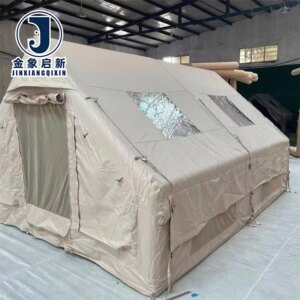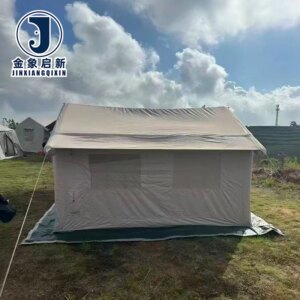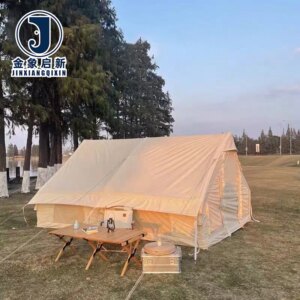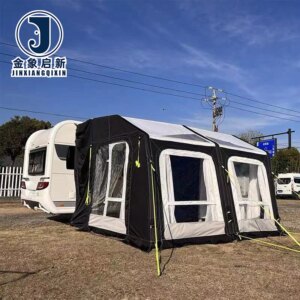
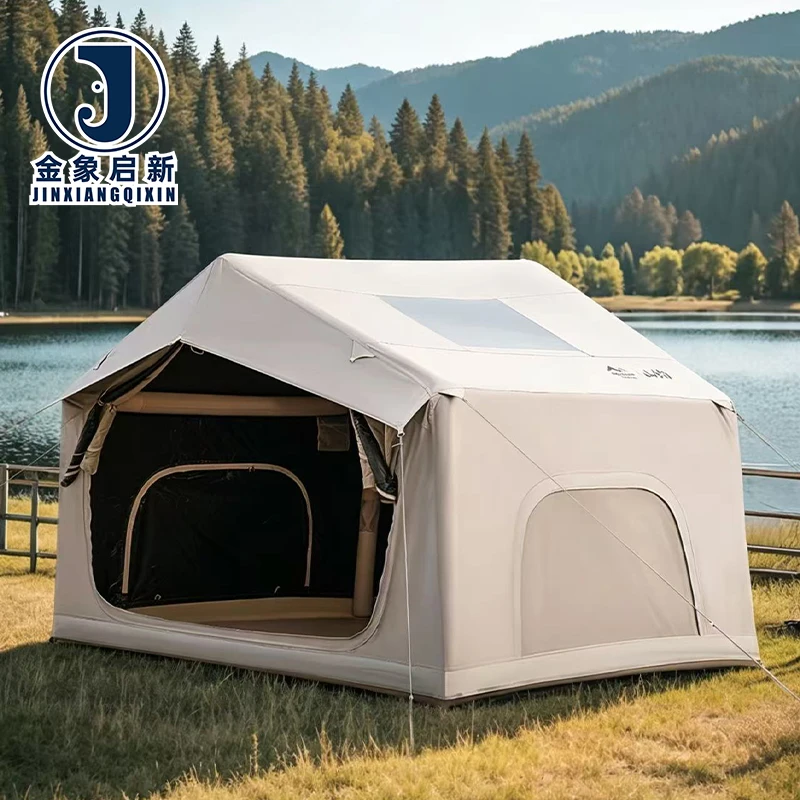
Precision coating control — Three full production lines maintain consistent GSM and adhesion across every roll of inflatable tent fabric, verified at each stage before dispatch.
Technical Specifications
| Parameter | Value |
|---|---|
| Product Type | Inflatable Tent Material |
| Core Material | PVC tarpaulin |
| Key Performance | Waterproof, UV-resistant (test basis not stated), tear-resistant |
| Customization Service | OEM & ODM (sample customization, pattern printing) |
| Capacity Reference | 6-8 person inflatable tent structures |
| Feature | Quick automatic opening compatibility |
| Standards | ISO 9001, ISO 14001, ISO 45001, CE |
Application Suitability
| Application | Exposure & Requirement |
|---|---|
| Commercial glamping equipment manufacturing | Prolonged UV exposure, repeated inflation cycles, guest safety compliance, airtight beam welding |
| Event and exhibition temporary shelters | Rapid deployment and teardown, variable weather, crowd safety, visual branding consistency |
| Construction on-site inflatable storage enclosures | Abrasion from equipment movement, dust ingress prevention, wind load on membrane surfaces |
Why Coating Weight Alone Misleads Inflatable Tent Fabric Buyers
Specifying Inflatable Tent Fabric material coating technology by GSM without examining base fabric denier and weave density leads to material that inflates but cannot hold structural load under wind stress.
Airtight beam integrity depends on coating adhesion to the base fabric, not coating thickness alone.
When the inflatable beam pressurises, every square centimetre of the internal surface pushes outward against the coating-to-yarn bond. If adhesion is weak, delamination starts at the weld line and spreads across the beam within the first few inflation cycles. I have seen coated rolls pass a GSM check yet fail at the seam because the coating separated from the base fabric under internal pressure [NEED_CITE: tensile and peel adhesion test methods for coated fabrics per ISO 1421]. The result is a tent that deflates unpredictably — a liability no commercial campsite operator can absorb.
Coating Adhesion and Airtight Beam Welding
The Inflatable Tent Fabric material coating technology process determines how well the PVC layer bonds to the polyester base yarns. Strong adhesion prevents delamination when heat-welded seams are subjected to internal air pressure during inflation. Coating weight must be balanced against base fabric density; a heavier coating on a loosely woven base does not improve beam rigidity and may actually reduce peel strength at the weld interface.
UV Treatment Verification for Prolonged Outdoor Deployment
Commercial glamping tents remain erected for extended seasons under direct sunlight. UV-resistant treatment must be supported by test data that matches the expected exposure duration at the installation site. Without a stated test basis, buyers should request confirmation that the treatment level aligns with their regional solar irradiance conditions before committing to bulk orders.
Waterproof Integrity Under Heavy Rainfall and Ground Moisture
Fully waterproof PVC tarpaulin construction prevents water ingress through both the fabric body and welded seams. For inflatable camping tents deployed on grass or soil, ground moisture wicking through the floor contact zone places additional demand on the coating’s hydrostatic resistance. Consistent coating coverage across the full roll width eliminates thin spots that become leak paths during sustained rainfall.
How Base Fabric Denier and Coating Weight Interact
Base fabric denier and weave density set the structural floor for tensile and tear performance. Coating weight adds mass and surface protection but cannot compensate for a loosely woven base when inflatable beams bear wind load. A high-denier yarn in a tight weave provides the tear propagation resistance that keeps a puncture from spreading across the beam surface [NEED_CITE: relationship between base fabric construction and tear strength in coated technical textiles]. GSM read in isolation tells you nothing about this balance — two rolls with identical GSM can behave very differently under inflation pressure if their base fabrics differ. Coating method also matters: knife-over-roll coating tends to produce stronger adhesion than laminating, which directly affects how well heat-welded seams hold under cyclic pressurisation.
The Hidden Cost of Specifying on GSM Without Weld Data
When inflatable tent fabric is selected on GSM alone, the first failure rarely appears in the material body — it appears at the welded seam where the beam flexes during inflation and deflation cycles. A coating that is too heavy relative to the base fabric can create a stiff weld zone that cracks under repeated bending. Batch-to-batch GSM variation compounds the problem: weld parameters dialled in for one roll may burn through a slightly lighter roll or fail to fuse a heavier one [NEED_CITE: hot air welding parameter sensitivity to PVC coating weight variation]. Commercial glamping operators then face warranty claims on tents that deflate overnight, and fabricators absorb the cost of replacement panels and field repairs.
Why Sourcing Inflatable Tent Fabric Here Reduces Specification Risk
Our 10-person R&D team develops samples within days for custom width, colour, and pattern printing requirements specific to inflatable membrane structures. Three full production lines and 36 sets of professional equipment support bulk roll output with consistent coating weight from first metre to last. Dedicated QA/QC inspection at every production stage catches adhesion deviations before they reach the dispatch area. Material specification sheets accompany each order stating GSM, base fabric construction, and coating composition for full traceability. Pre-shipment inspection records confirm that what leaves the facility matches the quotation, roll by roll.
Documentation & Verification
- Material specification sheet stating GSM, base fabric denier, coating composition, and colour reference per roll
- UV resistance and waterproof test reports provided where applicable to the specified grade
- Pre-shipment inspection record with QA/QC sign-off at each production stage
- ISO 9001, ISO 14001, ISO 45001, and CE certificates included in the documentation package
- Roll packing list with batch number for material traceability across the order
Fabrication, Handling & Storage
- Heat-weld parameters must be tested against the specific PVC coating weight to ensure airtight beam seams
- Store rolls upright on pallets to prevent flat-spot deformation of the coated surface
- Use compatible PVC cleaners that do not degrade the UV-resistant treatment layer
- Allow cold-stored rolls to acclimatise before unrolling to avoid coating micro-cracking
- Plan cutting layout to minimise transverse welds across inflatable beam load paths
What We Need to Quote Your Inflatable Tent Fabric Accurately
Provide the intended application — glamping shelter, event structure, or industrial enclosure — along with the expected deployment duration and regional climate conditions. Specify whether you require rolls at stock width or custom dimensions, and indicate any colour matching or pattern printing needs for brand consistency. Confirm whether your market requires flame-retardant certification and which standard applies, so we can match the treatment grade to your compliance documentation before sampling begins.
Frequently Asked Questions
Q: How is the GSM of inflatable tent fabric verified upon delivery?
A: Each roll undergoes weight verification against the stated GSM during pre-shipment inspection. The inspection record accompanies the shipment so you can cross-reference the documented value with your own incoming check. If a discrepancy is found before dispatch, the roll is held for re-assessment rather than shipped.
Q: What test basis supports the UV-resistant claim for prolonged outdoor exposure?
A: UV-resistant treatment is applied based on the intended deployment conditions. We recommend buyers specify their expected exposure duration and regional solar conditions so the appropriate treatment level can be confirmed with supporting test data before bulk production begins.
Q: How does PVC coating weight relate to tensile and tear strength for inflatable structures?
A: Coating weight adds surface protection and mass but does not replace base fabric construction as the primary determinant of tensile and tear performance. A high-denier base fabric in a tight weave provides the structural strength, while the coating ensures airtight integrity and environmental resistance at the beam surface.
Q: What welding method is recommended for airtight inflatable beam seams?
A: Hot air welding is the standard method for PVC tarpaulin inflatable beam construction. Weld temperature, speed, and pressure must be calibrated to the specific coating weight and base fabric combination. We recommend running test welds on sample material before committing to full production runs.
Q: What documentation accompanies each batch for material traceability and compliance?
A: Every shipment includes a material specification sheet, roll packing list with batch numbers, pre-shipment inspection record, and applicable certificates. Test reports for UV resistance or other treatments are provided where relevant to the grade specified on your purchase order.