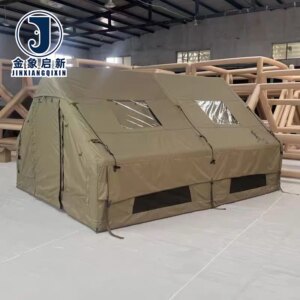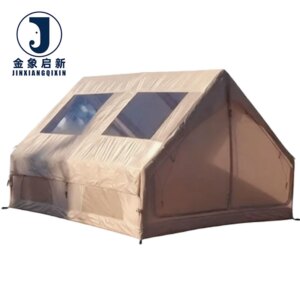
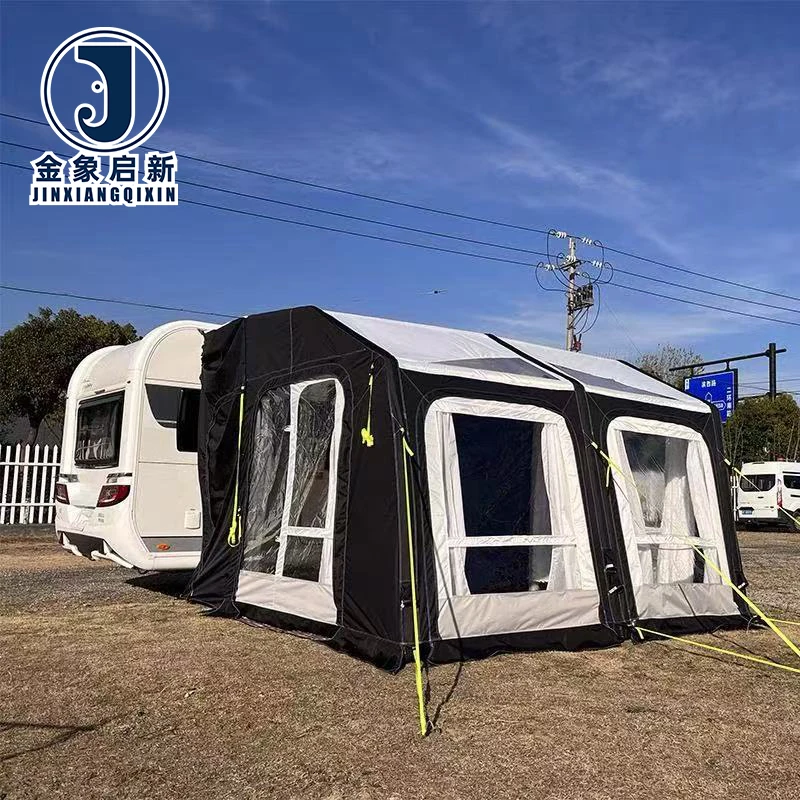
Deep Process Control — coating weight and adhesion monitored across three full production lines, ensuring every roll of PVC inflatable tent fabric meets the stated specification from first metre to last.
Technical Specifications
| Parameter | Value |
|---|---|
| Product Type | Inflatable Tent Fabric |
| Core Material | PVC Tarpaulin |
| Product Forms | Extended Type, Single Layer Construction |
| Key Performance | Waterproof, Tear-resistant |
| UV Resistance | Available — confirm test basis for your market |
| Flame Retardant Grade | Available in flame retardant grades — confirm the grade required for your market |
| Anti-Static | Available — confirm certification required for your application |
| Customization Service | OEM & ODM (sample customization, pattern printing) |
| Quality Control | Full-process inspection with dedicated QA & QC staff |
| Standards | ISO 9001, ISO 14001, ISO 45001, CE |
Application Suitability
| Application | Exposure & Requirement |
|---|---|
| Emergency response centers | Rapid deployment, all-weather exposure, repeated inflation cycles, structural membrane stress |
| Temporary storage facilities during disaster recovery | Prolonged UV exposure, wind loading, water ingress prevention, floor-to-wall seam integrity |
| Mobile command posts for engineering projects | Frequent relocation, abrasion from ground contact, thermal expansion and contraction |
| Auxiliary workspace for outdoor industrial operations | Chemical splash resistance, dust containment, ventilation duct integration |
| Construction sites | Puncture risk from tools and debris, high wind shear, multi-season temperature fluctuation |
| Remote industrial installations | Extended unattended outdoor exposure, limited repair access, supply chain isolation |
What "Flame Retardant" Means Without a Test Standard Behind It
A flame retardant claim on PVC inflatable tent fabric is only as reliable as the test report that backs it.
Technical buyers sourcing inflatable shelter fabric regularly receive quotations stating "flame retardant treated" with no reference to a classification system. When the material arrives at a disaster-relief staging area or a mining camp, site safety officers ask which standard it meets — M2, B1 per DIN 4102, or NFPA 701 — and a generic claim becomes a compliance failure. Inflatable tent fabric used in enclosed, pressurised structures concentrates risk because the air-filled membrane surrounds occupants on every side; a fire event propagates across the entire surface in seconds. Without a documented grade tied to a recognised standard, the purchasing team carries liability that should sit with the material supplier [NEED_CITE: DIN 4102 fire classification for building materials].
Coating Adhesion and Weld Line Integrity
The single layer construction of this PVC inflatable tent fabric places every performance demand on one coated structure. In inflatable shelters, welded seams join panels under continuous internal pressure, meaning the peel strength between coating and base fabric directly governs joint life. A coating that delaminates at the weld creates a leak path that no amount of re-inflation can seal. Our production process controls coating adhesion through monitored temperature profiles and dwell times on each of the three production lines, so the PVC bond to the base fabric remains consistent across the full roll width.
Base Fabric Architecture and Tear Propagation
Tear resistance in coated PVC tarpaulin depends on the denier of the yarns and the weave density of the base fabric, not on the coating weight alone. When an inflatable tent panel is punctured by debris or a sharp tool edge, the tear must be arrested by the woven structure before it propagates to a seam. The base fabric specification for this PVC inflatable tent fabric is selected to balance puncture resistance with the flexibility needed for repeated inflation and deflation cycles. Each roll is produced with consistent warp and weft tension to prevent weak zones that would otherwise become tear initiation points [NEED_CITE: tensile and tear test methods for coated fabrics per ISO 1421].
Understanding GSM in Context
Grams per square metre is the most quoted number on any tarpaulin data sheet, yet it tells only part of the story. Two fabrics can share the same GSM while performing very differently: one may achieve its weight through a heavy coating on a light base fabric, yielding good waterproofing but poor tear strength; another may use a denser weave with a thinner coat, delivering higher tensile values at the same stated weight. For PVC inflatable tent fabric, the critical metric is how that weight is distributed between coating and substrate, because the coating governs weather resistance while the base fabric governs structural strength. Buyers should request the breakdown of coating weight versus base fabric weight, not the total GSM alone.
The Hidden Cost of Specifying on Price Per Kilogram
When procurement decisions are driven by the lowest cost per kilogram of coated fabric, the supplier has every incentive to reduce coating weight and use a lighter base fabric while keeping the total GSM within a vague tolerance band. The consequence appears months after deployment: the inflatable shelter fabric shows pinhole wear at high-stress panels, weld seams begin to lift under cyclic pressure loading, and UV degradation becomes visible as surface chalking on panels facing prevailing sunlight. At a remote industrial installation or disaster-relief site, replacement logistics multiply the original material savings several times over. The specification sheet should demand verified coating weight, documented base fabric denier, and batch-level consistency records — not a single GSM figure on a quotation [NEED_CITE: coating weight verification methods for PVC tarpaulin].
Why Source This Fabric Here
Material specification transparency starts with a data sheet that breaks down coating weight, base fabric denier, and colour reference for every batch, not a generic brochure. Three full production lines and 36 sets of processing equipment allow bulk rolls to be manufactured with consistent coating thickness across the full width. A 10-technician R&D team handles sample development, pattern printing specifications, and custom sizing within days rather than weeks. Full-process QA and QC inspection at every production stage means the pre-shipment inspection record reflects actual in-line data, not a spot check. Nearly three decades of focused coated-fabric production provides the process knowledge to match coating formulation to the specific demands of inflatable membrane structures.
Documentation & Verification
- Material specification sheet stating GSM breakdown, base fabric denier, coating type, and colour reference per batch
- UV and flame retardant test reports citing applicable standards where grades are specified
- ISO 9001, ISO 14001, ISO 45001, and CE certificates for compliance documentation
- Pre-shipment inspection record with weight verification against stated GSM before dispatch
- Roll packing list with batch traceability for multi-roll orders
- Certificate of origin and customs documentation for cross-border shipments
Fabrication, Handling & Storage
- Heat weld temperature and dwell time must match the PVC coating formulation to achieve full peel strength at seams
- Store rolls horizontally on padded racks to prevent permanent creasing in the single layer construction fabric
- Avoid dragging cut panels across abrasive surfaces that can score the coating before welding
- Use compatible PVC-based adhesives for field repairs to maintain membrane integrity at patch edges
- Allow cold-stored rolls to reach ambient temperature before unrolling to prevent coating micro-cracking
- Plan cut layouts to minimise offcuts and reduce the number of transverse welds in the inflatable structure
What We Need to Quote Accurately
To provide a specification and sample that matches your project, we need the intended application and environmental exposure conditions — including expected temperature range and UV duration. Confirm whether your market requires a specific flame retardant classification or anti-static certification for the inflatable shelter. Provide the target roll width, colour reference or pattern printing requirements, and whether you need sample approval before bulk production.
Frequently Asked Questions
Q: How is the GSM of the inflatable tent fabric verified upon delivery?
A: Every roll undergoes weight verification against the stated GSM during pre-shipment inspection. The inspection record documents actual measured values per roll, not batch averages. Buyers can cross-check these figures on arrival using a calibrated scale and a standard sample area cut.
Q: What UV test basis applies to this PVC tarpaulin?
A: UV resistance depends on the specific stabiliser package added during coating. The applicable test standard and exposure duration must be confirmed based on your target market and deployment climate. Request the test report that matches your project specification before placing a bulk order.
Q: What flame retardant grades are available for inflatable shelter fabric?
A: Flame retardant grades are formulated to meet standards such as M2, B1 per DIN 4102, or NFPA 701 depending on market requirements. The correct grade depends on your end-use jurisdiction and building code. Specify the standard your project demands so the matching formulation is applied.
Q: How are welded seams tested for inflatable structures?
A: Welded seam peel strength is evaluated during production to confirm the coating-to-base-fabric bond meets the requirement for continuous inflation pressure. The adhesion data is recorded in the QA inspection file. Buyers can request this data alongside the pre-shipment documentation package.
Q: What customisation options exist for width, colour, and printing?
A: Rolls can be produced in custom widths and colours with pattern printing handled by the 10-person R&D team. Lead times depend on the complexity of the colour match and the quantity ordered. Sample rolls are developed for approval before bulk production begins.