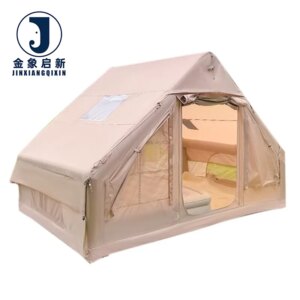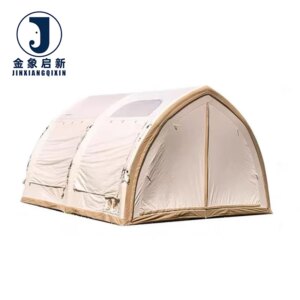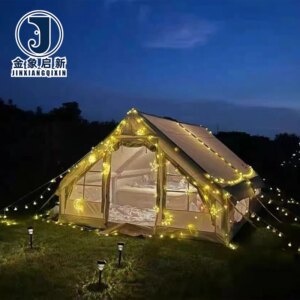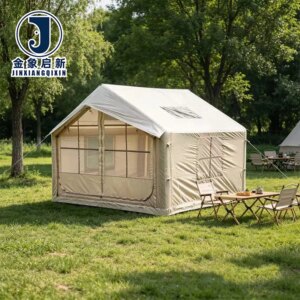
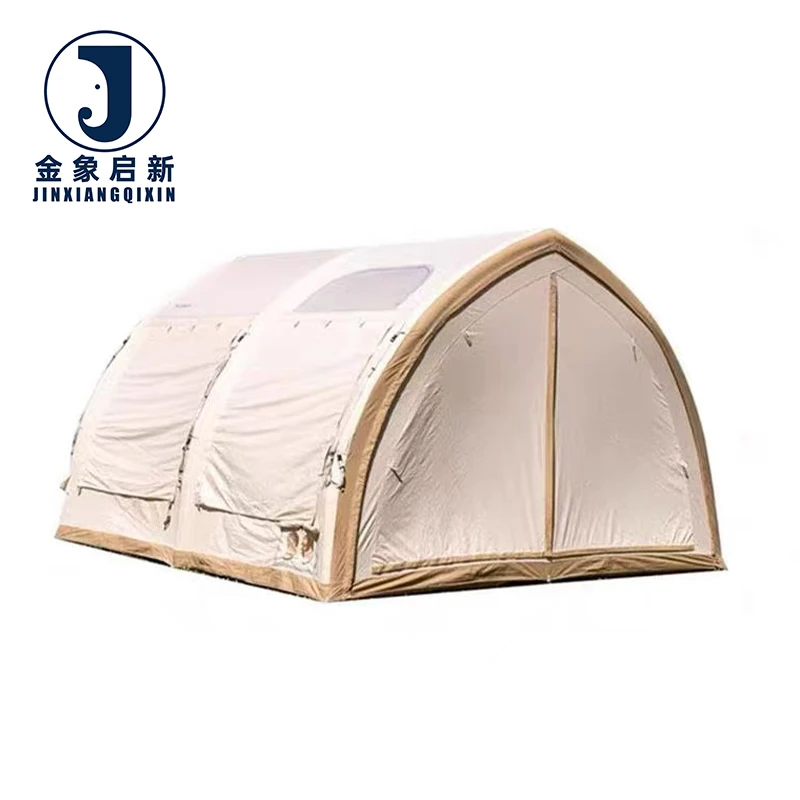
Process-Controlled Coating — every roll of this inflatable fabric is produced under in-process QA checkpoints that verify coating adhesion and weight consistency before it leaves the line.
Technical Specifications
| Parameter | Value |
|---|---|
| Product Type | Inflatable Fabric |
| Core Material | PVC Tarpaulin |
| Product Forms | Single Layer Construction, Extended Type |
| Waterproof | Fully coated waterproof construction |
| UV-Resistant | Available with anti-UV treatment — confirm the UV test standard required for your market |
| Tear-Resistant | Engineered for high tear resistance — verify tensile and tear values per roll |
| Fire-Retardant | Available in flame retardant grades — confirm the grade required for your market |
| Anti-Static | Available with anti-static treatment — confirm the anti-static standard for your application |
| Customization | OEM & ODM, sample customization, pattern printing |
| Certifications | ISO 9001, ISO 14001, ISO 45001, CE |
Application Suitability
| Application | Exposure & Requirement |
|---|---|
| Emergency disaster relief inflatable shelters | Rapid deployment, wind load, rain exposure, fire safety compliance in temporary camps |
| Mining and tunnelling temporary structures | Confined atmosphere, static discharge risk, mandatory fire-retardant and anti-static certification |
| Construction site inflatable shelters | UV exposure, abrasion from equipment movement, repeated inflation and deflation cycles |
| Industrial membrane and inflatable structures | Four-season weather exposure, sustained internal air pressure, structural seam integrity |
Why Fire-Retardant and Anti-Static Certification Cannot Be an Afterthought for Inflatable Fabric
A compliance gap in your inflatable fabric documentation can shut down an entire site before the first shift starts.
Mining operations, aviation hangars, and disaster relief camps all mandate verifiable fire-retardant and anti-static credentials before any inflatable structure is permitted on-site. I have seen projects stalled for weeks because the fabric supplier shipped material without the specific grade or test report the safety auditor required. The inflatable fabric arrives, the structure goes up, and then the inspector asks for the certificate — and the answer is "we can send it later." Later is not acceptable when personnel are sleeping or working under that membrane. Sourcing certified inflatable fabric means the test reports, grade classifications, and material specification sheets travel with the shipment, not as an email attachment weeks after delivery [NEED_CITE: fire safety compliance requirements for temporary inflatable structures in mining and construction].
How Coating Formulation Affects Fire and Static Performance
The fire-retardant behaviour of PVC inflatable fabric is determined during the coating stage, where additives are compounded into the PVC plastisol before it meets the base fabric. The type and loading level of these additives define the final classification the material can achieve. Different markets require different test methods — a grade accepted in one jurisdiction may not satisfy the fire code in another. Confirming the target standard before production begins prevents costly re-orders or on-site rejection.
The Relationship Between Base Fabric and Structural Integrity
The base fabric provides the mechanical skeleton of any inflatable structure. Denier weight and weave density together determine how the material handles sustained internal pressure, wind loading, and the repeated stress of inflation cycles. A heavier denier with a tight weave resists tear propagation better than a lighter alternative, which matters when a puncture or seam stress concentrates force on a single point. The coating locks the weave in place and adds waterproofing, but it is the base fabric that carries the structural load.
Understanding Specification Choices for Inflatable Membrane Use
Selecting the right inflatable fabric involves balancing several interacting properties. Coating weight and base fabric density work together — a heavy coating on a light base fabric adds weight without proportional strength gains, while a light coating on a dense base may not provide adequate waterproofing or weld adhesion. The knife coating method used on this material produces a continuous film that bonds directly to the yarn, yielding strong peel resistance at welded seams — critical for inflatable structures where the weld line carries the inflation pressure [NEED_CITE: knife coating adhesion and peel strength for PVC coated fabrics]. Single layer construction reduces overall weight for transport and rapid deployment while maintaining the tear resistance needed for field conditions. Surface finish selection affects both cleaning behaviour and print adhesion — a matte finish accepts pattern printing more reliably, while a glossy surface sheds dirt and water more easily in exposed installations.
What Happens When Specification Gaps Reach the Site
When inflatable fabric arrives without the fire-retardant grade the project specification demanded, the structure cannot be commissioned. When anti-static treatment was specified for a mining environment but the test report references a different standard, the safety officer has no choice but to reject the installation. I have also seen seam failures where the weld peeled before the fabric tore — typically the result of a coating formulation that was optimised for cost rather than peel strength. These are not defects in the traditional sense; they are specification mismatches that could have been caught during sample confirmation [NEED_CITE: weld peel failure versus fabric tear in coated technical textiles].
Why This Production Facility Supports Certified Inflatable Fabric Orders
Three full production lines with 36 sets of professional processing equipment provide the capacity to run dedicated batches for project-specific inflatable fabric orders without cross-contamination between standard and treated grades. A 10-person R&D team develops custom formulations and sample panels so you can validate fire-retardant grade, anti-static performance, and colour match before committing to full production volume. Dedicated QA and QC staff inspect every production stage — from base fabric incoming check to final coating weight verification — ensuring the material that ships matches the material that was approved. Full-process quality inspection with 100% pre-shipment review means each roll is checked against the order specification, not just sampled from the batch.
Documentation & Verification
- Material specification sheet stating base fabric type, coating method, and colour reference for each inflatable fabric order
- Fire-retardant test report supplied with order number matching the grade confirmed during sample approval
- Anti-static test documentation aligned with the standard specified for your site compliance requirements
- Batch-specific pre-shipment inspection record covering coating weight, visual defects, and dimensional accuracy
- ISO 9001, ISO 14001, ISO 45001, and CE certificates available for audit trail and site registration
- Certificate of origin and customs documentation included with each international dispatch
Fabrication, Handling & Storage
- Heat-weld seams using temperature and dwell settings matched to the PVC coating formulation to prevent peel failure at inflation pressure points
- Store rolls upright on pallets in a dry, shaded area to prevent compression marks on the coated surface
- Avoid dragging single layer construction panels across abrasive ground during deployment to protect the coating film
- Clean with mild detergent and soft brush — avoid solvent-based cleaners that may degrade the PVC coating layer
- Allow cold-stored rolls to reach ambient temperature before unrolling to prevent cracking in low-temperature conditions
- Repair minor punctures with compatible PVC adhesive patches cut from off-cuts of the same inflatable fabric batch
What to Include in Your Inflatable Fabric Enquiry
Provide the target fire-retardant grade or standard your site requires, along with any anti-static classification mandated by your safety protocol. Specify the intended application — emergency shelter, mining structure, or industrial membrane — so the correct coating formulation and base fabric weight can be recommended. Include required widths, estimated annual volume, and whether you need raw rolls or finished fabricated panels with welded seams and pattern printing. Request a sample panel if your project demands physical verification of material performance before production begins.
Frequently Asked Questions
Q: Which fire-retardant grades are available for inflatable tent fabric, and how do I confirm the right one?
A: This inflatable fabric is available in multiple flame retardant grades. The correct grade depends on your local fire safety regulations and the specific application — mining, construction, or disaster relief each carry different compliance requirements. Request the grade classification and corresponding test report during the sample confirmation stage so your safety team can verify alignment before production starts.
Q: Is anti-static certification available for mining and tunnelling inflatable shelter projects?
A: Anti-static treatment can be applied during the coating process for environments where static discharge poses an ignition risk. The specific standard required varies by jurisdiction and site operator policy. Provide your target anti-static standard with your enquiry, and the R&D team will confirm the treatment formulation and supply the test documentation with your shipment.
Q: How is UV resistance validated, and what service life can I expect in outdoor deployment?
A: UV-resistant treatment is available and should be specified based on your deployment climate and expected exposure duration. The appropriate UV test method depends on your target market and application conditions. Request the UV test report with your sample order to verify the treatment level matches your project requirements for four-season outdoor use.
Q: What is the sample and customisation process for project-specific inflatable fabric orders?
A: Submit your application details, required certifications, and dimensional specifications. The R&D team produces sample panels reflecting the exact coating formulation, fire-retardant grade, and colour for your approval. Once the sample is signed off, full production proceeds with in-process QA checks at every stage. Pattern printing and custom sizing are available as part of the OEM and ODM service.
Q: How is material consistency verified from sample approval through to final delivery?
A: Every roll undergoes coating weight verification and visual inspection before dispatch. The pre-shipment inspection record documents the results against your approved sample specification. Batch-specific quality reports accompany each order, allowing you to cross-reference the material received with the sample your team originally signed off.