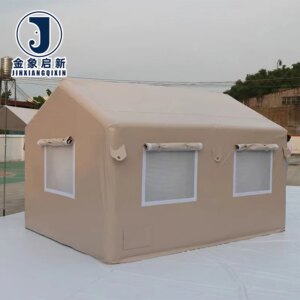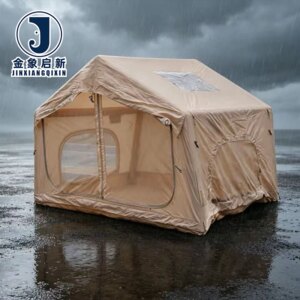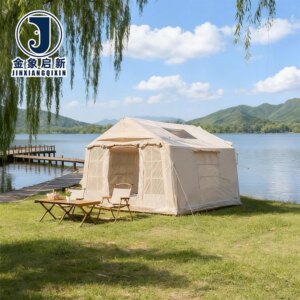
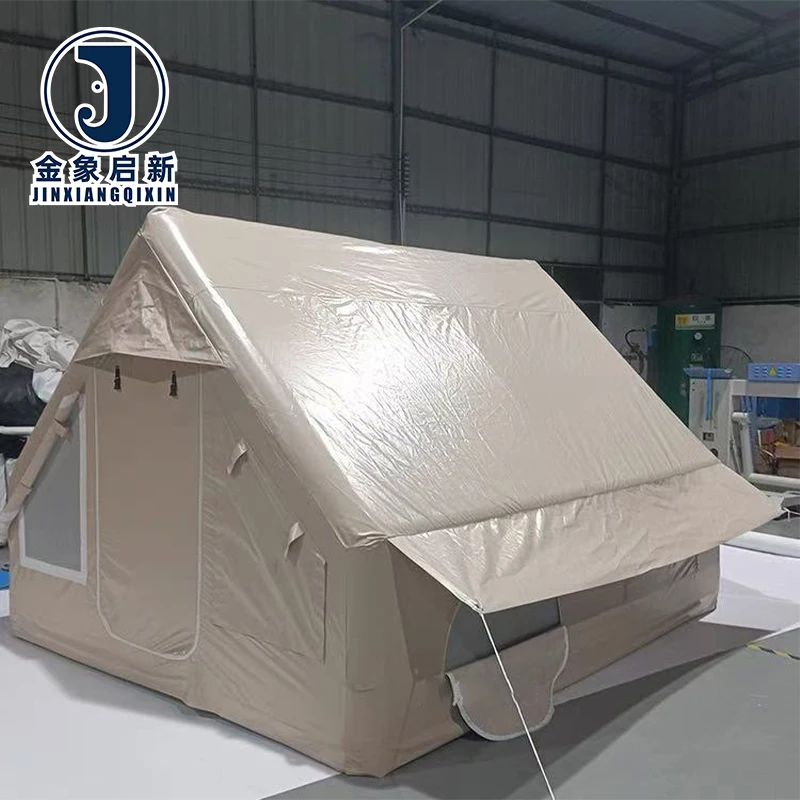
Deep Process Control Over Coating Weight — Three dedicated production lines with 36 sets of professional equipment ensure batch-consistent PVC tarpaulin output for inflatable tent structures, verified through 100% pre-shipment inspection.
Technical Specifications
| Parameter | Value |
|---|---|
| Product Type | Inflatable Tent |
| Core Material | PVC tarpaulin |
| Waterproof | Stated (grade not stated in source) |
| UV-resistant | Stated (test basis not stated in source) |
| Tear-resistant | Stated (test basis not stated in source) |
| Flame-retardant | Stated (grade not stated in source) |
| Anti-static | Stated (surface resistance or standard not confirmed) |
| Capacity | 5-8 Person |
| Opening Mechanism | Quick automatic opening |
| Season Rating | All-Season |
| Certifications | ISO9001, ISO14001, ISO45001, CE |
| Customization | OEM & ODM, sample customization, pattern printing |
Application Suitability
| Application | Exposure & Requirement |
|---|---|
| Temporary site accommodation for construction crews | Constant weather exposure, UV degradation, wind load, rapid deployment requirement |
| Mobile field operations bases for engineering teams | Remote location logistics, all-season thermal performance, repeated inflation cycles |
| Emergency response shelters for disaster management | Immediate deployment, variable ground conditions, high-visibility requirements |
| Resource exploration base camps | Extreme temperature fluctuation, abrasive terrain, long-term outdoor storage |
| Large-scale event management structures | Crowd safety compliance, branding visibility, frequent assembly and disassembly |
What "Flame Retardant" Means Without a Grade Behind It
Specifying flame retardant without a referenced standard leaves your inflatable tent project exposed to compliance rejection at the inspection stage.
Industrial procurement teams regularly encounter PVC inflatable tent fabric marketed as fire-resistant, only to discover during site audits that the material lacks documentation for the specific fire code enforced in their jurisdiction. A mining operation in Western Australia requires compliance different from a construction site in Germany or an event venue in North America. The PVC inflatable tent aftermarket supplier market is flooded with materials claiming protection without the test data to back it up [NEED_CITE: international fire classification standards for temporary structures]. When the fire marshal arrives and requests the certification, a generic "flame retardant" label does not satisfy the requirement.
Coating Formulation and Substrate Bonding for Inflatable Structures
Inflatable tent fabrics endure continuous internal pressure and cyclic stress that static tarpaulin applications never experience. The PVC tarpaulin core material must maintain coating adhesion through thousands of inflation and deflation cycles without delamination at the weld seams. Our material and coating technology focuses on the interface between the base fabric denier and the PVC coating weight, ensuring the bond strength exceeds the tensile load during peak inflation. A PVC inflatable tent fabric manufacturer must control this adhesion parameter at the coating stage, not discover failure during field deployment.
Treatment Chemistry and Environmental Exposure
The waterproof, UV-resistant, and anti-static treatments applied to PVC inflatable tent fabric operate through different chemical mechanisms, each with distinct verification requirements. Anti-static performance matters critically in mining and resource exploration environments where combustible dust or vapours may be present, yet surface resistance values vary significantly between treatment formulations [NEED_CITE: anti-static testing standards for industrial fabrics in hazardous areas]. UV-resistant treatment delays polymer degradation but does not halt it indefinitely, making the test basis essential for projecting service intervals. Technical buyers specifying inflatable tent material for industrial applications must request the underlying test methodology, not accept a marketing claim.
Reading the Specification Sheet Beyond Marketing Claims
The relationship between base fabric construction and final performance is frequently misrepresented in product literature. A heavier GSM does not automatically translate to higher tear resistance if the base fabric uses low-denier yarns with loose weave density. The coating method — whether knife-over-roll, dip coating, or calendering — determines peel strength and heat-welding behaviour, directly affecting how well inflatable tent seams hold under pressure. Flame-retardant grades available in this PVC inflatable tent fabric range must be confirmed against your target market’s fire safety codes, as classifications vary between DIN, NFPA, and regional building regulations [NEED_CITE: flame retardant classification systems for coated technical textiles]. Surface finish selection between glossy and matte affects not just aesthetics but cleanability and print adhesion for branded structures.
The Hidden Cost of Specification Mismatches
When inflatable tent fabric arrives on site with colour variation between rolls, the entire structure presents an unprofessional appearance that reflects poorly on the operator. Batch inconsistency in coating weight leads to uneven inflation characteristics, with some panels stretching more than others under identical pressure. Fire-retardant treatment claimed without a test result to support it creates liability exposure if an incident occurs and investigators trace the material source. Welded seams failing before the fabric does represents a systemic specification error where the heat-welding parameters were not matched to the coating formulation, causing joint failure at the exact point where structural integrity matters most [NEED_CITE: common failure modes in inflatable structure fabric assemblies].
Why Procurement Teams Source This Material Here
Thirty years of continuous PVC coated fabric production provides the process control depth that inflatable tent applications demand, where coating weight consistency directly affects inflation behaviour. The 10-person R&D team handles material selection and sample development specifically for inflatable structures, not generic tarpaulin grades repurposed for pressurised applications. Three full production lines with dedicated quality checkpoints ensure that batch-to-batch colour and weight remain within tolerance across container-load orders. Every roll undergoes 100% pre-shipment inspection with documentation traceable to the production batch, eliminating the gamble of unverified material arriving at your fabrication facility. Custom width, pattern printing, and OEM configuration are handled in-house rather than outsourced, maintaining control over the coating parameters that affect your heat-welding setup.
Documentation & Verification
- Material specification sheet stating base fabric denier, coating weight, and treatment parameters per production batch
- Test reports for flame-retardant and UV-resistant grades available upon request by order number
- ISO9001, ISO14001, ISO45001, and CE certificates provided for compliance documentation packages
- Pre-shipment inspection record with weight verification against stated specifications before dispatch
- Batch traceability documentation linking delivered rolls to specific production runs and quality checkpoints
Fabrication, Handling & Storage
- Heat-welding temperature and dwell time must match the specific PVC coating formulation to prevent seam delamination under inflation pressure
- Store rolls horizontally on padded racks to prevent permanent creasing that weakens the base fabric at fold lines
- Allow cold-transported PVC tarpaulin rolls to reach ambient temperature before unrolling to avoid coating cracking
- Use compatible PVC-based adhesives for field repairs, testing bond strength on scrap material before application to the inflatable structure
- Plan cutting layouts to minimise transverse welds across the inflation axis where stress concentration is highest
Before You Request a Quotation
Technical buyers evaluating PVC inflatable tent fabric should provide the specific fire safety classification required in their target deployment markets, as treatment formulations vary by compliance standard. Specify whether your operation requires anti-static certification for hazardous environment deployment, and indicate the expected inflation cycle frequency to guide material grade selection. Confirm whether you need roll stock for in-house fabrication or finished panels with specific weld seam configurations, and advise if pattern printing or colour matching to existing brand standards is required for your project.
Frequently Asked Questions
Q: What flame-retardant grades are available and how do I verify compliance for my market?
A: The PVC inflatable tent fabric is available in flame-retardant grades, but the specific classification must be confirmed against your target market’s fire safety codes. Request the test report by order number to verify alignment with DIN, NFPA, or regional building regulations applicable to temporary structures in your jurisdiction. Different markets enforce different standards, and generic claims without documentation create compliance risk during site inspections.
Q: How is anti-static performance verified for hazardous environment applications?
A: Anti-static treatment is stated as available, but the surface resistance value and applicable testing standard must be confirmed for your specific hazardous environment classification. Mining and resource exploration operations requiring anti-static inflatable shelters should specify the resistance range mandated by their safety protocols. Request the test documentation to verify the material meets the threshold required for your deployment environment before committing to volume orders.
Q: What is the test basis for UV-resistant treatment and expected outdoor performance?
A: UV-resistant treatment is stated for this PVC inflatable tent fabric, but the specific test methodology and exposure duration basis must be requested to understand projected service life in your deployment climate. Different test standards simulate varying intensity and duration of UV exposure, affecting how the data translates to real-world conditions. Technical buyers should request the test report to evaluate whether the treatment level matches their expected deployment cycles and replacement intervals.
Q: How does the sample approval process work for custom sizing and pattern printing?
A: The 10-person R&D team develops samples within days for custom requirements including specific dimensions, pattern printing, and colour matching. Submit your application details, required sizing, and branding specifications to initiate sample development. Once the sample meets your approval, production proceeds with in-process quality control maintaining consistency across the full order volume, with 100% inspection before shipment.
Q: How is batch consistency maintained across large-volume inflatable tent fabric orders?
A: Three full production lines with dedicated quality checkpoints and 100% pre-shipment inspection ensure colour uniformity and coating weight consistency across multiple rolls in the same order. Each production batch is documented with traceability records linking delivered material to specific manufacturing runs. This prevents the visible colour variation and performance inconsistency that occurs when material from different production dates is installed side by side in large inflatable structures.