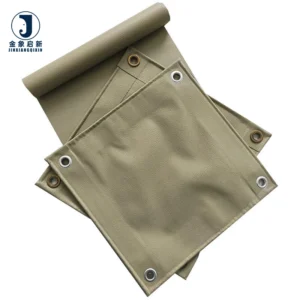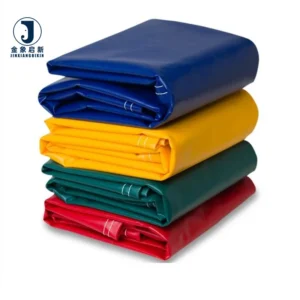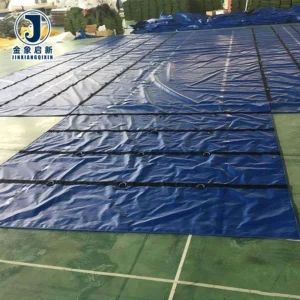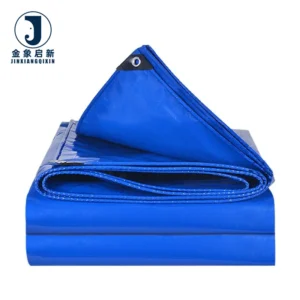
Coating weight mastery — nearly 30 years controlling PVC adhesion and GSM consistency on 500D×500D polyester, verified roll by roll before dispatch.
Technical Specifications
| Parameter | Value |
|---|---|
| Product Type | PVC Coated Tarpaulin |
| Base Fabric | 500D×500D Polyester |
| Coating Method | Double-Sided PVC Coating |
| Weight Range | 450–900 g/m² (confirm the grade for your application) |
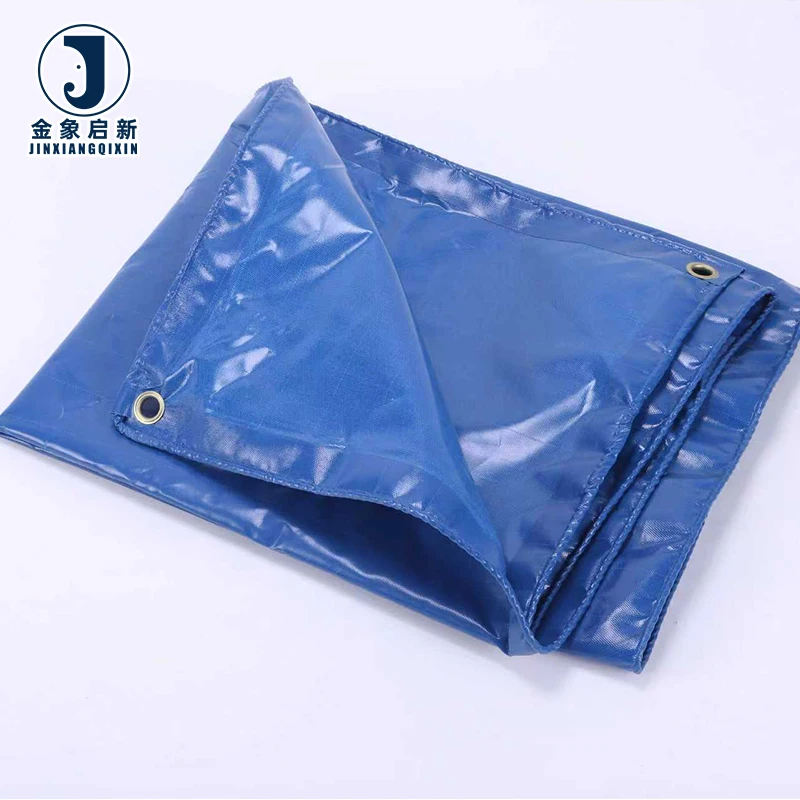
| Surface Finish | Smooth, leather-like texture |
| Key Features | Water resistant, waterproof, anti-UV and flame retardant treatments available — confirm grades required for your market |
| Repairability | Hot air weldable |
| Abrasion Resistance | Very strong |
| Package | Roll packing, bale packing, carton |
Application Suitability
| Application | Exposure & Requirement |
|---|---|
| Truck and trailer side curtains | Constant flexing, road spray, UV exposure, frequent hot air welding at seams |
| Tent and awning fabrication | Outdoor weathering, structural tension, flame retardant compliance for public venues |
| Machinery and equipment covers | Abrasion from contact surfaces, dust and moisture ingress, repeated removal and replacement |
| Wood and construction material covers | Long-term static UV exposure, wind uplift, puncture from sharp edges |
Why a Flame Retardant Claim Without a Grade Is a Liability for Your Project
We supply verifiable test reports matched to your target market standard — not a generic certificate that fails inspection.
When a site inspector requests documentation for a PVC coated polyester fabric and the flame retardant grade cannot be produced, the entire installation halts. This is not a theoretical risk; it happens regularly on construction sites and public event venues where compliance officers demand standard-specific evidence. A supplier who quotes "flame retardant" without naming the standard — whether DIN 4102, NFPA 701, or another regional requirement — leaves the buyer carrying the compliance risk [NEED_CITE: fire classification requirements for temporary structures and building materials per DIN 4102]. The cost of replacing non-compliant fabric after installation far exceeds the upfront effort of specifying the correct grade.
Coating Adhesion and Weight Control Across Production Runs
Consistent PVC coating weight is the foundation of reliable tensile and weld performance in any PVC coated tarpaulin fabric. Our three full production lines maintain coating thickness within tight tolerances, supported by dedicated QA/QC checkpoints at every stage from paste mixing through to final winding. When coating weight drifts between rolls, the hot air welding temperature that produces a strong seam on one roll will under- or over-cure the next — a problem that only surfaces during fabrication or, worse, in the field.
Verifiable Treatment Grades for Fire and UV Compliance
Flame retardant and anti-UV treatments are available in multiple grades, each matched to specific market standards and end-use regulations. We confirm the exact grade with you during the specification phase and supply the corresponding test report with your shipment. This means a tent manufacturer exporting to the EU can receive fabric certified to the relevant European standard, while a mining contractor can specify the grade required by their site safety officer — all documented, not assumed [NEED_CITE: tensile and tear test methods for coated fabrics per ISO 1421].
How Base Fabric Denier and GSM Work Together
The 500D×500D polyester base fabric provides the structural skeleton; the PVC coating on both sides locks the weave and delivers waterproof integrity. Higher GSM does not automatically mean higher strength — a heavily coated light-denier fabric can have impressive weight but poor tear resistance compared to a properly balanced 500D×500D construction at the same GSM. Coating method also matters: double-sided PVC coating ensures the base yarns are fully encapsulated, improving peel strength at weld lines and preventing delamination under repeated flexing. The smooth leather-like surface finish supports consistent heat transfer during hot air welding, reducing the variability that causes seam failures in fabricated products. Surface characteristics also influence how well printed branding adheres and how easily the fabric can be cleaned in the field.
The Hidden Cost of Specifying on GSM Alone
A buyer who selects PVC coated polyester fabric based solely on quoted weight, without verifying coating adhesion and base fabric denier, often discovers the problem at the worst possible moment. Rolls that arrive lighter than agreed compromise the tensile margin needed for wind-loaded structures. Welded seams that fail before the fabric itself does typically trace back to inconsistent coating weight at the seam zone — the exact point where the load flexes most [NEED_CITE: weld failure analysis in coated technical textiles]. Colour variation between rolls in the same order becomes visible only after panels are installed side by side, forcing a full replacement rather than a simple swap. These are not defects in the PVC chemistry; they are failures of process control and pre-shipment verification.
Why Technical Buyers Source This PVC Coated Polyester Fabric Here
Our 10-person R&D team develops custom material builds — adjusting denier, coating weight, treatment grade and colour — with samples turned around within days, not weeks. Every roll undergoes 100% pre-shipment inspection, with GSM and colour verified against the material specification sheet before it leaves the facility. Three full production lines and 36 sets of professional equipment give us the capacity to fulfil container-volume orders with roll-to-roll consistency, while still accommodating short runs for prototyping. The QA/QC protocol checks coating adhesion at intermediate stages, not just final weight, catching drift before it reaches the winding station. Documentation — from test reports to certificates of origin — is prepared per shipment, not downloaded from a generic portal.
Documentation & Verification
- Material specification sheet stating GSM, base fabric denier, coating method and colour reference per roll
- Test reports for UV and flame retardant grades matched to buyer’s market standard
- Pre-shipment inspection record with roll-by-roll weight and colour verification
- ISO and CE certificates supplied with each shipment package
Fabrication, Handling & Storage
- Hot air welding temperature should be calibrated to the specific GSM grade of your PVC coated tarpaulin roll
- Store rolls upright on pallets to prevent flat-spot creases in the leather-like surface finish
- Allow cold-stored rolls to reach ambient temperature before unrolling to avoid coating micro-cracking
- Use compatible PVC-based repair patches and hot air welding for field repairs on the double-sided coated construction
- Plan panel layout to minimise weld seams at high-stress flex points on truck and trailer covers
Preparing Your Inquiry for Accurate Quotation
Share the end-use application and the environmental conditions the fabric will face — static outdoor exposure, dynamic flexing, chemical contact — so we can recommend the correct GSM grade and treatment level. Specify the flame retardant or UV standard required by your market or project specification. Indicate the roll width and estimated annual volume, along with any colour or printing requirements, to help us match you to the right production run.
Frequently Asked Questions
Q: How is GSM verified on each roll before shipment?
A: Every roll is weighed and measured against the stated GSM on the material specification sheet during our 100% pre-shipment inspection. The inspection record, including actual weight readings per roll, accompanies the shipment documentation so you can verify on arrival without dispute.
Q: Which flame retardant standards can you certify against for this PVC coated polyester fabric?
A: We offer flame retardant treatments certifiable to multiple international standards. The specific grade — such as DIN 4102, NFPA 701 or another regional requirement — is confirmed during the specification phase, and the corresponding test report is supplied with your shipment.
Q: How do you control colour consistency across multiple rolls in the same order?
A: All rolls in a single order are produced from matched coating batches, and colour is verified against the reference standard during pre-shipment inspection. This prevents visible variation when panels are fabricated and installed side by side.
Q: What hot air welding parameters and seam strength can be expected from this 500D×500D fabric?
A: The smooth leather-like surface finish supports consistent heat transfer during hot air welding. Optimal temperature and speed settings depend on the specific GSM grade selected; we provide recommended welding parameters with sample material for your fabrication team to validate.
Q: Do you support custom width, colour and pattern printing by the roll?
A: Yes. Custom widths, colours and brand printing are available, with samples developed by our R&D team for approval before full production. Lead times and minimum quantities are confirmed at the quotation stage based on your specific requirements.