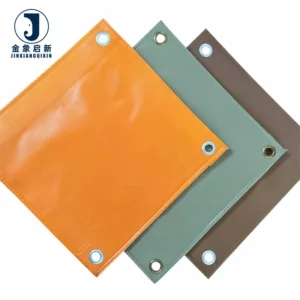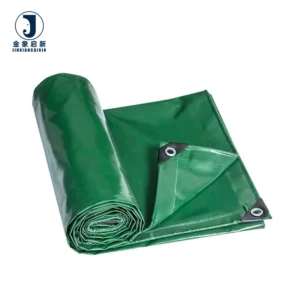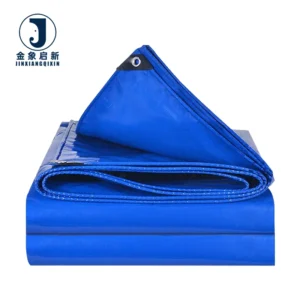
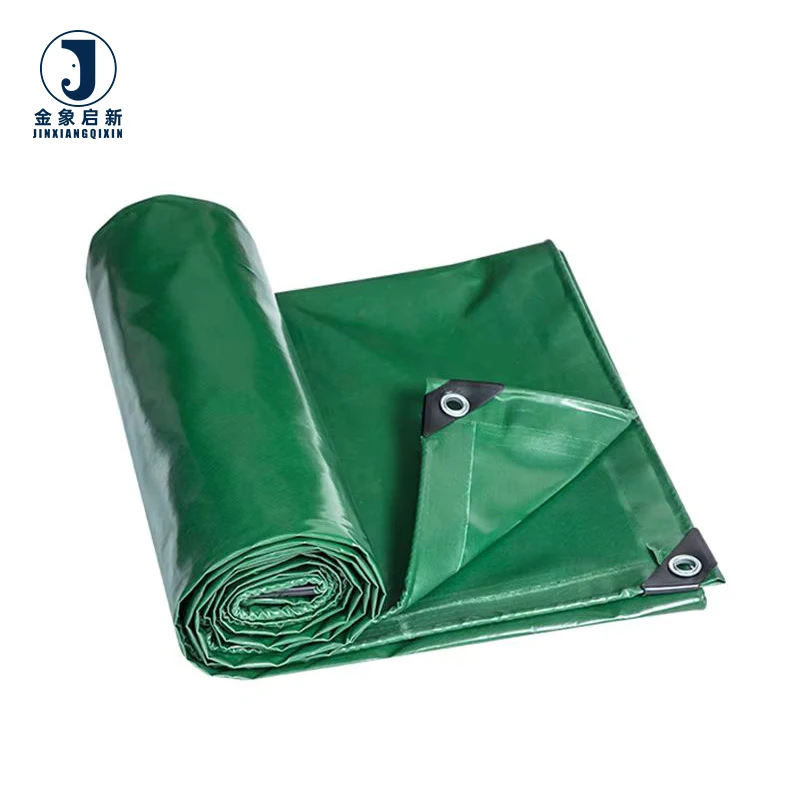
Consistent Coating Adhesion — hot melt lamination technology ensures each roll of 620gsm PVC Coated Tarpaulin 620gsm for Membrane Structure leaves the line with verified coating weight and peel strength at the weld seam.
Technical Specifications
| Parameter | Value |
|---|---|
| Product Type | PVC Coated Fabric |
| Weight | 620 gsm |
| Base Fabric | 1000D×1000D high-toughness polyester yarn |
| Coating Method | Hot melt coating / lamination technology |
| Coating Material | PVC |
| Tensile Strength (Heavy-duty) | Meridian 2000–2500 N/5cm, Latitude 1800–2200 N/5cm |
| Cold Resistance | Cold resistant cracking formulation |
| Anti-Mildew | Mold proof treatment |
| Weld Tear Strength | Excellent (test basis not stated in source) |
| Weather Resistance | Outdoor living guarantee (test basis not stated in source) |
| Flame Retardant | Available in flame retardant grades — confirm the grade required for your market |
| UV Treatment | Claimed anti-UV (test basis not stated in source) |
| Anti-Static | Claimed anti-static (standard or surface resistance not stated in source) |
| Certifications | ISO, CE |
Application Suitability
| Application | Exposure & Requirement |
|---|---|
| Stadium and arena tensioned roofs | Continuous tensile load, wind uplift cycles, solar UV exposure, verified fire classification for public assembly |
| Architectural membrane facades | Long-term weathering, colour consistency across panels, weld integrity at panel junctions |
| Industrial pipe canopies | Chemical-laden atmosphere, thermal cycling, puncture resistance from maintenance access |
| Inflatable and air-supported structures | Repeated inflation cycles, fold crease resistance, airtight weld seams |
| Water containment and tank liners | Permanent hydrostatic pressure, submersion, resistance to algae and microbial growth |
Why GSM on Paper Does Not Guarantee Structural Integrity
A quoted 620gsm rating means nothing if the coating adhesion fails at the welded seam under real tensile load.
Buyers specifying PVC coated fabric for membrane structures frequently discover that the rolls arriving on site weigh less than the specification sheet indicated. Coating weight accounts for a significant share of total GSM, and a thinner coating layer reduces both weathering resistance and the surface available for thermal welding. When the weld line is the weakest point in a tensioned roof, the entire structure is compromised before the fabric itself reaches its rated tensile capacity [NEED_CITE: tensile and tear test methods for coated fabrics per ISO 1421].
Coating Weight Control Through Hot Melt Lamination
Hot melt coating technology deposits PVC in a controlled, uniform layer across the 1000D×1000D polyester base fabric, achieving consistent adhesion between coating and yarn. This process is fundamental to PVC Coated Tarpaulin 620gsm for Membrane Structure because uneven coating creates thin spots that become failure origins under sustained tension. Lamination technology bonds the coating to both faces of the woven substrate, preventing delamination when the fabric flexes under wind load or thermal expansion.
Base Fabric Denier and Structural Tensile Capacity
The 1000D×1000D polyester yarn provides the structural skeleton that carries load in both meridian and latitude directions. In membrane structure applications, the fabric must sustain biaxial stress from pretensioning and wind uplift simultaneously. Higher denier yarns distribute point loads across more filaments, reducing the risk of tear propagation from a puncture or cut edge. The interplay between yarn toughness and coating adhesion determines whether a seam holds or peels under cyclic loading [NEED_CITE: DIN 4102 fire classification for building materials].
How Coating Method Shapes Weld Performance and Fabrication
The choice between hot melt coating and lamination technology directly influences how the PVC surface responds to thermal welding. Hot melt coating produces a homogeneous PVC layer that melts uniformly when heated, creating a fused weld zone with strength approaching that of the parent fabric. Lamination technology adds an adhesive bonding layer between coating and base fabric, which affects the temperature window for welding. Fabricators working with PVC Coated Tarpaulin 620gsm for Membrane Structure must calibrate their welding equipment to the specific coating method, as incorrect temperature or dwell time produces a surface bond that peels under tension rather than a through-thickness fusion.
The Hidden Cost of Specifying Without Verification
When membrane structure fabric arrives with a coating weight below the agreed specification, the consequences compound through the fabrication and installation process. Thinner coating reduces the thermal mass available for welding, leading to inconsistent weld quality across panels. UV and weathering resistance degrade faster when the protective PVC layer is insufficient. In fire-rated applications, a lighter coating may not carry the required flame retardant loading, causing the installed structure to fail building inspection. These failures typically surface after fabrication, when the cost of replacement includes not only new material but also lost production time and delayed project handover [NEED_CITE: coating adhesion peel strength test methods].
Why Procurement Verification Matters Here
Coating weight is inspected at every production stage, not only at final roll-off, so that the 620gsm specification is maintained throughout the batch rather than averaged across it. The 10-person R&D team develops samples within days when custom widths or treatment combinations are required for specific membrane structure projects. A dedicated QA/QC protocol inspects 100% of rolls before shipment, recording actual measured weight against the specification sheet. Three full production lines provide capacity to fulfil large membrane structure orders without compressing lead times or sacrificing coating consistency. Documentation accompanies every dispatch, linking each roll to its production batch and test data.
Documentation & Verification
- Material specification sheet stating 620gsm, 1000D×1000D base fabric, and hot melt coating method
- Pre-shipment inspection record with measured coating weight per roll
- UV and flame retardant test reports supplied where applicable grades are specified
- ISO and CE certificates covering the production facility and quality system
- Roll packing list with individual roll weights and dimensions for receiving verification
- Certificate of origin and customs documentation for international shipment
Fabrication, Handling & Storage
- Set welding temperature and dwell time to match the hot melt coating layer thickness for consistent peel strength
- Store 620gsm rolls upright on cores to prevent flat-spotting and permanent crease marks in the PVC coating
- Allow cold-stored rolls to reach ambient temperature before unrolling to avoid coating crack damage
- Use compatible PVC-based adhesives for patch repairs so that bond chemistry matches the coating formulation
- Plan panel cutting layout to minimise weld seams across high-tensile zones in the membrane structure
- Clean fabricated panels with mild, non-solvent detergents to preserve the coating surface and colour fastness
What We Need to Move Your Enquiry Forward
Provide the target market and any fire classification your building code requires, along with the membrane structure design loads and pretension values. Specify whether you need rolls in standard widths or custom widths to reduce on-site welding, and indicate the annual volume so we can plan production slots. If colour consistency across multiple rolls is critical for visible facade panels, confirm the RAL or Pantone reference for sample matching before bulk production.
Frequently Asked Questions
Q: How is the 620gsm coating weight verified before shipment?
A: Every roll undergoes weight measurement during pre-shipment inspection, and the result is recorded against the specification sheet. In-process QA checks coating weight at multiple production stages, not only at final winding, so deviations are caught before the roll is completed. The inspection record accompanies the shipment documentation.
Q: What base fabric is used behind the PVC coating on this membrane structure fabric?
A: The base fabric is woven from 1000D×1000D high-toughness polyester yarn, providing the tensile capacity required for pretensioned membrane structures. This denier supports the heavy-duty tensile strength ratings in both meridian and latitude directions while maintaining flexibility for fabrication and on-site installation.
Q: How does hot melt coating affect weld seam performance compared to other methods?
A: Hot melt coating produces a homogeneous PVC layer that fuses uniformly during thermal welding, creating a weld zone with strength approaching the parent fabric. Lamination technology adds an adhesive bonding layer that influences the welding temperature window. Fabricators should request a sample and test their welding parameters against the specific coating method used.
Q: What test documentation is available for flame retardant or UV treatment?
A: Test reports are supplied for flame retardant grades and UV treatment where applicable. Buyers should confirm the specific grade or standard required for their market and building code before ordering, as requirements vary between regions and application types. Reports reference the test standard and results achieved.
Q: Can this PVC coated fabric be ordered in custom widths for membrane structure panels?
A: Custom widths are available, and the R&D team develops samples within days for non-standard specifications. Specifying panel-width rolls reduces the number of weld seams required on site, improving structural continuity and reducing fabrication time. Minimum order quantities and lead times apply to custom width production runs.