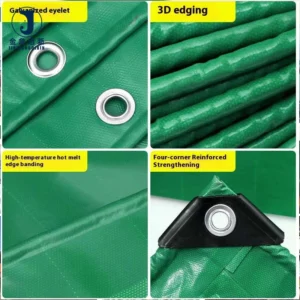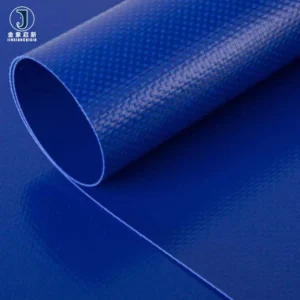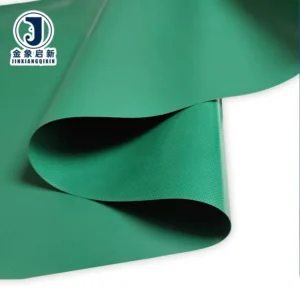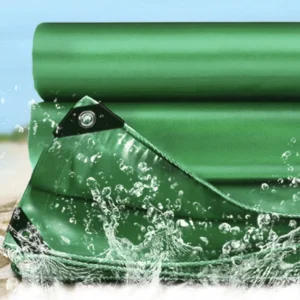
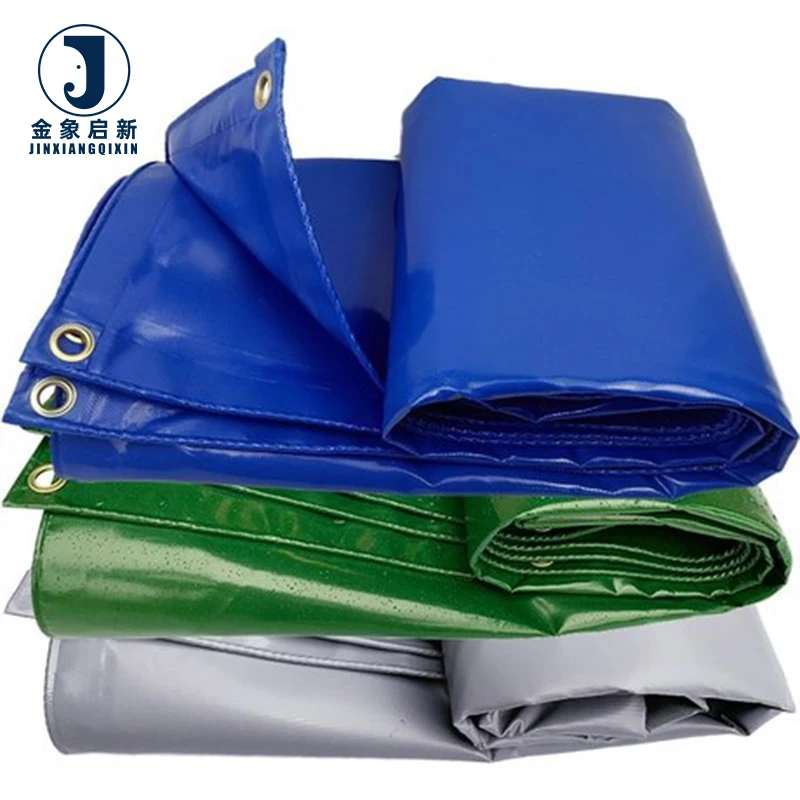
Controlled Coating Weight — every roll of 650gsm PVC coated tarpaulin is produced under monitored coating application with dispatch documentation confirming the stated grade at delivery.
Technical Specifications
| Parameter | Value |
|---|---|
| Product Type | PVC Tarpaulin Roll |
| Base Fabric | 100% high tenacity polyester yarns |
| Coating Material | PVC |
| Coating Method | Laminated technology & Hot-melt Coating technology |
| Weight | 650 GSM |
| Waterproof | Yes |
| Cold Crack Resistance | Yes |
| Anti-Mildew | Yes |
| Anti-Static | Yes (grade not stated in source — confirm required standard) |
| Flame Retardant | Available as special treatment (grade not stated in source — confirm required standard) |
| UV Treatment | Not explicitly stated — confirm UV grade required for your application |
| Color Fastness | High color fastness (test basis not stated in source) |
| Tearing Strength | Outstanding tearing strength for welding (no test standard in source) |
| Tensile Strength | High strength (no test standard in source) |
| Adhesion Strength | Good (no quantified value in source) |
| Key Features | Waterproof, cold crack resistant, anti-mildew, flexible at low temperatures |
Application Suitability
| Application | Exposure & Requirement |
|---|---|
| Truck and trailer side curtains | Constant flexing at load points, road abrasion, weather exposure, heat-welded seam integrity |
| Tent and awning fabrication | Roll stock for cutting and heat-welding, UV and rain exposure, colour consistency across panels |
| Construction site enclosures | Prolonged weather exposure, wind loading, mechanical contact with scaffolding and tools |
| Industrial equipment covers | Outdoor storage protection, dust and moisture ingress prevention, repeated handling |
| Membrane and inflatable structures | Tensile loading, weld seam strength, sustained air pressure resistance |
Why Coating Adhesion Matters More Than GSM Alone for Welded Fabrication
A 650 GSM fabric that delaminates at the weld line is weaker than a lighter roll with proper hot-melt bonding.
Technical buyers sourcing PVC coated tarpaulin 650 gsm roll stock often specify weight as the primary gate criterion. Yet weight tells you how much coating sits on the fabric — not how firmly it grips the base yarns. When fabricators heat-weld seams on truck curtains or tent panels, the coating must transfer load into the polyester yarn without peeling. Rolls coated by lamination alone can show strong initial adhesion that degrades under repeated flex, while hot-melt coating forces PVC into the yarn interstices for a mechanical bond that survives weld-line stress. [NEED_CITE: adhesion test methods for PVC coated fabrics per ISO 2411]
Specifying adhesion performance alongside GSM prevents weld failures that appear months after installation, when the curtain or cover has entered regular service cycles.
Hot-Melt Coating and Lamination: How the Process Shapes Fabric Behaviour
The dual coating approach on this PVC coated tarpaulin 650 gsm grade combines laminated technology with hot-melt coating. Lamination lays a PVC film onto the base fabric under heat and pressure, producing a smooth surface with consistent coating thickness. Hot-melt coating drives molten PVC directly into the polyester yarn structure before curing, creating a mechanical interlock between coating and base fabric.
Fabricators who heat-weld panels for truck side curtains or tent structures benefit from this combined approach because the hot-melt bond resists peel forces at the weld zone. The polyester base yarns carry the tensile load, and the coating transfers stress into those yarns rather than separating under thermal cycling. This matters on long welded seams where differential expansion between coating and fabric creates sustained peel stress.
Reading the Base Fabric: Denier, Weave and Their Role in Tear Propagation
The 100% high-tenacity polyester yarn base fabric provides the structural backbone that determines how tears initiate and propagate through the material. High-tenacity yarns carry greater tensile load before breaking compared to standard polyester of the same denier. [NEED_CITE: tensile and tear test methods for coated fabrics per ISO 1421]
Weave density sets the distance a tear must travel between yarn intersections — tighter weaves force the tear to change direction more often, absorbing energy at each deflection. When combined with the 650 GSM coating weight, the base fabric controls how the roll behaves during fabrication: cutting accuracy, heat-weld parameter windows, and the force required to initiate a tear at a cut edge or eyelet point.
How 650 GSM, Coating Method and Base Yarn Interact in Practice
GSM measures total weight per square metre — base fabric plus coating combined — so a 650 GSM roll can achieve that weight through different ratios of yarn mass to coating mass. A roll weighted toward heavier base yarn with moderate coating will show higher tensile strength but may sacrifice surface flexibility. A roll weighted toward thicker coating with lighter base yarn may feel substantial but tears more easily once the coating is breached.
The hot-melt coating process on this PVC coated tarpaulin 650 gsm product drives coating into the yarn structure, meaning the boundary between base fabric and coating is less distinct than on knife-coated alternatives. This integration improves peel strength — relevant wherever heat-welded seams carry structural load. The cold crack resistance and anti-mildew treatment extend usable temperature range and prevent biological degradation in humid storage or tropical deployment.
Fabricators should evaluate samples by testing weld peel strength and tear propagation rather than relying on GSM alone, since the interaction between base yarn tenacity and coating adhesion determines real-world seam performance.
The Hidden Cost of Specifying Weight Without Adhesion Data
Buyers who specify PVC coated tarpaulin 650 gsm by weight alone often encounter failures at the point where the material is most stressed: the welded seam. A coating that sits on the surface without penetrating the yarn structure can peel away under the thermal and mechanical load of heat welding, leaving the seam held only by the base yarns bridging across the joint. [NEED_CITE: common failure modes in PVC coated fabric welded seams]
On truck side curtains, this manifests as seam splitting after months of highway vibration and wind load. On tent and awning panels, it shows as coating delamination along the weld line during seasonal temperature swings. Batch-to-batch inconsistencies in coating weight compound the problem — one roll may weld cleanly while the next requires different temperature settings, forcing fabricators to recalibrate between rolls. Pre-shipment inspection with weight verification per roll reduces this variability, but only when the buyer has specified adhesion requirements alongside GSM in the original inquiry.
Why Technical Buyers Source This PVC Coated Tarpaulin Here
Three full production lines and 36 sets of professional equipment maintain consistent coating application across bulk roll orders, reducing batch-to-batch variation that disrupts fabricator settings.
A 10-person R&D team develops custom samples within days when buyers need to validate weld parameters, colour matching or treatment combinations before committing to volume.
Dedicated QA/QC inspection at every production stage — with 100% roll-by-roll pre-shipment checking — catches coating weight deviations before they reach the buyer’s cutting table.
Deep process control over coating weight and adhesion, built over nearly 30 years of focused coated fabric production, translates into rolls that behave predictably during heat-weld fabrication.
ISO and CE certified production with full documentation supports customs clearance and site audit requirements across export markets.
Documentation & Verification
- Material specification sheet stating exact 650 GSM weight, base fabric composition and hot-melt coating method
- Test reports for flame retardant and anti-static grades supplied when special treatments are ordered
- Pre-shipment inspection record with weight verification per roll against the stated 650 GSM before dispatch
- ISO and CE certificates included with every shipment for customs and site compliance
- Roll packing list with batch identification for traceability across multiple roll orders
Fabrication, Handling & Storage
- Heat-weld temperature windows should be calibrated per roll batch, as the hot-melt coating method affects thermal response at the seam
- Store rolls horizontally on racking to prevent flat-spot deformation that shows as surface irregularities when unrolled for cutting
- Cold crack resistant formulation allows handling and unrolling in low-temperature environments without coating fracture at the bend
- Anti-mildew treatment reduces biological growth risk during humid storage, but rolls should remain elevated off concrete floors
- Cut edges on the 650 GSM material should be heat-sealed or hemmed to prevent yarn fraying under load cycling
- Weld parameters for this high-tenacity polyester base should account for coating penetration depth when setting dwell time and pressure
What to Include in Your Enquiry
Provide your end-use application and the environmental conditions the finished product will face — outdoor exposure duration, temperature range, and whether flame retardant or anti-static treatment is required for site compliance. Specify the roll widths and lengths that align with your cutting patterns to minimise waste, along with your annual volume so production can be scheduled accordingly. If colour consistency across multiple rolls is critical for your finished panels, state your colour reference and request batch sampling before full production. Indicate whether you need raw roll stock or finished cut-to-size panels with hemming and eyelets.
Frequently Asked Questions
Q: How can I verify the 650 GSM coating weight when rolls arrive?
A: Request a weight verification record per roll as part of pre-shipment inspection documentation. On receipt, cut a measured sample from the roll edge and weigh it on a calibrated scale to confirm it matches the stated 650 GSM. Discrepancies beyond normal tolerance should be flagged against the inspection record supplied with the shipment.
Q: What flame retardant grades are available for this PVC coated tarpaulin?
A: Flame retardant treatment is available as a special option applied during the coating process. The specific grade must be confirmed against your target market fire safety requirements — different regions mandate different test standards. Provide the standard your end application must meet so the correct treatment formulation is specified at production.
Q: How does hot-melt coating differ from lamination for weld performance?
A: Hot-melt coating forces molten PVC into the polyester yarn interstices, creating a mechanical bond that resists peel forces at heat-welded seams. Lamination lays a PVC film onto the fabric surface under heat and pressure. This product uses both methods combined, giving the surface consistency of lamination with the deeper yarn adhesion of hot-melt coating for fabrication-intensive applications.
Q: How do you control colour consistency across multiple rolls in one order?
A: All rolls in a single production batch are coated from the same mixed compound, reducing colour drift between rolls. Pre-shipment inspection includes visual comparison under controlled lighting. For orders spanning multiple production runs, provide a colour reference sample and request cross-batch comparison before dispatch to ensure panels installed side by side show no visible variation.
Q: What documentation ships with each roll consignment?
A: Each shipment includes a material specification sheet confirming GSM and coating method, roll packing list with batch identifiers, ISO and CE certificates, and pre-shipment inspection records. For orders with flame retardant or anti-static treatment, corresponding test reports are included. Certificate of origin and customs documentation are provided for export consignments.