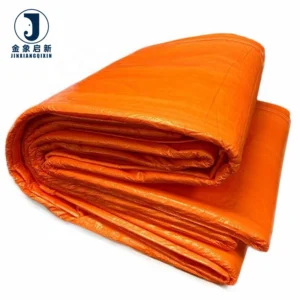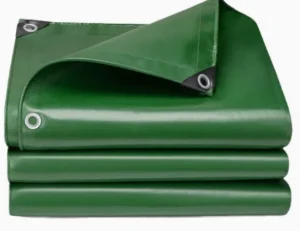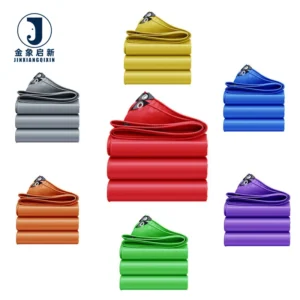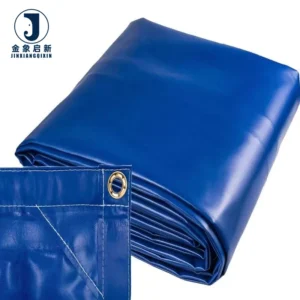
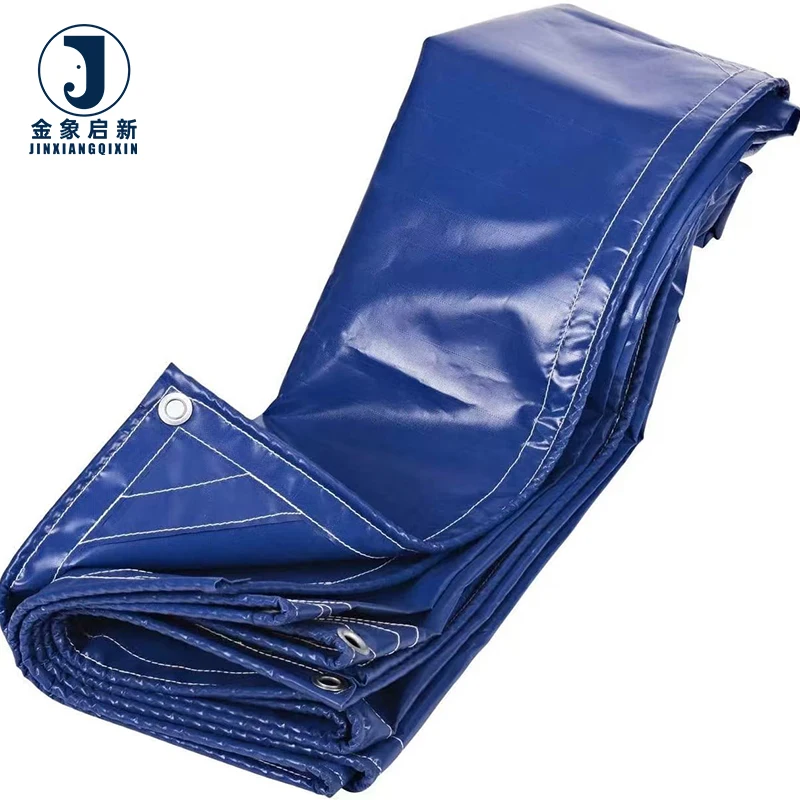
Coating Weight Integrity — 680GSM RIPSTOP PVC Coated Tarpaulin delivered with verified coating adhesion and GSM per roll, ensuring the material property you specify is the material you receive on site.
Technical Specifications
| Parameter | Value |
|---|---|
| Product Type | PVC Coated Tarpaulin |
| Base Fabric Denier Options | 200DX300D / 500DX500D / 840DX840D / 1000DX1000D |
| Weight | 680 GSM |
| Coating Material | PVC |
| Surface Finish | Glossy or matte |
| Waterproof | Yes |
| Temperature Range | -15°C to 70°C |
| Flame Retardant | FR treated (confirm specific grade for market compliance) |
| UV Treatment | Customized (test basis to be specified) |
| Anti-Fungal | Treated |
| Environment | Eco-friendly |
| Certifications | ISO, CE |
Application Suitability
| Application | Exposure & Requirement |
|---|---|
| Builders Roof Sheeting | Direct sun, wind uplift, and puncture from tools require verified tensile strength and tear resistance at fixings. |
| Construction Site Containment | Abrasion against scaffolding and dust control require a durable coating that withstands repeated repositioning. |
| Temporary Industrial Roofing | Rainwater pooling and thermal expansion demand consistent waterproofing and coating adhesion under tension. |
| Heavy-Duty Equipment Covers | Static load and environmental exposure require a fabric that resists fungal growth and surface degradation over time. |
Why Coating Weight Alone Fails Technical Buyers
Specifying the 680GSM PVC Coated Tarpaulin without defining the base fabric denier is a common procurement error that leads to structural failure. The coating provides weather resistance, but the base yarn carries the mechanical load.
Many buyers focus purely on the GSM figure, yet when wind load or physical impact stresses the material, the failure often occurs because the base fabric weave density was insufficient for the application. A lighter denier fabric heavily coated to reach 680 GSM will perform poorly under tension compared to a heavier denier base with balanced coating. [NEED_CITE: tensile and tear test methods for coated fabrics per ISO 1421].
Base Fabric Density and Tensile Behavior
The 680GSM PVC Coated Tarpaulin is available in denier options ranging from 200DX300D to 1000DX1000D. The ripstop weave structure integrates thicker yarns at regular intervals to arrest tear propagation. For technical buyers specifying material for permanent or semi-permanent tension structures, selecting the higher denier base ensures the fabric can handle the installation tension without elongating beyond its elastic limit.
Coating Adhesion and Delamination Resistance
The PVC coating must bond chemically and mechanically to the base scrim. Poor adhesion results in delamination where the coating peels away from the fabric under stress or thermal cycling. Our process control focuses on the interface between the yarn and the coating, ensuring that the 680GSM weight represents a fully integrated composite rather than surface application that cracks at the folds. [NEED_CITE: peel adhesion test standards for PVC coated fabrics].
Understanding the Specification Matrix
Selecting the correct material requires balancing the GSM with the specific environmental exposure. The 680GSM PVC Coated Tarpaulin operates within a -15°C to 70°C range. In high-temperature applications, the plasticizer migration rate dictates longevity; in cold environments, the low-temperature flexibility of the PVC compound prevents cracking. The glossy or matte finish options further influence surface cleaning and light reflection, which can affect thermal load on the covered asset.
The Cost of Underspecifying
When a technical buyer accepts a generic "680 GSM" quote without verifying the base fabric denier or the coating adhesion method, the result is often a cover that fails at the seams or tears under load. [NEED_CITE: common failure modes in PVC tarpaulin installations]. This leads to project delays and warranty disputes. Verifying the exact denier and the ripstop weave structure ensures the material matches the engineering requirement for the specific site conditions.
Sourcing Based on Material Data
- Verified GSM: Every roll of 680GSM PVC Coated Tarpaulin is weighed and recorded to confirm the coating weight matches the specification sheet before dispatch.
- Denier Traceability: We document the specific base fabric denier used for your order, ensuring the tensile properties align with your structural calculations.
- Process Consistency: Our production lines maintain uniform coating thickness, preventing thin spots that compromise waterproofing and tear resistance.
- Treatment Validation: UV and flame-retardant treatments are documented with test references, allowing you to verify compliance with local building codes.
- Technical Support: Our team assists in matching the ripstop weave and coating weight to your specific fabrication method, whether high-frequency welding or industrial sewing.
Documentation & Verification
- Material specification sheet listing the exact base fabric denier and 680 GSM coating weight for each roll.
- Test references for UV stability and flame retardant grades specific to the batch produced.
- Pre-shipment inspection records showing weight and dimensional verification.
- ISO and CE certificates confirming the quality management system applied to the coating process.
Fabrication, Handling & Storage
- Confirm high-frequency welding power settings to match the 680 GSM coating thickness for optimal seam strength.
- Store rolls horizontally on pallets to prevent permanent creasing of the PVC coating surface.
- Allow material to acclimatize to site temperature before unfolding to avoid stress cracking in cold weather.
- Use compatible PVC-based adhesives for patch repairs to ensure chemical bonding with the coating.
- Specify the ripstop base fabric alignment during cutting to maximize tear resistance along stress lines.
Specifying Your Requirement
To ensure the 680GSM PVC Coated Tarpaulin meets your project engineering standards, provide the target base fabric denier and the specific flame-retardant or UV test standard required for your market. Confirm whether you require the material in standard roll widths or custom cut sizes, and specify the surface finish preference for your installation environment.
Frequently Asked Questions
Q: How is the 680GSM weight verified before shipment?
A: We perform weight checks on sample cuts from the beginning, middle, and end of each roll. The data is recorded in the pre-shipment inspection report, confirming the material meets the 680 GSM specification you ordered, preventing the receipt of under-weight fabric that compromises durability.
Q: What base fabric denier options are available and how do they affect tensile strength?
A: Options include 200DX300D, 500DX500D, 840DX840D, and 1000DX1000D. Higher denier yarns provide greater tensile and tear strength, which is critical for structural applications where the fabric is under constant tension or exposed to high wind loads.
Q: How does ripstop weave influence tear behaviour compared to plain weave?
A: The ripstop weave incorporates thicker reinforcement yarns at regular intervals. If the fabric is punctured, these thicker yarns arrest the tear propagation, preventing a small cut from expanding into a major structural failure under load.
Q: What UV treatment test basis is available for outdoor exposure specification?
A: UV treatments are customized based on your exposure requirements. We can supply test references that quantify the material’s resistance to UV degradation, ensuring the coating retains its flexibility and color stability for the intended outdoor lifespan.
Q: Can you provide test reports for flame retardant treatments?
A: Yes, flame retardant grades are available and we can provide test reports corresponding to specific standards. You must specify the required standard for your local building regulations so we can apply the correct chemical treatment during production.