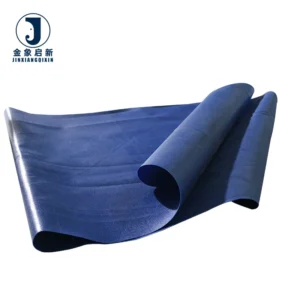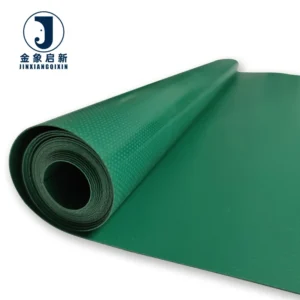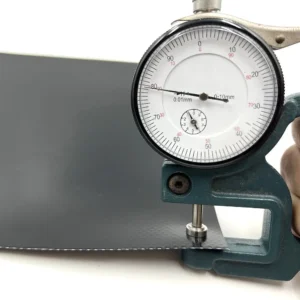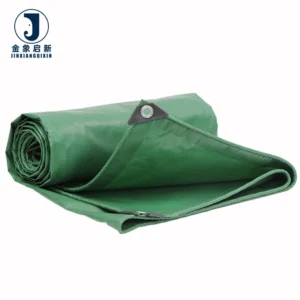
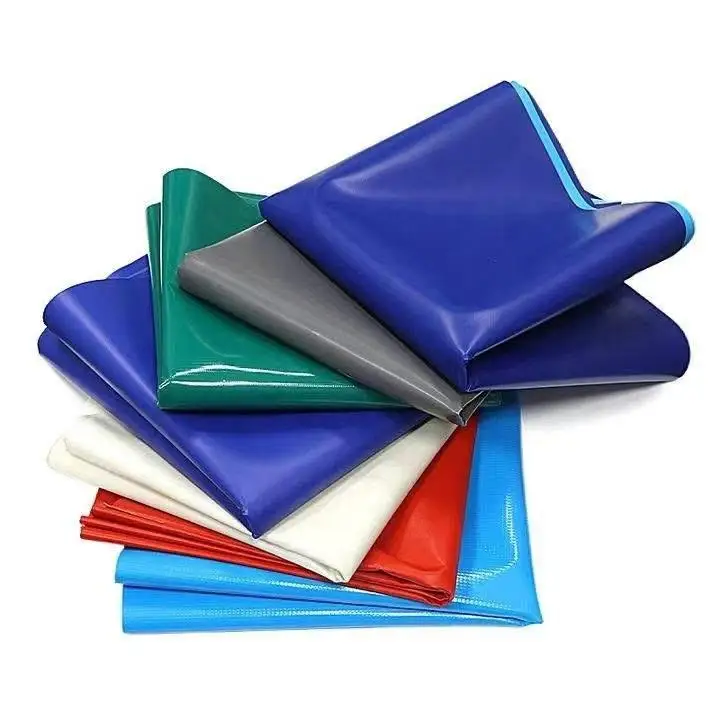
Process-Controlled Coating Weight — Every roll of PVC Knife Coated Tarpaulin is verified for GSM and coating adhesion through in-process QA checkpoints before it leaves the production line, ensuring technical specifiers receive material that matches the specification sheet exactly.
Technical Specifications
| Parameter | Value |
|---|---|
| Product Type | PVC Knife Coated Tarpaulin Roll |
| Coating Method | Knife Coated |
| Coating Material | PVC |
| Color | Blue |
| Waterproof Rating | Waterproof (grade not stated in source) |
| UV Treatment | UV Resistant (test basis not stated in source) |
| Flame Retardant Grade | Fire Retardant (grade not stated in source) |
| Anti-Mildew | Antibacterial and mildew proof (standard not stated in source) |
| Chemical Resistance | Oil and stain resistance, acid and alkali resistance |
| Temperature Resistance | High temperature and cold resistance (range not stated in source) |
| Welding Options | HF, Hot Air, Sewing |
| Finish | Self-cleaning surface |
Application Suitability
| Application | Exposure & Requirement |
|---|---|
| Tensile and architectural membrane structures | Sustained tensile load, wind uplift, UV exposure, requirement for verified tensile and tear data |
| Stadium roofs and large-format covers | Long-span tension, weather cycling, self-cleaning surface to reduce maintenance access |
| Airport hangars and portable storage structures | Wide-span fabric tension, chemical exposure from aviation environments, fire-retardant compliance |
| Shade systems and shading structures | Continuous solar exposure, colour stability, flexibility for curved framing |
| Truck cover fabric | Road abrasion, flexing at load points, weather and moisture exposure |
What "Fire Retardant" Means When No Test Standard Is Named
A flame-retardant claim without a test standard is a liability, not a specification.
Technical buyers reviewing PVC Knife Coated Tarpaulin GSM and coating weight data sheets often see "fire retardant" listed with no reference to DIN 4102, NFPA 701, or M2. This creates a gap between the quotation and the building inspector’s checklist. When the membrane is installed in a stadium, airport hangar, or public shade structure, the authority having jurisdiction will ask for the test report — not the brochure. [NEED_CITE: fire classification requirements for tensile membrane structures in public venues] Fabricators who ship a structure without the correct flame-retardant documentation face rework, project delay, or rejection at handover.
How Knife Coating Delivers the Structural Performance Envelope
The knife coated construction applies PVC directly to the base fabric under controlled blade pressure, forcing the polymer into the weave interstices rather than sitting on the surface. This produces higher peel strength at the coating-to-yarn interface compared to lamination, which is why PVC Knife Coated Tarpaulin Roll is specified for tensile and membrane structures where the coating must survive sustained tension without delamination. The resulting bond supports the high-frequency and hot-air welding processes fabricators rely on to join panels.
Welding Compatibility and Seam Integrity for Membrane Fabricators
Fabricators building stadium roofs, hangar covers, or portable storage structures need seams that match the base fabric in tensile and tear performance. This material supports HF welding, hot-air welding, and sewing, giving fabrication shops flexibility in how they construct panel joints and reinforcement zones. The self-cleaning surface finish reduces particulate adhesion, which is important when welding must occur in less controlled site conditions or when the finished structure will see minimal maintenance access after installation. [NEED_CITE: seam strength testing for welded PVC coated fabrics per ISO 1421]
Reading Beyond GSM: Base Fabric, Coating Weight, and Real-World Behaviour
GSM tells you the total mass per square metre but not how that mass is distributed between base fabric and coating. A PVC Knife Coated Tarpaulin with a high-density base fabric and moderate coating weight will resist tear propagation differently from one with a lighter base and heavier coating, even at identical GSM. The knife coating process controls coating weight independently, allowing the manufacturer to tune the ratio for the specific mechanical demands of tensile structures versus truck covers. Chemical resistance — oil, stain, acid, and alkali — is delivered by the PVC polymer itself, while the self-cleaning surface treatment addresses maintenance intervals on structures where access for washing is restricted.
The Cost of Specifying on Claims Instead of Verified Data
When a project specifies a fire-retardant membrane and the supplied roll arrives without a matching test report, the fabricator either halts production or installs at risk. When anti-UV treatment is claimed without a documented test basis, the specifier has no reference point for expected colour retention or tensile retention over extended outdoor exposure. Rolls that arrive lighter than the quoted GSM shift the structural load calculations, and in tensile applications this can mean the engineered preload is no longer valid. [NEED_CITE: consequences of GSM deviation on engineered tensile structure performance] Colour variation between rolls in the same shipment becomes visible once panels are installed side by side on a stadium façade or shade canopy, triggering replacement costs that far exceed the fabric value.
Why Technical Buyers Source This Fabric Here
Deep process control over coating weight and adhesion is built into every production run, with dedicated QA at each stage rather than only at final inspection. The three full production lines and 36 sets of professional equipment support project volumes without forcing buyers into extended lead times for custom widths. A 10-person R&D team handles material selection and sample development, producing samples within days when a fabricator needs to run weld tests before committing a full order. Every roll ships with 100% pre-shipment inspection, and the inspection record is provided before dispatch so the buyer can verify coating consistency and colour match.
Documentation & Verification
- Material specification sheet stating GSM, base fabric denier, coating method, and coating weight per roll
- Test reports for UV and flame-retardant grades where applicable, matched to roll batch
- ISO and CE certificates included with every shipment
- Pre-shipment inspection record covering coating adhesion, colour, and surface quality
- Roll packing list with individual roll identification for traceability
Fabrication, Handling & Storage
- HF and hot-air welding parameters should be calibrated to the knife coated PVC layer thickness for optimal seam peel strength
- Sewn seams on this PVC Knife Coated Tarpaulin Roll benefit from UV-stable thread to match the fabric’s outdoor exposure life
- Store rolls upright on cores in a dry, shaded area to prevent flat-spot deformation and surface marking
- Unroll in moderate temperatures; cold-conditioned rolls resist flexing and may crease if forced open on site
- Clean the self-cleaning surface with mild detergent only — solvent-based cleaners may degrade the surface treatment
Requesting a Technical Quotation
Provide the intended application and structural load conditions so the correct base fabric denier and coating weight can be confirmed. Specify the fire-retardant grade or test standard required by your local building authority, along with the target colour and any roll width requirements beyond standard widths. Indicate whether you need full rolls for in-house fabrication or if finished panel cutting is required.
Frequently Asked Questions
Q: How is GSM and coating weight verified — what documentation do you supply?
A: Each roll is measured during production and again at pre-shipment inspection. We provide a material specification sheet stating GSM, base fabric denier, coating method, and coating weight. The inspection record accompanies the shipment so you can cross-reference actual values against your specification before fabrication begins.
Q: What flame-retardant grades are available and which test standards do they meet?
A: Fire-retardant treatment is available in multiple grades. The applicable test standard — such as DIN 4102 B1, NFPA 701, or M2 — depends on your project jurisdiction. Confirm the grade required for your market at inquiry stage so we supply the matching test report with your roll documentation.
Q: What is the UV treatment test basis and expected outdoor performance?
A: UV-resistant treatment is applied during coating. The specific test basis should be confirmed at inquiry to match your project specification. We supply the test report where applicable and recommend requesting a sample for your own accelerated weathering validation if your structure has a defined design life requirement.
Q: Which welding methods are compatible and what seam strength can be expected?
A: This fabric supports HF welding, hot-air welding, and sewing. The knife coated construction delivers strong coating-to-yarn adhesion, which supports high peel strength at welded seams. Fabricators should run weld parameter trials on sample material to establish optimal temperature, speed, and pressure for their equipment.
Q: How do you control colour and coating consistency across rolls on large orders?
A: Raw material batches are matched at the start of a project order, and in-process QA checks coating weight and colour at every production stage. The 100% pre-shipment inspection compares every roll against the approved sample, and the inspection record is shared before dispatch so you can verify batch consistency.