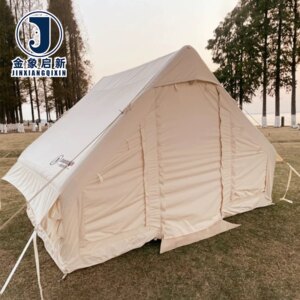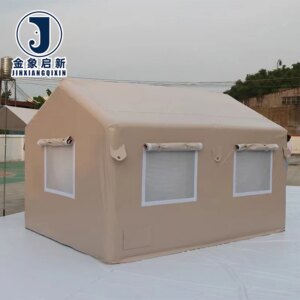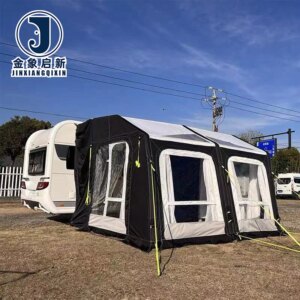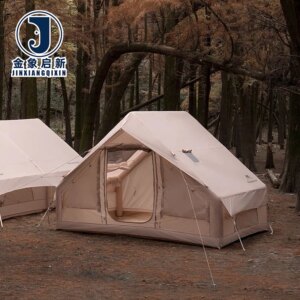
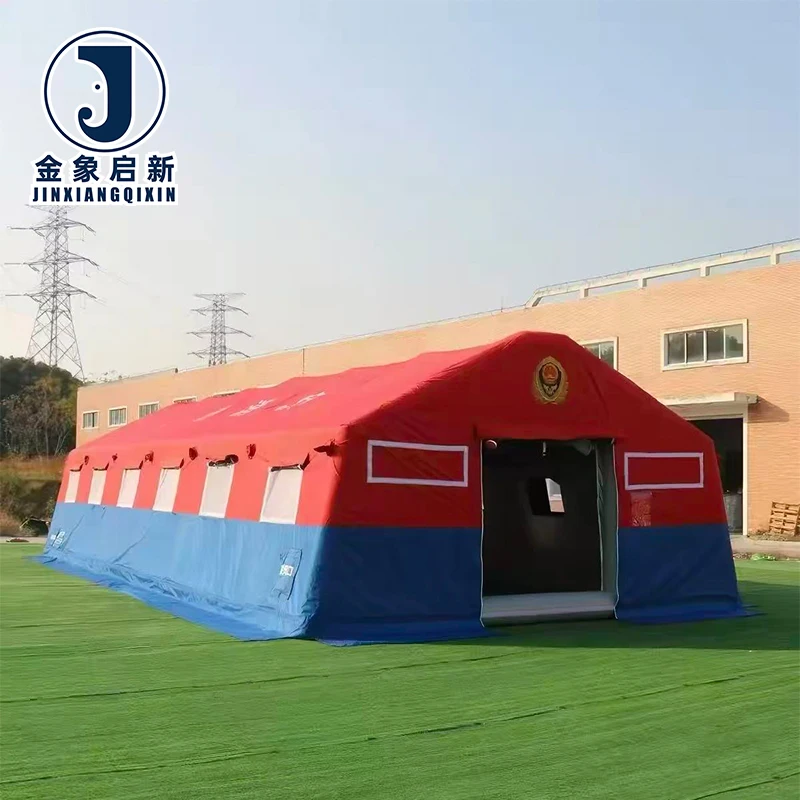
Deep Process Control Over Coating Weight and Adhesion — verified through 100% pre-shipment inspection on every roll of PVC tarpaulin destined for inflatable tent structures, ensuring batch-to-batch consistency in GSM and coating adhesion.
Technical Specifications
| Parameter | Value |
|---|---|
| Product Type | Inflatable Tent |
| Core Material | PVC Tarpaulin |
| Waterproof Rating | 3000mm |
| Construction | Single Layer |
| Design | Four-Season, Extended Type |
| Opening Mechanism | Quick Automatic Opening |
| UV Treatment | UV-resistant PVC material (test basis not stated in source — confirm the UV test standard required for your market) |
| Flame Retardant | Available in flame retardant grades — confirm the grade required for your market |
| Customization Service | OEM & ODM |
| Standards | CE, ISO9001, ISO14001, ISO45001 |
Application Suitability
| Application | Exposure & Requirement |
|---|---|
| Disaster relief emergency shelter | Rapid deployment under severe weather, sustained rain exposure, high wind loading on inflatable beams |
| Temporary storage at construction sites | Abrasion from equipment movement, UV exposure across seasons, dust and moisture ingress prevention |
| Mobile command centers for infrastructure projects | Repeated inflation and deflation cycles, interior climate control compatibility, frequent relocation |
| Emergency response units for utility maintenance | Cold-weather deployment, low-temperature flexibility of PVC coating, quick automatic opening under time pressure |
What the 3000mm Waterproof Rating Actually Tells You About Inflatable PVC Tent Fabric Material Coating Technology
A measured hydrostatic head value means the coating has been tested under controlled pressure — not just described as waterproof in a brochure.
When sourcing Inflatable PVC Tent Fabric material coating technology for emergency and industrial shelter, buyers frequently encounter specifications that state "waterproof" without providing a test method or measured value. The consequence is fabric that performs adequately in light rain but allows moisture penetration during sustained storms, compromising both occupant safety and stored equipment [NEED_CITE: hydrostatic head testing methods for coated fabrics per ISO 811]. A 3000mm rating indicates the PVC coating layer can withstand a water column of that height before penetration occurs, which is relevant for structures deployed in regions with heavy seasonal rainfall. Without this verified data point, procurement decisions rest on supplier claims rather than measurable coating performance.
How PVC Coating Formulation Affects Inflatable Air-Beam Performance
The relationship between PVC coating weight and inflatable beam integrity is direct. Heavier coating builds a thicker barrier against puncture and abrasion, but it also increases the stiffness of the fabric when cold. For Inflatable PVC Tent Fabric material coating technology used in four-season applications, the formulation must remain flexible at low temperatures while maintaining adhesion to the base polyester fabric during repeated inflation cycles. Single layer construction reduces overall transport weight, which matters when shelters are airlifted or carried to remote disaster zones.
Weld Behaviour Under Cyclic Pressure Loading
Every inflatable tent depends on welded seams to hold air within the structural beams. The PVC coating must be compatible with high-frequency or hot-air welding so that the seam achieves adhesion equal to or greater than the parent fabric. When coating weight and plasticiser balance are correct, the weld line flexes with the beam during pressurisation and deflation without cracking or delaminating [NEED_CITE: weld strength testing for PVC coated fabrics]. Poor coating formulation leads to seam failure at the point of maximum flex, which is typically where the beam bends at ground level.
Reading the Specification Sheet Beyond GSM Alone
GSM tells you the total weight of base fabric plus coating per square metre, but it does not reveal how that weight is distributed. A high GSM achieved through heavy coating on a low-denier base fabric will behave differently under tensile load than a moderate GSM built on a high-density woven polyester. For inflatable tent structures, the base fabric denier and weave density determine tear propagation resistance, while the coating weight governs waterproof integrity and surface durability. Buyers evaluating Inflatable PVC Tent Fabric material coating technology should request the base fabric specification alongside the finished GSM to understand the full performance picture. The 3000mm waterproof rating applies to the coating layer specifically, and its longevity depends on coating adhesion to the substrate.
The Cost of Specifying Coating Without Verifying Treatment Claims
Buyers who accept UV or flame retardant claims at face value without requesting the underlying test report face two distinct risks. First, the fabric may degrade under prolonged sun exposure far sooner than expected, leading to chalking, embrittlement, and loss of tensile strength in the PVC coating. Second, a site inspector or regulatory authority may reject the deployed structure if the flame retardant grade cannot be documented against the applicable local standard [NEED_CITE: fire classification requirements for temporary structures in construction and mining]. Both outcomes carry financial consequences that exceed the initial material savings. Batch-to-batch inconsistency in coating weight compounds these issues, as one roll may pass testing while another from the same purchase order falls below the threshold.
Why Procurement Teams Source This Inflatable Tent Fabric Here
Three full production lines and 36 sets of professional equipment provide the capacity to fulfil bulk roll orders for inflatable tent manufacturers without splitting production across external mills. The 10-person R&D team handles material selection and sample development, producing test rolls within days so you can verify coating weight, colour, and weld compatibility before committing to volume. Dedicated QA and QC staff inspect every production stage, and the pre-shipment inspection includes a 24-hour pressure retention test plus waterproof integrity check on finished inflatable units. Full OEM and ODM customisation covers size, colour, and logo printing to your project specification. ISO9001, ISO14001, ISO45001, and CE documentation ships with every order, giving your compliance team traceable records from raw material to finished product.
Documentation & Verification
- Material specification sheet stating GSM, base fabric denier, coating method, and colour reference per roll
- Test report for 3000mm waterproof rating with traceable order and batch reference
- UV treatment and flame retardant test documentation supplied where grade is confirmed at inquiry
- ISO and CE certificates included in shipment documentation package
- Pre-shipment inspection record covering 24-hour pressure retention and waterproof integrity check
Fabrication, Handling & Storage
- Hot-air weld temperature must match the specific PVC coating formulation — confirm parameters with supplied sample before full production
- Single layer construction reduces roll weight, but store flat or on core to prevent creasing that weakens the coating at fold lines
- Quick automatic opening mechanism requires clean beam channels — inspect fabric interior for coating debris before assembly
- UV-resistant PVC surface tolerates mild detergent cleaning — avoid solvent-based cleaners that attack the plasticiser in the coating
- Cold-weather deployment below freezing requires gradual inflation to allow the PVC coating to flex without cracking at stored fold points
What to Include in Your Next Inquiry
Provide the deployment environment, including expected temperature range and seasonal weather exposure, so the correct PVC coating formulation can be recommended. State whether you require roll stock for your own fabrication line or finished inflatable tent units with custom sizing and printing. Confirm the fire safety or UV test standard applicable in your destination market so that the correct grade is produced and documented from the outset.
Frequently Asked Questions
Q: How is the 3000mm waterproof rating tested and what standard applies to the coated fabric?
A: The hydrostatic head test measures the water column height the PVC coating can sustain before penetration. We provide the test report with each batch, referencing the applicable standard and the specific order number so your quality team can verify performance independently. Request the report format at inquiry stage.
Q: What is the base fabric denier and weave structure, and how does it relate to tensile and tear strength?
A: The base polyester fabric denier and weave density determine how the material resists tearing under load. Higher denier yarns and tighter weave reduce tear propagation in inflatable beam structures. We supply the base fabric specification alongside the finished GSM so you can evaluate both layers.
Q: What test basis supports the UV-resistant claim, and how does coating weight affect outdoor service life?
A: UV treatment is incorporated into the PVC coating formulation to resist degradation from prolonged sun exposure. The specific test standard depends on your market requirement — confirm the applicable UV test at inquiry so we can supply the matching test report with your shipment documentation.
Q: How does PVC coating adhesion perform at welded seams under repeated inflation and deflation cycles?
A: Weld integrity depends on coating compatibility with the welding method and correct temperature settings. We recommend producing test welds on supplied samples before full production. The 24-hour pressure retention test on finished units verifies seam performance under sustained internal pressure.
Q: What customisation is available for width, colour, and printing, and what are the minimum order requirements?
A: OEM and ODM services cover custom size, colour matching, and logo printing on the PVC tarpaulin. Minimum quantities vary by specification complexity and custom colour run length. Share your target dimensions and annual volume so we can confirm the minimum and lead time for your configuration.