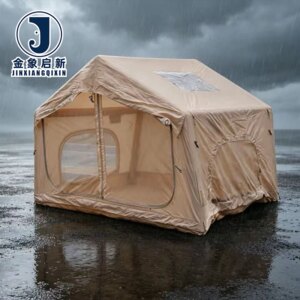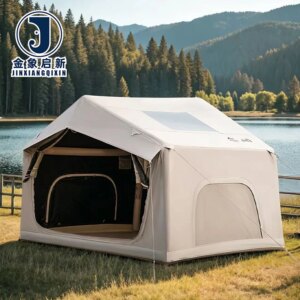
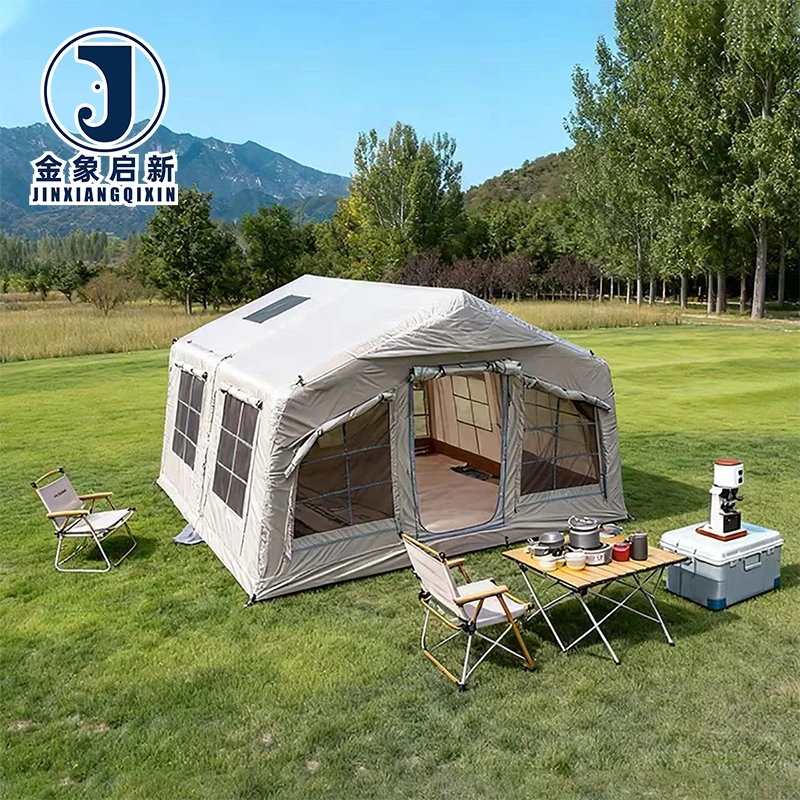
Process Control — coating weight and base fabric adhesion verified at every production stage for inflatable tent fabric, ensuring consistent performance across rolls.
Technical Specifications
| Parameter | Value |
|---|---|
| Product Type | Inflatable Tent Fabric |
| Core Material | PVC tarpaulin |
| Structure | Single-layer PVC tarpaulin construction |
| Waterproof Performance | Fully waterproof coated surface |
| UV Resistance | UV-resistant additives integrated (test basis not stated in source) |
| Fire Retardancy | Available in flame-retardant grades — confirm the grade required for your market |
| Anti-Static Treatment | Anti-static properties available — confirm standard required for your application |
| Tear Resistance | Tear-resistant PVC coated fabric |
| Season Rating | 4-season suitability |
| Customization | OEM & ODM services: size adjustments, pattern printing, material thickness modifications |
| Quality Control | Full-process QA & QC inspection on site |
| Pre-Shipment Testing | 24-hour pressure testing for structural stability |
| Manufacturing Standards | ISO9001, ISO14001, ISO45001, CE |
Application Suitability
| Application | Exposure & Requirement |
|---|---|
| Commercial glamping resorts | Year-round weather exposure, wind load, guest safety compliance, UV degradation |
| Outdoor event venues | Rapid setup and teardown cycles, mechanical abrasion during folding, temporary deployment |
| Temporary hospitality facilities | Fire safety certification for public occupancy, seasonal weather variation, repeated inflation cycles |
| Inflatable structure manufacturers sourcing fabric | Batch-to-batch colour and thickness consistency, certified documentation for regulatory submissions |
What "Flame Retardant" Means Without a Grade Behind It
Fire compliance is not a generic claim — it is a specific grade tested to a named standard.
Procurement teams ordering inflatable tent PVC tarpaulin often receive a certificate that says "flame retardant" without specifying which classification or test method applies. When the local fire inspector asks for documentation matching the jurisdiction’s code, the project stalls. We have seen commercial glamping installations delayed because the fabric supplier could not produce a test report aligned with the market’s requirement [NEED_CITE: fire classification standards for temporary outdoor structures vary by jurisdiction]. An Inflatable Tent Fabric manufacturer that understands compliance will ask which standard your market demands before quoting — not after the material arrives on site.
Coating Adhesion and Structural Integrity in Inflatable Applications
The single-layer PVC tarpaulin used in inflatable tent structures must maintain coating adhesion under continuous internal pressure and external wind load. When the coating delaminates from the base fabric, the air chamber loses integrity and the structure deflates. This is why our Inflatable Tent Fabric manufacturer process controls coating weight and adhesion at every production stage, backed by dedicated QA and QC staff inspecting each batch before it leaves the facility.
Batch Consistency Across Custom Orders
When a glamping operator orders multiple inflatable tents for a resort expansion, colour variation between rolls becomes visible once the structures are erected side by side. Controlling pigment dispersion and coating thickness across the production run is what separates a professional Inflatable Tent Fabric manufacturer operation from a generic supplier [NEED_CITE: colour consistency measurement methods for coated fabrics]. Our 10-technician R&D team manages formulation parameters for every custom colour order, and pre-shipment inspection includes visual comparison against the approved reference sample.
Reading the Specification Sheet for Inflatable Tent PVC Tarpaulin
The relationship between base fabric denier, weave density, and coating weight determines how the material behaves under the cyclic stress of inflation and deflation. A heavier coating does not automatically mean higher tear resistance — if the base fabric yarn count is low, the coating carries load it was never designed to bear, and tears propagate along the weave rather than being arrested by it. Single-layer PVC tarpaulin for inflatable structures requires a balanced specification where the coating provides waterproofing and surface protection while the base fabric handles tensile and tear loads. Surface finish — whether glossy or matte — affects both cleaning behaviour in hospitality environments and the adhesion of printed branding applied during fabrication. Fire-retardant and anti-static treatments are integrated into the coating formulation, but the applicable grade and test standard must be confirmed against your target market’s regulatory framework before production begins.
The Hidden Cost of Specifying Inflatable Tent Fabric on Price Alone
When the coating weight on arrival does not match the quotation, the inflatable structure may hold pressure during the 24-hour pre-shipment test but degrade under sustained wind load at the installation site. Flame-retardant treatment that was claimed but not backed by a verifiable test report becomes a liability the moment a compliance audit occurs. Colour variation between rolls in the same order forces the glamping operator to reject installed units and wait for replacements, pushing the entire project timeline. We have seen welded seams on inflatable structures fail before the fabric itself does, precisely at the flex points where the material bends during inflation [NEED_CITE: weld strength testing for PVC coated fabrics under cyclic loading]. These failures trace back to specification shortcuts taken at the procurement stage.
Why Source Inflatable Tent PVC Tarpaulin Here
Three full production lines and 36 sets of professional processing equipment support bulk capacity without compromising the coating consistency that inflatable structures demand. The 10-technician R&D team handles material selection, pattern printing, custom sizing, and sample development — ensuring the specification matches your application before bulk production starts. Dedicated QA and QC staff inspect every production stage, with 24-hour pressure testing on finished inflatable units to verify structural stability and seam integrity before dispatch. Samples for custom requirements are developed within days, allowing procurement teams to validate material performance against their project specifications. Full documentation accompanies every shipment, from material specification sheets to certification records, supporting both regulatory submissions and internal quality records.
Documentation & Verification
- Material specification sheet confirming coating composition and colour reference per order
- Batch-specific quality reports covering tensile strength and coating adhesion results
- ISO9001, ISO14001, ISO45001, and CE certificates included with shipment
- Fire-retardant and anti-static test reports provided where applicable grades are specified
- Pre-shipment inspection record with pressure test results for each inflatable unit
Fabrication, Handling & Storage
- Heat welding parameters must match the PVC coating thickness to ensure seam strength equals fabric strength
- Store rolls upright on pallets to prevent flat-spot creases that weaken the coating at fold lines
- Clean with mild detergent only — solvent-based cleaners degrade the PVC surface coating
- Allow cold-stored rolls to reach ambient temperature before unrolling to prevent coating cracking
- Repair minor punctures with compatible PVC adhesive patches applied to clean, dry surfaces
Preparing Your Inflatable Tent Fabric Inquiry
Provide the intended application environment and the weather conditions the structure will face across seasons. Specify the fire-retardant grade and any anti-static standard required by your target market’s regulatory authority. Indicate whether you need finished inflatable tent units or roll stock for your own fabrication, along with any size adjustments, pattern printing, or material thickness modifications required for the project.
Frequently Asked Questions
Q: How is GSM and coating weight verified upon arrival to match the quotation specification?
A: Every roll undergoes weight verification against the stated specification during our pre-shipment inspection process. The material specification sheet accompanying your order documents the coating composition and base fabric construction. Batch-specific quality reports provide traceability from production through dispatch, allowing your receiving team to cross-reference the documentation against physical measurements taken on arrival.
Q: What fire-retardant grade does the inflatable tent fabric carry for my market’s compliance requirements?
A: Fire-retardant grades are available, but the specific classification and test standard depend on your target market’s building and temporary structure codes. We recommend confirming the required grade — such as the relevant DIN, NFPA, or local equivalent — during the inquiry stage so the correct formulation is applied and the matching test report is included with your shipment documentation.
Q: How do you control colour consistency across rolls in the same custom order?
A: Our R&D team manages pigment formulation and coating parameters for each custom colour batch. During production, dedicated QA staff compare output against the approved reference sample. Pre-shipment inspection includes side-by-side visual comparison of rolls within the same order to identify any variation before dispatch, ensuring uniform appearance when multiple inflatable tents are installed together.
Q: What OEM customization options are available for size, pattern printing, and material thickness?
A: We offer full OEM and ODM services including size adjustments to match your inflatable structure design, pattern printing for branding or decorative purposes, and material thickness modifications to suit specific performance requirements. Sample development is completed within days, allowing you to validate the customised specification before committing to bulk production.
Q: What documentation package accompanies each shipment for procurement and regulatory records?
A: Each shipment includes a material specification sheet, batch-specific quality inspection reports, pre-shipment inspection records with pressure test results, and applicable ISO and CE certification documentation. Fire-retardant and anti-static test reports are provided where the relevant grades have been specified for your order.