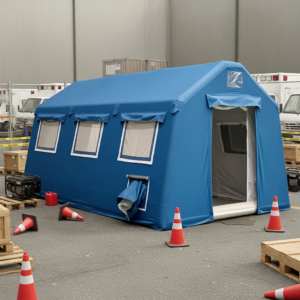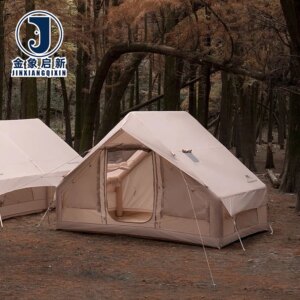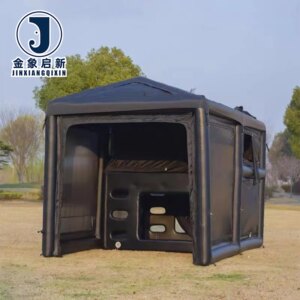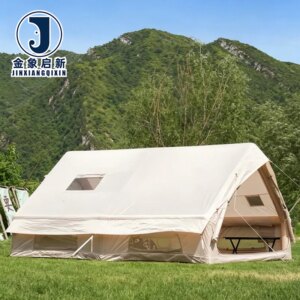
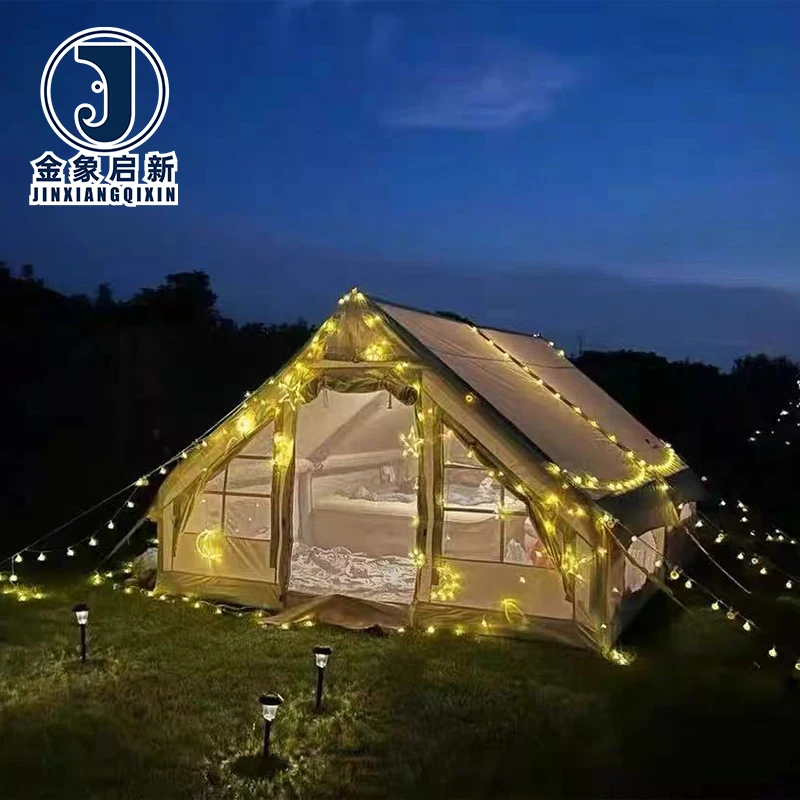
Proven Coating Consistency — Each roll of PVC tarpaulin for inflatable tent structures undergoes in-process adhesion and weight checks across three dedicated production lines, ensuring batch-to-batch uniformity that technical buyers can verify on arrival.
Technical Specifications
| Parameter | Value |
|---|---|
| Product Type | PVC Tent |
| Core Material | PVC Tarpaulin |
| Key Performance | Waterproof, UV-resistant (test basis to be confirmed per batch), Tear-resistant |
| Capacity | 4-6 Person |
| Opening Mechanism | Quick Automatic Opening |
| Layer | Single layer |
| Customization | OEM & ODM — sample customization, pattern printing available |
| Quality Control | Full-process inspection with dedicated QA & QC staff |
| Standards | ISO9001, ISO14001, ISO45001, CE |
Application Suitability
| Application | Exposure & Requirement |
|---|---|
| Outdoor event management workspace | Repeated inflation cycles, wind loading, sun exposure, frequent deployment and pack-down |
| Construction site equipment shelter | Abrasion from ground contact, dust ingress, prolonged UV exposure, mechanical stress at seams |
| Disaster relief mobile facility | Rapid deployment under time pressure, variable weather, transport handling stress |
| Commercial outdoor gear product lines | Consistent roll-to-roll material properties, weld integrity for airtight chambers, brand-level surface finish |
Why Inflatable Tent Fabric Demands More Than a GSM Number on the Quotation
A stated weight tells you nothing about how the coating bonds to the base fabric or whether the weave will hold a welded seam under inflation pressure.
Technical buyers sourcing Inflatable Tent Fabric material coating technology often receive quotations listing a single GSM figure with no supporting detail on base fabric denier, weave density, or coating method. When the rolls arrive, the material may meet the weight target yet fail at the weld line during inflation testing because the coating formulation does not fuse properly under heat. The consequence is a production batch of inflatable chambers that leak at the seams before the fabric itself shows any sign of wear [NEED_CITE: tensile and tear test methods for coated fabrics per ISO 1421]. Without batch-level documentation tying coating weight to adhesion strength, procurement teams have no basis for accepting or rejecting material before it enters fabrication.
Coating Adhesion and Weld Integrity for Airtight Chambers
The performance of an inflatable tent depends entirely on the seam holding air pressure long after the fabric itself remains intact. Inflatable Tent Fabric material coating technology must deliver a coating that softens and fuses under controlled heat without delaminating from the base fabric. PVC tarpaulin produced with consistent coating adhesion allows fabricators to dial in heat-welding parameters that produce seams matching or exceeding the tensile strength of the parent material.
Base Fabric Construction and Tear Propagation Resistance
Inflatable structures experience concentrated stress at valve openings, corners, and tie-down attachment points where tear initiation is most likely. The denier of the yarn and the density of the weave determine how far a puncture or cut will propagate before the surrounding threads arrest it. A tightly woven base fabric with high-denier yarns provides the structural backbone that prevents small abrasion damage from becoming a catastrophic failure during use.
Understanding GSM in Context: Weight, Density, and Strength
Grams per square metre is frequently treated as a universal indicator of fabric quality, but it conflates coating weight with base fabric mass. Two PVC tarpaulin rolls can share the same GSM yet differ substantially in tear resistance if one uses a heavier coating over a lighter base fabric while the other distributes weight more evenly. The relationship between GSM and actual mechanical performance depends on how the coating penetrates the weave, the yarn count in warp and weft directions, and the method of coating application — whether knife-over-roll, calendering, or lamination [NEED_CITE: coating methods and their effect on peel strength in PVC tarpaulin]. For inflatable tent fabric, the specification sheet should state base fabric weight and coating weight separately so buyers can assess whether the construction suits their welding process and structural demands.
The Hidden Cost of Specification Gaps in Inflatable Tent Fabric
When a supplier quotes Inflatable Tent Fabric material coating technology with a GSM figure but no coating formulation detail or adhesion test data, the risk surfaces during fabrication. Rolls that appear identical in weight may require different welding temperatures, causing inconsistent seam strength across a production run. Inflatable chambers that pass initial pressure tests may develop slow leaks after repeated inflation cycles because the coating-to-fabric bond degrades under cyclic stress. Batch-to-batch colour variation adds another layer of risk when multiple rolls are used in a single tent structure, creating visible differences once panels are joined side by side [NEED_CITE: colour consistency standards across production batches in coated fabrics]. These failures are not material defects in the conventional sense — they are specification gaps that could have been identified and addressed before the material entered production.
Why Technical Buyers Source Inflatable Tent Fabric Here
Three full production lines running dedicated PVC coating processes give us the capacity to supply consistent material across large orders without splitting batches across different machines. Our 10-person R&D team develops samples within days, allowing fabricators to validate welding parameters and seam performance before committing to a production volume. Every roll passes through in-process QA checks covering coating weight, adhesion, and surface finish before reaching the final pre-shipment inspection stage. The specification sheet you receive states GSM, base fabric construction, coating type, and colour reference — not a generic product family range. ISO9001, ISO14001, ISO45001, and CE documentation is compiled per order, not pulled from a generic library [NEED_CITE: ISO management system standards for coated fabric manufacturing].
Documentation & Verification
- Material specification sheet stating GSM, base fabric and coating details, and colour reference per roll
- UV-resistant test report provided where applicable — confirm the test basis required for your market
- ISO9001, ISO14001, ISO45001, and CE certificates compiled per order for compliance submission
- Pre-shipment inspection record documenting weight verification and visual checks before dispatch
- Certificate of origin and customs documentation prepared for international shipment
Fabrication, Handling & Storage
- Heat-weld temperature and dwell time must be calibrated to the specific PVC coating formulation on this tarpaulin
- Store rolls horizontally on padded racks to prevent permanent creasing that affects inflation panel flatness
- Avoid dragging cut panels across abrasive surfaces to protect the coating layer from scoring
- Use compatible PVC-based repair adhesive for field patching to ensure chemical bonding with the coating
- Allow cold-stored rolls to reach ambient temperature before unrolling to prevent coating cracking at low temperature
What We Need to Prepare Your Quotation
Tell us the inflatable tent dimensions, inflation pressure range, and the welding method your production line uses. Specify whether you need fabric in roll form or pre-cut panels, along with any colour or pattern printing requirements. If your target market requires flame retardant certification, state the grade your end customer demands so we can confirm availability. Share your annual volume estimate and preferred roll width so we can align production scheduling with your delivery timeline.
Frequently Asked Questions
Q: What UV resistance test basis applies to this inflatable tent fabric?
A: UV-resistant treatment is available, but the specific test method and exposure duration must be confirmed per batch. Request the test report for your production batch to verify the treatment level matches your expected outdoor service conditions. We recommend sharing your target market and typical deployment duration so we can match the appropriate formulation.
Q: How do you verify GSM accuracy before shipment?
A: Every roll undergoes weight verification at our facility before dispatch, and the pre-shipment inspection record documents the measured GSM against the stated specification. We recommend buyers perform arrival re-inspection using standardized sample cutting and weighing procedures to confirm consistency across the order.
Q: What are the heat welding guidelines for airtight inflatable chambers?
A: Welding temperature, pressure, and dwell time depend on the specific coating formulation and base fabric weight of your batch. We supply material data with recommended starting parameters and encourage fabricators to run test welds on sample pieces to fine-tune settings before full production.
Q: What customisation options exist for inflatable tent fabric orders?
A: OEM and ODM services include sample customization, custom dimensions, pattern printing, and colour matching. Provide your design files and dimensional requirements, and our R&D team will prepare samples for your approval within days before production begins on the confirmed specification.