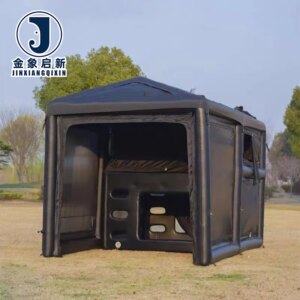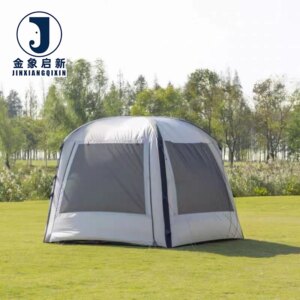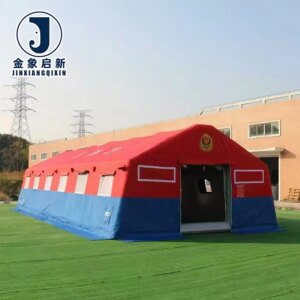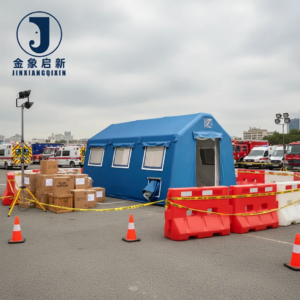
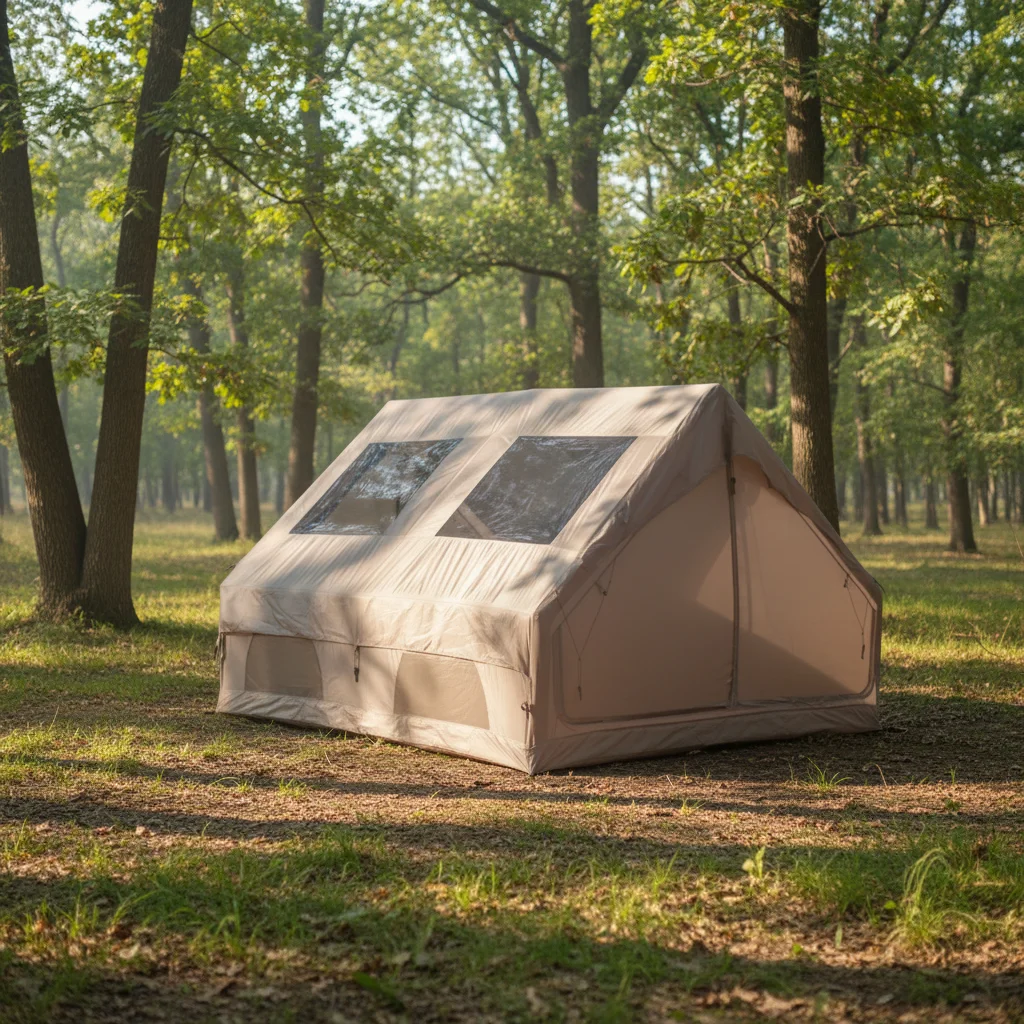
Precision-Coated Fabric Control — our three-line production facility monitors coating weight at every stage to ensure the PVC Inflatable Tent material you specify is what you receive, roll after roll.
Technical Specifications
| Parameter | Value |
|---|---|
| Product Type | Inflatable Tent |
| Core Material | PVC Tarpaulin |
| Capacity | 2-8 Person |
| Design Configuration | Four-Season, Quick Automatic Opening, Single Layer Construction |
| Water Resistance | Fully waterproof coated construction |
| Wind Resistance | Windproof rated for temporary shelter deployments |
| UV Treatment | UV-resistant (test basis not stated in source — confirm grade required for your market) |
| Tear Performance | Tear-resistant PVC coated fabric |
| Customization Scope | OEM & ODM — material selection and product design |
| Quality Assurance | Full-process inspection with dedicated QA & QC staff |
| Flame Retardant | Available in flame retardant grades — confirm the grade required for your market |
| Certifications | ISO 9001, ISO 14001, ISO 45001, CE |
Application Suitability
| Application | Exposure & Requirement |
|---|---|
| Temporary storage shelters at construction sites | Continuous weather exposure, abrasion from equipment handling, dust and moisture ingress |
| Mobile command centers during infrastructure projects | Rapid deployment cycles, repeated inflation and deflation, interior climate management |
| Emergency relief stations for disaster response | Immediate field assembly, wind and rain loading, transport and handling stress |
| Industrial logistics and engineering management | Prolonged sunlight exposure, chemical and particulate contact, heavy foot traffic around entry points |
| Outdoor industrial settings with prolonged UV | Sustained solar radiation, thermal cycling between day and night temperature extremes |
Why Batch Consistency Matters More Than the Quoted GSM for Inflatable Tent Fabric
A roll that arrives lighter than specified compromises inflation pressure retention and structural rigidity from the first deployment.
When inflatable tent manufacturers source PVC Inflatable Tent Fabric by the roll, the single most disruptive failure is not the fabric tearing in the field — it is the coating weight drifting below the agreed specification during production. A lighter coat means lower tensile capacity and reduced air-holding performance across welded seams. We have observed coated fabrics where the roll-to-roll GSM variation was significant enough to change the inflation behaviour of the finished structure [NEED_CITE: tensile and tear test methods for coated fabrics per ISO 1421]. The consequence is not a single rejected roll but an entire production batch behaving inconsistently on the inflation line, forcing your assembly team to adjust heat-weld parameters mid-run.
Base Fabric Construction and What It Controls in an Inflatable Structure
The denier of the base yarn and the weave density determine how the PVC Inflatable Tent Fabric responds when the air beam is pressurised. A tighter weave limits the stretch under internal pressure, keeping the inflated shape stable across temperature swings. The PVC coating bonds to this base fabric, and the adhesion strength between the two layers governs whether the material delaminates at stress points after repeated inflation cycles. Our R&D team evaluates base fabric selection against the specific inflation pressure and flex pattern your tent design demands.
Coating Weight and Its Direct Relationship to Tensile and Tear Performance
Heavier coating adds mass but does not automatically increase tear resistance — that property depends on the interplay between coating penetration and base fabric density. For Inflatable Tent Fabric used in four-season emergency shelters, the coating must seal the weave completely while maintaining enough flexibility for the fabric to fold and deploy without cracking at low temperatures. We control coating weight application across each production run so that the tensile and tear values remain within the expected range from the first roll to the last [NEED_CITE: coating adhesion and peel strength testing for PVC tarpaulin materials].
Reading the Specification Sheet Beyond the Headline Numbers
GSM alone does not tell a technical buyer how the PVC Inflatable Tent Fabric will perform under inflation stress. The base fabric denier, weave count, and coating method together determine the real-world behaviour. Knife-coated fabric typically achieves higher adhesion between the PVC layer and the base yarn, which translates to better peel strength at welded seams — the exact point where inflatable structures concentrate stress during pressurisation. Surface finish also plays a role: a glossy face sheds water and dirt more readily, while a matte finish may offer better print adhesion for branding or identification markings required on emergency relief structures.
The Hidden Cost of Specifying Without Verification
When a buyer accepts a quotation based on stated GSM without requiring pre-shipment weight verification, the risk is not merely receiving lighter material — it is that the finished inflatable tent fails to hold pressure within the designed tolerance. Welded seams on lighter-coated fabric may separate before the base fabric itself reaches its tear limit, because the coating did not penetrate the weave deeply enough to create a reliable heat-weld bond. For emergency relief deployments, this kind of failure surfaces in the field, not in the factory [NEED_CITE: weld seam failure analysis in PVC coated inflatable structures]. Colour variation across rolls in the same batch compounds the problem when panels from different rolls are joined to form a single tent membrane, producing visible shade differences once the structure is erected.
What Differentiates Our Inflatable Tent Fabric Supply
Our three full production lines and 36 sets of professional equipment give us the capacity to maintain consistent PVC Inflatable Tent Fabric output across large-volume orders without sacrificing coating control. The 10-person R&D team handles material selection and sample development specifically for inflatable applications, evaluating base fabric options against your inflation pressure and deployment requirements. Every production stage carries dedicated QA and QC inspection, with 100% inspection before shipment ensuring that coating weight, colour, and surface finish meet the agreed specification on every roll. We develop custom samples within days when your tent design requires a specific fabric weight, colour, or surface treatment. ISO and CE certification accompanies each batch, and our documentation package includes the material specification sheet, test reports where applicable, and pre-shipment inspection records.
Documentation & Verification
- Material specification sheet stating GSM, base fabric denier, coating type, and colour reference for every Inflatable Tent Fabric batch
- Test report for UV-resistant grades provided with the stated test basis when specified in the purchase order
- ISO and CE certificates issued per shipment batch with traceable production records
- Pre-shipment inspection record confirming 100% weight and visual inspection before dispatch
- Certificate of origin and customs documentation prepared for cross-border shipment
Fabrication, Handling & Storage
- Heat-weld parameters must be calibrated to the specific PVC coating weight and base fabric denier of your Inflatable Tent Fabric batch
- Store rolls upright on pallets in a shaded, ventilated area to prevent compression marks on the coated surface
- Avoid unrolling PVC tarpaulin in temperatures below the material’s cold-flex threshold to prevent coating micro-cracking
- Use compatible PVC adhesive for field repairs on single-layer inflatable tent panels rather than solvent-based alternatives
- Plan cutting layouts to minimise off-cuts and ensure that welded seams align with the lower-stress zones of the inflated structure
Requesting a Technical Proposal for Your Inflatable Tent Programme
To provide an accurate Inflatable Tent Fabric recommendation, share the inflation pressure range and operating temperature envelope for your tent design, along with the target market’s fire classification or compliance requirements. Specify whether you need rolls in a standard width or a custom width optimised for your cutting pattern, and indicate your annual volume to help us plan batch scheduling. If your application requires a specific colour or printed identification, let us know so we can develop a sample for your approval before production.
Frequently Asked Questions
Q: How can I verify that the GSM on arrival matches what was quoted for my Inflatable Tent Fabric order?
A: We provide a pre-shipment inspection record that documents the measured coating weight for each roll. Upon receipt, you can confirm by cutting a measured sample from the roll and weighing it against the stated GSM on the material specification sheet. Our QA team conducts this verification at 100% inspection before any dispatch leaves the facility.
Q: What test basis supports the UV-resistant claim, and how does it relate to service life for inflatable shelters?
A: UV-resistant treatment is available with a test report stating the test basis used — confirm the specific standard your market requires. The relationship between UV test results and field service life depends on geographic solar exposure and deployment duration. We recommend requesting the test report and evaluating performance against your specific operating conditions.
Q: How do welded seams perform at inflation flex points compared to adhesive bonding?
A: Heat-welded seams on PVC Inflatable Tent Fabric create a continuous bond that typically matches or exceeds the base fabric strength when the coating weight and welding parameters are correctly matched. Adhesive bonding can introduce a different failure mode at flex points. We recommend heat welding for air-beam structures and provide coating specifications to help your fabrication team calibrate weld temperature and dwell time.
Q: What controls are in place to prevent colour variation between rolls in the same batch?
A: Colour consistency is managed through controlled pigment dosing and in-process inspection at the coating stage. Each production batch is monitored for shade uniformity, and our pre-shipment inspection checks panels side by side before rolls are packed. If your inflatable tent design joins panels from multiple rolls, communicate this in your order so we can prioritise roll-to-roll matching.
Q: What are the options and lead times for custom width, colour, or printed Inflatable Tent Fabric?
A: Custom widths, colours, and pattern printing are available through our OEM and ODM service. Lead times depend on the customisation complexity and order volume — typical multi-week lead times apply for non-standard colours and widths. We develop samples for your approval before full production begins, ensuring the material meets your design and compliance requirements.