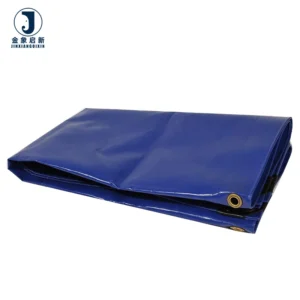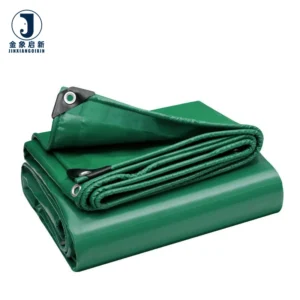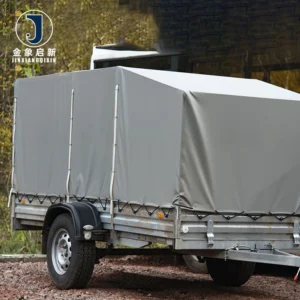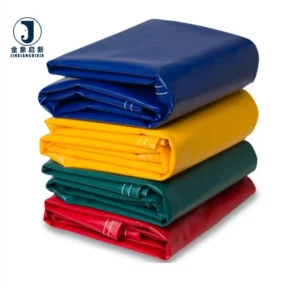
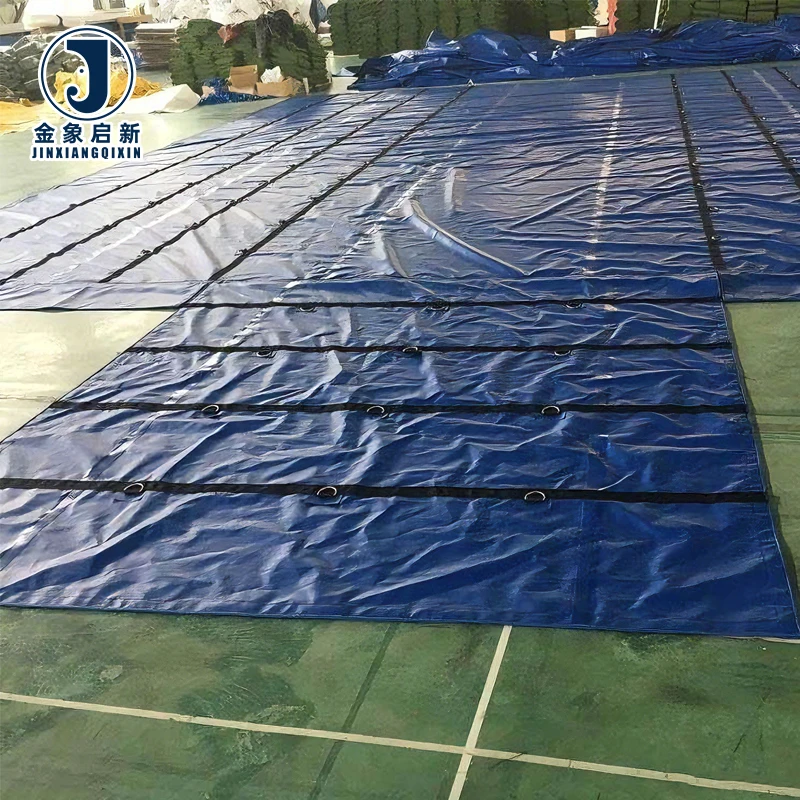
Coating Adhesion Mastery — Nearly 30 years of process-controlled PVC coating application ensures the bond between base fabric and coating layer holds firm at welded seams and high-stress flex zones.
Technical Specifications
| Parameter | Value |
|---|---|
| Product Type | PVC Coated Tarpaulin |
| Coating Material | PVC |
| Waterproof | Yes |
| Flame Retardant | Available (grade subject to specification at inquiry) |
| Anti-Static | Available (standard subject to specification at inquiry) |
| Anti-Cold Treatment | Available |
| Anti-Mildew Treatment | Available |
| Weather Resistance | Suited to extended outdoor exposure (1–3 years stated in source — verify against manufacturer catalog) |
| High Strength | Yes — prevents damage during installation and transit |
| Customization | Available for different industry requirements |
| Standards | ISO, CE (company certifications) |
Application Suitability
| Application | Exposure & Requirement |
|---|---|
| Truck cargo covering | Constant flexing at load points, road abrasion, UV and rain exposure, tie-down tension |
| Transport fleet load protection | Repeated removal and reinstallation, wind flap fatigue, temperature fluctuation |
| Outdoor equipment and pallet covers | Prolonged sun exposure, moisture ingress risk, handling abrasion from forklift contact |
| Construction site material protection | Dust, debris impact, standing water, UV degradation over multi-month projects |
Why "Flame Retardant" Means Nothing Without a Test Report Behind It
A flame-retardant claim on a quotation only protects you if a verifiable grade and test standard ship with the roll.
When a PVC coated truck tarpaulin for transport arrives on site and the safety officer asks for documentation, a supplier statement that says "flame retardant" without referencing a recognised standard like DIN 4102, NFPA 701 or M2 leaves the fleet operator exposed. The fabric may self-extinguish in one test condition but fail entirely under the protocol your regional authority demands [NEED_CITE: fire classification standards for transport and building-adjacent tarpaulins]. Technical buyers know that coating formulation and additive loading determine the grade — and those details must be locked in before production starts, not debated at the delivery dock.
Base Fabric and Coating Weight: What GSM Actually Tells You
The GSM of a PVC coated tarpaulin is the combined weight of the base fabric and the PVC coating layers. A heavy coating over a loosely woven base may register high on the scale yet tear easily along the warp or weft. Conversely, a tightly woven high-denier polyester base with a controlled coating weight delivers balanced tensile and tear resistance. When evaluating a PVC coated truck tarpaulin for transport, request the base fabric denier and weave density alongside the total GSM — those two data points explain why two fabrics at the same weight can perform very differently under load flex and tie-down tension [NEED_CITE: tensile and tear test methods for coated fabrics per ISO 1421].
Coating Adhesion at Welded Seams: Where Most Covers Fail First
The weld line on a truck cover is only as strong as the bond between the PVC coating and the underlying polyester base. If coating adhesion is weak, heat welding can delaminate the layers at the seam, creating a failure point that appears long before the fabric body shows wear. This is especially critical at corners and flex zones where the load shifts during transit. The PVC coated truck tarpaulin for transport is produced with controlled coating adhesion parameters designed to maintain seam integrity through repeated flex cycles. Fabricators should confirm peel strength values and weld compatibility before committing to large production runs.
Reading Between the Specs: How Treatments Interact with the PVC Matrix
Flame-retardant additives are compounded into the PVC coating during manufacture, and the loading level directly influences both the fire grade and the fabric’s physical hand. Higher additive content can stiffen the material, affecting how it drapes over a load and how it behaves during heat welding. Anti-mildew treatment operates at the coating surface and must be compatible with any anti-UV formulation to avoid one treatment neutralising the other. The anti-cold formulation adjusts the plasticiser system so the PVC remains flexible at lower ambient temperatures rather than cracking under tension. Each treatment shifts the performance balance — specifying one without understanding its effect on the others leads to compromises that only show up in the field.
The Hidden Cost of Specifying on Price Per Square Metre Alone
A truck cover fabric that arrives lighter than the quoted GSM means less PVC on the surface, thinner protection at abrasion points, and a shorter service life before pinholes and coating cracks appear. When batches vary in colour from roll to roll, panels installed side by side on the same trailer create a visible patchwork that reflects poorly on the fleet brand [NEED_CITE: batch colour consistency in industrial coated fabric orders]. And when flame-retardant treatment is claimed without a matching test certificate, the cover may be rejected at a site safety audit, forcing a full replacement at the buyer’s cost and downtime. These downstream expenses routinely exceed the per-metre saving that prompted the specification compromise in the first place.
Why Technical Buyers Source This Fabric Here
Coating weight and adhesion are monitored at every stage of production, not sampled once per batch and forgotten. The three full production lines with 36 sets of professional equipment give the capacity to fulfil container-load orders while keeping roll-to-roll consistency tight. A 10-person R&D team handles material selection and sample development, meaning custom widths, treatment combinations and colour references are developed and confirmed before bulk production starts. Dedicated QA/QC runs 100 percent inspection before shipment, catching GSM deviations and visual defects that would otherwise reach the buyer’s warehouse. ISO and CE certifications are maintained and documentation is supplied as standard, not as an afterthought.
Documentation & Verification
- Material specification sheet stating GSM, base fabric denier, coating method and colour reference for each roll
- Flame-retardant and anti-static test reports provided when treatments are specified at inquiry
- Pre-shipment inspection record confirming weight and visual consistency across the order
- ISO and CE certificates included in the shipping documentation package
- Certificate of origin and customs support documents prepared for cross-border dispatch
Fabrication, Handling & Storage
- Heat-weld at manufacturer-recommended temperature to preserve PVC coating adhesion at seam lines
- Store rolls horizontally on a flat surface to prevent permanent creasing in the PVC layer
- Avoid dragging the coated surface over abrasive edges during installation on truck frames
- Use compatible PVC-based repair patches and adhesive for field repairs on high-stress zones
- Allow cold-stored rolls to reach ambient temperature before unrolling to prevent coating crack
What to Include in Your Inquiry
Provide the specific trailer dimensions or cover size you need, the operating environment including temperature range and UV exposure level, and any fire-safety or anti-static compliance standards your site requires. If you have a target GSM or base fabric denier in mind, state it alongside the quantity and roll width preference. Let the technical team know whether you need finished cut-to-size covers or roll stock for your own fabrication line.
Frequently Asked Questions
Q: How is GSM verified before the PVC coated truck tarpaulin ships?
A: Each roll is weighed and measured during the pre-shipment inspection to confirm the actual GSM matches the material specification sheet. The inspection record travels with the shipment so you can cross-check on arrival. If a deviation is found at our facility, the roll is held and reworked before dispatch.
Q: What flame-retardant grades can be supplied and how do I choose?
A: Flame-retardant treatment is available in multiple grades depending on the market standard your project requires. State the regulation or test method your site safety plan references — such as DIN 4102, NFPA 701 or M2 — and the R&D team will formulate and test accordingly. A certified test report is provided with qualifying orders.
Q: How is colour consistency maintained across multiple rolls in one order?
A: All rolls in a single production run are matched to the confirmed colour reference under controlled lighting. The pre-shipment inspection includes a side-by-side visual check. If you are ordering across separate production batches, request that all rolls be allocated from the same dye lot to avoid panel-to-panel variation.
Q: Does the coating adhesion hold at welded seams under repeated flex?
A: The PVC coating is applied with controlled adhesion parameters so that heat-welded seams maintain bond integrity through flex cycles. Peel strength is part of the in-process quality check. Fabricators should validate weld settings on a sample piece before committing to full production.
Q: What documentation ships with the PVC coated truck tarpaulin for transport?
A: The standard package includes a material specification sheet, pre-shipment inspection record, ISO and CE certificates, certificate of origin and a roll packing list. Treatment-specific test reports for flame retardant or anti-static grades are included when those options are confirmed at the inquiry stage.