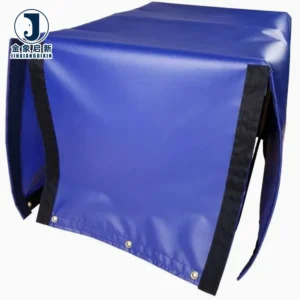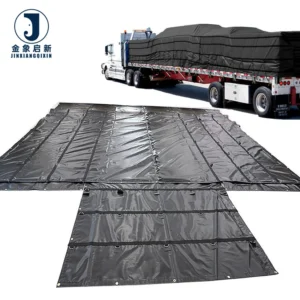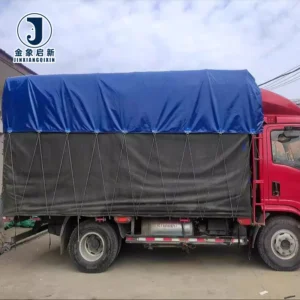
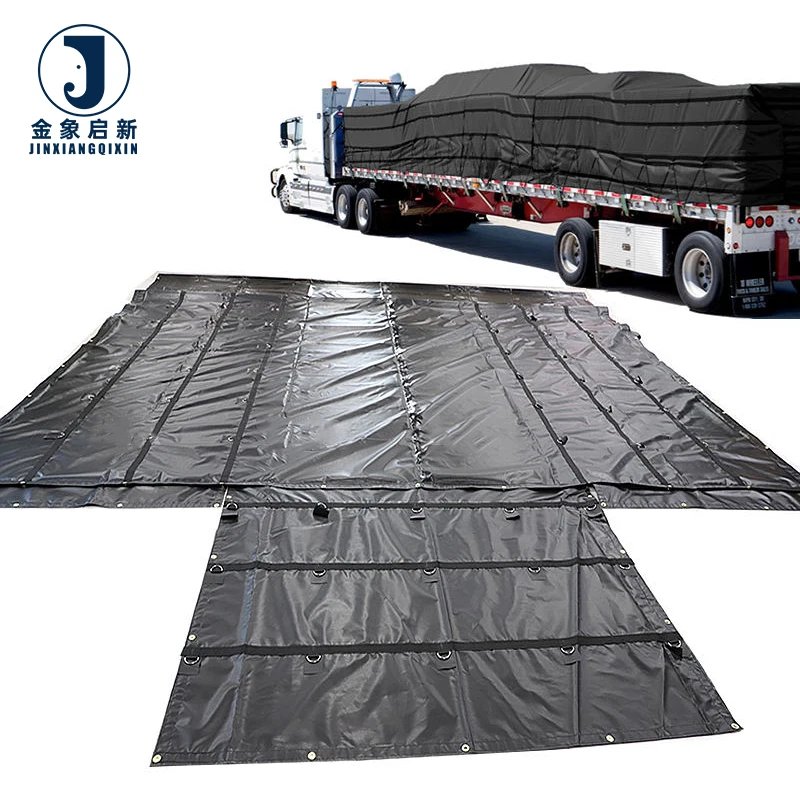
RipSTOP Base Fabric — woven with reinforcing threads at intervals to halt tear propagation at high-stress zones common in flatbed transport loads.
Technical Specifications
| Parameter | Value |
|---|---|
| Product Type | PVC Coated Truck Tarpaulin |
| Identifier | 14oz 18oz RipSTOP Flatbed Semi Truck Lumber Tarp with 8′ Drops 1PC 2PC 3PC |
| Weight Grade Options | 14oz / 18oz |
| Base Fabric | Vinyl or RipSTOP weave |
| Drop Length | 8′ Drops |
| Panel Configuration Options | 1PC / 2PC / 3PC |
| Coating Method | Knife Coated |
| Abrasion Resistance | Yes |
| Anti-Mildew Treatment | Yes |
| Anti-Pull Reinforcement | Yes |
| Waterproof Construction | Yes |
| Flame Retardant | Available in flame retardant grades — confirm the grade required for your market |
| UV Treatment | Available with UV stabilisation — confirm test basis required for your application |
| Customizable Density | Yes |
Application Suitability
| Application | Exposure & Requirement |
|---|---|
| Flatbed semi-trailer freight | High-speed road abrasion, wind uplift, load shifting at flex points, weather exposure during transit |
| Lumber transport covering | Timber splinter puncture risk, heavy load compression on drops, moisture ingress at end grain |
| Heavy cargo on flatbeds | Tie-down strap friction on surface, repeated load flexing, UV exposure on long-haul routes |
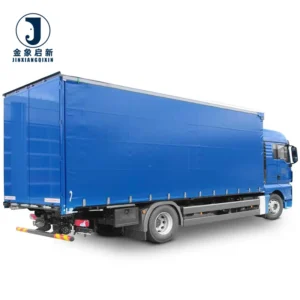
| Side curtain integration for trailers | Constant folding and tension cycles, abrasion against trailer frame hardware |
Why "Heavy-Duty" Claims Fail Without Weight Verification
Many truck covers arrive lighter than the ounce weight stated on the original quotation, leaving operators exposed to premature fabric failure under real highway conditions.
A PVC coated truck tarpaulin for transport specified at 18oz that actually weighs 14oz or less will not deliver the expected tensile and tear performance, especially at weld lines and tie-down zones where stress concentrates. This discrepancy is rarely caught until the cover is already in service and the first tear appears. [NEED_CITE: pre-shipment weight verification standards for coated fabrics] The gap between quoted and delivered weight is the most common reason fleet operators report that their truck covers do not last as expected — and the problem starts at the quotation stage, not on the highway.
Coating Adhesion and Weld Behaviour on RipSTOP Weaves
The knife coating process forces PVC compound into the interstices of the RipSTOP base fabric, creating a mechanical bond that resists delamination when the tarp flexes repeatedly over uneven loads. A PVC coated truck tarpaulin for transport built on a RipSTOP weave distributes localised stress across the reinforcement grid rather than allowing it to concentrate at a single yarn junction.
When heat-welded seams are applied to join panels or attach webbing, the coating adhesion strength determines whether the seam outlasts the fabric or fails first. Poor adhesion leads to the weld line peeling apart under load tension — a failure mode that accounts for a significant share of warranty claims on flatbed covers. [NEED_CITE: weld strength test methods for PVC coated textiles]
Panel Configuration and Drop Geometry for Trailer Fit
Choosing between 1PC, 2PC, or 3PC configurations depends on your trailer length and the access requirements of your freight operation. A single-piece cover minimises seams and potential leak paths but adds weight and handling difficulty during daily tarping and untarping. Multi-panel setups distribute the lifting load across smaller sections, making it easier for drivers to manage the cover in wind and rain.
The 8′ drop length provides coverage from the deck to below the load line on standard flatbed trailers, protecting cargo sides from spray and road debris. [NEED_CITE: standard flatbed trailer dimensions and tarp overlap requirements] When drops are too short, the gap between tarp edge and cargo bed invites wind-driven water ingress and reduces the effectiveness of edge tie-downs.
Understanding the Relationship Between Weight Grade and Base Weave
The 14oz and 18oz weight grades reflect total coated fabric weight, which is the sum of base fabric mass and PVC coating applied during the knife coating process. A heavier coating adds abrasion resistance and waterproofing integrity, while the base fabric’s denier and weave density govern tensile strength and tear propagation resistance. Two tarps at the same ounce weight can perform very differently if one uses a denser base fabric with lighter coating while the other relies on heavy coating over an open weave.
For lumber transport, the RipSTOP weave provides a secondary defence: when a timber splinter or sharp edge punctures the surface, the reinforcement yarns halt the tear from spreading across the panel. This is distinct from a plain weave of equivalent weight, where a single puncture can propagate into a full-panel split under highway vibration and wind load.
The Hidden Cost of Underspecified Truck Covers
When a fleet operator receives tarps lighter than quoted, the cover may initially appear adequate — but under sustained highway speeds and loaded conditions, abrasion at tie-down points and flex zones accelerates beyond the material’s capacity. Anti-mildew treatments applied to a thinner-than-expected substrate lose effectiveness faster in humid climates, leading to premature staining and fabric degradation. [NEED_CITE: mildew resistance testing protocols for transport textiles]
Colour inconsistency across multiple covers in the same order becomes visible once installed side by side on a fleet — a reputational issue for transport companies operating branded trailers. And when welded seams on underweight fabric are subjected to repeated flexing at load shift points, the seam separates before the fabric itself fails, requiring field repairs that take trucks off the road.
Why Source This PVC Coated Truck Tarpaulin Here
Coating weight and base fabric adhesion are controlled at every production stage across three full lines and 36 sets of equipment, ensuring that the 14oz or 18oz grade quoted is the grade delivered.
A 10-person R&D team handles panel configuration, drop length customisation, and sample development within days — meaning your 1PC, 2PC, or 3PC requirement can be prototyped before bulk commitment.
Dedicated QA/QC inspection covers every roll and finished piece before dispatch, with weight verification against the material specification sheet forming part of the pre-shipment record.
Batch-controlled coating and pigment mixing ensure colour consistency across all panels in a multi-cover fleet order, eliminating the visible panel-to-panel variation that undermines professional appearance.
Documentation & Verification
- Material specification sheet stating base fabric type, coating weight, and confirmed 14oz or 18oz grade
- Pre-shipment inspection record documenting panel count, drop length, and reinforcement placement
- Weight verification per piece against quoted ounce specification before dispatch
- Test report for flame retardant or UV grades where applicable to your market requirements
- Roll packing list with piece-level identification for fleet allocation
- ISO and CE certificates supporting cross-border compliance documentation
Fabrication, Handling & Storage
- Heat welding parameters should match the knife-coated PVC compound used on the 14oz or 18oz grade to prevent seam delamination.
- Anti-pull reinforcement zones at tie-down points must align with strap positions to distribute load without fabric distortion.
- Store folded tarps flat or rolled on core — avoid compression stacking that creates permanent crease marks in the RipSTOP weave.
- In cold climates, allow the PVC coating to warm to ambient temperature before unfolding to prevent low-temperature cracking at fold lines.
- Clean with mild detergent only — solvent-based cleaners can degrade the anti-mildew treatment on the surface.
- Field repairs on punctures should use compatible PVC patch material heat-welded rather than adhesive-bonded for lasting adhesion.
How to Specify Your Requirement
Provide your trailer make, model, and deck dimensions so the panel configuration and drop length can be matched to your specific equipment rather than a generic size. Specify whether you need flame retardant or UV stabilised grades and which market compliance standard applies.
Confirm whether you require finished covers with eyelets and hem reinforcement or roll stock for in-house fabrication, along with your annual volume to support batch consistency planning. Requesting a pre-production sample ensures the weight grade, surface finish, and RipSTOP weave characteristics meet your expectations before the full order enters production.
Frequently Asked Questions
Q: How is tarp weight verified on delivery against the quoted oz specification?
A: Each piece is weighed during pre-shipment inspection and recorded against the material specification sheet stating the 14oz or 18oz grade. The inspection record accompanies the shipment so you can cross-check delivered weight against your purchase order. Discrepancies are resolved before dispatch, not after the covers reach your depot.
Q: What panel configuration suits my trailer and load profile?
A: Single-piece covers suit shorter flatbeds where drivers can handle the full weight during tarping. Two or three-piece setups are preferred for longer trailers or operations requiring partial load access. The 8′ drop length covers standard deck-to-ground clearance, but confirm your trailer side profile for any non-standard dimensions.
Q: How do tie-down zones handle abrasion from straps and chains?
A: Anti-pull reinforcement is built into the base fabric at high-stress zones where tie-down hardware contacts the surface. The RipSTOP weave structure distributes strap load across the reinforcement grid, reducing localised wear. Placement of these reinforced zones should match your specific strap pattern for maximum effectiveness.
Q: What test basis supports the UV and mildew treatment claims?
A: UV stabilisation and anti-mildew treatments are applied during the coating process, and test documentation is available upon request. Specify the standard or test method required for your operating region so the appropriate grade can be confirmed before production. Untested generic claims are not substituted for verified results.
Q: Can the tarp be cut to match my specific flatbed model dimensions?
A: Yes. Provide your trailer make, model, and exact deck measurements. Samples are developed within days to confirm fit, drop geometry, and panel layout before bulk production proceeds. This eliminates the mismatch that occurs when generic-size covers are forced onto non-standard trailer profiles.