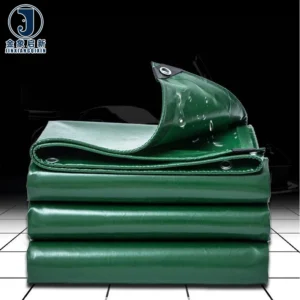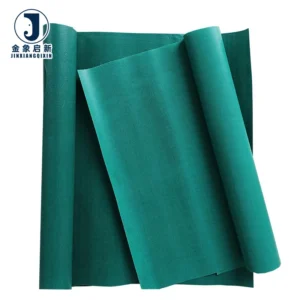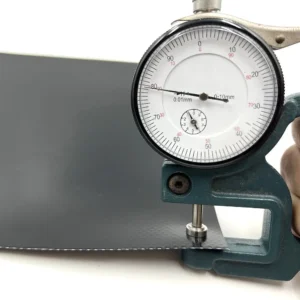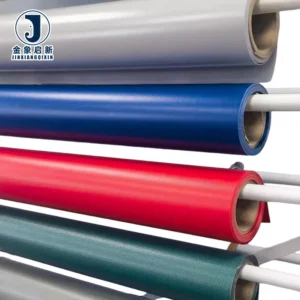
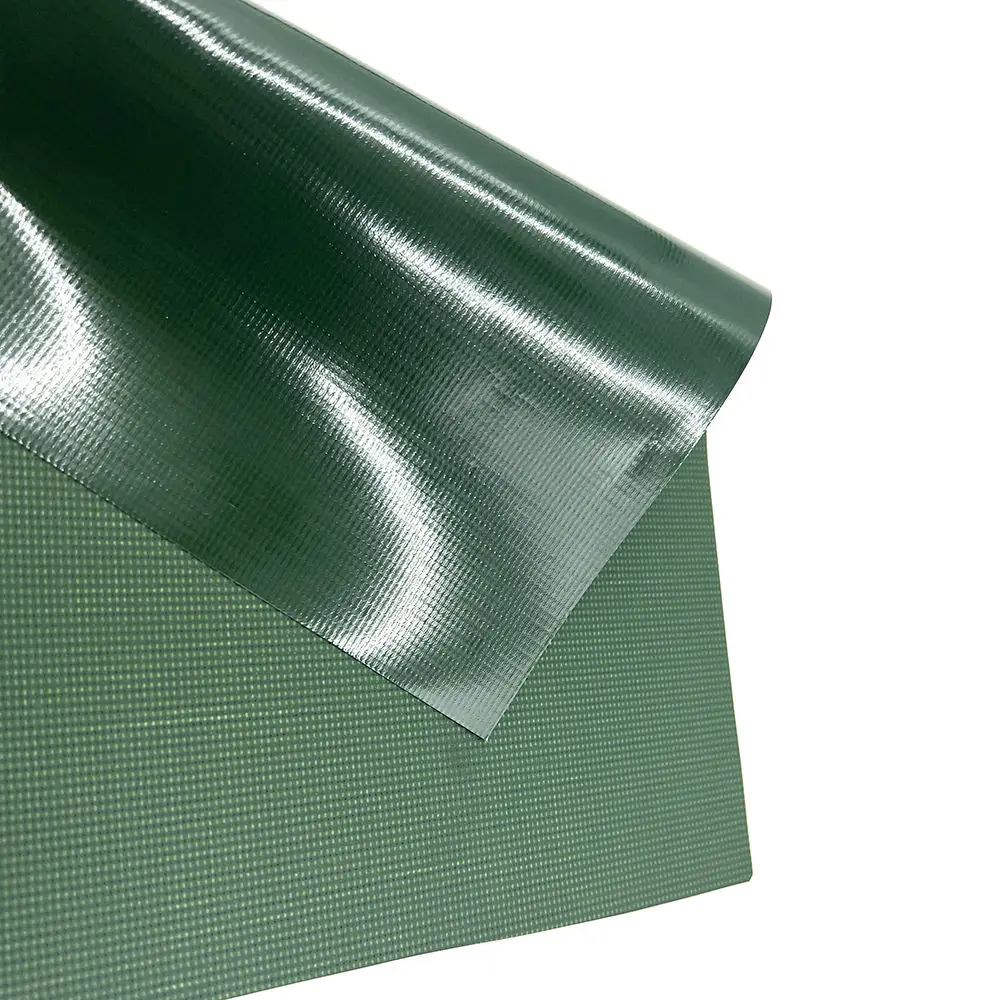
Controlled Coating Weight — three full production lines with in-process GSM verification ensure this Green PVC Knife Coated Tarpaulin Heavy Duty Waterproof Truck Cover Fabric maintains consistent coating adhesion from first roll to last.
Technical Specifications
| Parameter | Value |
|---|---|
| Product Type | PVC Tarpaulin Roll |
| Coating Method | Knife coated |
| Coating Material | PVC |
| Colour | Green |
| Base Fabric Denier | Available in multiple denier options — confirm requirement |
| Mesh Count | Confirm based on tensile and tear targets |
| Weight (GSM) | Available across heavy-duty grades — confirm exact GSM required |
| Tensile Strength | Excellent tensile resistance (test standard not stated in source) |
| Tear Strength | Excellent tearing resistance (test standard not stated in source) |
| Peeling Resistance | Excellent peeling resistance (test standard not stated in source) |
| Flame Retardant Grade | Available in flame retardant grades — confirm the grade required for your market |
| UV Treatment | Available with UV stabilisation — confirm test basis and duration required |
| Anti-Bacterial | Yes |
| Anti-Mildew | Yes (mildew proof) |
| Oil and Stain Resistance | Yes |
| Acid and Alkali Resistance | Yes |
| Temperature Range | High temperature and cold resistance (specific values not stated in source) |
| Anti-Oxidation | Yes |
| Weather Resistance | Yes |
| Flexibility | Highly flexible, resistant to cracking |
| Self-Cleaning | Yes |
| Welding Options | HF, Hot Air, Sewing |
| Waterproof | Yes |
Application Suitability
| Application | Exposure & Requirement |
|---|---|
| Tensile and stadium architectural structures | Permanent UV exposure, wind load cycling, fire code compliance on public assembly sites |
| Airport hangars and portable storage | Wide span membrane loading, weather sealing at seams, long-term coating adhesion under thermal expansion |
| Shade systems and large format technical textiles | Colour consistency across adjacent panels, UV stability, self-cleaning surface for maintained appearance |
| Truck and trailer side curtain fabric | Road abrasion, constant flex at tie-down points, weather and spray exposure during transit |
Why Coating Adhesion Matters More Than Colour Alone
A green PVC knife coated tarpaulin that delaminates at the weld line is useless regardless of how sharp the colour looks on delivery.
When a fabricator specifies PVC Knife Coated Tarpaulin PVC coating technology by colour and GSM only, the structural integrity of the coating-to-base-fabric bond is left unverified. Knife coating forces the PVC compound into the weave under blade pressure, creating a mechanical lock that laminate or dip-coat processes cannot match. Without verifying peel strength alongside coating weight, the seam becomes the weakest point under load. [NEED_CITE: peel strength test methods for coated fabrics per ISO 2411]
Coating Method and Adhesion Behaviour
The knife coating process applied to this PVC Knife Coated Tarpaulin PVC coating technology drives compound directly into the interstices of the base fabric rather than laying it on top. This produces a coating-to-yarn bond that resists separation at cut edges and weld lines. For fabricators producing tensile membranes or truck side curtains, the adhesion quality determines whether a flexed panel holds or splits along the seam before the base fabric itself reaches its tear limit.
Welding Compatibility and Seam Engineering
This fabric supports HF, hot air, and sewing as joining methods. High-frequency welding fuses the PVC coating layers on two panels into a continuous bond without thread or adhesive, producing a seam that can match or exceed the body strength of the fabric. Hot air welding offers flexibility for on-site repairs and complex geometries where HF equipment is impractical. Sewing remains relevant for applications requiring mechanical fastening or where regulatory frameworks mandate stitched seams with taped overlays. [NEED_CITE: welding methods and seam strength standards for technical textiles]
Reading the Specification Sheet Beyond GSM
Coating weight and base fabric denier work together to produce the final tensile and tear values — neither alone tells the full story. A heavier coating on a low-denier base adds waterproofing and surface durability without proportionally increasing tear resistance. Conversely, a high-denier base with a thin coating may show strong tensile numbers but fail at the weld line where the coating is too thin to fuse properly. The knife coating method used here allows precise control of compound thickness across the full width, which directly affects how evenly the fabric behaves under tension. Surface treatments including anti-bacterial, mildew proof, oil and stain resistance, and acid and alkali resistance are integrated into the coating formulation rather than applied as a topcoat, meaning they remain functional through abrasion and cleaning cycles. The self-cleaning characteristic reduces dirt accumulation on shade systems and architectural membranes where appearance maintenance matters over time. Flexibility across the stated high temperature and cold resistance range prevents the brittle cracking that occurs when plasticiser migration reduces low-temperature performance.
The Cost of Specifying on Colour Without Checking the Bond
When rolls arrive with the correct colour but unverified peel strength, the problem does not appear until the fabricated panel is installed and loaded. A tensile membrane that passes visual inspection on site can develop coating separation at welded seams within months of wind cycling, requiring full panel replacement at far greater cost than the original fabric purchase. Similarly, shade panels installed side by side may show visible colour variation if batch consistency was not confirmed before cutting. These failures trace back to a quotation that specified colour and GSM without including peel strength verification, batch-level colour control, or weld compatibility confirmation. [NEED_CITE: field failure modes for coated architectural fabrics]
Procurement Advantages for Technical Fabricators
Three full production lines and 36 sets of professional equipment support the volume consistency this Green PVC Knife Coated Tarpaulin Heavy Duty Waterproof Truck Cover Fabric demands across multi-roll orders. The 10-person R&D team develops samples within days when custom widths, treatments, or colour references are required, allowing fabricators to verify weld behaviour and coating adhesion before committing to production volume. Dedicated QA and QC at every production stage with full pre-shipment inspection means coating weight and adhesion are checked before rolls leave the facility. Nearly 30 years of focused coated fabric production provides the process control that prevents the GSM variation and colour inconsistency issues common when coated fabric is sourced from generalist mills.
Documentation & Verification
- Material specification sheet confirming GSM, base fabric denier, weave, and coating weight for this grade
- UV and flame retardant test reports referencing the specific standard and batch number
- Pre-shipment inspection record with coating weight and peel strength verification per roll
- ISO and CE certificates applicable to the coated fabric product category
- Roll packing list with net weight and roll count for container loading confirmation
- Certificate of origin and customs documentation for destination country clearance
Fabrication, Handling & Storage
- HF welding parameters should be calibrated to the specific coating weight of this knife coated PVC before full production runs
- Hot air welding on this fabric requires temperature and speed trials to avoid burning through the green PVC surface layer
- Store rolls upright on a flat surface to prevent permanent creasing in the knife coated PVC coating
- Allow cold-stored rolls to reach workshop temperature before unrolling to prevent coating micro-cracking
- Use neutral pH cleaners on the self-cleaning surface to preserve the oil and stain resistance treatment
- Sewn seams on this PVC Knife Coated Tarpaulin PVC coating technology require PVC tape overlay to maintain waterproof integrity at stitch holes
Requesting a Specification Match
Provide your application type, the environmental exposure conditions at the installation site, and any fire compliance grades required by local building codes. Specify the width, roll length, and annual volume you need so we can confirm production line scheduling and batch consistency. If colour matching to an existing structure or branding reference is required, send the colour standard for sample development before the full order.
Frequently Asked Questions
Q: How is the GSM verified on arrival and what is the acceptable tolerance for knife coated PVC tarpaulin?
A: GSM is measured by cutting a standard-area sample from each roll and weighing it on a calibrated scale. The total weight includes both base fabric and coating, so verifying coating weight separately requires a peel-and-weigh method. We provide pre-shipment inspection records showing per-roll GSM values and can confirm acceptable tolerance ranges based on the specific grade ordered.
Q: What test standards back the flame retardant and anti-UV claims, and can test reports be provided per batch?
A: Flame retardant and UV stabilisation treatments are available in multiple grades depending on destination market requirements. We supply test reports referencing the applicable standard — such as DIN 4102 or NFPA 701 for fire classification — matched to the production batch. Specify the grade your project requires at the inquiry stage so the correct formulation is used.
Q: Which welding method delivers the strongest seam for tensile structure applications?
A: High-frequency welding typically produces the highest peel strength on knife coated PVC because it fuses the coating layers into a continuous bond. Hot air welding performs well for field repairs and complex shapes. The optimal method depends on the specific coating weight and the load profile of your structure. Request seam peel-strength data for your chosen method before committing to production.
Q: How is colour consistency controlled between rolls when multiple rolls are installed side by side?
A: Colour is controlled through compound formulation and in-line monitoring during the knife coating process. For projects requiring multiple rolls in visible proximity, we recommend ordering the full quantity as a single production run to minimise batch variation. Physical samples from the production batch can be reviewed before dispatch to confirm consistency against your colour reference.
Q: What base fabric denier and mesh count options are available to match specific tensile and tear requirements?
A: Base fabric denier and mesh count directly determine the tensile and tear values of the finished coated fabric. Higher denier yarns and tighter weave counts increase mechanical strength but also add weight. Share your target tensile and tear values along with the application load profile, and our R&D team will recommend the appropriate base fabric construction for your specification.