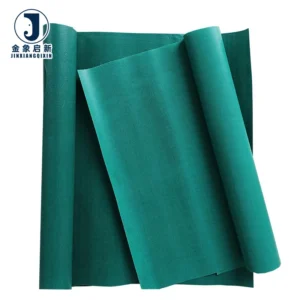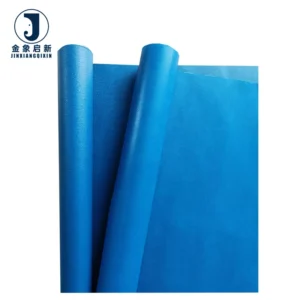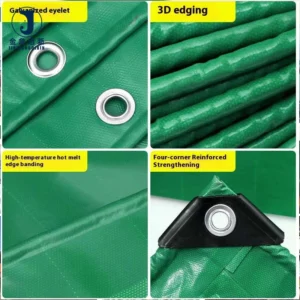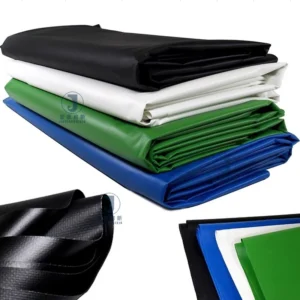
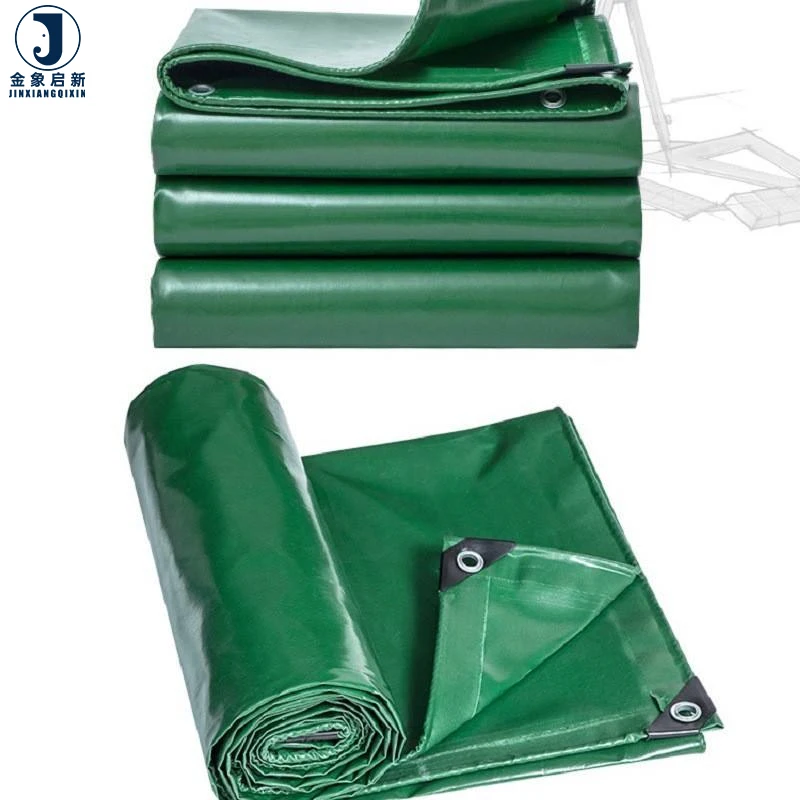
Deep Process Control Over Coating Weight — Three full production lines and 36 sets of professional equipment support batch-to-batch GSM consistency for every PVC coated tarpaulin roll leaving the facility.
Technical Specifications
| Parameter | Value |
|---|---|
| Product Type | PVC Coated Tarpaulin |
| Material | PVC + High-strength polyester mesh fabric |
| Weight (GSM) | 350gsm / 420g / 500gsm / 550gsm / 600gsm / 750gsm |
| Total Thickness | 0.32mm / 0.35mm / 0.4mm / 0.45mm / 0.5mm / 0.65mm |
| Roll Size | 2m width × 75m length / 2.1m width × 50m length |
| Coating Technology | Laminated technology & Hot-melt Coating technology |
| Surface Finish | Glossy Surface or Matt Surface |
| Color Options | Blue / Red / Yellow / Light blue / Grey (Customized) |
| Key Features | Cold crack resistance, anti-mildew, waterproof, color fastness, anti-static treatment (grade not stated), sunproof (test basis not stated) |
| Flame Retardant Grade | Grade not stated — confirm the grade required for your market |
| Service Life | 3-7 years under normal circumstances |
| Standards | ISO, CE |
Application Suitability
| Application | Exposure & Requirement |
|---|---|
| Truck awning and lorry tarpaulin | Constant flexing, road debris abrasion, weather exposure, wind load at highway speed |
| Tent cover and event structure | UV exposure, rain loading, repeated assembly and teardown stress at seams |
| Fish tank and pool lining | Permanent water contact, hydrostatic pressure, chemical balance of treated water |
| Cargo ship cover | Salt spray, heavy wind, sustained UV, tie-down point tension across large spans |
Why Stated GSM Means Nothing Without Coating Adhesion Data
A quoted GSM figure only tells you total weight — it says nothing about how the PVC layers bond to the polyester base fabric.
Technical buyers specifying PVC tarpaulin roll stock for fabrication know the frustration: the material certificate shows the correct GSM, but the fabric delaminates at the weld line or peels apart under tension. The weight is there, but the process behind it was not controlled. Hot-melt coating and lamination are fundamentally different manufacturing routes, and each produces different peel strength values between the coating and the mesh [NEED_CITE: tensile and tear test methods for coated fabrics per ISO 1421]. When you are buying roll stock for downstream cutting and welding, coating adhesion matters as much as total weight.
How Hot-Melt Coating and Lamination Differ in Bond Strength
Hot-melt coating drives molten PVC directly into the polyester mesh, filling the gaps between yarns and creating a mechanical lock that is difficult to separate. This process generally yields higher peel strength at the coating-to-fabric interface, which matters when the material is subjected to high-frequency welding or sustained tension at tie-down points. Laminated technology bonds pre-formed PVC films to the base fabric through heat and pressure, offering a smooth, uniform surface that suits applications where appearance and print clarity take priority. Understanding which PVC tarpaulin roll coating method was used lets fabricators set welding parameters with confidence rather than relying on trial and error.
Polyester Mesh as the Structural Backbone
The high-strength polyester mesh fabric carries the mechanical load in this PVC coated tarpaulin construction. PVC coating alone provides waterproofing and weather resistance, but the base fabric determines how the material behaves under tension and when a tear is initiated. Higher-denier yarns and tighter mesh counts resist tear propagation, which is critical at stress concentration points like corners, eyelets, and welded seams. When evaluating roll stock for demanding applications such as truck side curtains or large-span tent covers, the relationship between base fabric density and overall tensile performance should be reviewed alongside GSM [NEED_CITE: DIN 53354 test method for tear resistance of coated fabrics].
Reading GSM, Thickness, and Coating Weight Together
Selecting the correct PVC tarpaulin roll grade requires looking at GSM, total thickness, and coating technology as an integrated set rather than isolated numbers. GSM represents the combined weight of base fabric and coating — a heavier GSM may come from a thicker PVC layer rather than a stronger base mesh. For example, a 750gsm grade at 0.65mm thickness is suited to heavy-duty truck covers exposed to highway wind loads, while a 350gsm grade at 0.32mm serves lighter applications such as temporary pool liners or indoor protective covers. The coating technology also affects how thickness relates to flexibility: hot-melt coated grades tend to maintain flexibility across a wider temperature range, while laminated grades may stiffen in cold conditions. Surface finish selection — glossy or matte — influences self-cleaning behaviour and the compatibility with different welding methods.
The Hidden Cost of Specifying on Price Per Kilogram Alone
When purchasing decisions focus exclusively on cost per kilogram, manufacturers may meet the target GSM by adjusting the coating-to-base-fabric ratio, adding PVC weight while reducing mesh density. The result is a roll that weighs correctly but tears more easily and produces weaker welds. Batch colour inconsistency between rolls in the same shipment is another symptom of process shortcuts — visible only after the fabric is installed side by side on a truck fleet or event structure [NEED_CITE: colour fastness testing standards for PVC coated textiles]. These failures are not caught by checking GSM with a scale; they require coating adhesion tests, tear strength verification, and roll-by-roll colour inspection before dispatch.
Why Procurement Teams Source This Roll Stock Here
Dedicated QA and QC checkpoints at every production stage ensure coating weight, colour, and thickness are verified before any roll is packed. The 10-person R&D team develops custom colour and width samples within days, reducing the lead time typically associated with non-standard roll specifications. Three full production lines with 36 sets of equipment provide the capacity to maintain roll-to-roll consistency across container-volume orders. Pre-shipment inspection covers 100% of rolls, not spot samples, so the packing list reflects actual measured values. The documentation package includes material specification sheets that break down base fabric and coating contributions to total GSM, giving technical buyers the data needed to approve material for fabrication.
Documentation & Verification
- Material specification sheet stating GSM, base fabric construction, and coating weight per side
- Pre-shipment inspection record covering GSM verification and thickness measurement per roll
- Colour consistency check documented across all rolls within the same production batch
- ISO and CE certificates accompanying each shipment for customs and compliance filing
- Roll packing list with individual roll weight and running meter count
Fabrication, Handling & Storage
- Set high-frequency welding power based on whether the roll uses laminated or hot-melt coating to avoid delamination at seams
- Allow glossy surface rolls to reach ambient temperature before unrolling to prevent surface cracking in cold conditions
- Store 2m or 2.1m width rolls upright on pallets to avoid permanent creasing across the polyester mesh
- Use compatible PVC-based repair patches matching the coating technology for field repairs on truck tarpaulins
- Plan cutting layouts around the 75m or 50m roll length to minimise offcuts and welded join lines
- Clean matt surface rolls with mild detergent only to preserve the finish texture before fabrication
What to Include in Your Enquiry
When requesting a quotation, provide the target GSM grade, required surface finish, and intended application so the correct coating technology can be recommended. Specify roll width preference and whether custom colour matching against a Pantone or RAL reference is needed. If your market requires flame-retardant or anti-static certification, state the applicable standard so the correct grade and test report can be prepared before production.
Frequently Asked Questions
Q: How is GSM verified on each roll before shipment?
A: Every roll is weighed and measured for thickness during the pre-shipment inspection. The inspection record documents actual GSM values per roll against the stated specification. Rolls that fall outside the acceptable tolerance range are flagged and excluded from the shipment packing list, ensuring the material arriving at your warehouse matches the material specification sheet provided with your order.
Q: Can I order mixed GSM or mixed colour rolls in one container?
A: Mixed GSM and colour combinations within a single container order are supported, subject to minimum quantities per variant. Each roll is individually labelled with its GSM grade, colour code, and running meter count. The roll packing list details the exact contents so your receiving team can identify and sort inventory upon arrival.
Q: What is the minimum order for custom width or custom colour?
A: Custom width and colour orders carry minimum quantities that depend on the specific GSM grade and coating technology selected. The R&D team develops a sample roll for approval before bulk production begins. Provide your Pantone or RAL reference and target width at enquiry stage so sample development and lead time can be confirmed early in the process.
Q: Do you supply flame-retardant grades with supporting test reports?
A: Flame-retardant grades are available — confirm the grade required for your market at enquiry stage. When a specific standard such as DIN 4102 or NFPA 701 applies to your project, state this in your specification request so the correct treatment and corresponding third-party test report can be prepared and included with your shipment documentation.
Q: What welding methods work best on this fabric?
A: Both high-frequency and hot-air welding are compatible with this PVC coated tarpaulin fabric. Hot-melt coated grades generally tolerate a wider welding parameter window due to deeper PVC penetration into the polyester mesh. Laminated grades may require more precise temperature control to achieve consistent peel strength at the weld line. Request a weld test sample with your material specification sheet to calibrate equipment settings.