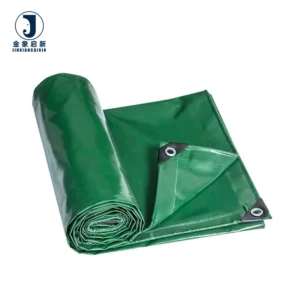
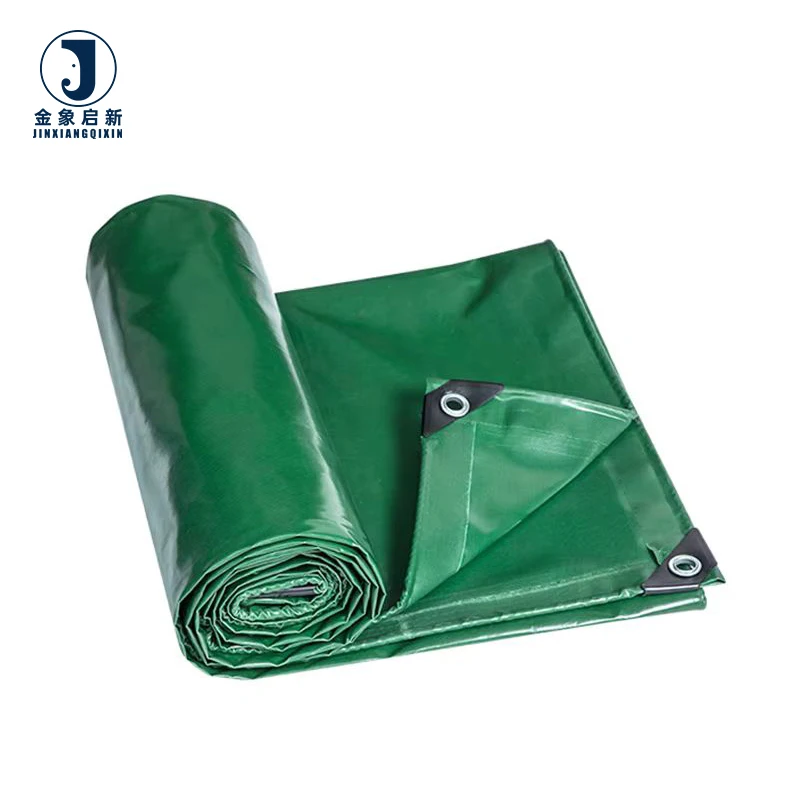
Deep Process Control Over Coating Weight and Adhesion — every roll of PVC coated tarpaulin material specification is weighed and inspected at each production stage, ensuring the GSM and base fabric details match your order documentation before dispatch.
Technical Specifications
| Parameter | Value |
|---|---|
| Product Type | PVC Coated Tarpaulin Roll |
| Material | High-strength PVC vinyl |
| Base Fabric | Woven fabric |
| Weight | At least 450 GSM |
| Coating Method | Vinyl coated |
| Waterproof Rating | Fully waterproof (test basis not stated) |
| Fire Performance | Available in flame retardant grades — confirm the grade required for your market |
| UV Resistance | Available with UV treatment — test report available where applicable |
| Standards | ISO, CE |
Application Suitability
| Application | Exposure & Requirement |
|---|---|
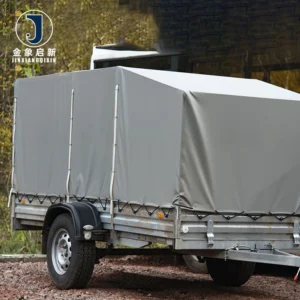
| Custom truck covers and equipment wraps | Road abrasion, flexing at load points, sustained weather exposure requiring verified tensile strength and coating adhesion |
| Tent and awning structural panels | Wind loading on seams, UV exposure, rain ingress prevention across welded joints and folded edges |
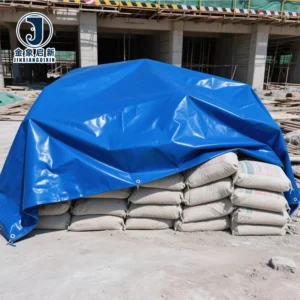
| Industrial site and machinery protection | Standing water, debris impact, chemical splash resistance, puncture risk from sharp structural edges |
| Pond and reservoir liner projects | Permanent water contact, soil chemistry interaction, subgrade puncture risk requiring waterproof barrier integrity |
Why PVC Coated Tarpaulin Material Specification Demands More Than a GSM Number
The weight on the label means nothing if the base fabric density and coating adhesion are not verified against it.
Buyers sourcing PVC coated tarpaulin material specification by GSM alone frequently discover that two rolls quoted at the same weight behave differently under tension. One tears at the seam while the other holds, not because of the coating but because the woven base fabric underneath has a different denier or weave density. Coating weight can be increased to mask a lighter base cloth, inflating the GSM figure without improving real-world performance [NEED_CITE: tensile and tear test methods for coated fabrics per ISO 1421]. Technical buyers and fabricators who specify on material properties need the full picture: base fabric construction, coating method, and the relationship between these factors and the end-use stress conditions.
Base Fabric Density and Its Effect on Tear Propagation
The woven base fabric within this PVC coated tarpaulin material specification provides the structural skeleton that determines how the material responds when a puncture or cut begins to propagate. Higher denier yarns and tighter weave density resist tear spread, while lighter constructions allow a small nick to run across the panel. At this weight grade, the relationship between warp and weft density directly affects how the fabric behaves under the cyclic loading seen in truck covers and tensioned structures.
Coating Adhesion and Weld Seam Integrity
The PVC coating applied to this fabric must bond to the woven base with sufficient peel strength to survive repeated flexing and thermal cycling. When hot-air or RF welding joins two panels, the seam strength depends on both the coating chemistry and how thoroughly the PVC penetrates the weave during manufacturing. Poor adhesion means the weld fails before the fabric itself, a failure pattern that appears most often at the points where the load flexes during transport [NEED_CITE: DIN 4102 fire classification for building materials].
Reading the GSM, Denier, and Coating Weight Together
The 450 GSM figure for this PVC coated tarpaulin material specification represents the combined weight of base fabric and PVC coating, not the coating alone. A heavier base fabric with thinner coating will show higher tensile strength but may sacrifice surface abrasion resistance, while a lighter base with thicker coating can inflate the GSM without improving structural performance. Fabricators cutting panels for custom applications need the base fabric denier and weave details to calculate how the material will handle stitching, welding, and mechanical fastening. Surface finish options affect how the material cleans and whether printed branding adheres properly over extended outdoor exposure. Temperature response also shifts with coating thickness, influencing low-temperature flexibility and high-temperature softening behaviour during installation.
The Hidden Cost of Specifying on Quoted Weight Alone
When material arrives lighter than the GSM stated on the quotation, the consequences compound through the fabrication process. Panels cut to calculated dimensions may fall short on tensile margins, welded seams may not reach the expected peel strength, and the finished cover may fail its first real weather event. For tent and awning manufacturers, a batch that does not meet its stated specification means structural panels that cannot be certified for the wind load calculations submitted to the client. Industrial contractors installing site protection face the same risk when waterproof sheeting fails under standing water because the coating weight is insufficient for the exposure conditions [NEED_CITE: weld seam peel strength testing for PVC coated fabrics].
Why Fabricators Source This PVC Coated Tarpaulin Material Specification Here
Three full production lines with 36 sets of professional equipment provide the capacity to hold consistent coating weight across multiple rolls in a single order, verified through in-process QA rather than sampling alone. A 10-person R&D team supports material selection, custom sizing, and sample development within days, allowing fabricators to test weld parameters and seam configurations before committing to a production order. Every roll undergoes 100% pre-shipment inspection with documented weight verification, so the PVC coated tarpaulin material specification you ordered is the specification that arrives. Coating weight and adhesion are controlled at each production stage rather than checked only at the end, reducing the variability that causes problems downstream. Samples are developed for custom requirements so buyers can validate the material against their specific fabrication methods before placing bulk orders.
Documentation & Verification
- Material specification sheet stating exact GSM, base fabric construction, and coating details for every roll shipped
- Test reports for UV resistance and flame retardant grades supplied with documentation where applicable
- Pre-shipment inspection record with actual measured coating weight per roll before dispatch
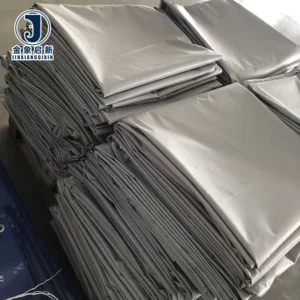
- Roll packing list with colour reference and batch traceability for multi-roll orders
- ISO and CE certificates confirming production system compliance
- Certificate of origin and customs documentation for international shipment support
Fabrication, Handling & Storage
- Hot-air welding at temperatures matched to the PVC coating thickness to achieve full peel strength without base fabric distortion
- Store rolls upright on clean pallets to prevent flat-spot deformation of the woven base fabric at 450 GSM weight
- Allow cold-stored rolls to reach ambient temperature before unrolling to avoid coating surface cracking
- Use compatible PVC adhesive for field repairs on cuts or punctures, testing bond strength on a scrap section first
- Cut panels with allowance for hem folding to maintain waterproof integrity at edges without relying solely on sealed raw edges
Preparing Your Enquiry for This PVC Coated Tarpaulin Material Specification
To match the correct base fabric construction and coating treatment to your application, specify the end-use environment, expected mechanical loading, and any fire performance or UV resistance requirements for your target market. Include the required roll width, annual volume, and whether you need finished panels or roll stock for your own fabrication line. Colour references or print requirements should be noted so samples can be developed for approval before production.
Frequently Asked Questions
Q: How is GSM verified on arrival — what inspection documentation accompanies each roll?
A: Each roll is weighed during the pre-shipment inspection process and the actual measured weight is recorded on the inspection documentation that ships with your order. This is not a sample-based check but a 100% inspection covering every roll, giving you a traceable record that the PVC coated tarpaulin material specification matches what was quoted.
Q: What base fabric denier and weave options are available at this weight grade?
A: Base fabric options at this weight grade vary by intended application and the tensile performance required. Request the base fabric specification sheet for your specific order, which details the yarn denier, weave density, and how these factors relate to tear and tensile strength at the stated GSM.
Q: How does PVC coating method affect tensile and tear strength at 450 GSM?
A: The coating method influences how deeply the PVC penetrates the woven base fabric, which in turn affects adhesion and the material’s response to mechanical stress. Knife coating and dip coating produce different peel strength characteristics, and the correct choice depends on whether your fabrication process involves welding, stitching, or mechanical fastening.
Q: What UV and flame retardant test reports can be supplied with this fabric?
A: Test reports for UV resistance and flame retardant grades are available where applicable to the specific grade ordered. Confirm the performance level required by your market or project specification during the enquiry stage so the correct treatment and corresponding documentation can be prepared.
Q: How is coating adhesion and weld seam performance validated during production?
A: Coating adhesion is monitored through in-process quality control during the coating stage, and weld seam performance can be validated through sample testing before full production. Fabricators are encouraged to request samples and conduct their own weld trials to confirm compatibility with their equipment and parameters.