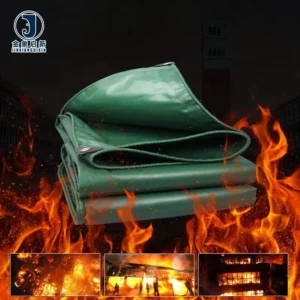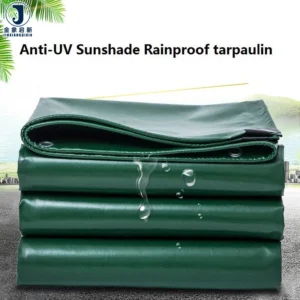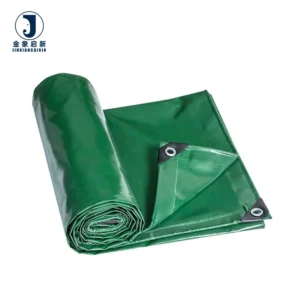
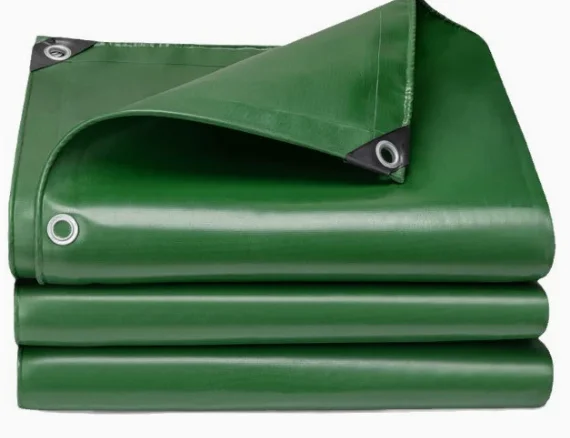
Deep Process Control Over Coating Weight — Our PVC coated tarpaulin fabric base fabric coating technology ensures each roll meets the stated GSM through in-process QA and 100% pre-shipment inspection, giving technical buyers verified material properties before the container is sealed.
Technical Specifications
| Parameter | Value |
|---|---|
| Product Type | PVC Coated Tarpaulin Roll |
| Category | PVC Coated Fabric |
| Weight (GSM) | At least 450 grams (source value — verify against manufacturer catalog) |
| Coating Material | PVC |
| Base Fabric Type | Woven Fabric |
| Waterproof | Yes |
| Key Features | High-strength, durable, resistant to wear and tear, resistant to tearing |
Application Suitability
| Application | Exposure & Requirement |
|---|---|
| Vehicle and equipment covers | Rain, snow, road debris abrasion, repeated handling and folding at stress points |
| Industrial structure covers | Sustained weather exposure, wind load tension, UV degradation over extended periods |
| Outdoor protective sheeting | Agricultural and construction site moisture, soil contact, mechanical puncture risk |
| Roll stock for fabricators | Batch consistency across rolls, predictable weld and seam behaviour during conversion |
Why Coating Adhesion Matters More Than GSM on the Spec Sheet
A fabric that reads 450 GSM but delaminates at the weld line is not a 450 GSM fabric in service.
When technical buyers specify PVC coated tarpaulin fabric base fabric coating technology, the stated weight is only useful if the coating is bonded to the woven substrate with enough peel strength to survive fabrication and field use. We have seen coated fabrics arrive at the correct weight yet fail within weeks because the coating lifted at flex points where the cover is folded over sharp load edges. The failure is not in the coating itself — it is in the bond between the PVC layer and the woven base fabric, a property that no single GSM number can capture [NEED_CITE: peel strength test methods for coated fabrics per ISO 2411].
How the Woven Base Fabric Determines Structural Behaviour
The woven base fabric is the load-bearing skeleton of any PVC coated tarpaulin fabric. Its denier and weave density govern how the material distributes tension across the surface and resists tear propagation once a cut or puncture occurs. A tighter weave with higher-denier yarns produces a fabric that holds its shape under wind load and resists distortion when clamped or tied down. For technical buyers evaluating base fabric coating technology, requesting the base fabric construction details — yarn count, weave pattern and denier — provides a far more reliable predictor of in-service performance than weight alone.
PVC Coating as the Environmental Barrier
The PVC coating layer serves two simultaneous functions: it seals the woven base fabric against water ingress and it protects the yarn structure from abrasion, chemical exposure and UV degradation. The coating weight and application method determine how effectively these functions are maintained over the service life of the cover. When PVC coated tarpaulin fabric base fabric coating technology is properly controlled, the coating penetrates the weave sufficiently to lock the yarns in place while maintaining enough surface thickness to withstand repeated contact with rough surfaces [NEED_CITE: coating adhesion and penetration requirements for industrial tarpaulin fabrics].
Reading the Specification Sheet Beyond Weight
Four parameters on the material specification sheet deserve close attention when evaluating PVC coated woven tarpaulin fabric. First, the base fabric denier directly correlates with tensile strength — higher denier yarns in both warp and weft directions produce a fabric that resists stretching under sustained load. Second, the coating method influences peel strength; knife-over-roll coating typically achieves deeper penetration into the weave than simple lamination, producing stronger coating-to-fabric bonds. Third, the stated GSM must be understood as a composite value including both base fabric and coating — a heavier coating on a lighter base fabric may show the same total weight as a lighter coating on a heavier base, yet the two fabrics will behave very differently under tension. Fourth, surface finish — whether glossy or matte — affects not only appearance but also dirt retention, cleanability and the adhesion of printed graphics or welded seams [NEED_CITE: relationship between coating method and peel strength in PVC coated fabrics per ISO 2411].
The Hidden Cost of Underspecified Material Properties
Ordering PVC coated fabric on weight alone creates predictable downstream failures. A roll that meets the quoted GSM but uses a lower-denier base fabric will tear more easily at eyelet points and along welded seams where the load flexes during transport. Coating that has not fully penetrated the weave may peel away in sheets when the cover is dragged across a rough surface or folded repeatedly in cold conditions. For fabricators producing finished covers, inconsistent coating thickness across the roll width causes weld parameters to vary — seams that hold on one section of the roll may fail on another, creating warranty claims that trace back to material variability rather than fabrication error [NEED_CITE: common causes of coated fabric delamination in field service].
Why Technical Buyers Source This Fabric Here
Our three full production lines and 36 sets of professional equipment handle bulk roll orders with consistent coating weight and batch-to-batch colour matching. The 10-person R&D team develops material formulations and sample rolls within days, allowing you to verify GSM, coating feel and weld behaviour before committing to a full container. Every roll undergoes dedicated QA/QC at each production stage, with 100% inspection before shipment — no sampling shortcuts. Near 30 years of focused coated fabric production means our process control over coating adhesion and base fabric selection is built on documented production history, not trial and error. Material specification sheets accompany every order, stating exact GSM, base fabric construction and coating material for traceability.
Documentation & Verification
- Material specification sheet stating exact GSM, base fabric denier and coating material per roll
- Pre-shipment inspection record confirming 100% QC before dispatch
- Test report for UV and flame-retardant grades where applicable — confirm the grade required for your market
- Roll packing list with batch reference for traceability across your order
- Certificate of origin and customs documentation for international shipment
Fabrication, Handling & Storage
- Weld temperature and dwell time must be matched to the PVC coating thickness to achieve full seam fusion without scorching
- Store rolls upright on a flat surface to prevent permanent creasing in the woven base fabric layer
- Allow cold-stored rolls to reach ambient temperature before unrolling to avoid coating micro-cracking
- Use compatible PVC-based adhesives for field repairs to maintain coating bond integrity at patched areas
- Plan cut patterns to minimise waste and ensure welded seams fall in low-flex zones of the finished cover
What We Need to Quote Your Requirement
Provide the intended application and the environmental exposure conditions — sustained outdoor weather, chemical contact, abrasion type and frequency of handling. Specify your target GSM range, required roll widths and whether you need full rolls or cut-to-size panels. If your market requires specific fire classification or UV treatment, state the standard and grade so we can match the correct formulation and provide the supporting test report with your sample.
Frequently Asked Questions
Q: How is GSM verified on arrival and what documentation accompanies each roll?
A: Each roll ships with a material specification sheet stating the exact GSM, base fabric construction and coating material. Our 100% pre-shipment inspection record confirms weight was measured before dispatch. On arrival, you can cross-check against the stated specification. Any discrepancy triggers our after-sales review process with the batch reference number from your packing list.
Q: What base fabric denier and weave options are available for different strength requirements?
A: We offer woven base fabrics in multiple denier and weave density combinations. Higher denier yarns in warp and weft directions increase tensile and tear resistance. Our R&D team recommends specific constructions based on your application’s mechanical demands and provides sample rolls so you can verify the fabric hand and structural behaviour before placing a bulk order.
Q: How does PVC coating weight relate to waterproof rating and long-term durability?
A: The PVC coating forms a continuous waterproof barrier over the woven base fabric. Coating weight influences how well the layer resists abrasion and environmental degradation over time. Heavier coatings generally provide a thicker barrier but must be balanced against flexibility and handling weight. Our specification sheet documents coating material and total GSM so you can evaluate the balance for your application.
Q: What UV or flame-retardant test reports can be provided with the specification sheet?
A: Test reports for UV and flame-retardant grades are available where applicable to the specific formulation you order. Confirm the standard and grade required for your market — such as DIN 4102 fire classification or UV exposure testing — and we will match the correct treatment and include the corresponding documentation with your material specification sheet and pre-shipment inspection record.
Q: How is batch-to-batch coating consistency controlled across production runs?
A: Our production process includes in-process QA checks at each coating stage, with coating weight monitored against the target GSM throughout the run. The 10-person R&D team maintains formulation records for each product variant, ensuring that repeat orders match the approved sample in weight, coating adhesion and surface finish. Batch reference numbers on your packing list enable full traceability.