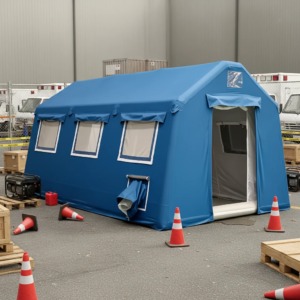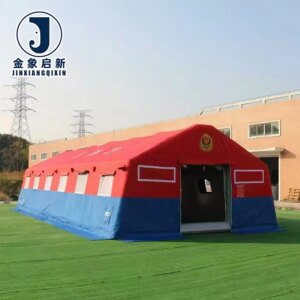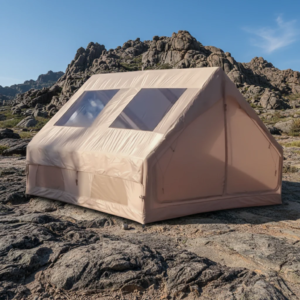
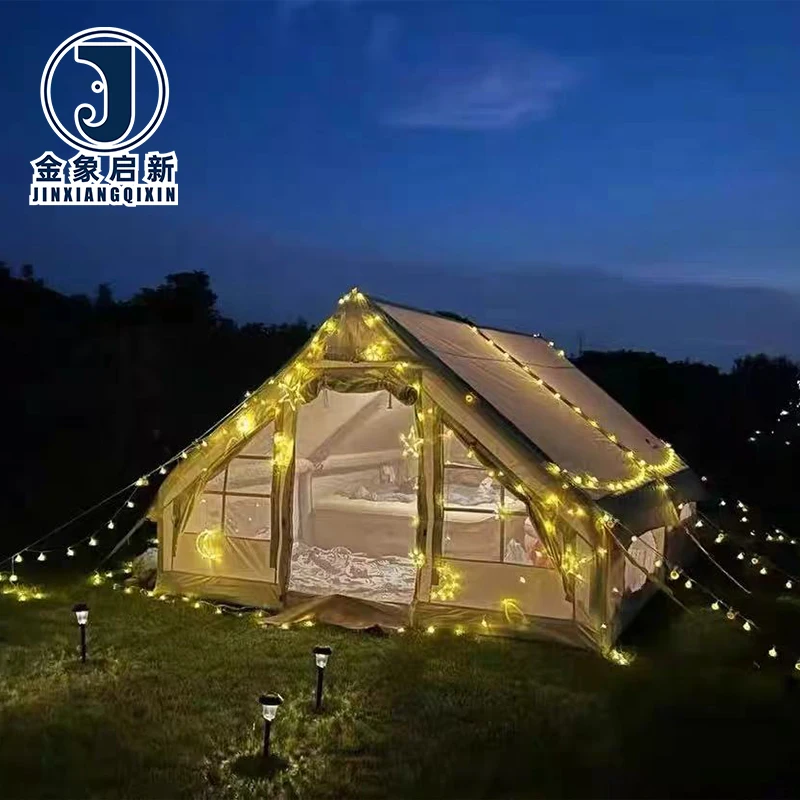
Material & Coating Technology — Deep process control over coating weight and adhesion applied to inflatable tent fabrics, validated through batch-specific waterproof and UV-resistance testing for outdoor gear production.
Technical Specifications
| Parameter | Value |
|---|---|
| Product Type | Inflatable Tent |
| Core Material | PVC tarpaulin |
| Key Performance | Waterproof, tear-resistant |
| UV Resistance | Available in UV-stabilized formulations — confirm UV rating required for your market |
| Fire Retardancy | Available in flame retardant grades — confirm the grade required for your market |
| Anti-Static | Anti-static treatment options available — confirm standard applicable to destination market |
| Customization Service | OEM & ODM (sample customization, pattern printing) |
| Production Facility Area | 9,180 square meters |
| Production Lines | 3 full production lines |
| Processing Equipment | 36 sets of professional processing equipment |
| R&D Team Scale | 10 technicians |
| Quality Control System | Full-process quality inspection with dedicated QA & QC staff on site |
| Standards | ISO9001, ISO14001, ISO45001, CE |
Application Suitability
| Application | Exposure & Requirement |
|---|---|
| Commercial inflatable tent production | High-frequency automated heat welding, repeated inflation cycles, seam stress |
| Summer camping equipment manufacturing | Prolonged UV exposure, sudden rainfall, ground moisture contact |
| Recreational shelter assembly | Abrasion from folding and packing, rapid deployment mechanisms |
| Large-scale tent distribution networks | Batch colour consistency across rolls, customs documentation for cross-border trade |
Why Claimed Performance Fails Without Batch-Specific Data
A datasheet that lists "UV-resistant" or "flame retardant" without a test method attached leaves your production line vulnerable.
Technical buyers for inflatable tent fabric often receive material that matches the quotation on paper but arrives without the backing data. When an Inflatable Fabric manufacturer does not supply batch-level test results, downstream fabricators face rejected shipments at customs or field failures during peak season. The absence of documented GSM verification, UV stabilization ratings, or flame retardant grades means the fabric’s behaviour under real-world conditions remains unproven [NEED_CITE: standardized test methods for coated fabric UV degradation].
Coating Formulation for Inflatable Tent Demands
The PVC tarpaulin core used in this custom inflatable tent material is engineered to withstand the mechanical stress of repeated inflation and deflation cycles. Waterproof performance is integral to the coating process, ensuring that the base fabric remains shielded from moisture ingress during summer downpours. The tear-resistant construction supports the structural integrity required when inflatable beams are pressurized, preventing small punctures from propagating across the panel.
Customization Depth for Production Line Integration
Full OEM and ODM capabilities allow outdoor gear manufacturers to specify pattern printing, colour matching, and material thickness variation to suit their assembly-line requirements. The 10-technician R&D team develops pre-production samples that engineering teams can validate on their own heat-welding equipment before committing to bulk orders. Batch-consistent coating weight and adhesion are maintained across 3 dedicated production lines, ensuring that roll-to-roll variation does not disrupt automated cutting or welding sequences [NEED_CITE: coating adhesion testing for PVC tarpaulin per ISO standards].
Decoding the Specification Sheet for Inflatable Fabrics
The relationship between base fabric denier and coating weight determines how the material behaves under tension and during heat welding. A heavier coating does not automatically translate to higher tear strength if the base fabric weave density is low; both elements must be evaluated together. The coating method — whether knife-over-roll, lamination, or calendering — directly influences peel strength at welded seams, which is critical for inflatable structures that rely on airtight beam construction. Surface finish options, such as glossy or matte, affect both the ease of cleaning in the field and the adhesion of printed branding. Fire retardant grades must be matched to the specific regulatory framework of the destination market, as requirements differ significantly between regions.
The Hidden Cost of Specification Mismatches in Production
Sourcing inflatable tent fabric that holds up under summer UV exposure and sudden downpours — without batch-to-batch colour drift or missing fire-retardant certificates at customs — is a persistent challenge. When a fabric arrives lighter than the quoted GSM, the resulting inflatable structures may lack the rigidity needed for safe deployment. Colour variation between rolls in the same order becomes visible once panels are welded side by side, forcing fabricators to cull material and delay shipments. Welded seams that fail before the fabric does typically indicate a mismatch between the coating formulation and the heat-welding parameters used on the production floor [NEED_CITE: weld strength failure modes in coated technical textiles].
Why Procure Inflatable Tent Material Through This Facility
Nearly 30 years of focus on PVC coated fabric translates into deep process control over the coating weight and adhesion parameters that matter most for inflatable tent applications. Three full production lines and 36 sets of professional equipment support the bulk capacity needed for commercial-scale tent manufacturing with reliable on-time delivery. A dedicated QA and QC presence at every production stage ensures that 100% inspection is completed before any roll leaves the facility. The in-house R&D team handles material selection, pattern printing, and custom sizing, delivering samples within days for engineering validation.
Documentation & Verification
- Material specification sheet stating GSM, base fabric denier, coating type, and colour reference for this inflatable fabric
- Batch-specific test report covering waterproof performance and available UV resistance ratings
- Pre-shipment inspection record documenting roll count, weight verification, and visual quality checks
- ISO9001, ISO14001, ISO45001, and CE certificates supporting global compliance and customs clearance
- Roll packing list with certificate of origin for cross-border shipment documentation
Fabrication, Handling & Storage
- Set heat-welding temperature and dwell time to match the PVC coating weight of this inflatable tent fabric
- Store rolls horizontally on racking to prevent permanent creasing of the PVC tarpaulin surface
- Allow cold-stored rolls to reach ambient temperature before unrolling to avoid coating micro-cracking
- Use compatible PVC-based repair patches and solvent cement for field repairs on inflated structures
- Plan cutting layouts to minimize waste given the supplied roll width and the panel geometry of your tent design
What to Include in Your Next Fabric Inquiry
Provide the specific inflatable tent model, target market, and any fire safety or UV performance requirements applicable to your destination region. Specify the required roll width, colour references or pattern printing files, and estimated annual volume so the R&D team can recommend the appropriate coating formulation and production schedule. Confirm whether pre-production samples are needed for your engineering team to validate welding parameters before bulk commitment.
Frequently Asked Questions
Q: How is GSM verified for inflatable tent fabric before shipment?
A: Every roll undergoes weight verification against the stated GSM during our pre-shipment inspection process. The inspection record documents actual measured values, and we can provide roll-level data so your incoming goods team can cross-check against the specification sheet without delay.
Q: Can you supply flame retardant certified fabric for specific markets?
A: Flame retardant grades are available for this PVC inflatable tent material. We need to know the fire safety standard applicable to your destination market — such as regional building or outdoor equipment codes — so our R&D team can formulate and test the coating accordingly before production begins.
Q: How do you maintain colour consistency across multiple rolls?
A: Colour matching is controlled through our full-process quality inspection system with dedicated QA and QC staff monitoring pigment dispersion and coating uniformity across all 3 production lines. Pre-production samples are provided for your approval, and batch-to-batch consistency is verified before dispatch.
Q: What is the sample process for custom pattern printing?
A: Our 10-person R&D team develops printed samples based on your artwork files and specified colour references. Samples are produced on the same PVC tarpaulin base material intended for bulk production, allowing your team to evaluate print sharpness, colour accuracy, and coating behaviour before committing to the full order.
Q: Do you provide test documentation for customs clearance?
A: Each shipment of custom inflatable tent material includes a material specification sheet, available test reports for relevant performance attributes, ISO and CE certificates, a roll packing list, and a certificate of origin to support smooth customs processing at the destination port.