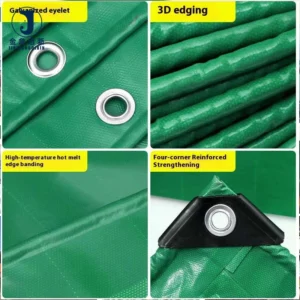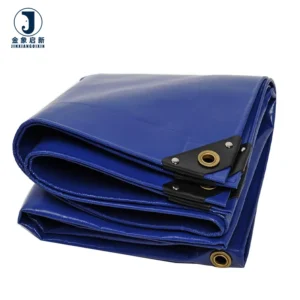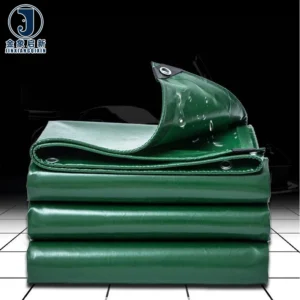
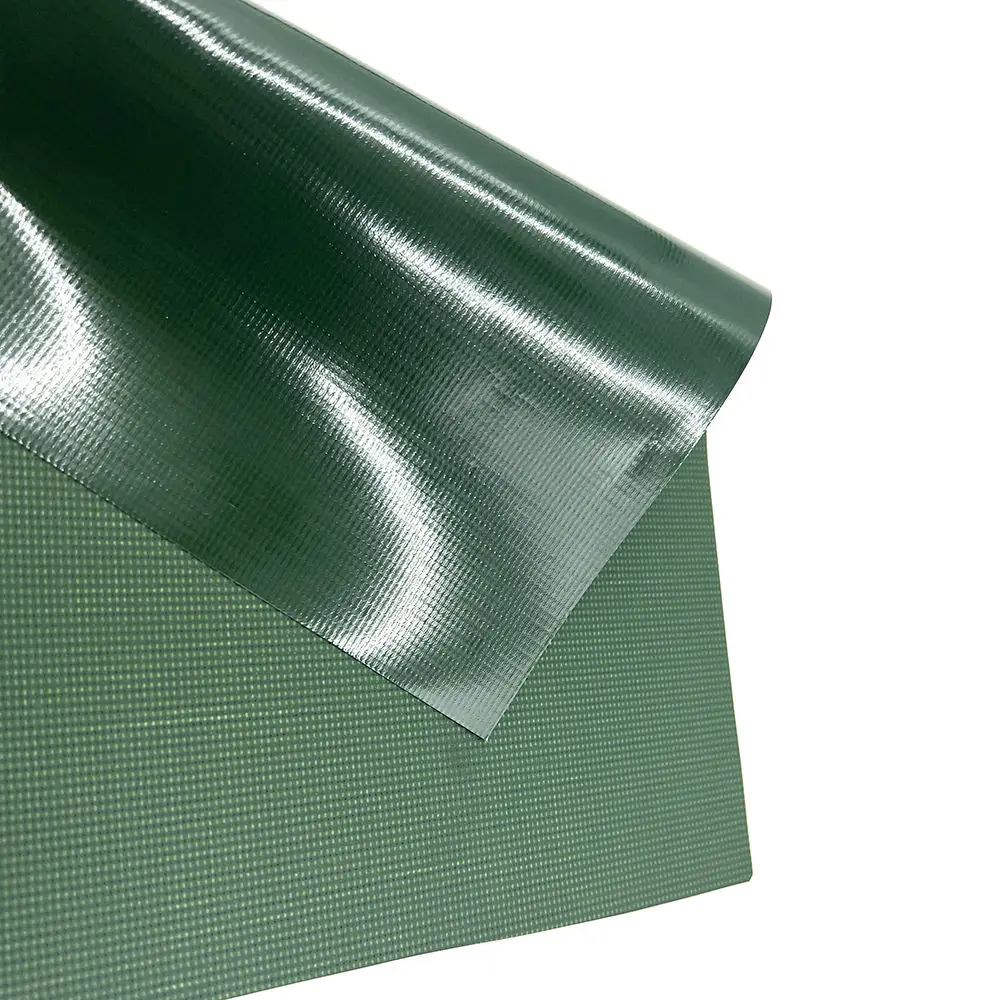
Material Science Focus — We engineer green PVC knife coated tarpaulin with controlled coating weight and verified treatment data, so technical buyers specify on measurable fabric properties rather than generic claims.
Technical Specifications
| Parameter | Value |
|---|---|
| Product Type | PVC Knife Coated Tarpaulin Roll |
| Coating Method | Knife coated |
| Coating Material | PVC |
| Color | Green |
| Flame Retardant | Fire retardant (grade not stated — confirm required grade for your market) |
| UV Treatment | UV resistance (test basis not stated — request test report for your exposure hours) |
| Anti-Mildew | Mildew proof |
| Antibacterial | Yes |
| Oil and Stain Resistance | Yes |
| Acid and Alkali Resistance | Yes |
| Temperature Resistance | High temperature and cold resistance |
| Welding Compatibility | HF welding, hot air welding, sewing |
| Surface Finish | Self-cleaning surface |
| Key Features | Tensile, tearing and peeling resistance; highly flexible and resistant to cracking |
Application Suitability
| Application | Exposure & Requirement |
|---|---|
| Tensile and membrane structures | Constant pre-stress loading, UV exposure, wind uplift; requires consistent coating weight and weld integrity across panels |
| Stadium architectural structures | Large-span coverage, long-term weather exposure; demands dimensional stability and colour consistency across multiple rolls |
| Airport hangars and portable storage | Chemical exposure from aircraft fluids, fuel vapour; needs acid, alkali and oil resistance with fire-retardant compliance |
| Shade systems and shadings | Continuous solar radiation, thermal cycling; calls for UV treatment backed by test data and self-cleaning surface for appearance retention |
| Large format technical textiles | Fabricator conversion into custom shapes; requires full welding compatibility and predictable tensile behaviour under load |
Why PVC Knife Coated Tarpaulin Material Specifications Matter More Than a GSM Number Alone
Coating weight uniformity and base fabric adhesion define real-world panel performance, not the total GSM printed on a quotation.
When a tensile structure fails, the tear rarely starts in the middle of the panel. It begins at a weld seam, a stress concentration point, or an area where the coating has separated from the base fabric. A material spec sheet that lists only total GSM tells you nothing about how that weight is distributed between the PVC layers and the polyester scrim inside [NEED_CITE: relationship between coating weight distribution and peel strength in PVC coated fabrics per ISO 1421]. Knife coating applies each PVC layer independently to the base fabric, producing measurable coating weight on each side. For a PVC knife coated tarpaulin destined for architectural membrane work, that coating-to-substrate bond is the property that determines whether a panel holds tension for the life of the structure or delaminates under sustained pre-stress.
Coating Adhesion and the Knife Coating Advantage
Knife coated PVC fabric achieves its coating-to-base bond by forcing liquid PVC paste through a precision blade gap directly onto the woven scrim. This process controls coating weight per side independently, which matters when a tensile membrane panel is welded on one face and exposed to weather on the other. The resulting PVC knife coated tarpaulin carries a uniform PVC layer that resists peeling under the cyclic loading typical of stadium roofs and large-span shade structures.
Self-Cleaning Surface and Long-Term Architectural Appearance
A self-cleaning surface treatment causes water to sheet across the membrane rather than bead and leave mineral deposits. For stadium canopies and airport hangar covers, this means the green colour retains its appearance without scheduled wash-downs. The surface finish also influences how well dirt and biological growth resist attachment, which is relevant in humid climates where mildew proof performance must be sustained over extended exposure [NEED_CITE: self-cleaning PVC surface performance in architectural membrane applications].
Welding Compatibility and Seam Integrity in Membrane Panels
Architectural fabricators joining panels for a tensile structure choose between HF welding, hot air welding and sewing based on seam geometry and load path. This PVC knife coated tarpaulin supports all three methods. HF welding produces a fused seam where the PVC layers merge, creating a joint that can match or exceed the base fabric strength. Hot air welding suits curved seams and field repairs. Sewing remains relevant for edge details and reinforcement patches. The choice affects how the completed structure distributes load across panel boundaries.
Understanding the Specification Chain from Base Fabric to Finished Panel
Total GSM is the sum of base fabric weight plus top and bottom coating weight. A heavy total GSM achieved through thick coating over a light scrim will show high peel resistance but may lack the tensile strength required for pre-stressed membrane panels. Conversely, a dense polyester base with lighter coating delivers tensile capacity but requires careful weld parameter control to avoid burning through thinner PVC layers. The knife coating method allows each variable to be adjusted independently, so the PVC knife coated tarpaulin specification can be matched to whether the structure demands tear propagation resistance, weld strength or a balance of both. Acid and alkali resistance further extends suitability to airport hangars where de-icing fluids and maintenance chemicals contact the membrane surface. Temperature resistance across high and cold ranges ensures the PVC remains flexible without cracking in winter or softening excessively in summer heat, maintaining dimensional stability under seasonal thermal cycling [NEED_CITE: temperature effects on PVC coated fabric flexibility and tensile behaviour].
The Hidden Cost of Specifying on Price Per Kilogram Instead of Coating Weight Per Side
When buyers approve a coated fabric roll based only on total GSM and unit price, the coating weight distribution remains unknown until panels are welded in the workshop. A coating that is too thin on the weld face results in seams that fail before the fabric body does, because there is insufficient PVC material to form a proper fused joint. Rolls that arrive lighter than the quoted GSM force fabricators to recalculate panel cutting layouts, creating material waste and project delays. Fire retardant grades that lack a matching test report mean the completed structure cannot pass building inspection, requiring full membrane replacement after installation [NEED_CITE: fire classification requirements for architectural membrane structures in building codes].
Why Fabricators Source This PVC Coated Fabric Here
Three full production lines with 36 sets of professional equipment support bulk roll orders with consistent coating weight from first roll to last, which matters when a stadium canopy requires dozens of matched panels.
A dedicated 10-person R&D team handles material selection and sample development, producing specification-matched samples within days so fabricators can run weld trials before committing to a bulk order.
QA and QC checkpoints at every production stage, with 100% pre-shipment inspection, ensure that the GSM, colour and treatment performance stated on the material specification sheet match what arrives at the fabricator’s dock.
Deep process control over coating weight and adhesion, built through nearly 30 years focused on coated fabric production, translates to predictable weld behaviour and peel strength across production batches.
ISO and CE certified production with documentation packages including certificate of origin supports cross-border project compliance for international architectural and infrastructure contracts.
Documentation & Verification
- Material specification sheet stating GSM, base fabric denier and weave, and coating weight per side for this green PVC knife coated fabric
- Test reports for UV resistance and fire retardant performance matched to the destination market’s applicable fire code
- Pre-shipment inspection record documenting roll-by-roll GSM verification and colour consistency before dispatch
- ISO and CE certificates with certificate of origin for cross-border project compliance and customs clearance
Fabrication, Handling & Storage
- Set HF welding parameters to match the specific PVC coating weight of this knife coated fabric to avoid burn-through on thinner layers
- Use hot air welding temperature and speed trials on scrap cuts before joining structural membrane panels for tensile applications
- Store rolls upright on pallets in a dry, shaded area to prevent flat-spot deformation of the PVC coating surface
- Allow cold-stored rolls to acclimatise to workshop temperature before unrolling to prevent cracking of the PVC layer
- Clean the self-cleaning surface with mild detergent only; avoid solvent-based cleaners that degrade the PVC coating
- Plan panel cutting layouts to maximise roll width utilisation and minimise the number of structural weld seams per structure
Before You Place a Roll Order
Share your membrane structure type, the tensile load per linear metre on critical seams, and the fire-retardant grade required by your local building authority. Specify whether you need rolls in standard stock width or a custom width to reduce panel seams, and confirm whether you require a pre-production sample for weld parameter development. State your target roll quantity and delivery timeline so we can align production scheduling with your project milestones.
Frequently Asked Questions
Q: What is the GSM and base fabric denier of this knife coated tarpaulin, and how do I verify it on arrival?
A: The specific GSM, base fabric denier and weave density are stated on the material specification sheet provided with your quotation. On arrival, you can verify GSM by cutting a measured sample from the roll edge and weighing it on a calibrated scale. We include a pre-shipment inspection record documenting measured GSM per roll so you can cross-check before fabrication begins.
Q: Which fire-retardant grade does this fabric carry, and does it meet my local building or aviation fire code?
A: This PVC knife coated tarpaulin is available in fire retardant grades — confirm the grade required for your market and project type. Fire classification requirements differ between building membrane codes and aviation hangar standards. Provide your applicable standard reference and we will supply the matching test report with your shipment documentation package.
Q: What UV test basis supports the anti-UV claim, and how should I specify exposure hours for my project?
A: UV resistance is available with test documentation — request the test report that corresponds to your project’s expected exposure duration and climate zone. Different test standards use varying irradiance levels and cycle conditions, so specifying your target exposure hours allows us to match the correct test basis and confirm whether the treatment level suits your installation environment.
Q: HF welding versus hot air welding — which method is recommended for architectural membrane panels?
A: HF welding produces a fully fused seam where PVC layers merge, making it the preferred method for primary structural seams in tensile membrane panels. Hot air welding suits curved geometries, field repairs and secondary details. Both methods are compatible with this knife coated fabric. We recommend running weld trials on sample material to establish optimal temperature, speed and pressure settings for your equipment.
Q: How is batch-to-batch colour consistency controlled when multiple rolls are used on the same tensile structure?
A: Colour consistency across rolls in a single order is managed through controlled pigment dosing and verified during 100% pre-shipment inspection. When ordering multiple rolls for one structure, the inspection record documents colour reference per roll so you can confirm visual match before fabrication. For projects spanning multiple production batches, request a retained sample from the initial batch for comparison.