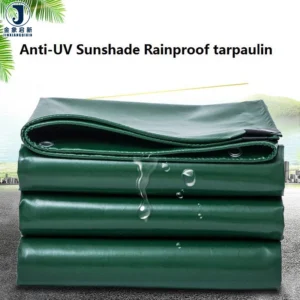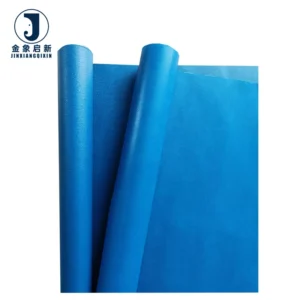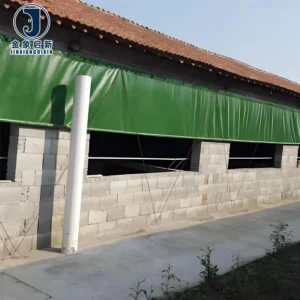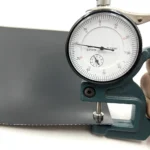
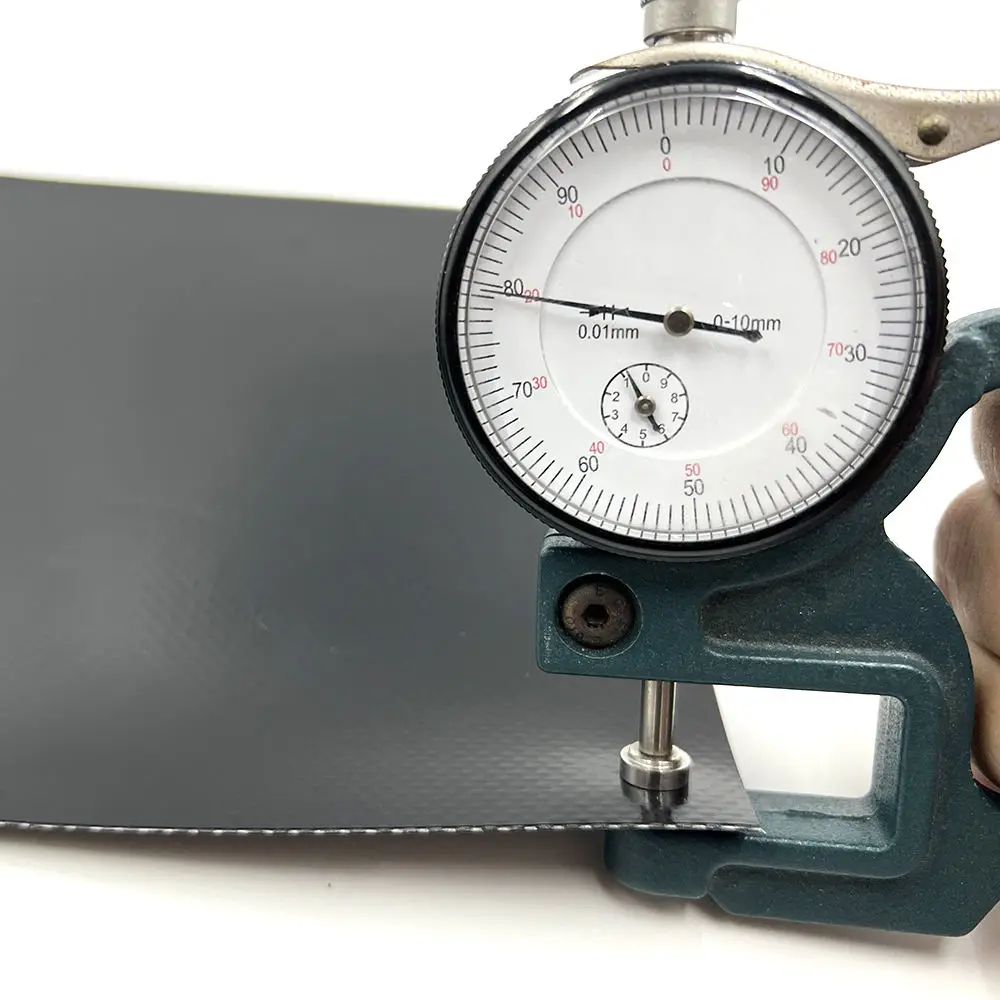
Process Control Over Knife Coating — Every roll of PVC Knife Coated Tarpaulin base fabric denier coating weight GSM is verified against the material specification sheet before dispatch, ensuring fabricators receive consistent coating adhesion and base fabric construction.
Technical Specifications
| Parameter | Value |
|---|---|
| Product Type | PVC Knife Coated Tarpaulin Roll |
| Coating Method | Knife Coated |
| Coating Material | PVC |
| Color | Gray (custom colours available on request) |
| Tensile Strength | Excellent (test standard available on request) |
| Tear Strength | Excellent (test standard available on request) |
| Peeling / Adhesion Strength | Excellent (test standard available on request) |
| Flame Retardant | Available in flame retardant grades — confirm the grade required for your market |
| UV Treatment | Available with UV stabiliser — test basis to be confirmed per order |
| Anti-Mildew | Antibacterial and mildew proof (test standard available on request) |
| Chemical Resistance | Oil, stain, acid and alkali resistant (test standard available on request) |
| Temperature Range | High temperature and cold resistance (specific values available on request) |
| Anti-Oxidation | Treated |
| Weather Resistance | Treated |
| Flexibility | Highly flexible, resistant to cracking under repeated flex |
| Self-Cleaning | Surface treatment supports dirt release and easy maintenance |
| Welding Compatibility | HF welding, hot air welding, sewing |
| Waterproof | Fully waterproof coated construction |
| Certification | ISO and CE certified production |
Application Suitability
| Application | Exposure & Requirement |
|---|---|
| Tensile and architectural membrane structures | Sustained tension loads, wind uplift, UV exposure, predictable weld and seam behaviour required |
| Airport hangars and stadium canopies | Weather cycling, thermal expansion, UV degradation, fire safety compliance on large spans |
| Shade systems and shading structures | Direct solar exposure, thermal loading, fabric tensioning over steel cable or frame systems |
| Portable storage structures | Repeated assembly and disassembly, flex at fold lines, ground-level moisture contact |
| Large format technical textiles | Roll-to-roll colour consistency, batch uniformity across long production runs |
| Truck cover and side curtain fabric | Road abrasion, constant flexing at load points, weather and spray exposure |
Why Coating Weight Matters More Than Quoted GSM for PVC Knife Coated Tarpaulin
GSM tells you how heavy the fabric is, not how well the coating has penetrated the base fabric or how strongly it bonds to the yarn.
Technical buyers specifying PVC Knife Coated Tarpaulin base fabric denier coating weight GSM often receive material that matches the quoted weight but fails at the weld line or delaminates under tension. A heavy GSM achieved through excessive surface coating with poor base fabric penetration will peel at the seam long before the fabric itself reaches its tensile limit. Knife coating, when properly controlled, drives the PVC compound into the weave structure rather than sitting on top of it — and this penetration depth is what determines real-world peel strength, not the number on the quotation [NEED_CITE: coating adhesion test methods for knife coated PVC fabrics per ISO 2411].
How Knife Coating Differs From Lamination in Coated Fabric Construction
The knife coating process applies a liquid PVC compound directly onto the base fabric under controlled blade pressure, forcing the coating material into the interstices of the woven yarn structure. This creates a mechanical and chemical bond between the PVC and the base fabric that lamination — where pre-formed PVC films are bonded to fabric with adhesive layers — cannot match in peel strength. For fabricators building tensile structures where seams carry structural loads, this distinction determines whether the weld holds or the coating separates from the base cloth under sustained tension. The PVC Knife Coated Tarpaulin base fabric denier coating weight GSM specification must account for both the coating weight applied and the base fabric denier, because the two work together to define the final mechanical performance.
Weld Compatibility and Seam Integrity in Membrane Fabrication
Fabricators working with tensile and architectural membrane structures need material that responds predictably to high-frequency welding, hot air welding, and industrial sewing. The knife coated PVC formulation used in this roll stock is designed to melt and fuse consistently under standard welding parameters, producing seams that match or exceed the parent fabric strength at flex points [NEED_CITE: weld strength requirements for architectural membrane fabrics per EN 13274]. Hot air welding works well for long continuous seams on stadium canopies and airport hangar covers, while HF welding delivers rapid, consistent bonds on shorter joints and complex shapes. Sewing remains relevant for applications where welded seams are not specified or where the fabricator needs to attach hardware reinforcement patches.
Reading the Specification Sheet: What GSM, Denier and Coating Method Actually Tell You
GSM — grams per square metre — is the total weight of the finished fabric, combining base fabric and coating together. A higher GSM does not automatically mean a stronger fabric: a 650 GSM material with a heavy coating and a light base fabric will tear more easily than a 650 GSM material with a denser base weave and a thinner, well-penetrated coating. The base fabric denier indicates yarn thickness — higher denier yarns resist tearing but add weight, while denser mesh counts distribute load across more yarns. Knife coating affects the relationship between these variables because the compound penetrates the weave, meaning the effective adhesion area is greater than with surface-only coating methods. For fabricators, understanding this interplay determines whether you specify for tensile strength, tear resistance, or peel performance — and each priority points to a different combination of denier, mesh count and coating weight [NEED_CITE: relationship between base fabric construction and coated fabric mechanical properties per ISO 1421].
The Hidden Cost of Specifying on Price Per Kilogram Alone
When buyers focus exclusively on cost per kilogram, manufacturers can meet the target by reducing base fabric denier and compensating with heavier surface coating — the GSM matches the quotation, but the fabric is coating-heavy and base-light. In tensile structures, this material will delaminate at welded seams under load because the coating has insufficient bond area with the underlying yarn. For truck covers and side curtains, the same shortcut produces fabric that cracks at fold lines where the thin base cloth cannot support the stiffer surface coating through repeated flex cycles. Colour inconsistency between rolls in the same shipment compounds the problem when panels are installed side by side on large membrane structures [NEED_CITE: common causes of coated fabric delamination in architectural membrane applications].
Why Fabricators Source This PVC Knife Coated Tarpaulin From Jinxiang
Nearly 30 years of focused production on coated fabric means the coating weight and base fabric adhesion on every roll is controlled through established process parameters, not adjusted run by run. Three full production lines and 36 sets of professional equipment support bulk roll volumes with consistent lead times for fabricators running continuous projects. The 10-person R&D team handles custom material selection, pattern printing, and sample development — samples for custom width, colour or treatment specifications are developed within days. Dedicated QA/QC inspection runs at every production stage, with 100% pre-shipment inspection ensuring that GSM, colour and coating weight match the material specification sheet. ISO and CE certified production, with full customs documentation and certificate of origin supplied per shipment.
Documentation & Verification
- Material specification sheet per roll stating exact GSM, base fabric denier and coating weight for incoming inspection
- UV resistance and flame retardant test reports supplied with shipment where applicable grades are specified
- Pre-shipment inspection record documenting weight, colour and coating consistency verification
- Roll packing list with individual roll identification for batch traceability
- Certificate of origin and full customs documentation included for international shipments
Fabrication, Handling & Storage
- HF and hot air welding parameters should be tested on sample pieces of this knife coated PVC roll before production runs begin
- Store rolls upright on pallets in a dry environment to prevent edge compression marks on the coated surface
- Allow cold-stored rolls to acclimatise to workshop temperature before unrolling to avoid coating stiffness and cracking
- Use mild, non-solvent cleaners on the self-cleaning surface to avoid degrading the PVC coating or UV treatment layer
- Plan panel cutting layouts to minimise waste and reduce the number of welded seams in high-load areas of tensile structures
- Reinforce eyelet and tie-down points with additional welded patches to distribute load across the base fabric weave
What to Include When Requesting a Quotation
Provide your application type and the environmental exposure conditions the fabric will face — including UV intensity, temperature range, and any fire safety or building code requirements in your target market. Specify whether you need roll stock in standard widths or custom widths, and indicate your annual volume so that batch consistency and production scheduling can be planned accordingly. If your project requires a specific colour match or surface finish, request a sample roll for approval before confirming bulk production.
Frequently Asked Questions
Q: How is GSM verified and what does it mean for tensile and tear strength?
A: GSM is verified per roll against the material specification sheet before dispatch. However, GSM alone does not determine strength — the base fabric denier, mesh count and coating penetration all contribute. A heavier coating on a lighter base fabric may match the quoted GSM but deliver lower tear resistance than a balanced construction. Request the full specification breakdown to assess mechanical performance accurately.
Q: What flame retardant grades are available and which test standards do they meet?
A: Flame retardant treatment is available in multiple grades to match different market requirements. The specific grade and test standard — such as DIN 4102, NFPA 701 or local building code equivalents — should be confirmed at the inquiry stage so that the correct formulation is applied and the matching test report is included with your shipment.
Q: What is the UV treatment test basis and how does it relate to outdoor service life?
A: UV stabiliser treatment is available for applications with sustained solar exposure. The test basis and exposure rating should be confirmed per order to match your installation environment. Request the UV test report with your shipment to verify that the treatment level meets the requirements of your specific climate zone and project specification.
Q: HF vs hot air vs sewing — which welding method suits my membrane structure?
A: HF welding delivers rapid, consistent bonds for shorter seams and complex shapes. Hot air welding is preferred for long continuous seams on large structures like stadium canopies. Sewing is used where hardware attachment or non-welded construction is specified. This PVC knife coated fabric is compatible with all three methods — test on sample pieces to confirm your preferred parameters.
Q: How is batch-to-batch colour consistency controlled across multiple rolls?
A: Colour consistency is managed through controlled pigment dosing and in-process QA checks at every production stage. For projects requiring multiple rolls installed side by side, specify colour matching requirements at the inquiry stage so that all rolls are produced within the same batch run. A pre-shipment inspection record documents the colour verification for each roll.