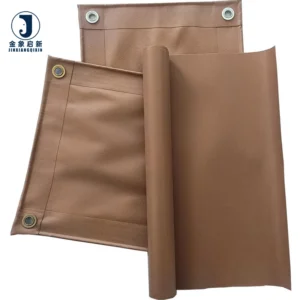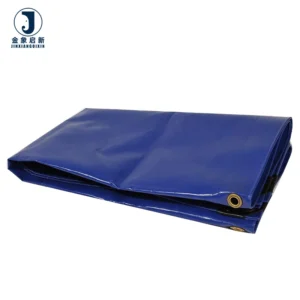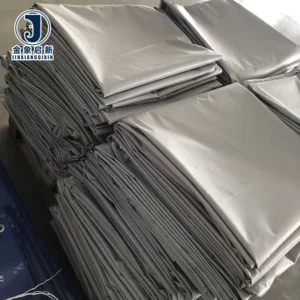
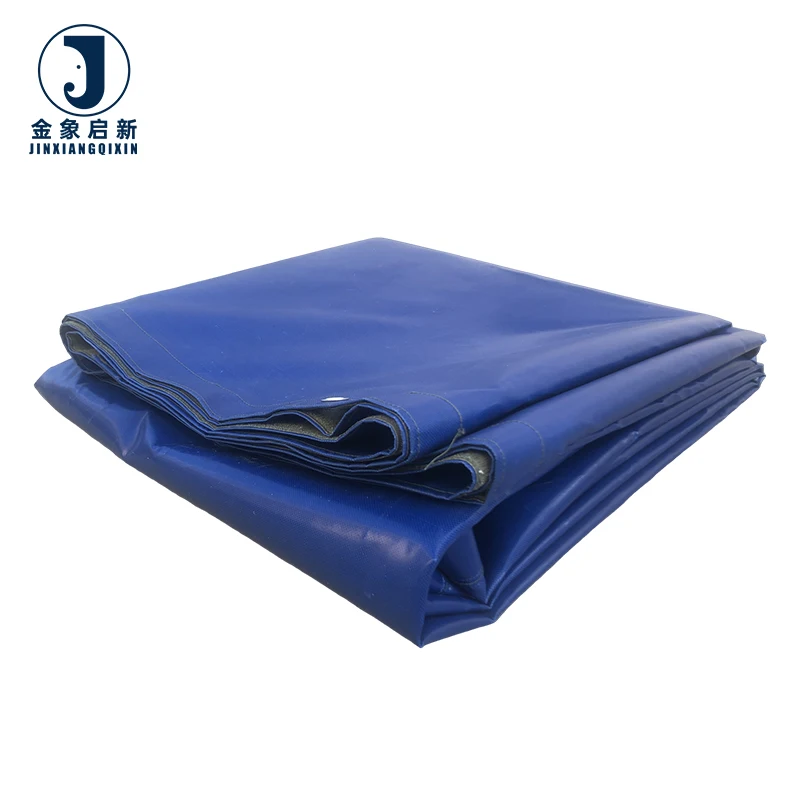
Coating Adhesion Control — Hot melt and lamination lines calibrated per batch to maintain stated PVC coating weight and prevent delamination at welded seams across the full 400–1500 g/m² range.
Technical Specifications
| Parameter | Value |
|---|---|
| Product Type | PVC Coated Fabric |
| Material | 100% high toughness polyester yarn with PVC coating |
| Coating Technology | Lamination technology and hot melt coating technology |
| Weight (Medium) | 400-500 g/m² |
| Weight (Heavy-Duty) | 700-1000 g/m² |
| Weight (Super Heavy) | 1100-1500 g/m² |
| Total Thickness (Medium) | 0.35-0.45 mm |
| Total Thickness (Heavy-Duty) | 0.70-1.0 mm |
| Total Thickness (Super Heavy) | 1.2-1.5 mm |
| Base Fabric Denier (Medium) | 500D |
| Base Fabric Denier (Heavy-Duty) | 1000D |
| Base Fabric Denier (Super Heavy) | 500D-2000D |
| Tensile Strength (Medium) | Warp 1500-2000 / Weft 1200-1800 N/5cm |
| Tensile Strength (Heavy-Duty) | Warp 2000-2500 / Weft 1800-2200 N/5cm |
| Tensile Strength (Super Heavy) | Warp 2500-3000 / Weft 2200-2800 N/5cm |
| Color Options | Blue, Blue/Orange, Green, Grey, Black, Clear, Grey/Green, Orange, or custom |
| Surface Finish | Available in custom glossy or matte finish |
| Treatment Options | Available in flame retardant, anti-static, cold resistant, mold proof, UV resistant and anti-aging grades — confirm the grade required for your market |
| Welding Tear Strength | Reported as excellent by manufacturer — request test data per grade |
| Weather Resistance | Reported 3-5 years outdoor service life — verify against project exposure data |
| Key Features | Waterproof, color fastness rated best grade by manufacturer |
Application Suitability
| Application | Exposure & Requirement |
|---|---|
| Truck and trailer side curtains | Constant flexing at load points, road abrasion, UV and weather exposure — requires heavy-duty GSM with stable base fabric for weld integrity |
| Tensioned membrane structures | Permanent tension load, wind uplift, UV saturation — demands super-heavy grade with high denier yarn and verified tensile values |
| Industrial pipe canopies and engineering covers | Chemical splash, thermal cycling, mechanical impact — coating method and treatment package must match site chemistry |
| Inflatable and specialist structures | Internal pressure cycling, seam stress concentration — hot melt coating adhesion critical to prevent delamination under repeated inflation |
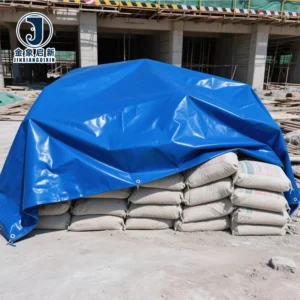
| Construction site protection and equipment covers | Puncture risk from site debris, UV exposure during multi-month projects — GSM and base weave density determine service duration |
Why GSM Alone Does Not Tell You How Strong the PVC Coated Fabric Really Is
GSM is the combined weight of base fabric and coating — it tells you how heavy the material is, not how it will perform under tension or at the weld line.
A roll quoted at 900 g/m² may arrive weighing substantially less because the coating layer was applied thin or the base fabric denier was substituted with a lighter yarn. Technical buyers specifying PVC coated tarpaulin gsm for structural or transport applications need to see the breakdown: base fabric weight versus coating weight, denier count, and tensile values measured in both warp and weft directions. A high GSM built on heavy coating rather than dense base yarn will tear more easily at fabricated seams and flex points [NEED_CITE: tensile and tear test methods for coated fabrics per ISO 1421].
How Base Fabric Denier and Coating Method Interact
The polyester base yarn provides the structural skeleton of PVC coated fabric. A 1000D yarn in the heavy-duty range delivers higher tensile and tear resistance than 500D because each filament bundle carries more load before failure. The coating — whether applied by hot melt or lamination — bonds to this skeleton and determines surface properties like waterproofing, weldability and chemical resistance. When denier and coating weight are correctly matched, the fabric behaves as a unified composite rather than two separate layers that can delaminate under stress.
Coating Technology and Its Effect on Seam Integrity
Lamination and hot melt coating each produce different adhesion profiles. Hot melt coating penetrates the base weave more deeply, creating a mechanical bond that resists peeling at welded joints — a critical factor when fabricating truck side curtains or inflatable structures where seams carry structural load [NEED_CITE: coating adhesion test methods for PVC laminated fabrics]. Lamination technology produces a more uniform surface finish suitable for applications requiring consistent appearance across large installed areas. The choice between the two methods should be driven by whether the fabricated product will be welded, sewn, or both.
Reading the Specification Sheet Beyond the Headline Number
Tensile strength values in both warp and weft directions reveal how the base fabric was woven. A balanced weave with similar longitude and latitude strength resists tearing in any direction — important for membrane structures where load distribution is multidirectional. Thickness readings across medium, heavy-duty and super-heavy grades correlate with both denier and coating build, but thickness alone does not guarantee tear performance if the base yarn is loosely woven. Requesting PVC coated fabric specifications with denier, weave density and coating weight separated out gives a far clearer picture than a single GSM figure.
What Happens When PVC Coated Fabric Specifications Are Wrong
A fabric specified at the wrong denier for its application will fail first at fabricated seams, where weld or stitch concentration creates local stress points. Rolls with inconsistent coating weight across a single order produce visible colour variation once panels are installed side by side — a problem that cannot be corrected on site and forces a full replacement order [NEED_CITE: colour fastness and batch consistency standards for coated textiles]. Where flame retardant or anti-static grades are specified without supporting test documentation, the material may pass visual inspection but fail compliance verification at project handover, delaying occupancy or operation permits.
Why Technical Buyers Source This PVC Coated Fabric Here
Coating weight and adhesion are controlled at each stage across three full production lines, maintaining the specified GSM from the first metre to the last metre of every roll. The 10-person R&D team develops samples within days when a custom denier, coating formulation or treatment additive is required for a specific application. Pre-shipment inspection covers 100% of rolls before dispatch, checking coating weight, colour consistency and surface quality against the confirmed specification. ISO and CE documentation is compiled per order, including material specification sheets and test reports where applicable. Production lines equipped with 36 sets of professional equipment support consistent output across medium, heavy-duty and super-heavy grades simultaneously.
Documentation & Verification
- Material specification sheet listing exact GSM breakdown, base fabric denier and coating method per roll
- Flame retardant and anti-static test reports supplied with applicable grades — confirm required standard before ordering
- Pre-shipment inspection record confirming coating weight and colour against stated PVC coated tarpaulin gsm
- ISO and CE certificates included in dispatch documentation package
- Certificate of origin and customs support documents prepared per destination country
Fabrication, Handling & Storage
- Hot melt coated grades require adjusted weld temperature settings — test seam peel strength on a sample strip before full production
- Rolls in 1100-1500 g/m² super-heavy grades are heavy — store flat on racking to prevent permanent creasing at the core
- Laminated PVC coated fabric surfaces should be cleaned with neutral pH agents to avoid degrading the coating bond over time
- When fabricating super-heavy grades above 1000D denier, allow wider seam overlap to distribute weld stress across more yarn bundles
- Unroll heavy-duty and super-heavy grades in ambient temperature to prevent coating cracking if stored in cold conditions
What to Include in Your Enquiry
Provide the end-use application and the environmental exposure conditions the fabric will face — including UV intensity, temperature range and any chemical contact. Specify whether you require flame retardant or anti-static grades and which test standard your project or market demands. Indicate the roll width, colour reference and annual volume so that batch consistency and production scheduling can be confirmed against your delivery timeline.
Frequently Asked Questions
Q: How does GSM relate to base fabric denier and tensile strength in PVC coated tarpaulin?
A: GSM is the total weight of base fabric plus coating. A higher GSM does not automatically mean higher strength — it depends on whether the weight comes from dense polyester yarn or from additional coating. Requesting a specification sheet that separates base fabric denier, weave density and coating weight allows you to verify that tensile performance matches your structural requirement.
Q: What is the difference between lamination and hot melt coating, and which should I specify?
A: Hot melt coating penetrates the base weave for stronger mechanical adhesion, making it preferable for welded seams in transport and inflatable applications. Lamination produces a smoother, more uniform surface suited to large-area membrane installations where appearance consistency matters. The choice depends on your fabrication method and performance priority.
Q: How are flame-retardant and anti-static treatments verified?
A: These treatments are available as coating additives matched to specific grades. Request the applicable test report before ordering — stating the standard required by your market or project specification. Without certified lab documentation, treatment claims cannot be verified at compliance inspection during project handover.
Q: What GSM and denier should I specify for tensioned membrane structures versus truck tarpaulins?
A: Tensioned membrane structures typically require super-heavy grades with high denier base yarn to withstand permanent tension and wind load. Truck tarpaulins generally perform well in the heavy-duty range, balancing strength with flexibility for daily operation. Confirm the specific tensile and tear values needed for your application before selecting a grade.