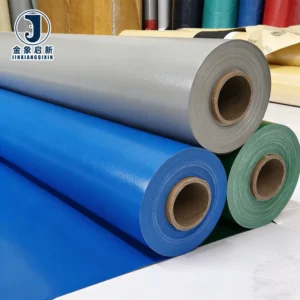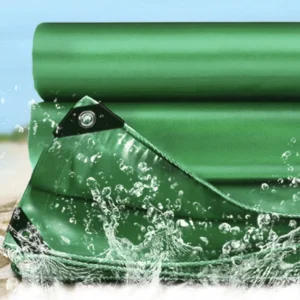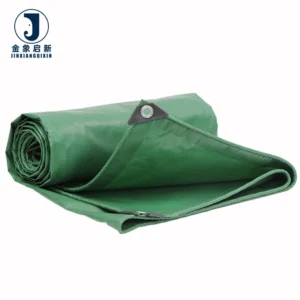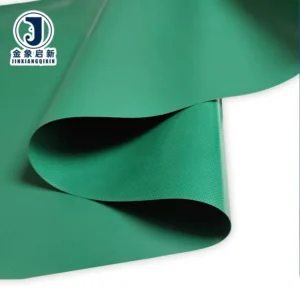
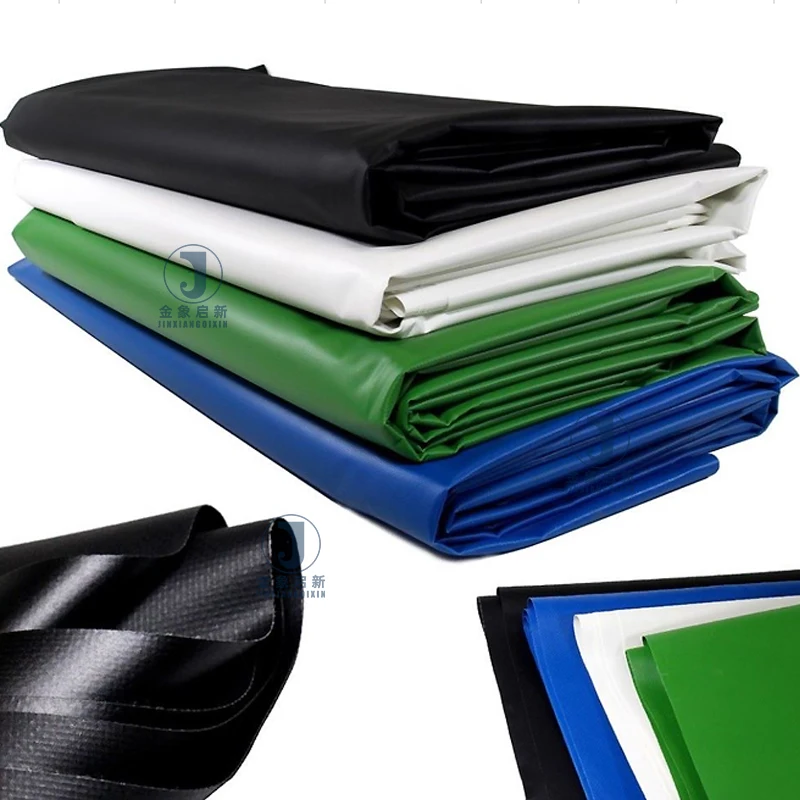
Consistent Coating Weight Control — Three full production lines with 36 professional equipment sets maintain tight GSM tolerance across every PVC coated tarpaulin roll, ensuring the fabric arriving at your facility matches the specification on the quotation.
Technical Specifications
| Parameter | Value |
|---|---|
| Product Type | PVC Coated Tarpaulin Fabric |
| Base Fabric | 100% high tenacity polyester yarns |
| Coating Material | PVC (Polyvinyl Chloride) |
| Coating Technology | Laminated & Hot-melt Coating |
| Waterproof | Yes |
| Cold Crack Resistance | Yes |
| Color Fastness | Best grade |
| Welding Tear Strength | Outstanding (test standard not stated in source) |
| Available Special Treatments | Flame Retardant (grade not stated in source); Anti-Static (standard not stated in source); Anti-cold; Anti-mildew; 3P |
| Outdoor Service Life | 3-5 years (source value — verify against manufacturer catalog) |
| Certification | ISO, CE |
Application Suitability
| Application | Exposure & Requirement |
|---|---|
| Truck and trailer side curtains | Constant flexing at road speed, abrasion from tie-down straps, prolonged UV and weather exposure |
| Industrial machinery covers | Outdoor storage, moisture ingress prevention, resistance to mildew in humid environments |
| Tent and temporary structure tarpaulin | Wind load tension on welded seams, flame retardant compliance for public assembly, repeated setup and teardown |
| Mining and construction site enclosures | Flame retardant and anti-static requirements, dust and debris exposure, low-temperature deployment |
Why Coating Adhesion Matters More Than GSM Alone
A heavier PVC coated tarpaulin base fabric denier coating method GSM reading means nothing if the coating delaminates at the weld line under flex stress.
Technical buyers often specify by weight, assuming a higher number guarantees durability. Yet coated fabric failures in truck and industrial covers frequently originate not in the body of the material but at the seam, where the PVC layer separates from the polyester base under repeated bending. The lamination bond strength determines whether the cover survives its first season or begins peeling at every welded joint. This is where hot-melt coating technology provides a structural advantage over simple knife-over-roll methods, as the coating penetrates and encapsulates the yarn rather than sitting on top of it [NEED_CITE: coating adhesion test methods for PVC coated polyester per ISO 1421].
Laminated and Hot-Melt Coating: How the Bond Is Built
The PVC coated tarpaulin fabric in this range is produced using both laminated and hot-melt coating processes. Lamination bonds pre-formed PVC films to the polyester base under heat and pressure, yielding a uniform surface on both sides. Hot-melt coating pushes molten PVC compound into the weave of the high-tenacity polyester yarns, filling the interstices and creating a mechanical lock that resists delamination during high-frequency welding. For technical buyers evaluating PVC coated tarpaulin base fabric denier coating method GSM, understanding which process was used directly informs the expected peel strength and weld integrity of the finished cover.
Treatment Options Engineered for Specific Compliance Environments
This material is available in flame retardant grades — confirm the grade required for your market before specifying, as fire safety classifications vary significantly between regions and end-use applications. Anti-static treatment is also available, though the specific test standard should be verified against your site’s safety requirements. Anti-cold and anti-mildew formulations address performance in low-temperature logistics corridors and tropical humidity respectively. Each treatment alters the compound chemistry, so requesting the relevant test report ensures the PVC coated tarpaulin fabric you receive carries documented proof of the claim, not just a data-sheet statement [NEED_CITE: flame retardant classification systems for coated technical textiles].
How Base Fabric and Coating Weight Interact to Determine Real-World Performance
The high-tenacity polyester yarn base fabric provides the tensile skeleton of this PVC coated tarpaulin fabric. Denier and weave density govern how load is distributed across warp and weft — a tighter weave resists tear propagation but may reduce flexibility, while a heavier denier increases ultimate tensile strength at the cost of roll weight and handling ease. The PVC coating method and weight then determine surface protection, weld-ability, and environmental resistance. A laminated coating sitting on top of the weave will behave differently under heat welding than a hot-melt coating that has penetrated the yarn interstices. Cold crack resistance, listed as a feature of this material, depends on plasticiser formulation within the PVC compound and the coating thickness that protects the base fabric from moisture ingress at low temperatures. Colour fastness at the stated best grade indicates that the pigment system is designed to resist fading through extended outdoor exposure, though the specific UV test basis should be confirmed for your target climate zone.
The Cost of Specifying on Weight Without Verifying Adhesion
When PVC coated tarpaulin base fabric denier coating method GSM figures on a quotation are not matched by coating adhesion performance, the consequences appear after the cover is installed and loaded. Welded seams peel open at flex points — the exact locations where truck curtains bend during transit or where industrial covers are folded for storage. The fabric body may still be intact, but the cover is functionally failed. Batch-to-batch variation in coating weight compounds the problem: one roll welds cleanly at standard temperature settings, while the next scorches or refuses to bond, forcing fabricators to recalibrate equipment mid-production [NEED_CITE: delamination failure modes in PVC coated polyester tarpaulins under cyclic flex loading]. Colour variation between rolls in the same order creates visible panel mismatches once installed side by side, requiring full replacement of affected sections rather than a simple patch repair.
Why Sourcing This Fabric Through Jinan Jinxiang
Nearly 30 years of focused coated-fabric production has produced deep process control over coating weight and adhesion, which directly affects how reliably this PVC coated tarpaulin fabric performs at the weld line. Three full production lines and 36 sets of professional equipment support bulk roll output with consistent on-time delivery schedules. The 10-person R&D team handles material selection, custom sizing, and sample development for specific application requirements, enabling sample turnaround within days rather than weeks. Dedicated QA/QC runs at every production stage with 100% inspection before shipment, so roll-to-roll colour consistency and coating weight conformance are verified before the material leaves the factory. ISO and CE certification underpins the documentation package provided with each dispatch.
Documentation & Verification
- Material specification sheet stating PVC coated tarpaulin base fabric denier coating method GSM and base fabric composition
- Test report for flame retardant and anti-static grades where applicable, matched to the target market classification
- Pre-shipment inspection record confirming coating weight and colour consistency roll by roll
- ISO and CE certificates included for regulatory compliance and buyer audit requirements
- Roll packing list detailing quantity, dimensions, and net weight per roll for customs clearance
Fabrication, Handling & Storage
- Set hot-air welder temperature to match the hot-melt or laminated PVC coating type to avoid surface scorching or incomplete bonding
- Allow cold-stored rolls to acclimatise to workshop temperature before unrolling to prevent coating micro-cracking in anti-cold treated fabric
- Store PVC coated tarpaulin fabric rolls upright on pallets, never stacked flat, to avoid permanent crease marks in the coating layer
- Use compatible PVC-based cleaners only, as solvent-based products may degrade the anti-mildew surface treatment
- Plan cutting layout to minimise welded seam count across high-stress flex zones, leveraging the outstanding welding tear strength of this material
Request a Specification Match for Your Application
Provide your end-use application, the environmental exposure conditions, and any fire-safety or anti-static classifications required by your market so the correct treatment package can be recommended. Specify the PVC coated tarpaulin fabric width, GSM range, and colour reference you need, along with estimated annual volume, so production scheduling and sample development can be arranged. If you require custom printing, finished cut sizes, or only roll stock, confirm this at the inquiry stage to ensure the quotation reflects your actual procurement format.
Frequently Asked Questions
Q: How is GSM verified before shipment and what documentation is provided?
A: Each roll undergoes weight testing as part of the 100% pre-shipment inspection process. A material specification sheet accompanies the shipment, stating the confirmed PVC coated tarpaulin base fabric denier coating method GSM alongside base fabric details. The pre-shipment inspection record documents the actual weight measured per roll, giving you verifiable proof that the delivered material matches the quoted specification before the container is sealed.
Q: What test reports are available for flame retardant and anti-static grades?
A: Flame retardant and anti-static treatments are available, and the specific grade or test standard should be confirmed at the inquiry stage to match your target market’s fire-safety requirements. Test reports are provided for the applicable classification upon request. Because compliance frameworks differ between regions, sharing your end-use environment and regulatory reference ensures the correct treatment is specified and documented.
Q: Can custom widths and colours be produced with consistent quality across multiple rolls?
A: Custom widths and colour references can be developed through the R&D team, with samples produced within days for approval before full production runs. Roll-to-roll colour consistency is maintained through dedicated QA checks at every coating stage. The pre-shipment inspection record confirms colour uniformity across all rolls in your order, reducing the risk of visible panel variation once the PVC coated tarpaulin fabric is installed.
Q: What is the difference between laminated and hot-melt coating methods?
A: Laminated coating bonds pre-formed PVC films to the polyester base under heat and pressure, producing a smooth and uniform surface on both sides. Hot-melt coating forces molten PVC compound into the yarn interstices, creating a mechanical lock that enhances peel strength and weld integrity. The choice between them depends on your tensile requirements, welding method, and the degree of flex stress the finished PVC coated tarpaulin fabric will experience in service.