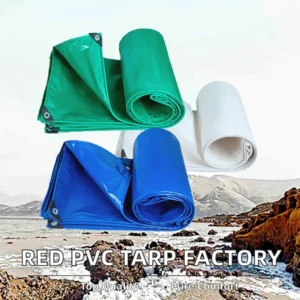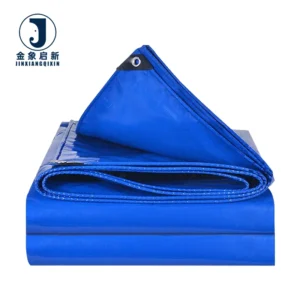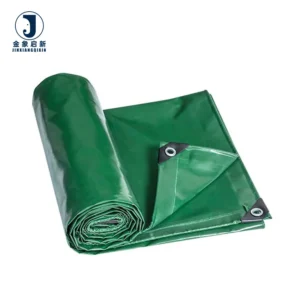
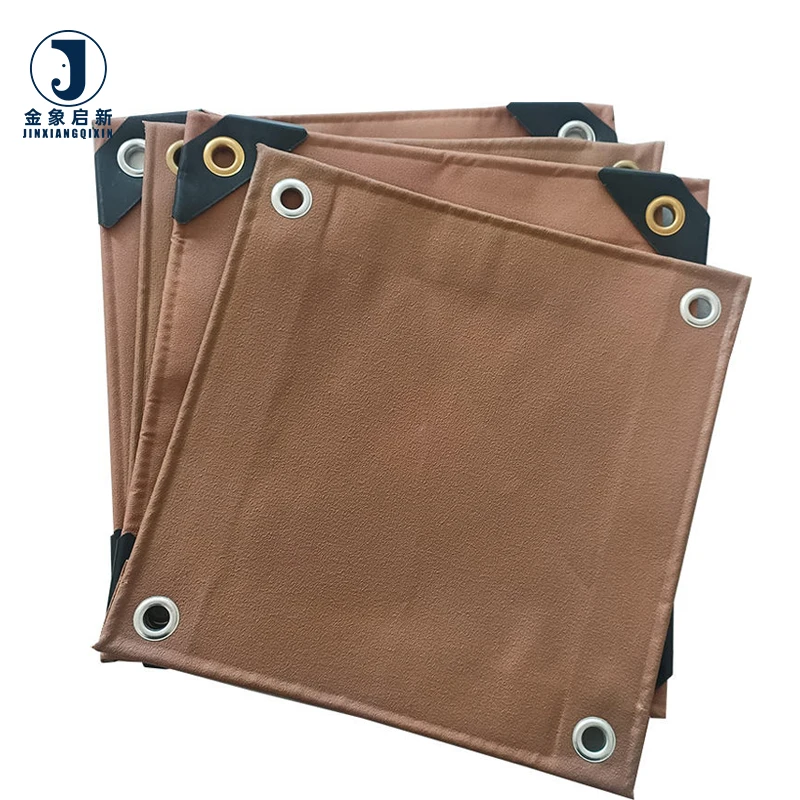
Coating Process Control — Every roll of PVC coated tarpaulin leaving our Jinan facility is checked for adhesion, coating weight, and surface finish before dispatch, keeping GSM and fire-retardant behaviour consistent across bulk orders.
Technical Specifications
| Parameter | Value |
|---|---|
| Product Type | PVC Coated Tarpaulin |
| Weight Options | 500gsm / 600gsm |
| Coating Material | PVC |
| Flame Retardant | Fireproof treatment available (grade to be confirmed for target market) |
| Waterproof Construction | Yes |
| Special Treatments Available | Flame retardant; anti-static; anti-cold; anti-mildew |
| Weather Resistance | 1–3 years outdoor service life stated |
| High Strength | Stated to reduce installation damage |
| Finishing Options | Custom width, length, eyelets and reinforced hems available on request |
Application Suitability
| Application | Exposure & Requirement |
|---|---|
| Truck and trailer cargo covers | Constant flexing at tie-down points, road spray, UV and abrasion at seams |
| Outdoor equipment and site covers | Sun exposure, rain ingress, wind-driven debris, occasional pooling water |
| Tent and awning fabrication by roll | Colour consistency across panels, weld-ability at long seams, fire classification for public venues |
| Agricultural and aquaculture pond liners | Continuous water contact, soil chemistry, puncture risk from substrate |
Why the Stated GSM Is Not the Whole Story for PVC Coated Tarpaulin
Coating weight only performs as well as the base fabric and adhesion method behind it.
Technical buyers frequently quote a 500gsm or 600gsm figure and assume tensile and tear values will follow. In practice, two rolls with identical GSM can behave very differently once fabricated into truck side curtains or site enclosures. The discrepancy usually traces back to base fabric denier, weave density, or coating adhesion — none of which a GSM reading captures. [NEED_CITE: tensile and tear test methods for coated fabrics per ISO 1421]
When the weld line fails before the fabric itself, the root cause is rarely the topcoat weight. It is the bond between the PVC layer and the polyester scrim, or a mismatch in hot-air welding temperature. Specifying PVC coated tarpaulin 500gsm 600gsm without a supporting material data sheet leaves these variables uncontrolled.
Base Fabric and Coating Adhesion
PVC coated tarpaulin 500gsm 600gsm grades rely on a polyester scrim sandwiched between two PVC films applied by knife coating or calendering. Knife coating pushes paste into the weave, giving higher peel strength at the cost of a slightly heavier hand feel. Calendering presses pre-formed film onto the scrim, yielding a smoother surface preferred for printed branding and tight colour matching across rolls. The choice directly affects how the material behaves at hot-air welded seams, which is where most field failures originate.
Flame Retardant Chemistry and Market Compliance
Fireproof treatment for PVC coated tarpaulin is achieved by blending halogenated or phosphorus-based additives into the plastisol before coating. The resulting classification — M2, B1, NFPA 701, or DIN 4102 — determines which jurisdictions accept the fabric for public venues and transport covers. [NEED_CITE: DIN 4102 fire classification for building materials] Requesting the specific grade required for your market at the enquiry stage ensures the correct additive package is used and the accompanying test report cites the right standard, rather than a generic self-extinguishing claim that will not satisfy a local fire inspector.
Reading the Specification Sheet Correctly
GSM measures total mass per square metre, but tensile strength depends on yarn denier and ends-per-centimetre in warp and weft. A 500gsm fabric woven from 1000-denier yarn at a tighter weave will resist tearing longer than a 600gsm fabric using lower-denier yarn with extra coating filler. Tear propagation — the force needed to extend an existing slit — is governed more by weave density and yarn crimp than by topcoat thickness. Surface finish also matters: glossy PVC sheds dirt and water more readily, while matte finishes reduce glare on reflective signage and accept solvent-based inks more cleanly. Anti-cold additives keep the PVC flexible at sub-zero temperatures, whereas anti-mildew packages protect stored rolls and installed covers in humid climates. Anti-static treatments lower surface resistivity, a requirement for ducting in mining and grain-handling environments. [NEED_CITE: surface resistivity testing for anti-static PVC coated fabrics]
The Cost of Overlooking Fabric Construction
A roll that passes GSM inspection yet uses a loose weave will stretch under tie-down tension, causing eyelets to pull through within weeks. Flame retardant additives added at the wrong ratio may pass a small-sample lab test but fail a full-panel burn test conducted by the end-user’s safety officer. Batch-to-batch colour drift, often invisible on a single roll, becomes obvious once three panels are seamed side by side on a trailer curtain. [NEED_CITE: colour consistency standards for PVC coated fabric in transport covers] These issues are preventable when the material specification sheet is treated as the primary contract document rather than a marketing handout.
Sourcing PVC Coated Tarpaulin With Verified Process Control
Three full production lines and 36 sets of professional equipment allow batch consistency across container-load orders without splitting production between subcontractors.
A dedicated 10-person R&D team develops custom treatment formulations — anti-cold, anti-mildew, or specific fire grades — and ships confirmation samples within days rather than weeks.
Every roll undergoes in-process QA during coating and a 100% pre-shipment inspection covering weight, colour, and adhesion before packing.
ISO and CE certification at company level supports customs clearance and end-market compliance documentation for exports to North America, Europe, and Asia.
Sample development covers custom width, colour matching, and treatment verification, letting fabricators approve the exact material before committing to full roll stock.
Documentation & Verification
- Material specification sheet stating exact GSM, base fabric denier, weave, and coating method per roll
- Flame retardant test report citing the applicable grade required for the destination market
- Pre-shipment inspection record confirming coating weight and colour consistency roll by roll
- ISO and CE certificates provided with shipping documentation for customs and compliance files
- Roll packing list detailing net weight, linear metres, and batch reference for traceability
- Certificate of origin issued for preferential tariff treatment where applicable
Fabrication, Handling & Storage
- Hot-air weld temperature must match the specific PVC formulation used on 500gsm or 600gsm rolls to avoid delamination
- Reinforced hems and eyelets should be placed at intervals matching the tarpaulin weight grade and expected tie-down load
- Store rolls upright on pallets to prevent flat-spot creases that become permanent after weeks in the warehouse
- Allow cold-stored rolls to reach ambient temperature before unrolling to avoid coating micro-cracking at the surface
- Use mild, non-solvent cleaners on glossy PVC surfaces to preserve coating integrity and colour depth over time
- Plan panel layout to minimise transverse seams, which concentrate flex fatigue on truck curtain applications
Specifying the Right Grade for Your Project
Provide the exposure conditions — UV load, temperature range, and fire classification — along with target width and annual volume so the correct 500gsm or 600gsm formulation is selected. If you require a specific flame retardant grade for your market, state the standard at the enquiry stage so the test report is prepared in parallel with sample development.
Frequently Asked Questions
Q: How is the actual GSM of PVC coated tarpaulin verified on arrival?
A: Each roll is weighed and measured during pre-shipment inspection, and a roll-by-roll weight record accompanies the shipment. On receipt, buyers can cross-check by cutting a known area, weighing it, and comparing against the stated 500gsm or 600gsm figure. Discrepancies beyond normal tolerance should be flagged before fabrication begins.
Q: Which flame retardant grade applies to my market for this fabric?
A: Common classifications include M2 for France, B1 per DIN 4102 for Germany, and NFPA 701 for the United States. The correct grade depends on the end-use and local building or transport codes. Specify the required standard at enquiry so the matching additive package and test report are prepared.
Q: How does the PVC coating method affect weld strength on fabricated products?
A: Knife-coated PVC penetrates the polyester scrim, producing higher peel strength at hot-air welded seams compared with calendered film. For truck curtain and duct fabrication where long seams carry structural load, knife-coated 500gsm or 600gsm grades typically give more reliable joint integrity after extended flexing.
Q: How are anti-static values measured for industrial PVC coated fabric?
A: Surface resistivity is measured in ohms per square using standardised electrode methods. The acceptable range depends on the application — mining ventilation ducts, for example, require a lower resistivity than general warehouse covers. Request the test method and target value relevant to your industry when specifying anti-static treatment.
Q: Can I obtain samples before committing to a bulk roll order?
A: Yes. Samples are developed within days for custom width, colour, and treatment formulation. Fabricators are encouraged to test weld parameters and verify colour consistency against existing panels before approving the bulk production run.